




“One mouth tells stories of thousands of years; two hands maneuver millions of soldiers” — this proverb vividly captures the artistic charm of Beijing shadow puppetry. Known as the “ancestor of film”, this ancient light and shadow art uses animal hides as materials, carving tools as brushes, and light and shadow as a stage, integrating painting, carving, music and performance to interpret timeless legends on a small screen. With a 400-year history as an intangible cultural heritage, it embodies the elegant heritage of Beijing-style art and the craftsmen’s ultimate ingenuity of “carving a universe with a knife and moving mountains with shadows”. For foreign travelers, exploring Beijing shadow puppetry is an excellent way to immerse themselves in traditional Oriental aesthetics and narrative wisdom.
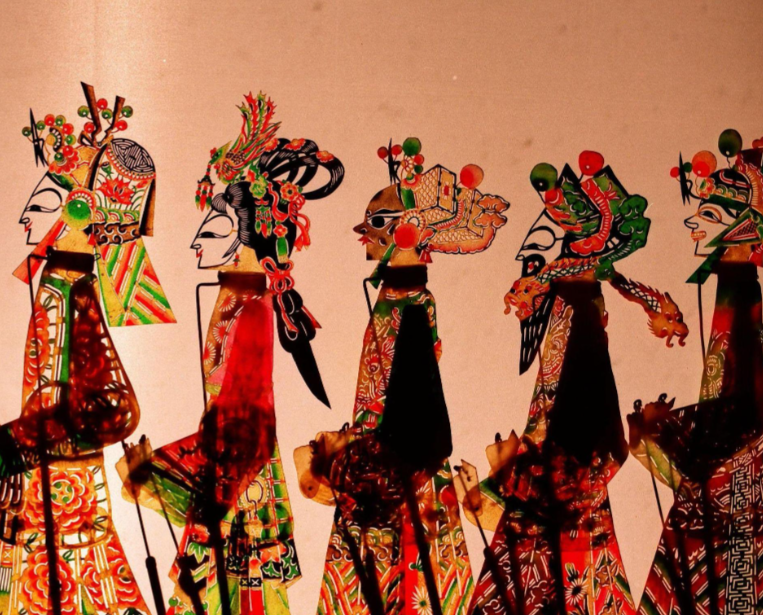
The inheritance of Beijing shadow puppetry began in the mid-Ming Dynasty and evolved into a unique school after hundreds of years. Originally introduced from Lanzhou and Huating in Gansu Province to Zhuozhou in Hebei Province, it later spread to the capital. Early puppets featured simple and neat designs, popular among the people. After the mid-Qing Dynasty, with the prosperity of Peking Opera, Beijing shadow puppetry extensively borrowed from Peking Opera’s artistic essence, forming distinctive characteristics in shape, vocal music and performance, and officially establishing the clear identity of “Beijing-style shadow puppetry”. At that time, shadow puppet shows were mostly performed at private gatherings, entering both the imperial court and the market — offering elegant entertainment for royal nobles and joyful pastime for ordinary people. Classic plays such as “Journey to the West” and “Water Margin” became widely performed repertories. In 2006, shadow puppetry was included in the first batch of national intangible cultural heritage lists, and Beijing shadow puppetry, as an important branch, became a treasure bearing national cultural memories with its unique artistic value.
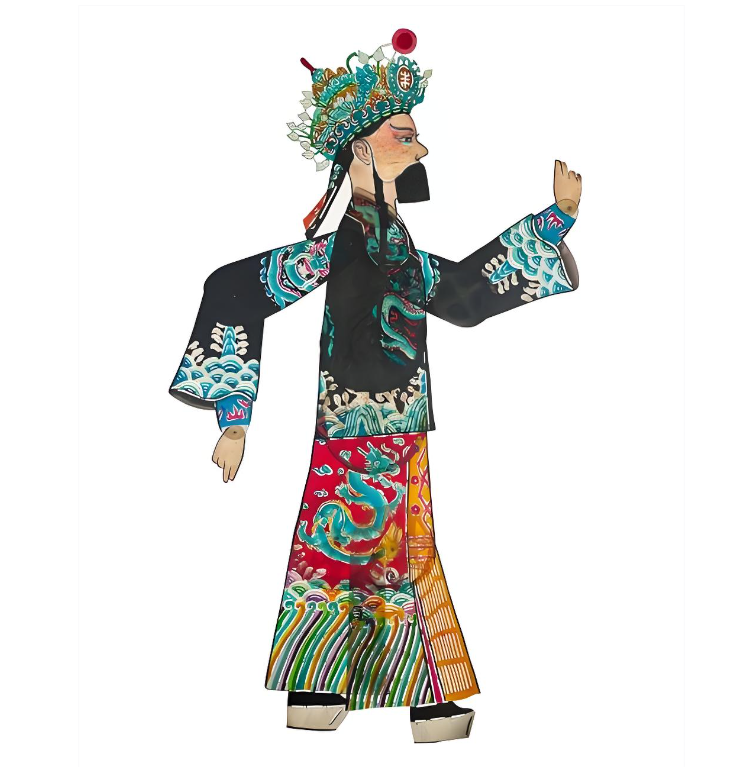
The unique charm of Beijing-style shadow puppetry lies first in its “vivid and elegant” modeling art. Compared with other schools, it fully absorbs the characteristics of Peking Opera facial masks and costumes, integrating stylized character portrayal into puppet shapes, and accurately conveying the good, evil, loyalty and treachery of characters through colors and patterns. For example, red faces symbolize loyalty and courage, black faces represent impartiality and integrity, painted faces imply treachery and evil, green faces are mostly used for robbers, and yellow faces are exclusive to gods and ghosts. Behind these intuitive color codes lies profound cultural accumulation. In terms of detail, Beijing-style shadow puppetry is particularly exquisite, pursuing rationality and beauty in costumes and headwear. The patterns on armors and robes are complex and delicate; even for shirtless characters, smooth short lines are used to outline muscle structures, matched with exquisite headwear and boots, making each character vivid and three-dimensional.
Exquisite carving craftsmanship is the soul of Beijing shadow puppetry. Each puppet undergoes 24 complex manual processes by craftsmen. Donkey hide, which is tough and translucent, is preferred as the material. After soaking, dehairing, thinning, drying and other leather processing steps, the hide becomes warm, transparent and not easy to crack. The carving process tests the craftsman’s skills most. Holding a thin knife, the craftsman accurately carves classic patterns such as “wheel coins”, “steamed bun tops” and “gauze backgrounds”, with smooth lines and reasonable density arrangement, ensuring that the puppet’s joints are flexible and the patterns are clear when projected by light. Mineral pigments are used for coloring, which are bright and durable. The main colors such as red, green, yellow and black match harmoniously. After repeated dyeing and drying, the puppets present a colorful and vivid visual effect under the light, making each finished product a work of art with both practicality and artistry.
The integration of vocal music and performance makes the narration of Beijing shadow puppetry more appealing. The vocal music of Beijing-style shadow puppetry draws on the tunes of Peking Opera, Kunqu Opera, folk art and other local operas, skillfully integrating multiple vocal changes in one aria, combining high-pitched passion with gentle grace. Matched with melodious folk music accompaniment, it forms a unique auditory experience. In terms of performance, it is characterized by delicacy and exaggeration. Craftsmen manipulate the puppets with three sticks, accurately interpreting subtle actions such as looking in the mirror, dressing up and shedding tears, making the characters on the screen vivid and lifelike. Even complex martial arts scenes can be vividly presented through the flexible postures of the puppets, achieving the performance realm of “shadow moving with spirit”.
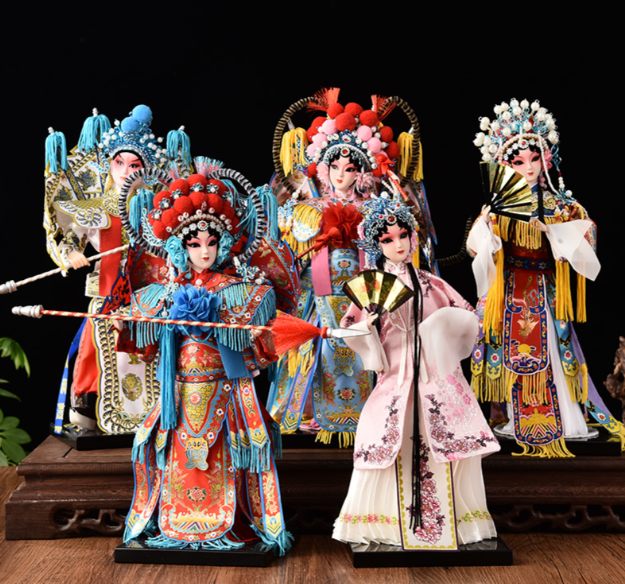
Today, Beijing shadow puppetry is revitalized through inheritance and innovation, with old craftsmanship colliding with the new era to sPark unique charm. The shadow puppetry studio founded by national intangible heritage inheritor Wang Tianwen in Beijing has become a landmark for Chinese and foreign tourists, attracting more than 80,000 visitors over the years, 30% of whom are foreign friends. After being taken over by his post-00s grandson Dang Feihua, the studio has made bold innovations, adapting “Subject Three” dance and Michael Jackson’s dance moves into shadow puppet performances, which have been widely spread on short video platforms, making the ancient art popular among young people. Longzaitian Shadow Puppet Theater adheres to tradition, regularly staging classic plays such as “The Monkey King Thrice Beats the Bone Demon” and “The Fox and the Crow”, and setting up backstage exploration and interactive experience sessions to allow visitors to closely understand puppet manipulation skills.
To experience the charm of Beijing shadow puppetry immersively, top venues are not to be missed. Wang Tianwen’s Shadow Puppetry Studio (Songshu Street Hutong, Xicheng District) requires advance booking 1-2 days prior via email (wangtianwenpiying@163.com), with two daily experience sessions (9:30-11:30 AM, 2:00-4:00 PM) lasting 1.5 hours each. Visitors can make simple puppets under craftsmen’s guidance and take away exclusive shadow souvenirs. Longzaitian Shadow Puppet Theater (Baishuwa Village, Shangzhuang Town, Haidian District) holds regular daily shows — one at 10:30 AM and 3:00 PM on weekdays, with an additional 7:00 PM show on weekends. Reservations can be made via its official WeChat account “Longzaitian Shadow Puppetry” or on-site ticket purchase. A 30-minute backstage tour and interactive session follow each show, allowing visitors to manipulate puppets to perform classic clips. During the Spring Festival, Zhongshan Park Music Hall hosts shadow puppet troupes performing plays such as “Havoc in Heaven”, integrating modern means like projection to present a light and shadow feast combining tradition and innovation. In addition, Beijing Folk Custom Museum displays rare shadow puppets from past dynasties, enabling a systematic understanding of the art’s evolution.
From a folk drama in the Ming Dynasty to an intangible heritage treasure today, from light and shadow narration on a small screen to cross-border communication on short video platforms, Beijing shadow puppetry carries not only a performance art but also the narrative wisdom and craftsmanship spirit of Oriental Culture. Each carving hides the precipitation of time, each shadow movement reflects the inheritance of art, and each performance conveys emotional resonance across time and space. When the lights are on and the puppets move with the music, you can understand the Chinese pursuit of beauty and adherence to tradition in the timeless stories and vivid light and shadow.




暂无评论内容