




Among the folk toys of Beijing, Paper Fan Flowers (Zhifanhua) stand out as an intangible heritage treasure, carrying the childhood memories and festive joy of old Beijing with their vivid charm of “endless transformations in one piece of paper”. This centuries-old craft uses ordinary colored paper, crafted through ancient processes such as cutting, folding, rolling and pasting. With just a flip of the fingers, it can transform from a flower into a flying bird, lantern, flower basket and other shapes, embodying the craftsmen’s ingenuity of “simplifying complexity” and filling the streets of old Beijing with pure joy. For foreign travelers, exploring Paper Fan Flowers is an excellent way to understand the “great ingenuity in small objects” in Beijing-style folk customs, and to personally unlock this timeless joy.
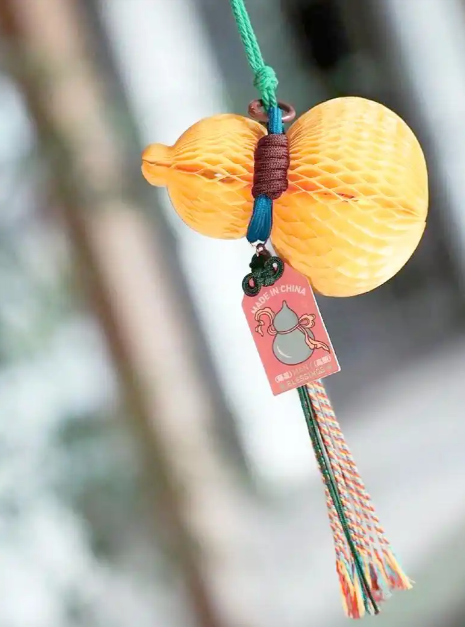
The inheritance of Beijing Paper Fan Flowers is deeply rooted in folk soil since the Ming and Qing dynasties, with a history of over 400 years. Also known as “Fan Hua” (transforming flowers), the craft originated in the Ming imperial court, initially as an exquisite toy for royal children. Later, with the prosperity of urban Culture, it spread to the people and became the most popular folk toy among children at temple fairs and markets. From the Qing Dynasty to the Republic of China, Paper Fan Flowers reached their peak, with workshops concentrated around temple fairs such as Changdian and Longfusi. Craftsmen set up stalls along the streets to sell them. Colorful Paper Fan Flowers swayed gently in the wind at the stalls, and the transformations and sounds when flipped became the most vivid urban symbols of old Beijing temple fairs.
At that time, Paper Fan Flowers were not only children’s toys but also decorations in festival rituals. During festivals, every family bought them for their children, symbolizing “prosperity through blooming flowers and new beginnings”. This tradition continues to this day, becoming a cultural symbol etched in Beijing-style memories. Over the changes of times, mass-produced toys once pushed handcrafted Paper Fan Flowers to the verge of extinction, with many ancient styles on the brink of being lost. Fortunately, intangible heritage inheritors and folk custom lovers persisted, recording processes and reproducing classic styles to revitalize the craft. In 2014, Beijing Paper Fan Flowers were included in the Xicheng District intangible heritage list, receiving official protection and promotion. Today, handcrafted Paper Fan Flowers reappear at traditional temple fairs and intangible heritage exhibitions, retaining ancient essence while integrating modern aesthetics, continuing to convey joy and cultural warmth in contemporary times.
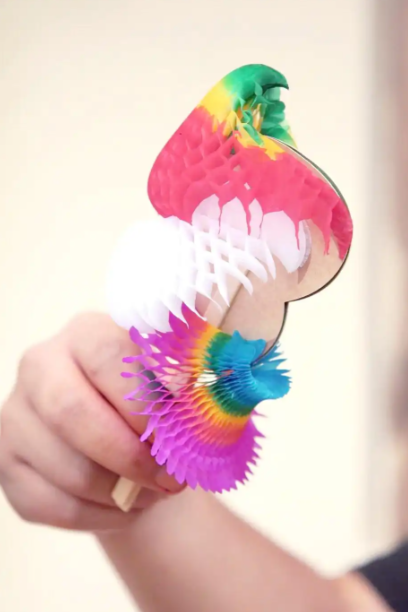
The unique charm of Paper Fan Flowers lies in the contrasting beauty of “simple materials and exquisite craftsmanship”. A piece of ordinary colored paper can achieve “endless transformations with each flip” through the skilled hands of craftsmen. The entire process is completed by hand, including five core steps: paper selection, cutting, folding-rolling, pasting and shaping. Each step tests the craftsman’s precise control of paper toughness and angle, with no reliance on machinery, fully showing urban craftsmanship. Paper selection is particularly crucial—rice paper or cotton paper with thick texture, sufficient toughness and bright colors is preferred. It can withstand repeated flipping without damage and maintain full patterns and colors. Old craftsmen favor festive colors such as bright red, bright yellow and emerald green, fitting the festival atmosphere.
Cutting and folding-rolling are the core of the craft, hiding the design wisdom of “simplifying complexity”. Craftsmen first draw patterns according to the preset shape, cut out symmetrical basic outlines with scissors, then form a three-dimensional structure through folding and rolling. The key lies in the folding angle and pasting position—not only ensuring a stable structure but also smooth flipping without jamming. The classic “Four-Season Flower” Paper Fan Flower has a basic shape of a blooming flower. Gently pulling the paper string at the bottom with fingers, it can transform into a budding flower bud, then into a fluttering butterfly with another flip. It can change into seven or eight shapes with repeated flipping, each transformation precise and smooth, embodying the clever integration of mechanics and aesthetics. Some exquisite Paper Fan Flowers are decorated with gold powder and tassels, or printed with auspicious patterns on the paper, adding elegance to the small objects.
Paper Fan Flowers are not only toys but also “living carriers” of old Beijing folk meanings, with auspicious expectations embedded in every shape and color. Red Paper Fan Flowers symbolize warding off evil spirits, attracting blessings and festive luck, making them essential items at Spring Festival temple fairs. Yellow represents prosperity and health, often used as a festival gift for children. Styles printed with peonies and lotus flowers stand for “prosperity through blooming peonies” and “purity and auspiciousness” respectively, fitting the Chinese yearning for a better life. In traditional customs, when elders buy Paper Fan Flowers for children, they not only give joy but also entrust wishes for “wisdom, agility and a bright future”. This warmth hidden in small objects makes Paper Fan Flowers more than just toys, becoming an important part of folk rituals.
Today, this ancient craft is revitalized under persistence and innovation. Intangible heritage inheritors not only reproduce classic styles such as “Four-Season Flower” and “Butterfly Fan Flower” to restore the essence of ancient processes but also innovate designs combining modern aesthetics, developing cartoon-shaped and cultural and creative gift box-style Paper Fan Flowers. They retain the core feature of “transforming with each flip” while adapting to contemporary life scenarios, becoming popular souvenirs among young people. Meanwhile, inheritors carry out craft exhibitions and experience activities in campuses and communities, teaching cutting and folding skills hand-in-hand, allowing children to make Paper Fan Flowers personally, feeling the joy of ancient craftsmanship through interaction and continuing this childhood fun and craftsmanship.
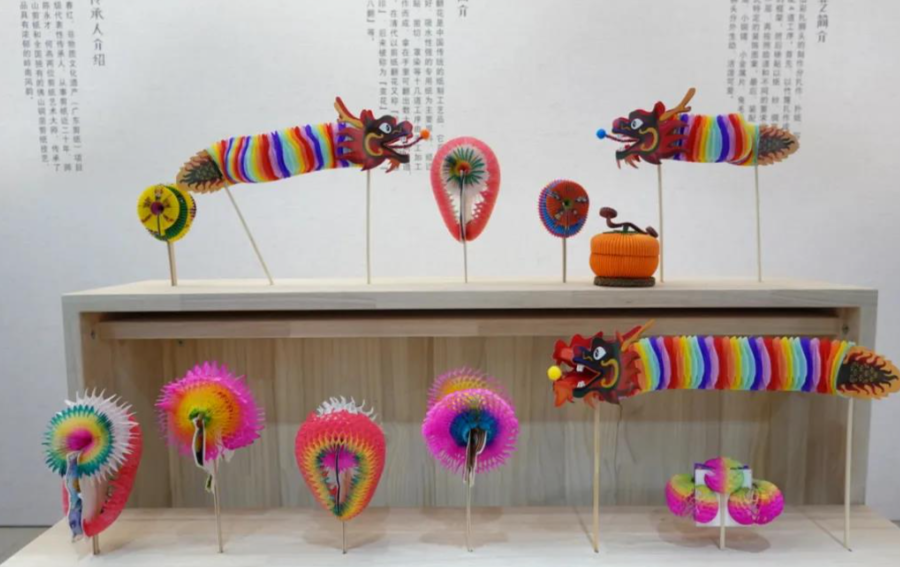
To experience the Beijing-style charm of Paper Fan Flowers immersively, core scenes and venues are not to be missed. Changdian Temple Fair is the first choice to experience Paper Fan Flower Culture. Every Spring Festival, long queues form in front of handcrafted Paper Fan Flower stalls in the intangible heritage folk street. Craftsmen demonstrate the production process on site, and visitors can flip classic styles by hand and purchase exclusive handcrafted ones. Longtan Temple Fair and Panjiayuan Temple Fair also have intangible heritage handmade zones, where visitors can watch the ingenuity of inheritors up close and participate in simple Paper Fan Flower making experiences. In addition, Beijing Folk Custom Museum and Xicheng District Intangible Heritage Exhibition Center display rare and restored Paper Fan Flowers from past dynasties, systematically showing the craft’s evolution and artistic characteristics, allowing visitors to deeply understand the cultural connotation of this folk treasure.
From an exquisite toy in the Ming-Qing imperial court to a childhood carrier in urban streets, from handcrafted stalls a hundred years ago to today’s intangible heritage exhibitions, Beijing Paper Fan Flowers carry not only a paper craft but also the folk memories and craftsmanship spirit of old Beijing. Each piece of colored paper hides the gift of nature, each crease reflects the craftsman’s persistence, and each flip conveys timeless joy. When you hold a Paper Fan Flower and watch it transform into various shapes at your fingertips, you can understand Beijingers’ love for life and feel the Beijing-style heritage and Oriental ingenuity hidden in this small piece of colored paper.




暂无评论内容