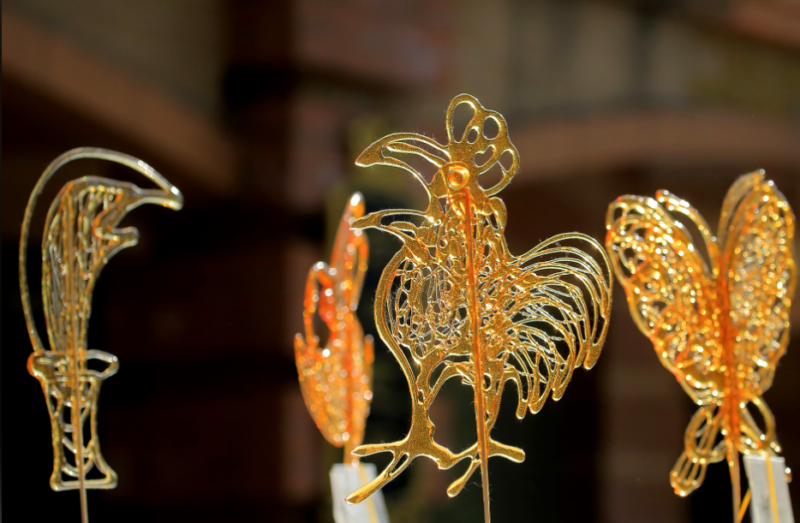





Amidst the bustle of old Beijing’s temple fairs, sugar painting stands out as an intangible heritage treasure, carrying children’s laughter and folk heritage with its unique charm of “a spoonful of syrup, a wrist’s strength, and a freehand painting”. Known as “edible art”, this craft uses a copper ladle as a brush and melted sugar as ink, improvising on a smooth marble slab to turn hot syrup into birds, beasts, and mythical figures in an instant. It exudes the sweet aroma of maltose while embodying the essence of traditional Chinese freehand art. For foreign travelers, exploring Beijing sugar painting is a sweet journey to immerse themselves in Oriental aesthetics and Beijing-style urban customs.
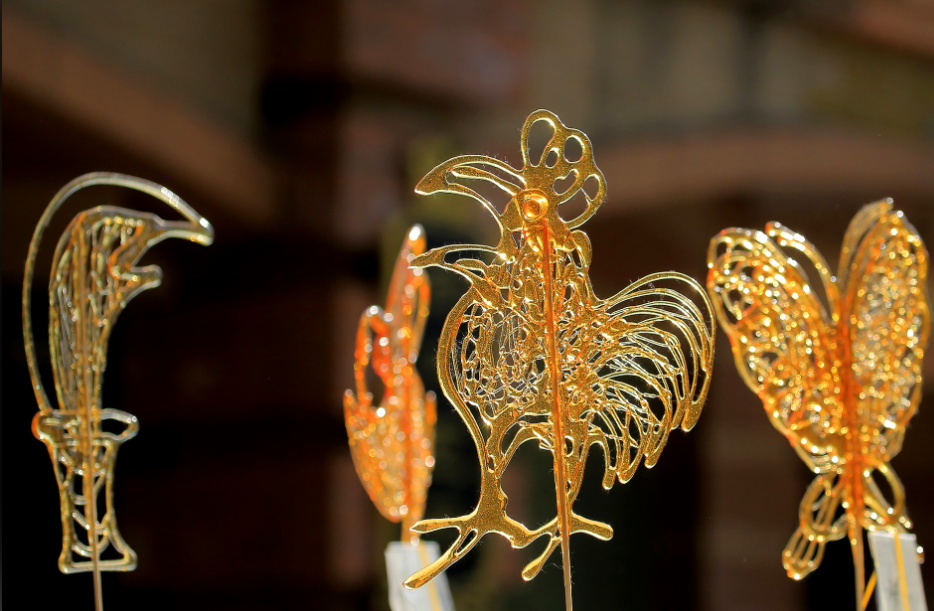
The inheritance of Beijing sugar painting is deeply rooted in folk soil since the Ming and Qing dynasties, with a history of hundreds of years. Originating from folk sugar-making crafts, it spread to the capital during the Ming and Qing dynasties and quickly became popular at temple fairs and markets for its “on-the-spot creation, edible and ornamental” features. From the Qing Dynasty to the Republic of China, sugar painting reached its peak. Craftsmen set up stalls in lively places such as Changdian and Longfusi, with a square table, a marble slab, a copper ladle, and a copper pot for boiling syrup as their only tools. Children stood on tiptoes in anticipation, watching the syrup flow into interesting shapes under the craftsman’s wrist, and the sweet aroma mingled with laughter, forming the most vivid festive memory of old Beijing. In 2008, sugar painting, along with sugar blowing, was included in the second batch of national intangible cultural heritage lists, becoming a protected cultural treasure that continues the sweet inheritance of thousand-year-old sugar art.
The unique charm of Beijing sugar painting lies in its freehand craftsmanship of “no draft, shaping with lines”. The entire process is completed by hand, testing the craftsman’s precise control of temperature, strength, and aesthetics, fully reflecting the Oriental artistic charm of “between similarity and dissimilarity”. The core procedures include three links: boiling syrup, shaping, and setting, with ingenuity hidden in each step. Boiling syrup is the foundation: white sugar and a small amount of maltose are mixed in proportion, added with water, and slowly boiled on low heat until the syrup turns golden and transparent, capable of pulling out thin and tough sugar threads. Overheating makes the syrup bitter and blackened, while insufficient heating results in soft and weak lines. Craftsmen can judge whether it is up to standard only by observing the color and flow rate of the syrup with the naked eye, a skill honed over decades.
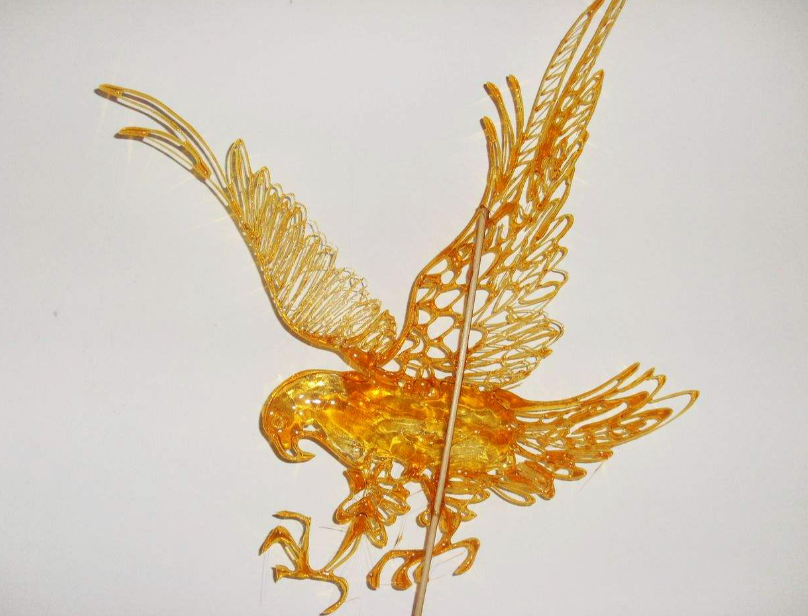
Shaping is the soul of sugar painting and the most ornamental part. Holding a copper ladle, the craftsman scoops up hot syrup and quickly moves his wrist to sketch on the cool marble slab, with all patterns stored in his mind without a draft. The handling of the ladle requires a delicate balance of force and speed: light wrist force produces thin sugar threads like brush strokes, while heavy force creates thick and full lines. Alternating speed and strength outlines the contours and textures of objects—such as fish scales and dragon beards—all presented with smooth lines. The classic Twelve Chinese Zodiac shapes can be completed in just tens of seconds. As soon as the syrup falls on the slab, it begins to solidify. The craftsman quickly inserts a bamboo stick to fix it before it fully sets, then gently lifts the painting with a small spatula, and a crystal-clear sugar painting is in hand, combining artistry and edibility. Some skilled craftsmen can also create three-dimensional sugar paintings, drawing parts separately to cool, then splicing them with hot syrup, which is more complex in craftsmanship.
Sugar painting is not only a combination of craftsmanship and taste but also hides the folk meanings and cultural codes of old Beijing. Classic shapes are mostly taken from auspicious symbols, mythological stories, and traditional patterns, each carrying people’s wishes for a better life: goldfish symbolize “surplus year after year” and are the most popular style at temple fairs due to moderate material use and auspicious meaning; dragons represent “prosperity and good luck”, phoenixes stand for “wealth and health”, and the Twelve Chinese Zodiac correspond to solar terms, embodying expectations for the new year. In traditional customs, when elders buy sugar paintings for children, they not only give a sweet snack but also convey wishes for “wisdom, agility, peace, and smoothness”. A straw bundle tied to the table leg is filled with various sugar paintings for customers to choose freely. This urban fireworks make sugar painting more than an artwork, becoming an important carrier of folk rituals.
Today, Beijing sugar painting is revitalized through persistence and innovation, with old craftsmanship colliding with the new era to sPark unique charm. traditional craftsmen still stand firm at temple fair stalls, attracting tourists with their improvisational stunts and continuing the “oral and heart-to-heart” inheritance model. Meanwhile, the craft is constantly breaking through: sugar painting robots in Haidian District use high-tech robotic arms and 3D printing technology to replicate sugar painting skills, integrating ancient intangible heritage with technological innovation and attracting young people’s attention. Intangible heritage experience venues such as Shijia Hutong Museum in Dongcheng District also include sugar painting in folk activities, offering interactive experience sessions where visitors can try to sketch with a ladle under the guidance of craftsmen and make simple sugar paintings by hand, feeling the sweet craftsmanship at their fingertips.
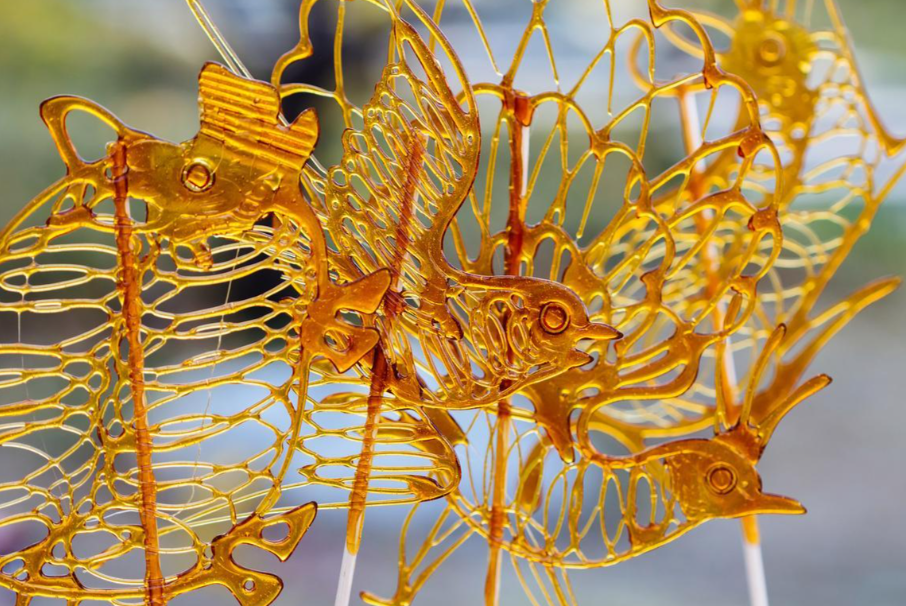
To experience the Beijing-style charm of sugar painting immersively, top venues are not to be missed. Changdian Temple Fair is the first choice to experience sugar painting Culture. Every Spring Festival, the sugar painting stalls in the intangible heritage folk street are crowded. Craftsmen demonstrate the stunt of “using a ladle as a brush and syrup as ink” on site. Visitors can customize exclusive sugar paintings by specifying shapes and taste the sweet folk flavor. In intangible heritage cultural and creative stores on Qianmen Street and Nanluoguxiang, there are craftsmen resident performing, allowing visitors to watch the craft up close and buy finished sugar paintings as souvenirs. Shijia Hutong Museum in Dongcheng District regularly holds folk experience activities, where you can book sugar painting courses; some science and technology venues in Haidian District also display sugar painting robot performances, showing the integration of tradition and technology. In addition, Beijing Folk Custom Museum displays traditional sugar painting tools and restored classic shapes, enabling a systematic understanding of the craft’s evolution.
From sugar painting stalls in Ming-Qing markets to contemporary intangible heritage exhibition halls, from improvisational creation by craftsmen’s wrists to precise replication by robotic arms, Beijing sugar painting carries not only a sugar art craft but also Oriental freehand aesthetics and Beijing-style folk memories. Each wisp of sugar thread hides the sweetness of time, each stroke reflects the craftsman’s persistence, and each work conveys cultural warmth across time and space. When you take a crystal sugar painting and taste its mellow sweetness, you can understand Beijingers’ love for life and feel the Oriental ingenuity and urban heritage hidden between the syrup and the marble slab.

暂无评论内容