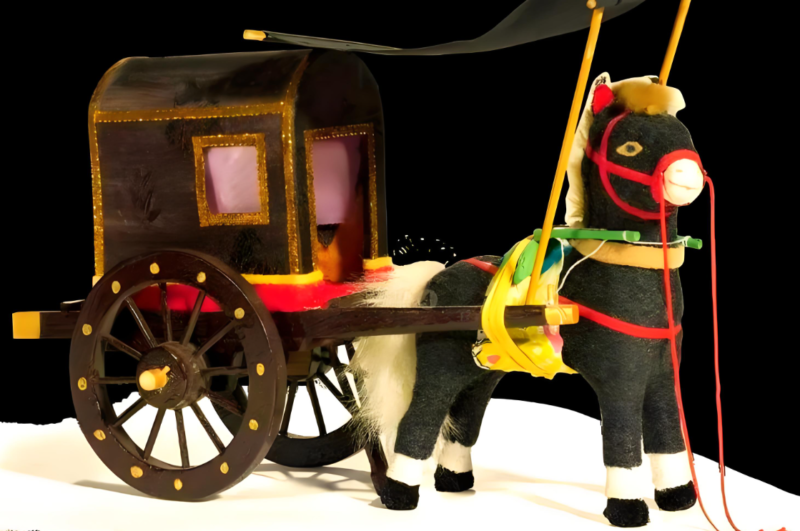





Among the folk toys of old Beijing, Rongbu Tang (flannel Tang toys) stands out as an intangible heritage treasure, carrying the childhood memories of generations with its unique charm of “flannel shaping and implied blessings”. Known as the “living fossil of modern Beijing folk toys”, this craft uses clay, paper helmets and flannel as raw materials, creating golden horse figurines, Rabbit God, carriage toys and other works through multiple ancient processes. It not only conveys pure childhood fun in temple fair streets but also precipitates the fireworks of Beijing-style urban life in inheritance. For foreign travelers, exploring Rongbu Tang is an excellent way to immerse themselves in old Beijing’s folk customs and the craftsmanship of “expressing emotions through objects and passing on fun through art”.
The inheritance of Beijing Rongbu Tang dates back more than 300 years. Originating from the life of northern nomadic peoples, it entered Beijing with the army and took root in the market, gradually developing into a unique folk craft. Old Beijingers used to call such folk toys “playthings”, and Rongbu Tang is one of the most representative categories. From the Qing Dynasty to the Republic of China, Rongbu Tang reached its peak, spreading widely relying on temple fairs. Craftsmen mostly operated in a family inheritance mode: female family members were responsible for hand-making, while males pushed “carts” to sell them in temple fairs and streets. They would also “stock up” products according to festivals—selling lanterns in the first lunar month and Rabbit God during the Mid-Autumn Festival, becoming a vivid symbol of old Beijing’s festival Culture.
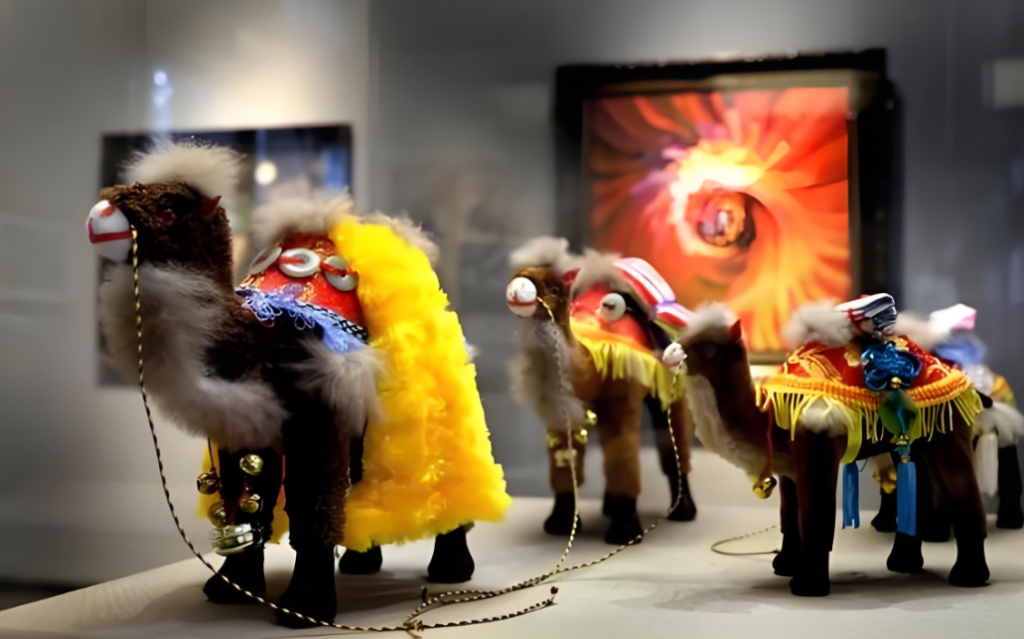
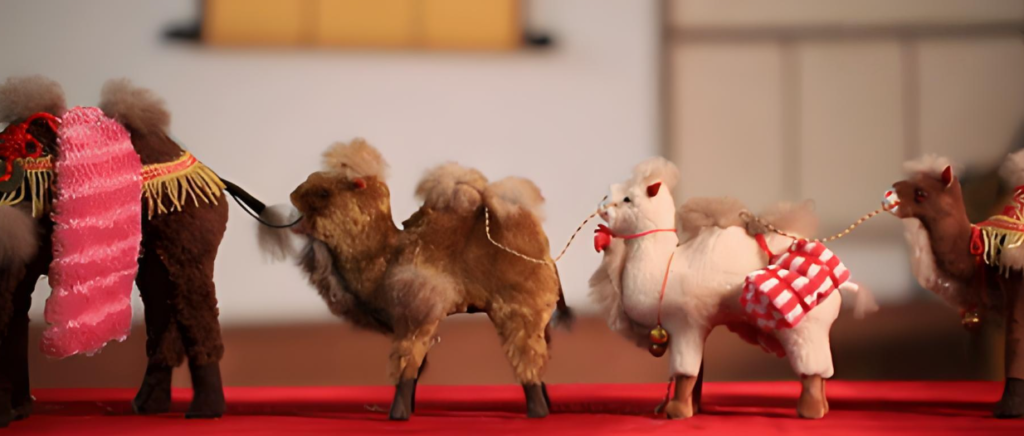
Rongbu Tang has a clear family inheritance line. Tang Qiliang, the fourth-generation inheritor, traveled around major Beijing temple fairs to set up stalls in the 1940s. His stalls featured not only ancestral flannel animal toys but also paper helmet carriages, clay roly-polies, etc., with a wide variety and great popularity. Today, this craft is inherited and carried forward by Wang Gang, the sixth-generation representative inheritor. His studio is just like an old Beijing toy world, with flannel carriages, Silk Road camels, lucky mice and other works in full range, retaining the essence of ancient methods while adapting to contemporary aesthetics, revitalizing the century-old craft in the new era. In 2009, Rongbu Tang was included in the Beijing municipal intangible heritage list, receiving official protection and promotion, and becoming an important link connecting old Beijing memories with contemporary cultural tourism.
The unique charm of Rongbu Tang lies in its “complex processes and simple vividness”. The entire craft is completed by hand, testing the craftsman’s precise control of raw materials, shape and details. Although classified as “playthings”, its production has strict requirements. The core processes include three links: mold making, paper helmet pasting and flannel decoration, each requiring patience and care. Mold making is the foundation: moderate viscosity clay is used to shape the toy prototype, which is air-dried and set as the base mold to ensure regular and symmetrical shape. Paper helmet pasting is the key: paper is pasted on the mold layer by layer, 10 to dozens of layers depending on the work size. Each layer must be evenly applied and naturally air-dried. After the paper helmet is formed, the clay mold is taken out to form a hollow toy skeleton, which is both light and firm.
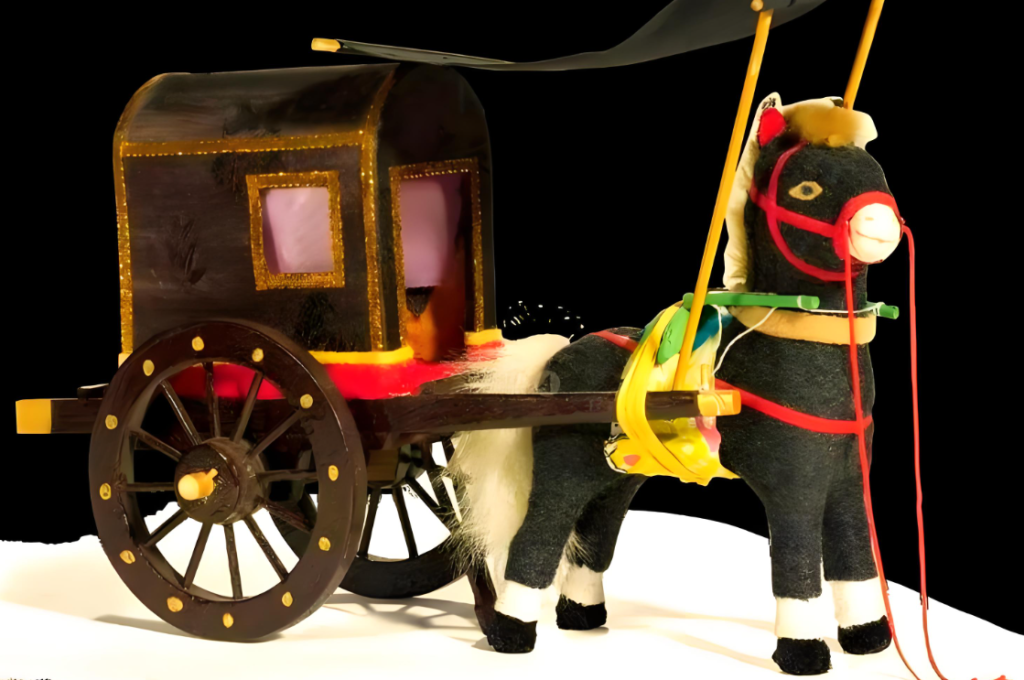
The flannel decoration link endows the work with soul. Craftsmen cut bright colored flannel into corresponding shapes, carefully paste them on the paper helmet skeleton, then outline facial features and patterns with colored pens, and add tassels and accessories to complete a Rongbu Tang work. The craft emphasizes “spirit over form”. Coloring does not require complex techniques, but focuses on the festive sense of color matching, mainly using bright colors such as red, yellow and green to fit the festival atmosphere. For example, the classic golden horse figurine is wrapped in golden flannel with simple lines, symbolizing “rolling wealth”, which is not only a toy for children but also an auspicious gift from elders. The flannel carriage focuses on structural restoration, with movable wheels and liftable curtains, vivid and interesting, showing the craftsman’s ingenuity.
Rongbu Tang is not only a handcrafted toy but also a “living carrier” of old Beijing’s folk meanings and cultural connotations, with profound folk codes and good wishes hidden in each work. As a iconic work, Rabbit God has different meanings with different mounts: tiger mount homophones “blessing”, deer mount symbolizes “official fortune” and longevity, kylin mount wishes family prosperity, and white elephant mount implies “all auspiciousness”. Every Mid-Autumn Festival, every family invites Rabbit God home to pray for the health and safety of family members. The roly-poly carries the meaning of encouraging people to adhere to their original aspirations and guard against conceit and impetuosity, derived from the legend of Bian He offering jade in the Spring and Autumn Period. Its shape of “light on top and heavy on bottom, standing firm” is not only a clever application of physical principles but also contains profound philosophical connotations. Shapes such as golden horse figurine and lucky mouse also correspond to good wishes of attracting wealth and blessings, becoming ideal festival gifts.
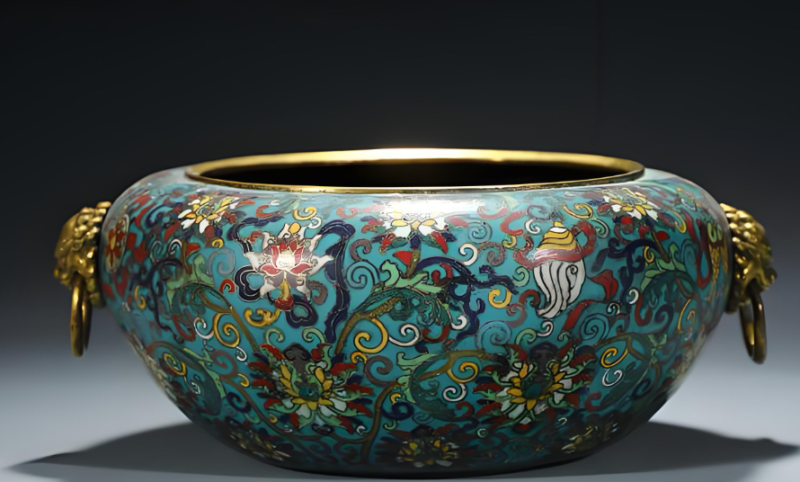
Today, Rongbu Tang expands its communication boundaries through persistence and innovation, retaining traditional charm while integrating into contemporary cultural tourism scenes. Every year, the cloisonné Royal Art Temple Fair opening on the second day of the first lunar month showcases Rongbu Tang craftsmanship. Classic works such as golden horse figurines, flannel carriages and assembled toys are displayed, and craftsmen demonstrate mold making, flannel pasting and other processes on site, allowing visitors to experience the charm of the craft up close. Wang Gang’s Studio, as a core inheritance base, is open to the public for visits and experiences. Visitors can try making simple Rongbu Tang works under the guidance of craftsmen, creating exclusive Beijing-style toys by hand. In addition, Beijing Folk Custom Museum displays rare and restored Rongbu Tang works from past dynasties, systematically showing the evolution of the craft and its connection with folk customs.
To experience the Beijing-style charm of Rongbu Tang immersively, top venues are not to be missed. The cloisonné Royal Art Temple Fair (inside Beijing Enamel Factory) is the first choice for Spring Festival experience, opening on January 26 (the second day of the first lunar month) every year. Rongbu Tang stalls appear alongside cloisonné, inside-painted snuff bottles and other intangible heritage crafts, and visitors can buy classic works as souvenirs. Wang Gang’s Studio requires advance reservation by phone, with a single experience lasting about 1.5 hours, allowing in-depth understanding of family inheritance stories and complete craft steps. Rongbu Tang works are also sold in intangible heritage cultural and creative stores on Qianmen Street and Nanluoguxiang. Although there is no on-site production experience, visitors can conveniently feel this old Beijing childhood fun. Beijing Folk Custom Museum is suitable for systematically understanding the history of the craft and reading the folk Culture behind Rongbu Tang.
From the daily utensils of nomadic peoples to the “playthings” of Beijing temple fairs, from family-inherited handcraft to municipal intangible heritage treasure, Rongbu Tang carries not only a toy-making craft but also the folk memories and humanistic warmth of old Beijing. Each layer of paper helmet hides the weight of time, each piece of flannel reflects the craftsman’s persistence, and each work conveys timeless childhood fun and blessings. When you hold a small and vivid Rongbu Tang toy, you can understand Beijingers’ love for life and feel the Beijing-style heritage and Oriental ingenuity hidden between flannel and paper helmets.





暂无评论内容