




In the folk memories of old Beijing, Ha’s Kite stands as a benchmark of Beijing kite schools with its unique features of vivid shape, exquisite painting, and stable flying performance. This intangible heritage craft, carrying a 300-year family inheritance, has integrated the four core techniques of “framing, papering, painting, and flying” through generations of refinement by the Ha family. It not only shines brightly in the clear sky above temple fairs but also precipitates Beijing-style aesthetics and craftsmanship spirit in bamboo, paper, ink, and brush. For foreign travelers, exploring Ha’s Kite is an excellent way to immerse themselves in Oriental kite art and the power of family inheritance.
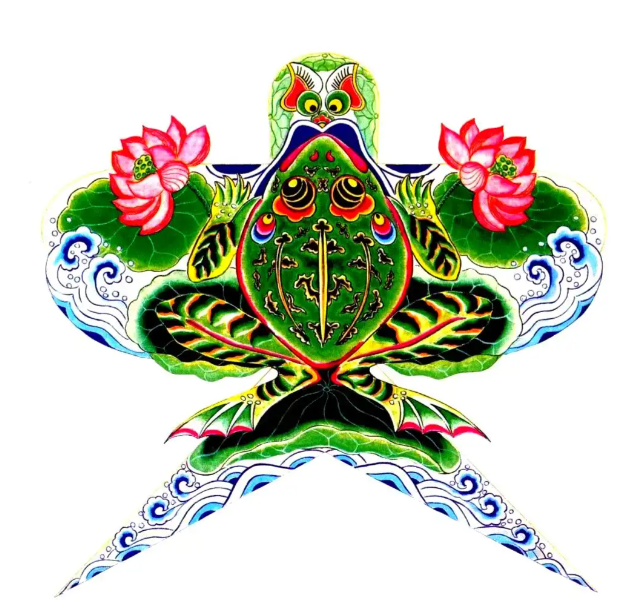
The inheritance of Ha’s Kite has a clear and long lineage, dating back to the Qianlong period of the Qing Dynasty, and has been passed down for ten generations, known as the “Kite Family”. The first-generation inheritor Ha Guoliang initially made a living by making kites. With superb craftsmanship, he gained fame at Beijing temple fairs. His works were deeply loved by the people for their regular shape and excellent flying performance. From the Qing Dynasty to the Republic of China, Ha’s Kite reached its peak. Ha Changying, the third-generation inheritor, further innovated the craft, integrating the grandeur of imperial kites with the agility of folk kites, establishing the style of Ha’s Kite featuring “shape, color, sound, and charm”. Classic styles such as Swallow Kite and Dragon-Eye Kite became handed-down works.
In 2006, as a core branch of Beijing kites, Ha’s Kite was included in the first batch of national intangible cultural heritage lists along with “kite making craftsmanship”. Ha Yiqi, the contemporary representative inheritor, has carried forward the craft, adhering to ancient methods while innovating communication ways, revitalizing the century-old kite art. The unique charm of Ha’s Kite stems from its “four-in-one and excellence-pursuing” technical system. Each step of “framing, papering, painting, and flying” has strict requirements, requiring thousands of times of practice to master.
“Framing” is the foundation of the kite’s skeleton. It selects annual moso bamboo, which is shaped through processes such as roasting, bending, cutting, and binding. The bamboo must be uniform in thickness and sufficient in toughness, and the skeleton structure strictly follows proportions. For example, the ratio of the wings to the body of the Swallow Kite is precise, ensuring uniform force and stable flying. The framing technique of Ha’s Kite is unparalleled. The skeleton is bound using ancient “one button, one knot” methods without needles or threads. Only through the ingenious fixation of bamboo strips and cotton thread can the skeleton be tough and non-deformable, a skill that takes years to master.
“Papering” is the key to forming the kite. It uses thin and translucent Gaoli paper or rice paper. Papering requires “flatness without wrinkles and moderate tightness”. First, the paper is cut into corresponding shapes, evenly coated with rice paste, pasted on the skeleton piece by piece, pressed firmly at the edges, air-dried, and adjusted repeatedly to ensure the paper is closely attached to the skeleton, without affecting the shape and resisting wind force. “Painting” is the soul of the kite. The painting of Ha’s Kite integrates meticulous and freehand techniques, with smooth lines and harmonious bright colors, focusing on both the auspicious meaning of patterns and overall beauty.
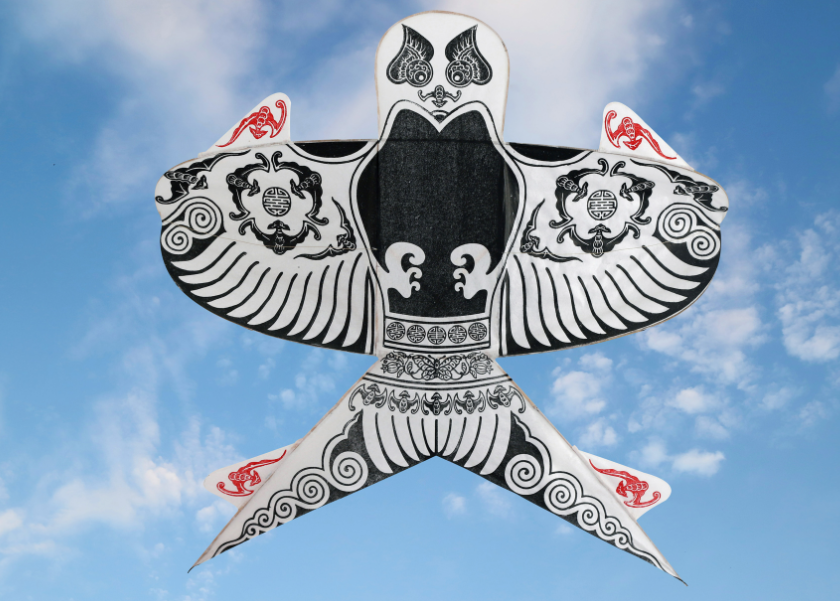
The abdomen of the Swallow Kite is painted with symmetrical patterns, the eyes are vivid, the patterns on the wings and tail are scattered in an orderly manner, and the matching of red, yellow, green and other colors is festive and bright, with both visual impact and cultural connotation. “Flying” is the final presentation of the craft. Ha’s Kite has high requirements for flying skills, requiring adjusting the spool and line-releasing speed according to wind force and direction. It can rise smoothly even in light wind, fly stably, and make flexible movements such as circling and gliding. The “Eagle Kite” inherited by Ha Yiqi has taken flying skills to the extreme. With a realistic shape, it can simulate the circling and diving posture of an eagle when flying, as if a real eagle is soaring in the sky, becoming one of the iconic skills of Ha’s Kite.
Among the classic shapes of Ha’s Kite, the Swallow Kite is the most representative, carrying profound folk meanings and cultural connotations. Swallow Kites are divided into “Fat Swallow”, “Thin Swallow”, “Little Swallow” and other categories, corresponding to different auspicious meanings: Fat Swallow symbolizes family harmony, happiness and health, often used as a festival gift; Thin Swallow represents lightness and progress, deeply loved by students; Little Swallow implies more children and family prosperity, a good wish from elders to younger generations.
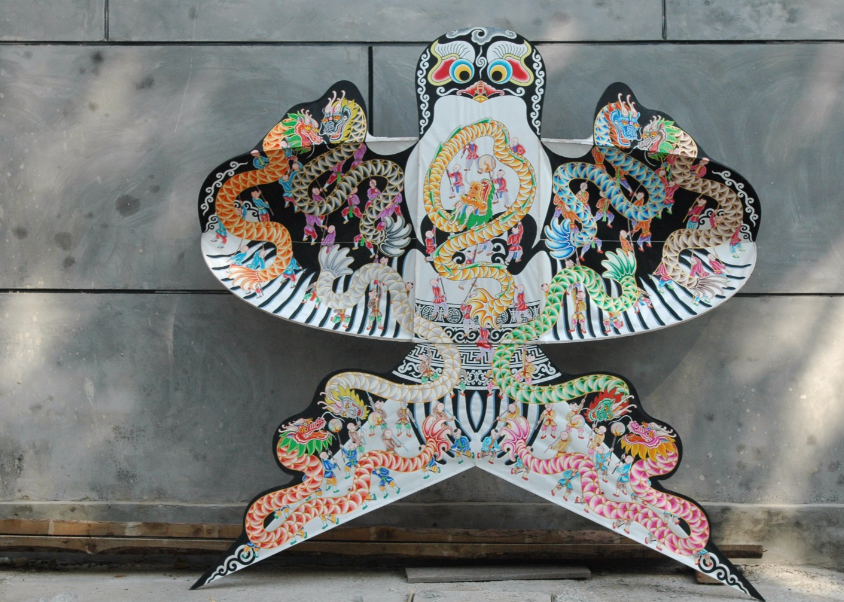
The patterns on the kite wings also hide codes: peony symbolizes wealth, lotus represents purity, bat homophones “blessing”, and peach symbolizes longevity. Every pattern embodies the Chinese yearning for a better life. In addition, styles such as Dragon-Eye Kite and Butterfly Kite correspond to the meanings of good luck and pairing, becoming the most sought-after intangible heritage items at temple fairs.
Today, Ha’s Kite expands its boundaries through inheritance and innovation. Ha Yiqi’s Kite Studio, as a core inheritance base, not only retains ancient techniques but also launches customized kite making experiences, allowing visitors to personally feel the fun of “framing, papering, painting, and flying”. During the Changdian Temple Fair and Longtan Temple Fair every year, Ha’s Kite makes a wonderful appearance. Inheritors demonstrate skills on site and display various classic works. Visitors can buy finished kites or book in-depth experiences to make simple Swallow Kites under the guidance of craftsmen. At the same time, Ha’s Kite has gone abroad many times, showing the charm of Oriental kites in international cultural exchange activities, becoming an important carrier of Sino-foreign cultural exchanges.
To experience the charm of Ha’s Kite immersively, top venues are not to be missed. Ha Yiqi’s Kite Studio (Chaoyangmennei Street, Dongcheng District) requires advance booking via WeChat 1-2 days in advance, with a single experience lasting about 2 hours. Visitors can deeply understand family inheritance stories, complete the painting and assembly of Swallow Kite under the guidance of craftsmen, and take away exclusive intangible heritage works. During the Changdian Temple Fair, the Ha’s Kite stall is located in the core area of the intangible heritage folk street. Inheritors demonstrate framing techniques on site, allowing visitors to watch the whole production process of Swallow Kite up close and buy limited-edition handcrafted kites. In addition, Beijing Folk Custom Museum and National Art Museum of China often hold special exhibitions of Ha’s Kite, displaying rare works of past dynasties and contemporary innovative works, systematically showing the evolution of the craft.
From temple stalls in the Qing Dynasty to contemporary intangible heritage exhibition halls, from family-inherited handcraft to national intangible heritage treasure, Ha’s Kite carries not only the four core techniques of “framing, papering, painting, and flying” but also the folk memories of old Beijing and Oriental aesthetics. Each bamboo strip hides the weight of time, each painting reflects the craftsman’s persistence, and each takeoff conveys joy across time and space. When you hold the spool and watch the Ha’s Kite soar in the clear sky, you can understand the Chinese pursuit of freedom and beauty, and feel the century-old craftsmanship and Beijing-style charm hidden in the kite.



暂无评论内容