




In the festival memories of old Beijing, palace lanterns stand out as intangible heritage treasures, carrying royal elegance and folk warmth with their magnificent charm of “mortise and tenon as bones, paintings as soul”. This traditional craft integrating Woodworking, carving, painting and weaving was once exclusive to the imperial court, later spreading to the people as a festival symbol, illuminating thousands of years of elegance among red walls and gray tiles. For foreign travelers, exploring Beijing Palace Lanterns is an excellent way to immerse themselves in Oriental royal aesthetics and craftsmen’s ultimate ingenuity, understanding the Chinese sense of ritual and cultural codes hidden in the exquisite lanterns.
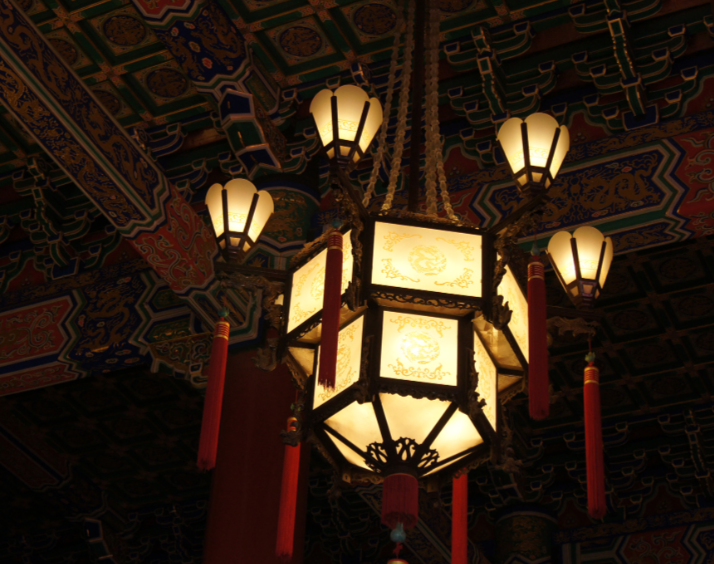
The inheritance of Beijing palace lanterns has a long and profound lineage, dating back thousands of years, while the “Beijing-style palace lantern” style was officially established during the Yongle period of the Ming Dynasty. At that time, the emperor moved the capital to Beijing and recruited skilled craftsmen from across the country to make various palace lanterns in the palace for display and festival decoration. Precious woods such as mahogany and red sandalwood were used, and techniques like carving and gold stamping were integrated, showing royal dignity and luxury. Thus, “Beijing Palace Lanterns” got their name and spread. The Qing Dynasty was the golden age of palace lanterns, with increasingly rich styles. Classic styles such as hexagonal double-layer lanterns and round lanterns took shape, not only becoming standard in the imperial court but also spreading to the people along with royal rituals, widely used in temple fairs, weddings and other occasions.
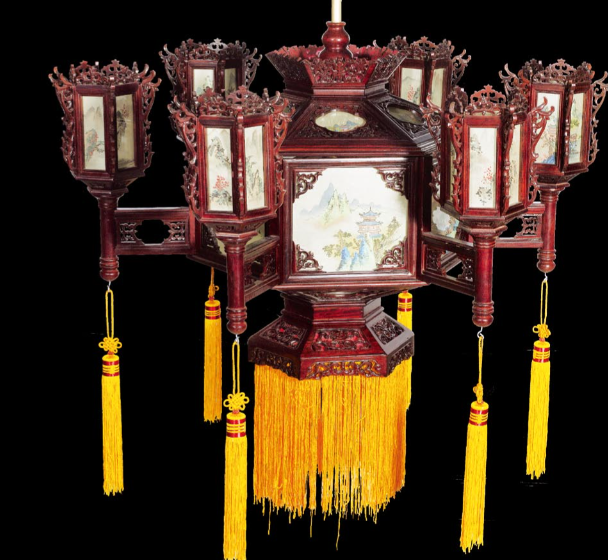
In 2008, the production technique of Beijing palace lanterns was included in the second batch of national intangible cultural heritage lists. Today, inheritors represented by Zhai Yuliang and Guo Yanqing adhere to ancient methods, revitalizing this royal craft in the contemporary era. The unique charm of Beijing Palace Lanterns lies in its “nail-free mortise and tenon, exquisite craftsmanship” system. Each lantern undergoes dozens of pure manual processes, testing the craftsman’s precise control of wood, structure and aesthetics, among which the hexagonal double-layer lantern best reflects the essence of the craft.
Material selection is the foundation. traditional imperial palace lanterns mostly use precious woods with hard texture and beautiful grain, such as mahogany and padauk, while ordinary lanterns use high-quality wood like colored wood to ensure the skeleton is tough, durable and not easy to deform. For giant palace lanterns in front of Tiananmen Rostrum, bamboo strips with excellent toughness are used to make the skeleton. A lantern with a diameter of 2 meters requires about 40 bamboo strips, which are split, fixed and precisely shaped to pursue a perfect “apple round” arc.
Mortise and tenon joints are the soul of Beijing Palace Lanterns. No nails are used between the lamp frame and fans; they are fixed by mortise and tenon joints, ensuring structural stability while realizing flexible opening and closing for easy carrying and storage. Take the hexagonal lantern with symmetrical upper and lower layers as an example: the upper layer is wide and flat as the lamp cap, and the lower layer is thin and long as the lamp body. The six fans of each layer need to be accurately connected, and the tightness of the mortise and tenon joints must be repeatedly adjusted—even a slight deviation will affect the overall beauty and stability. After the skeleton is formed, it needs to be decorated through processes such as sawing, carving, engraving and hollowing. The edges of the lamp frame are carved with dragon heads, auspicious clouds and other patterns, and the hollowed parts are smooth and exquisite, showing the craftsman’s ingenuity. This “sawing work” is completed by hand, which is difficult to master without the guidance of senior craftsmen.
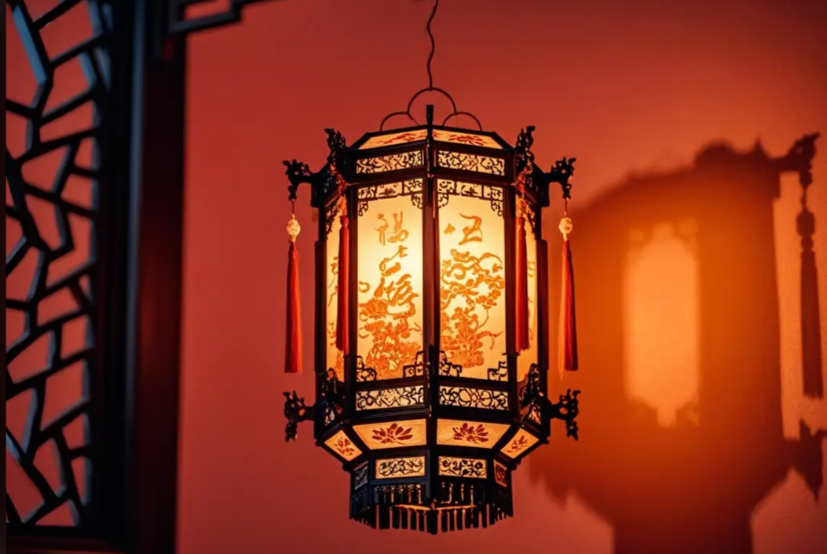
The painting and assembly links inject soul into the lanterns. Each fan of the hexagonal lantern is inlaid with a frosted Glass Painting screen, hand-painted by artists with three themes: landscapes, flowers and birds, and figures. The lines are delicate and the colors are elegant. Some are also supplemented with gold stamping and Embroidery techniques to make the pictures more luxurious. Ordinary paper-pasted palace lanterns use gold-flecked rice paper or silk-like paper, which can be decorated through calligraphy, Paper Cutting, hollowing and other techniques. When the light shines through the hollowed characters or patterns, the atmosphere is full. Finally, golden auspicious cloud patterns are pasted around the lamp base, tassels are hung at the bottom, and the light source is installed to complete a full palace lantern. Complex styles require the cooperation of multiple people and take two to three months to form. A little carelessness will lead to wood scrapping.
Every style and pattern of Beijing Palace Lanterns hides profound cultural meanings, carrying the Chinese yearning for a better life. Round palace lanterns symbolize “reunion and perfection”, making them the first choice for every family to hang during the Spring Festival. Hexagonal palace lanterns, with their regular structure and auspicious meanings, represent “great fortune and prosperity”, often used in important occasions such as weddings and celebrations. The auspicious cloud patterns on the lamp fans mean “good luck”, peonies symbolize “wealth and glory”, and landscape patterns embody the elegant feeling of “loving mountains and rivers”. The giant red lanterns in front of Tiananmen Rostrum have become a symbol of national festivals. Eight lanterns with a diameter of 2.7 meters require seven artists to work for half a month, each condensing the craftsmen’s hard work and family feelings.
Today, Beijing Palace Lanterns continue to thrive through persistence and innovation. As the inheritance carrier of “Wenshengzhai”, Beijing Art Red Lantern Factory not only retains ancient production techniques but also undertakes the customization and maintenance of Tiananmen lanterns, opening to the public for visits and experiences, allowing visitors to closely observe the reproduction process of Tiananmen lanterns and make simple paper-pasted palace lanterns, with a single experience lasting about 1.5 hours. Inheritors are also innovating expressions, combining modern lighting technology with traditional craftsmanship to launch small cultural and creative palace lanterns suitable for home decoration and souvenirs. Some intangible heritage studios also offer experience courses, allowing visitors to make simple lanterns under guidance and personally feel the fun of mortise and tenon joints and painting. Every Spring Festival, various exquisite lanterns are lit in the palace lantern exhibition areas of Changdian Temple Fair and Ditan Temple Fair, becoming the most atmospheric festival landscape in the capital.
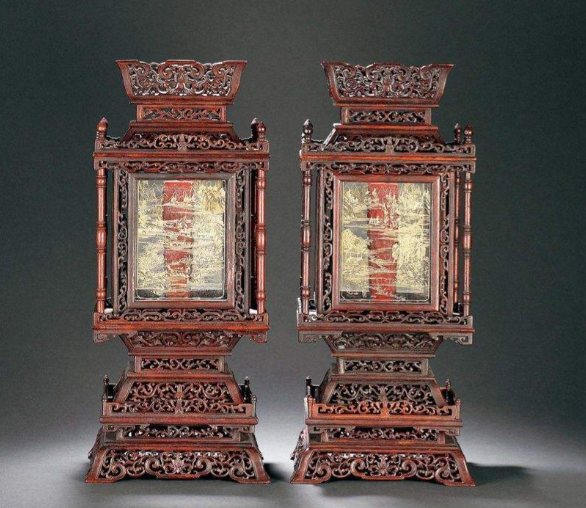
To experience the charm of Beijing Palace Lanterns immersively, top venues are not to be missed. Beijing Art Red Lantern Factory (Fengtai District) requires advance booking by phone 1 day in advance, where you can watch the reproduction of Tiananmen lanterns and experience making simple paper-pasted palace lanterns. During the Changdian Temple Fair, palace lantern stalls in the intangible heritage street display classic styles such as hexagonal lanterns and round lanterns. Inheritors demonstrate carving and painting techniques on site, and you can buy handcrafted palace lanterns as souvenirs. In addition, Beijing Folk Custom Museum and Palace Museum often hold special exhibitions of palace lanterns, displaying rare imperial palace lanterns from past dynasties, systematically showing the evolution of the craft and its connection with royal Culture, allowing visitors to deeply understand the historical heritage behind palace lanterns.
From exclusive furnishings in the Ming imperial court to contemporary intangible heritage treasures, from the precise engagement of mortise and tenon joints to the elegant flexibility of hand-painted patterns, Beijing Palace Lanterns carry not only a handcraft but also the integration of Oriental royal aesthetics and folk Culture. Each piece of wood hides the weight of time, each mortise and tenon joint reflects the craftsman’s persistence, and each exquisite lantern conveys festive warmth across time and space. When you light a Beijing Palace Lantern, you will understand the Chinese pursuit of ritual sense in the warm light and patterns, and feel the century-old craftsmanship and Beijing-style charm hidden in the lantern.




暂无评论内容