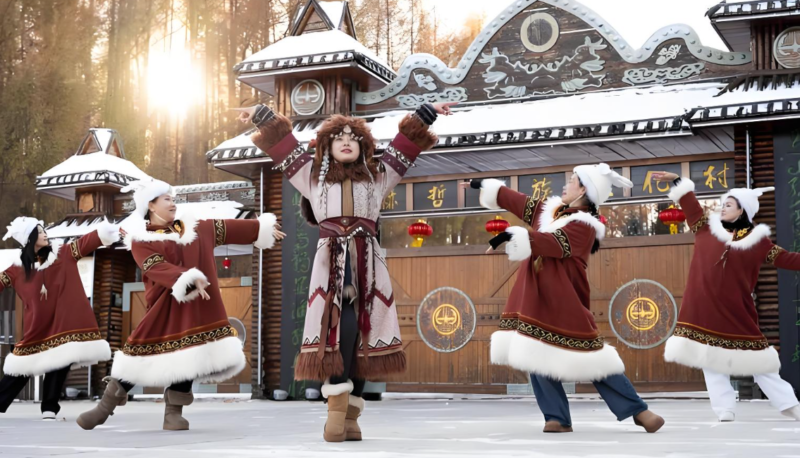





In the northeast ethnic exhibition area of Beijing’s National Community Experience Hall, a Hezhen fish-skin costume is on display. The specially tanned fish-skin glows with a warm luster, the fish-pattern Embroidery on the garment is vivid and lifelike, paired with a fur hat and fish bone accessories, embodying both the fresh breath of the Wusuli River and the Hezhen people’s reverence and love for hunting life. Famous for “taking fish skin as material and totem as soul”, Hezhen costumes are living fossils of costumes of northern Chinese hunting peoples. Passed down for thousands of years, they not only adapt to the cold hunting environment but also perfectly integrate intangible heritage craftsmanship with national beliefs. For foreign travelers, visiting Beijing’s characteristic venues and intangible heritage workshops and wearing Hezhen costumes offer an immersive experience of the collision between hunting civilization and the ancient capital’s Culture, understanding the ethnic codes behind the patterns.
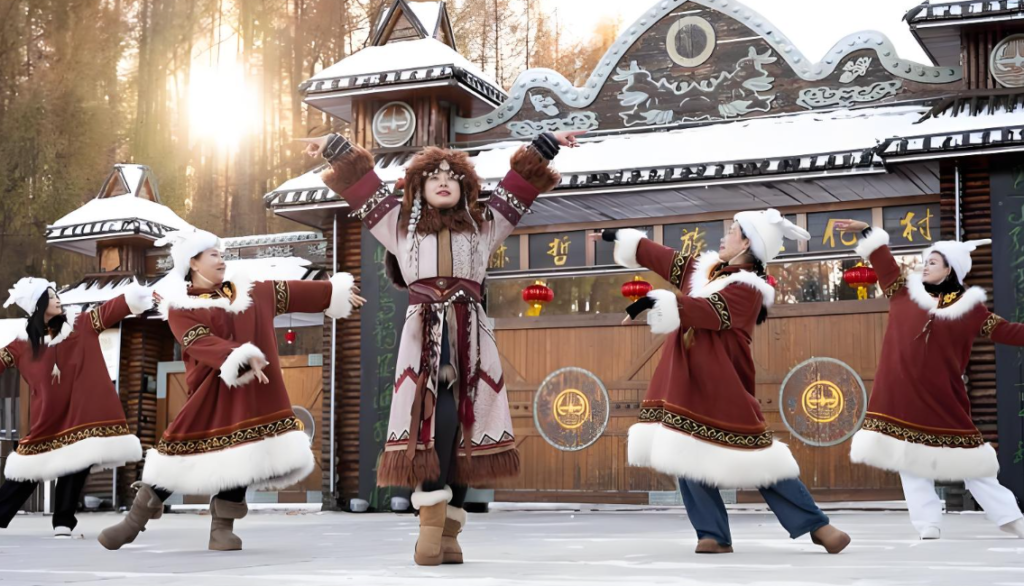
The soul of Hezhen costumes lies in the high adaptation of fish-skin craftsmanship and hunting styles. Men’s and women’s costumes are distinctly different but both focus on practicality, combining decorativeness and functionality. Women’s costumes are exquisite and flexible, centered on fish-skin long gowns and pleated skirts. The long gowns are made of tanned chum salmon skin, soft and tough, with deer skin lace and fish-pattern Embroidery inlaid on collars and cuffs. A fur belt is tied around the waist, hanging fish bone and shell accessories that jingle when walking. Unmarried girls’ long gowns are embroidered with simple small fish patterns on the hem, and their headdresses are small hats woven from deer skin, decorated with colored floss; married women’s costumes are more complex, with long gowns covered with river fish and water wave embroidery, and fur hats decorated with raccoon dog hair on their heads, which are both warm and show status.
Men’s costumes focus on wear resistance and convenience, mainly fish-skin short shirts and fur trousers, suitable for fishing and hunting scenes. The short shirts are made of thick carp skin, with a front-opening design for easy movement. The cuffs and hems are embroidered with rough fish patterns and geometric patterns for wear protection; the fur trousers are made of roe deer skin and deer skin, with tight cuffs, paired with fish-skin leg wraps to resist river wind and cold. During festivals, men wear fish-skin capes, large raccoon fur hats with fox fur on the brims, and hang fish fork models and fish bone waist pendants around their waists, showing the bold spirit of hunting peoples. In addition, Hezhen costumes have no branch differences, with unified core craftsmanship and styles, only slight differences in Embroidery patterns and accessory details, highlighting the integrity of national Culture.
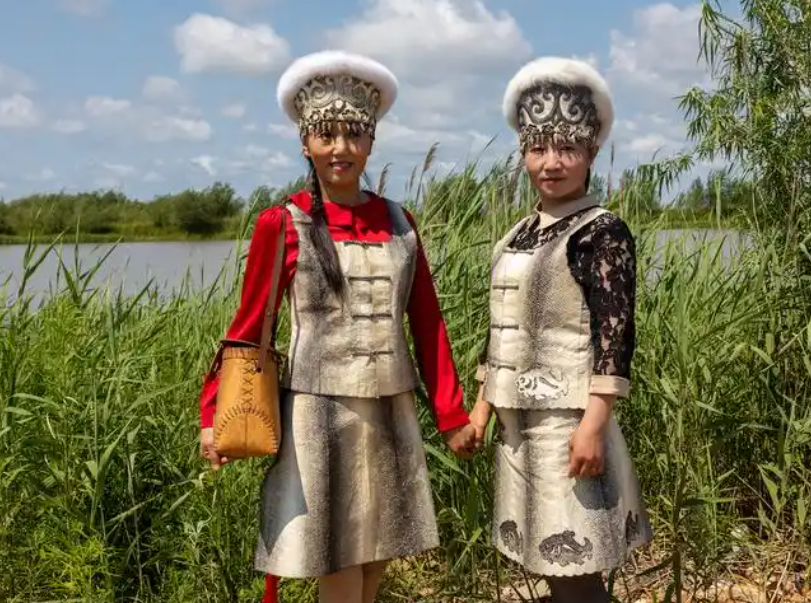
Fish-skin craftsmanship and totem patterns are the cultural core of Hezhen costumes, known as “hunting epics worn on the body”. Fish-skin processing requires more than ten manual processes such as material selection, tanning, drying and sewing. The Hezhen people use bone scrapers to remove fish scales and skin, and repeatedly tan with animal oil to make the fish-skin soft, tough and not easy to rot. This craftsmanship has been included in the national intangible cultural heritage. Patterns are all derived from hunting life: river fish patterns symbolize harvest and reproduction, water wave patterns represent the nourishment of the Wusuli River, deer and roe patterns convey gratitude for natural gifts, and geometric patterns come from production tools such as fishing nets and forks. Every pattern carries national memories. Colors are mainly natural fish-skin tones, paired with a small amount of natural fur colors, simple and elegant but full of texture.
As a core of multi-ethnic cultural integration, Beijing has many high-quality spots to experience Hezhen costumes. The National Community Experience Hall is the first choice, displaying complete physical Hezhen fish-skin costumes and fur hats, showing the process of fish-skin tanning and embroidery, and providing costume rental services. Combined with professional explanations, visitors can deeply understand the hunting Culture and intangible heritage inheritance behind the costumes. Beijing Hundred Workshops gather intangible heritage craftsmen; some workshops offer simple fish-skin embroidery and fish bone accessory making experiences, allowing visitors to feel the ingenuity of “using fish as material and needle as pen”. In addition, some ethnic cultural exhibitions invite Hezhen craftsmen to demonstrate fish-skin craftsmanship on site, allowing visitors to closely appreciate the charm of intangible heritage.
When personally experiencing Hezhen costumes, it is necessary to balance cultural etiquette and scenario adaptation. For daily check-ins, simple fish-skin short shirts with fur hats are recommended; for festival experiences, grand costumes with complete accessories can be chosen, with fish bone waist pendants for women and fur leg wraps for men. When wearing, fish-skin costumes should be handled with care to avoid scratches by sharp objects; embroidery patterns should not be pulled randomly to keep the costumes clean. Photo spots can be the hunting scene exhibition area of the experience hall and Olympic Forest Park, with fish fork models and fishing nets as props to freeze the hunting ethnic customs; if encountering intangible heritage performances, wearing costumes to participate will better feel the vivid vitality of traditional hunting culture.
Wearing Hezhen costumes requires following basic etiquette to show respect for national culture. As intangible heritage carriers, fish-skin costumes should not be folded or discarded at will, and should be stored in a well-ventilated and dry place; when interacting with others, do not touch their fur hats and fish bone accessories at will, which is a respect for their cultural beliefs. Complete costume sets should be chosen for major occasions, symbolizing reverence for rituals; matching can be flexible for daily experiences, but the shape and patterns of costumes should not be arbitrarily changed. In experience halls and workshops, follow the guidance of staff to understand the inheritance story of fish-skin craftsmanship and jointly protect intangible cultural heritage.
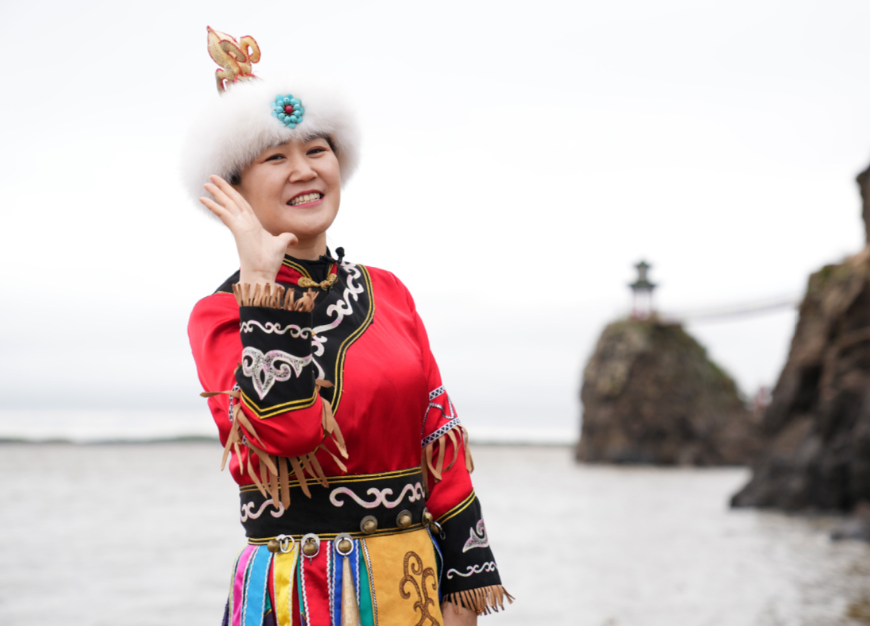
Beyond costume experience, visitors can deeply feel the close bond between Hezhen culture and costumes in Beijing. Some cultural venues regularly hold Hezhen costume shows, combined with hunting dance performances, to display the flexible posture of costumes in dynamics. Senior craftsmen in Beijing Hundred Workshops demonstrate fish-skin tanning techniques on site, allowing visitors to understand the complete process from fish selection, tanning to finished products. In addition, tasting Hezhen specialties such as raw fish and fish roe sauce while wearing fish-skin costumes allows for an immersive experience of the ethnic lifestyle where “living by fishing, clothing and food share the same origin”, fully feeling the unique charm of hunting culture.
traditional Hezhen costumes are not only a master collection of intangible heritage techniques but also a carrier of Hezhen people’s ethnic memories and spiritual beliefs. With fish-skin carrying thousands of years of hunting wisdom and totems recording national changes, they retain the pure characteristics of hunting peoples and bloom new vitality of intangible heritage culture in integration with Beijing’s ancient capital culture. When you walk in Beijing’s venues and streets wearing this fish-skin finery, touching the warm fish-skin and delicate embroidery threads with your fingers, you can understand the Hezhen cultural core of “expressing emotions through clothing and recording history through patterns”, adding profound hunting intangible heritage depth to your Beijing trip.








暂无评论内容