




In the ethnic costume exhibition area of Beijing’s National Community Experience Hall, a Miao hundred-bird coat is on display. The silver horn headdress shines brightly, and the Miao Embroidery patterns on the coat are vivid, embodying both the grace of Guizhou and Hunan’s landscapes and the Miao people’s reverence for ancestors and nature. Known as “history books worn on the body”, Miao costumes have been passed down through thousands of years of migration, famous for exquisite silver forging, Miao embroidery techniques and rich totem meanings. Costumes of different branches have unique characteristics, forming a splendid costume system. For foreign travelers, visiting Beijing’s characteristic venues and workshops and wearing Miao costumes offer an immersive experience of the collision between Miaoxiang civilization and the inclusive charm of the ancient capital, understanding the ethnic memories behind the patterns.
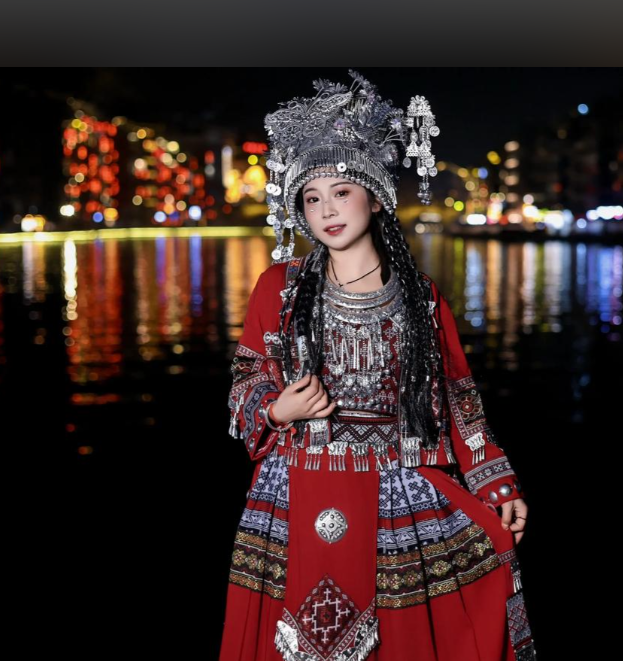
The soul of Miao costumes lies in the perfect integration of silver ornaments and Miao Embroidery. Men’s and women’s costumes are distinctly different but both carry profound Culture. Women’s costumes are the most gorgeous, consisting of silver ornaments, Miao embroidered tops and pleated skirts. Silver ornaments are a symbol of identity and faith. A complete set of silver ornaments includes silver horns, collars, chest locks, bracelets, etc., which need to go through more than 30 manual processes such as smelting, casting, forging and welding. Jianhe Miao silver ornaments are good at chain twisting and carving techniques, with hundreds of silver flowers welded without traces, showing exquisite craftsmanship. Pleated skirts are mostly made by batik or Miao embroidery, with dense pleats that sway gracefully when walking. The patterns on Anshun Miao pleated skirts also hide memories of hometown rivers. Unmarried girls wear simple and flexible silver ornaments, while married women wear more complex ones, highlighting family status.
Men’s costumes focus on practicality and simplicity, mainly blue or dark slanted-collar short shirts with Miao embroidered borders on cuffs and necklines, paired with wide-leg trousers and waistbands and leg wraps for mountain work. Men of some branches wear simple silver collars and bracelets, and change into grand costumes embroidered with geometric patterns for festivals. Although their silver ornaments are not as complex as women’s, they still exude solemnity. In addition, there are many Miao branches with distinct costume differences: the hundred-bird coat of Baibei Miao centers on feathers and bird patterns, showing bird totem worship; Taijiang Miao costumes have various Embroidery stitches, and one pattern tells an ethnic story; the silver horn headdress of Nayong Qing Miao costumes resembles ox horns, retaining ancient clan emblem marks.
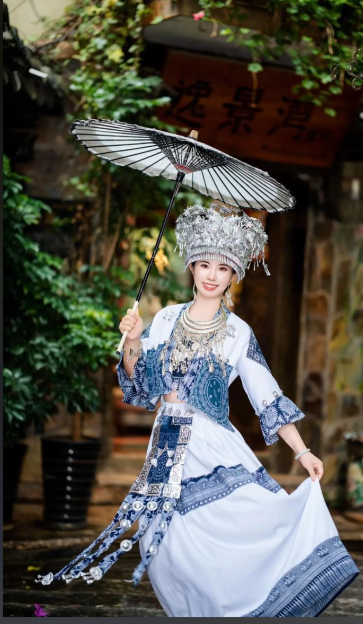
The patterns and colors of Miao costumes are a concentrated embodiment of ethnic history and nature worship, known as “wordless history books”. There are more than 20 kinds of Miao embroidery stitches, including flat embroidery, braid embroidery and coiled embroidery. Patterns are widely sourced: bird patterns symbolize respect for ancestors, geometric patterns hide migration routes, flower and grass patterns convey gratitude to nature, and the embroidery on Anshun Miao tops uses patterns to symbolize hometown rivers such as the Yellow River and Yangtze River. Color matching is bold and intense, with red, blue, green, white and other colors interweaving, derived from the characteristics of natural dyes and implying love for life. Silver ornaments are valued for their whiteness, symbolizing purity and sacredness, and their shapes mostly draw on animals and plants such as dragons, tigers, flowers and birds, perfectly combining natural spirit with handcraftsmanship.
As a core of multi-ethnic integration, Beijing has many high-quality spots to experience Miao costumes. The National Community Experience Hall is the first choice, displaying physical Miao costumes from different branches such as Taijiang and Baibei, showing the process of silver forging and Miao embroidery, and providing rental services for hundred-bird coats and silver horn headdresses. Combined with professional explanations, visitors can learn about the migration stories and totem meanings behind the costumes in detail. Beijing Hundred Workshops gather intangible cultural heritage craftsmen; some workshops offer simple Miao embroidery and silver ornament weaving experiences, allowing visitors to feel the ingenuity of “forging silver flowers through thousands of hammer blows”. In addition, some ethnic cultural shops provide customized services, which can integrate modern aesthetics according to preferences to create exclusive Miao costumes.
When personally experiencing Miao costumes, it is necessary to balance cultural etiquette and scenario adaptation. For daily check-ins, simple Miao embroidered tops with pleated skirts are recommended, paired with small silver collars and bracelets; for festival performances, grand hundred-bird coat sets with complete accessories can be chosen, wearing silver horn headdresses to show solemnity. When wearing, silver ornaments should be handled with care to avoid collision and damage; Miao embroidered costumes should be kept clean, and patterns should not be pulled randomly. Photo spots can be the Miaoxiang scene exhibition area of the experience hall and Beijing Hundred Workshops, with lusheng and silver combs as props to freeze the ethnic customs. If encountering Miao festival performances, wearing costumes to participate will better feel the vivid integration of Miao dances and costumes.
Wearing Miao costumes requires following basic etiquette to show respect for ethnic Culture. As important cultural carriers, silver ornaments should not be discarded or placed low randomly. When interacting with others, do not touch their silver ornaments and headdresses at will, which is a respect for their identity and faith. Complete silver ornament sets should be chosen for major occasions, symbolizing reverence for rituals; matching can be flexible for daily experiences, but the shape and patterns of costumes should not be arbitrarily changed. In experience halls and workshops, follow the guidance of staff to understand the cultural stories behind the patterns and jointly protect intangible cultural heritage inheritance.
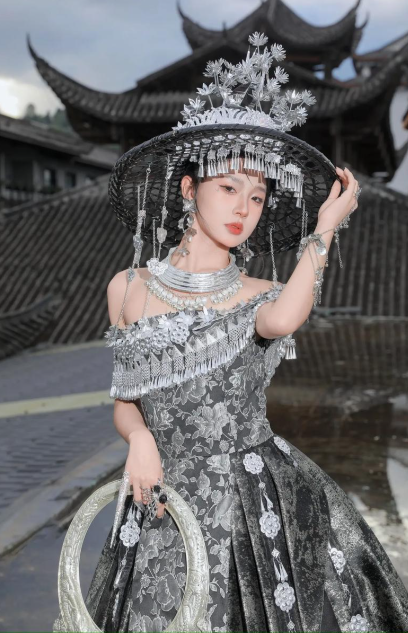
Beyond costume experience, visitors can deeply feel the close bond between Miao Culture and costumes in Beijing. Some cultural venues regularly hold Miao costume shows, combined with lusheng dance performances, to display the flexible posture of costumes in dances. Senior craftsmen in Beijing Hundred Workshops demonstrate silver forging and Miao embroidery techniques on site, allowing visitors to understand the complete process from silver materials and silk threads to finished products. In addition, tasting Miao delicacies such as sour fish soup and glutinous rice while wearing traditional costumes allows for an immersive experience of the Miaoxiang lifestyle where “clothing and food are of the same origin”, fully feeling the charm of intangible cultural heritage.
traditional Miao costumes are not only a master collection of intangible heritage techniques but also a carrier of Miao people’s ethnic memories and spiritual beliefs. With silver forging carrying thousands of years of ingenuity and Miao embroidery recording migration history, they retain the pure characteristics of Miaoxiang ethnic groups and bloom inclusive charm in integration with Beijing’s ancient capital culture. When you walk in Beijing’s venues and streets wearing this finery, touching the cold silver ornaments and delicate embroidery threads with your fingers, you can understand the Miao cultural core of “recording history through clothing and expressing emotions through ornaments”, adding profound intangible cultural heritage depth to your Beijing trip.



暂无评论内容