




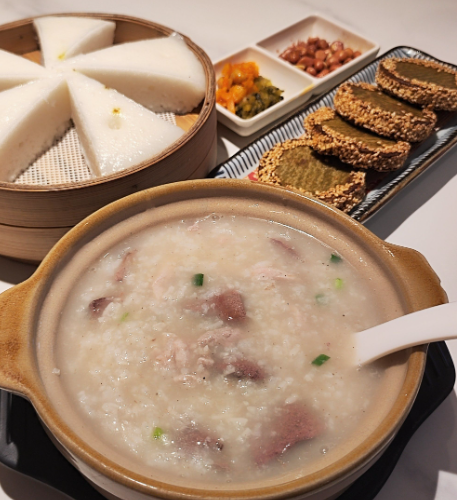
1. Eating Hot Porridge: Health Preservation and Warmth Through Millennia
The Chinese preference for hot porridge goes far beyond satisfying hunger; it has evolved into a life ritual etched in the cultural gene. Tracing its origin, “Zhou Shu” (Book of Zhou) records that “the Yellow Emperor boiled grains into porridge,” linking the birth of porridge to the dawn of Chinese civilization. The ancients even regarded porridge as a “great event that initiated civilization.” Medicinally, “Huangdi Neijing” (Yellow Emperor’s Internal Classic) regarded porridge as a core early treatment method, and the administration of Guizhi Decoction in “Shang Han Lun” (Treatise on Febrile Diseases) specifically emphasized “sipping porridge to assist sweating.” Sun Simiao recorded dozens of medicinal porridge recipes such as lamb bone porridge and fangfeng porridge in “Qian Jin Yao Fang” (Thousand Golden Prescriptions), confirming the health wisdom that “porridge is both food and medicine.”
Beyond its medicinal value, hot porridge carries the warmth of daily life. A bowl of hot porridge in the morning “invigorates stomach qi and promotes body fluids,” a health secret summarized by the ancients. Laba porridge in the cold winter, simmered slowly with a variety of grains and fruits, evolved from a sacrificial offering in ancient Laba festivals to a holiday delicacy, embodying wishes of gratitude for a bumper harvest and prayers for smoothness. Whether it was Cao Cao drinking hot porridge to induce sweat and regulate his body, or Su Dongpo’s comfort described as “indescribable bliss after a nap following porridge,” hot porridge has become a universal life consensus across social classes, conveying the simple philosophy of “nourishing life through food and expressing affection through porridge.”
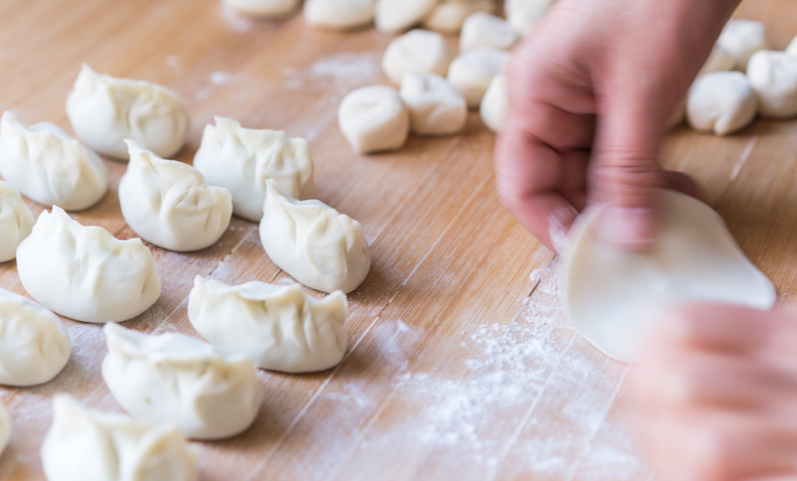
2. Making Jiaozi (Dumplings): Symbols of Reunion and Millennia-old Heritage
Jiaozi’s status as the “quintessence of Chinese cuisine” stems not only from its taste but also from the multiple cultural meanings it carries. According to legend, Zhang Zhongjing, the “Sage of Medicine” in the Eastern Han Dynasty, invented “Quhan Jiao’er Soup” to treat people with frostbitten ears in the cold winter. He wrapped lamb and cold-dispelling herbs in dough and shaped them like ears, which became the prototype of jiaozi. This gives eating jiaozi an inherent meaning of “dispelling cold and praying for blessings.” From the earliest jiaozi unearthed in Spring and Autumn Period tombs, to the name “Jiaozi” in the Song Dynasty that distinguished it from wontons, and to the custom of “Geng Sui Jiao Zi” (celebrating the New Year transition) in the Ming and Qing Dynasties, jiaozi has long been deeply integrated into traditional festivals.
The whole family gathering to make jiaozi on New Year’s Eve is a cherished reunion ritual for Chinese people. The crescent-shaped jiaozi resembles ingots, symbolizing attracting wealth and treasure; the sound of chopping fillings is believed to drive away the Nian beast, embodying wishes of warding off evil and attracting blessings. Different fillings carry exclusive blessings—chives symbolize longevity, while Chinese cabbage represents prosperity. The process of making jiaozi itself is a warm interaction; the cooperation of rolling dough, filling, and pinching turns reunion from an abstract concept into a tangible happiness felt in fingertips and taste buds.
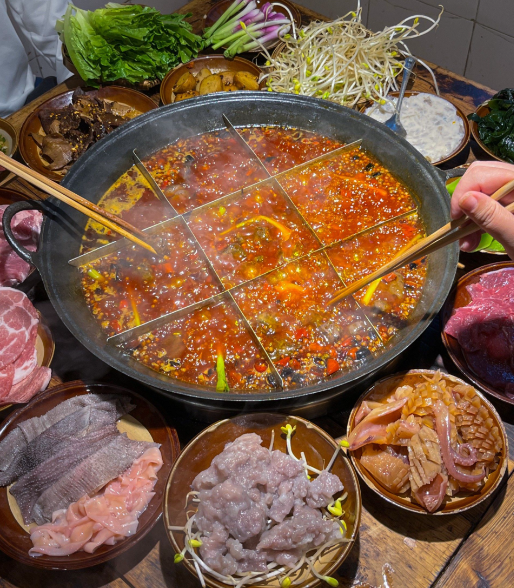
3. Cooking Hot Pot: The Social Philosophy in a Boiling Pot
The charm of hot pot lies in its perfect integration of food and social interaction, making it the most inclusive form of Chinese group dining. This boiling pot is a microcosmic social arena, breaking the distance of Western-style a la carte dining and bringing people closer as they cook and share ingredients together. The “seven lifts and eight dips” for tripe in Sichuan and Chongqing hot pots is not only a technique to control texture but also endows dining with a sense of ritual, reflecting the Chinese pursuit of heat control and original flavor.
Essentially, hot pot embodies the warmth of Eastern collectivism. Whether for family reunions, friend gatherings, or welcoming guests, hot pot adapts to various occasions—ingredients are not divided by status, and both meat and vegetables can be cooked in the pot, just like the Chinese philosophy of inclusive coexistence. The steaming atmosphere quickly dissolves unfamiliarity, allowing people of different identities to achieve emotional connection through the resonance of taste buds. Today, as hot pot spreads worldwide, its core of “sharing” crosses cultural boundaries, becoming a culinary language that conveys intimacy and enthusiasm.
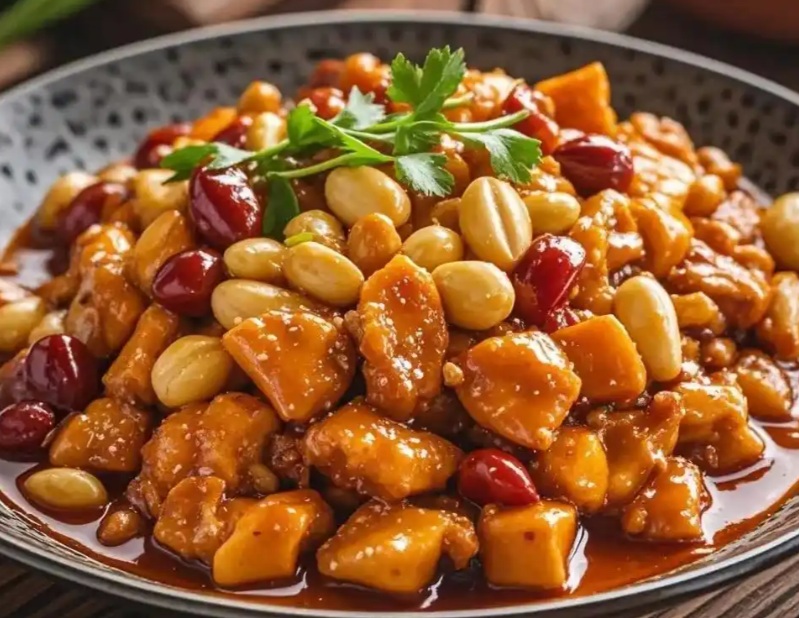
4. Trying Chinese Stir-Fry: The Art of Wok Hei (Wok Aroma)
The soul of Chinese stir-fry lies in the fascinating “wok hei,” which is not metaphysics but a series of wonderful chemical reactions of ingredients at high temperatures. When a wok is heated to over 200°C, the instant ingredients are added, the Maillard reaction and caramelization occur—amino acids and sugars generate complex aromas, moisture evaporates instantly to remove fishiness, and the unique metallic smoky flavor of a seasoned iron wok combines to create this one-of-a-kind taste. The birth of this aroma relies on three key elements: heat, wok, and skill— the powerful fire of restaurant stoves, the heat retention of thick-bottomed iron woks, and the chef’s skilled wok-tossing technique, none of which can be missing.
The Chinese obsession with stir-fry stems from the dietary pursuit behind it. The habit of “eating while hot” is essentially a adherence to wok hei, as this aroma fades within ten minutes, prompting the traditional Chinese practice of “stir-frying and eating immediately” for freshness. Stir-frying is not just a cooking method but also carries the chef’s dedication— the control of heat and seasoning for each dish depends on experience, and this irreplicable “human touch” can never be replaced by ready-made meals. The wok hei in the smoke and fire is the Chinese love and commitment to the true flavor of life.
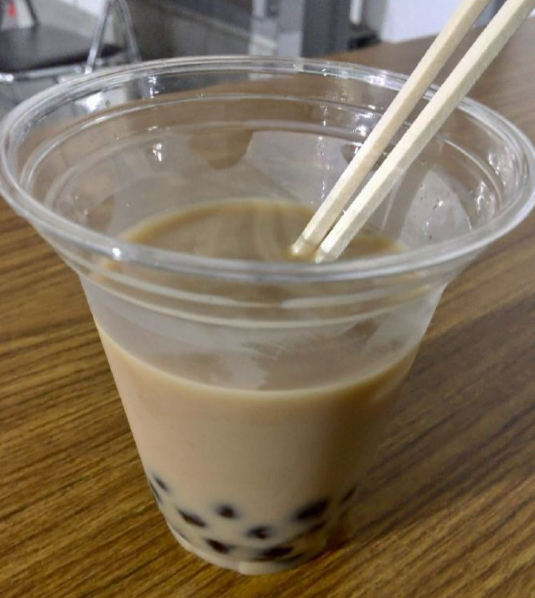
5. Using Chopsticks to Pick Boba in Milk Tea: Cultural Expression in Trends
Using chopsticks to pick boba in milk tea may seem like a novel pastime, but it is actually a fun interpretation and cross-cultural integration of Chinese Culture by the younger generation. As an iconic tool of Chinese cuisine, chopsticks carry thousands of years of usage wisdom, while bubble tea is a trendy drink combining Chinese and Western elements. Their collision has become a highly representative scene in the #BecomingChinese trend. This practice is not without precedent—similar to the Japanese creativity of picking “flowing boba” with chopsticks, it is essentially a cross-border application of traditional tools.
For Chinese people, this behavior is both a relaxed display of chopstick skills and a medium for social interaction. At friend gatherings, picking up chewy boba with chopsticks not only brings a fun experience but also becomes a topic for taking photos and sharing. It breaks the stereotype among foreigners that “chopsticks are only used for traditional Chinese food,” demonstrating the flexibility and inclusiveness of Chinese Culture. It revitalizes traditional tools in trendy drinks, becoming a unique way for the younger generation to express cultural identity.







暂无评论内容