




In the winter warmth of old Beijing, nothing gathers warmth and flavor better than a pot of charcoal-burning copper pot hot pot. This delicacy, which has crossed a thousand years from the imperial court to the streets, embodies the iconic charm of Beijing-style cuisine with its philosophy of “boiling freshness in clear water and prioritizing original taste”. For foreign tourists visiting Beijing, copper pot hot pot is not only a warming meal but also an immersive experience of old Beijing’s life aesthetics—sitting around the stove, watching the charcoal dance, savoring tender mutton, and understanding the Beijing flavor hidden in the fireworks with every dip and bite.
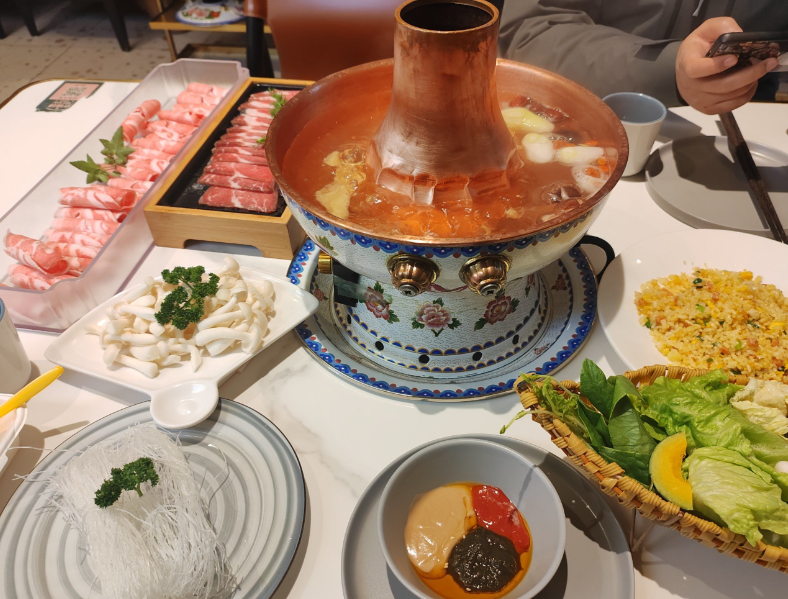
The historical origin of this delicacy dates back to the Yuan Dynasty. Legend has it that during Kublai Khan’s expedition, he urgently wanted to taste his hometown mutton. In a hurry, the chef sliced the mutton thinly, blanched it quickly in boiling water, and served it with fine salt. After eating, Kublai Khan defeated the enemy and named this dish “instant-boiled mutton”, including it in the imperial menu. During the Kangxi and Qianlong dynasties of the Qing Dynasty, mutton hot pot was a must-have dish at the grand “Thousand Elders Feast”. Later, it was inherited and improved by halal restaurants and gradually spread to the people, forming the current form of copper pot hot pot. Among them, “Yitiaolong” Restaurant, founded in 1785, is not only one of the first batch of “China Time-Honored Brands” but also its halal instant-boiled mutton making technique was included in Beijing’s intangible cultural heritage list in 2007, continuing the 200-year-old taste inheritance.
The essence of this delicacy lies in three core elements: “utensil, ingredient, and method”. First is the “utensil”—the traditional purple copper hot pot. Its shape with a large belly and small bottom, paired with charcoal heating, conducts heat quickly and evenly. Trace amounts of copper elements dissolved in the soup add a unique flavor, and it also carries the ritual sense of family reunion around the stove in old Beijing. Unlike modern electric hot pots, the open flame and fireworks of charcoal copper pots are its irreplaceable soul, making every boiling full of warmth.
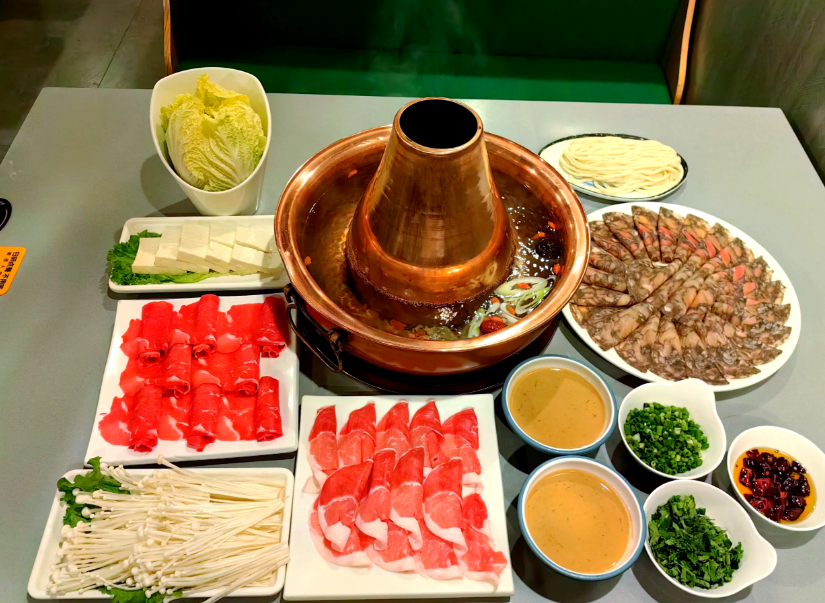
Second is the “ingredient”, which is the foundation of the copper pot hot pot’s quality. The soup base follows minimalism, using only clear water as the base, paired with a few slices of ginger, green onions, and several wolfberries to enhance freshness. It rejects heavy seasonings to highlight the original freshness of mutton—this is not only absolute confidence in the quality of ingredients but also a reflection of Beijing’s dietary concept of “valuing original taste”. The selection of mutton is even more stringent. Authentic copper pot hot pot mostly uses Sunite sheep from Inner Mongolia or Tan sheep from Ningxia, which have tender meat without mutton odor and must be processed by “hand-slicing”.
Hand-sliced mutton emphasizes “thin as paper, uniform as thread, and standing on the plate without falling”. Different parts of the meat have distinct flavors: lamb tenderloin has fine fibers and little fat, with a smooth and milky taste, making it the first choice for high-end hot pot; lamb chop meat has distinct layers of fat and lean meat, rich in oil aroma and full of chewiness; lamb inner thigh meat is soft and juicy, with interlaced fat and lean meat that is neither dry nor greasy; the rare lamb tender strip is pure lean meat without tendons, with a smooth texture like tofu, which can be eaten after blanching for a few seconds. In addition to mutton, classic side dishes are indispensable—frozen tofu soaks up the meat juice, vermicelli absorbs the flavor and is smooth, and Chinese cabbage is sweet and refreshing to relieve greasiness, making a perfect match with mutton.
The most distinctive feature of Beijing flavor is the “secret sesame paste dipping sauce”, which is the soul mate of copper pot hot pot. The traditional dipping sauce is based on pure sesame paste, mixed with chive flower sauce and fermented tofu sauce in proportion, and then added with chopped green onions, coriander, and chili oil according to personal preference. It has a rich and mellow taste, which can neutralize the greasiness of mutton and enhance the overall flavor. For foreign tourists trying it for the first time, it is recommended to start with the classic ratio and then adjust the taste gradually.
Mastering the authentic “eating method” is the key to unlocking the complete charm of copper pot hot pot. When blanching mutton, follow the principle of “swish seven times and dip eight times”—pick up the mutton slices, quickly blanch them in boiling water seven times and dip them in the soup eight times. When the slices turn color and curl, they can be taken out. At this time, the meat is tender but not dry, full of freshness. There is also a skill to the blanching order: first blanch lean meat (such as lamb tenderloin and lamb tender strip), then blanch parts with both fat and lean meat (such as lamb chop and inner thigh meat), and finally blanch vegetables and soy products to avoid the soup base becoming turbid too early. When eating, pair it with sweet and sour garlic to relieve greasiness and refreshing sour plum soup, which can neutralize the oil and enrich the taste level—this is a centuries-old matching wisdom of old Beijingers.
Choosing the right restaurant can elevate the experience to a higher level. Restaurants with different styles interpret the diverse charm of copper pot hot pot: Donglaishun (Wangfujing Store), a century-old time-honored brand, is synonymous with copper pot hot pot. Founded in 1903, it is famous for hand-sliced Sunite lamb and secret sesame paste, with an antique environment, suitable for experiencing traditional heritage; Jubao Yuan (Niujie Headquarters) focuses on high-end quality, with mutton from exclusive pastures featuring excellent texture, paired with limited-time sesame cakes, making it the first choice for senior foodies. It is recommended to go during non-peak hours to avoid queuing; Manhengji (Ping’anli Store) is hidden in an alley, full of fireworks, with affordable prices. Its sweet and sour garlic and fried sausage are the finishing touches, and the waiters will kindly guide you on hot pot skills; Nanmen Hot Pot (Houhai Store) combines tradition and innovation, with soup base added with red dates and wolfberries for sweetness and health preservation. The window seats offer lake views, suitable for tourists pursuing a sense of atmosphere.
There are a few tips for tasting copper pot hot pot: first, try to make reservations in advance for popular restaurants, especially during peak hours, to avoid long queues; second, hand-sliced mutton is best eaten immediately after slicing, do not overcook; third, if you prefer light flavors, you can choose the basic dipping sauce without chili oil to better taste the original flavor of mutton; fourth, some restaurants provide vacuum-packed hand-sliced mutton and sesame paste, which can be taken back as souvenirs.
Old Beijing copper pot hot pot is never just a delicacy. With its minimalist ingredient matching and exquisite intangible cultural heritage craftsmanship, it carries the warmth of family reunion around the stove and hides the dietary philosophy of “simplicity is the ultimate sophistication” in old Beijing. When the charcoal rises and the copper pot boils, the tender mutton rolls in the sesame paste—every bite is the original flavor inherited for a century. It is hoped that this guide can help foreign tourists understand the essence of Beijing-style cuisine in the curling steam and leave a warm Beijing taste memory.








暂无评论内容