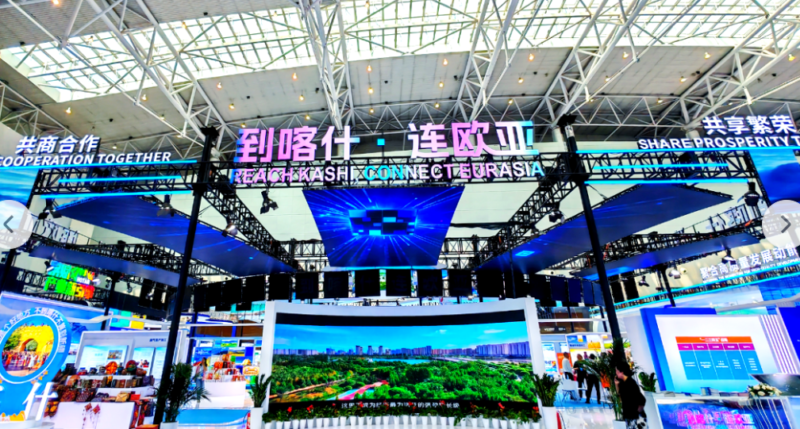





As China opens its doors wider to the outside world, Free Trade Zones (FTZs) and Economic and Technological Development Zones (hereinafter referred to as “Development Zones”) have become a “golden land” for foreigners to do business in China. Compared with other ordinary areas in China, FTZs and Development Zones, relying on national-level policy inclinations, targeted foreign investment support, and convenient business services, provide comprehensive and high-intensity welfare support for foreign business operators, becoming the preferred destination for many foreigners to start businesses and expand their operations in China. This article is specially created for foreigners planning to do business in China, detailing the core foreign investment benefits of FTZs/Development Zones, in-depth analyzing the key reasons for prioritizing these areas, helping foreigners accurately grasp policy dividends, reduce operating costs, improve operating efficiency, and achieve rapid development.
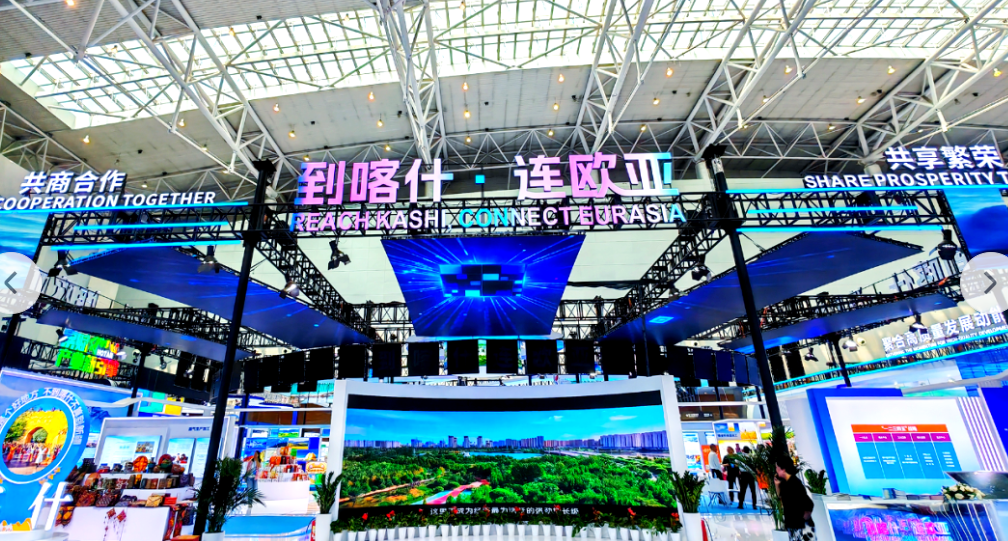
Although FTZs and Development Zones in China have different orientations, they both focus on foreign investment facilitation and industrial empowerment – FTZs focus on “system innovation and opening-up leadership”, focusing on pilot projects in cross-border trade, financial convenience and other fields; Development Zones focus on “industrial agglomeration and quality improvement”, focusing on the support and cultivation of high-end manufacturing and the real Economy. Both have launched a series of exclusive benefits around the core needs of foreign business operators, covering the entire business process from tax reduction and exemption, qualification approval to talent support and cross-border convenience, which is also the core confidence for them to become the first choice for foreign business operators. For foreigners, doing business in FTZs/Development Zones not only allows them to enjoy basic policies in ordinary areas, but also obtain exclusive dividends, effectively avoid operational risks, reduce operating costs, and seize opportunities in the Chinese market.
I. Core Foreign Investment Benefits: Exclusive Dividends in FTZs/Development Zones Covering the Entire Business Process
The foreign investment benefits in FTZs and Development Zones abandon the “one-size-fits-all” support model, accurately address the pain points and difficulties of foreign business operators, focus on four core dimensions of tax, qualification, cross-border and talent, and launch exclusive support policies with far greater intensity than ordinary areas. The application process is simplified and the threshold is loose, allowing foreigners to enjoy them without complex operations.
1. Tax Benefits: Multiple Reductions and Exemptions to Reduce Costs, More Flexible Capital Retention
Tax cost is one of the core concerns of foreign business operators. The tax reduction and exemption policies launched by FTZs/Development Zones have greatly reduced enterprise operating costs and improved capital liquidity. For foreign-invested enterprises established by foreigners, both regions have national authorized tax preferential rights, and the core benefits cover three aspects.
First, corporate income tax reduction and exemption. Foreign-invested enterprises established in FTZs/Development Zones that belong to encouraged industries (such as high-end manufacturing, cross-border trade, digital Economy, biomedicine, etc.) can enjoy a reduced corporate income tax rate of 15% (the tax rate for foreign-invested enterprises in ordinary areas is 25%), which greatly reduces the tax burden on enterprises. For example, a high-end manufacturing foreign-invested enterprise established by a foreigner with an annual taxable income of 10 million yuan needs to pay 2.5 million yuan in corporate income tax in an ordinary area, but only 1.5 million yuan in an FTZ/Development Zone, saving 1 million yuan in tax costs every year. In addition, for newly established foreign-invested enterprises, some FTZs/Development Zones have also launched the “two-year exemption and three-year halving” policy, that is, from the profit-making year, corporate income tax is exempted for the first to second years, and halved for the third to fifth years, further reducing the capital pressure on start-up enterprises.
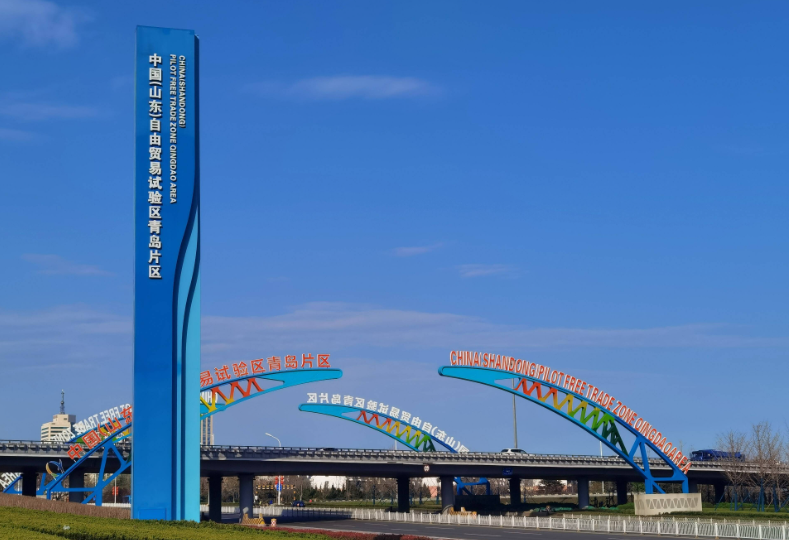
Second, value-added tax and tariff preferences. In the field of cross-border trade, FTZs implement the “bonded supervision” policy. Foreign trade enterprises established by foreigners can enjoy the benefits of bonded storage and deferred tax payment for imported goods, without paying full tariffs and value-added tax when importing goods, effectively relieving the pressure of capital occupation; for exported goods, they can enjoy the fast tax refund policy, with the tax refund cycle shortened to 3-7 working days, much faster than the 15-30 working days in ordinary areas, improving capital turnover efficiency. Development Zones, on the other hand, exempt high-end manufacturing foreign-invested enterprises from tariffs and import link value-added tax on imported equipment and spare parts needed for production, reducing enterprise equipment procurement costs. For example, foreign-invested manufacturing enterprises in Hainan Free Trade Port can enjoy full tariff exemption on imported self-used production equipment, greatly reducing initial investment costs.
Third, personal income tax preferences for foreigners. For foreign senior management personnel and technical personnel working in FTZs/Development Zones, their personal income tax can enjoy special reductions and exemptions. In some areas, the part exceeding 3 times the local average social wage is taxed at a reduced rate of 15%, and they can enjoy tax-free benefits such as housing subsidies, children’s education subsidies, and language training subsidies. This policy has effectively attracted foreign high-end talents to settle in, and also reduced the tax burden on foreign business operators themselves, allowing more funds to be used for enterprise development.
2. Qualification Approval Benefits: Simplified Procedures to Save Time, Looser Access Threshold
One of the biggest headaches for foreigners doing business in China is the cumbersome qualification approval, long cycle and high threshold. Relying on the reform of “streamlining administration, delegating power, improving regulation and optimizing services”, FTZs/Development Zones have launched a series of welfare policies to simplify approval, greatly improving approval efficiency, reducing access thresholds, and allowing foreigners to “run fewer errands and handle things faster”.
On the one hand, the approval process is simplified and the cycle is shortened. FTZs implement the “single window” approval system. Foreigners establishing foreign-invested enterprises do not need to go to multiple departments such as market supervision, taxation, customs, and foreign exchange to handle procedures separately. They can submit materials at one time through the “single window” to achieve “one-stop handling”. The enterprise registration approval cycle is shortened to within 3 working days (7-15 working days in ordinary areas), and some simple businesses can achieve “submitted today, completed today”. Development Zones, on the other hand, implement the “notification and commitment system” for the approval of business qualifications of foreign-invested enterprises. For industries that do not require pre-approval, enterprises can register first and supplement certificates later, greatly shortening the preparation cycle. In addition, both regions have opened a “green channel” for foreign investment approval, equipped with bilingual staff to provide full assistance to foreigners, solving the problems of language barriers and unfamiliarity with procedures.
On the other hand, the access threshold is lowered and restrictions are reduced. FTZs implement the “negative list” management model for foreign investment access, only restricting a few industries involving national security and public interests, and all other industries implement “non-prohibited access”. Foreigners can freely enter more fields to carry out business activities without additional approval. Compared with ordinary areas, FTZs have abolished many restrictions on the proportion of foreign capital holdings, allowing foreigners to establish wholly foreign-owned enterprises (such as education, Medical care, finance and other fields, which mostly require Sino-foreign joint ventures in ordinary areas). Development Zones, on the other hand, have lowered the registered capital threshold for start-up foreign-invested enterprises, allowing “subscription system” registration. Enterprises can be established without actually paying the registered capital, and there is no restriction on the currency of the registered capital (US dollars, euros and other foreign currencies can be used for registration), further reducing the start-up threshold for foreigners. It is worth noting that the policies of Development Zones and FTZs in some regions can be enjoyed in combination, forming a “1+1>2” superimposed effect, allowing foreign enterprises to enjoy double approval convenience.
3. Cross-Border Convenience Benefits: Unimpeded Capital Flow, More Efficient Trade Exchanges
Most foreigners doing business in China are involved in cross-border capital flow, cross-border trade and other businesses. The cross-border convenience benefits launched by FTZs/Development Zones have effectively solved the problems of difficult capital inflow and outflow and low customs clearance efficiency, making cross-border operations more convenient and efficient.
In terms of cross-border capital flow, FTZs implement the foreign exchange management facilitation policy. Foreign-invested enterprises established by foreigners can independently handle cross-border capital collection and payment without approval from the foreign exchange management department, making capital inflow and outflow more free and convenient. For example, enterprises can directly remit domestic profits overseas without submitting cumbersome certification materials, and the remittance cycle is shortened to 1-2 working days; overseas investment funds can be freely remitted into China without restricting the use of funds, and the settlement currency can be chosen independently. Development Zones, on the other hand, have launched facilitation policies for cross-border financing of foreign-invested enterprises, allowing enterprises to obtain low-cost financing from overseas without additional approval, effectively reducing financing costs. Foreign-invested enterprises in Hainan Free Trade Port can also concentrate the group’s import and export trade locally with the help of cross-border business convenience policies, improving customs clearance efficiency and reducing logistics costs.
In terms of cross-border trade, FTZs are equipped with exclusive customs supervision areas, implementing the “paperless customs clearance” and “fast inspection” policies. For foreign trade enterprises established by foreigners, the customs clearance time for import and export of goods is shortened to within 1 hour (4-8 hours in ordinary areas), greatly improving trade efficiency and reducing logistics costs. At the same time, FTZs support new trade models such as cross-border e-commerce and market procurement trade, providing more channels for foreigners to expand cross-border businesses, and they can enjoy relevant trade subsidies (such as cross-border logistics subsidies, exhibition subsidies, etc.). In addition, some FTZs have launched the “cross-border data flow pilot” policy, providing institutional guarantee for foreign enterprises to carry out cross-border digital businesses, which is a special benefit difficult to enjoy in ordinary areas.
4. Talent and Supporting Benefits: Comprehensive Protection for More Secure Operation
FTZs/Development Zones not only focus on enterprise support, but also pay attention to the work and living needs of foreigners, launching a series of talent and supporting benefits to provide comprehensive protection for foreign business operators, making their business in China more secure and convenient.
In terms of talent support, both regions have launched special support policies for foreign talents. For foreign high-end talents and technical personnel, they can quickly handle work permits and residence documents. The approval cycle for work permits is shortened to within 5 working days, and residence documents can be handled with a maximum validity period of 5 years (the longest in ordinary areas is 1 year), without annual inspection. At the same time, some FTZs/Development Zones also provide foreign talents with housing subsidies, children’s education subsidies, Medical security subsidies, etc. For example, foreign senior management personnel can enjoy a monthly housing subsidy of 5,000-10,000 yuan, and their children can study in international schools in the region for free, solving the problem of children’s education. Foreign-invested enterprises in Hainan Free Trade Port can also enjoy the visa convenience policy for foreign employees, allowing foreign colleagues at the headquarters to come to China to carry out work more frequently without cumbersome visa procedures.
In terms of supporting facilities, FTZs/Development Zones are equipped with complete commercial supporting facilities, office supporting facilities and living supporting facilities, including high-end office buildings, standardized workshops, cross-border logistics Parks, etc., which can meet the office, production and logistics needs of foreign enterprises; at the same time, a large number of foreign-related legal service institutions, financial institutions, translation institutions, etc. have gathered in the region to provide professional services for foreigners, solving legal, financial, language and other problems encountered in the business process. In addition, both regions focus on optimizing the business environment, implementing the “special person docking for foreign-related services” system, providing one-on-one assistance for foreign enterprises, and timely solving various problems encountered in the enterprise operation process, so that foreigners can do business in China without worries. Some Development Zones have also formed a high-end manufacturing industrial agglomeration effect, facilitating foreign enterprises to connect upstream and downstream resources and expand business cooperation.
II. Core Reasons Why Foreigners Prioritize These Areas for Doing Business
In addition to the above-mentioned exclusive benefits, the reason why FTZs/Development Zones have become the first choice for foreigners doing business in China is also due to their unique location advantages, industrial advantages and development potential. These advantages, combined with exclusive benefits, form an “irreplaceable” core competitiveness, allowing foreigners to develop the Chinese market more efficiently and steadily.
1. Strong Policy Stability and Guaranteed Dividends
The foreign investment support policies in FTZs/Development Zones are all authorized by the national level and refined and implemented by local governments, with strong policy stability and continuity, and there will be no “policy changes overnight”. Foreigners establishing enterprises in these regions can enjoy relevant welfare policies for a long time without worrying about operational risks caused by policy changes. Compared with ordinary areas, the policies of FTZs/Development Zones are more targeted and supportive, with strong policy implementation. All welfare policies have clear application processes and standards. Foreigners can clearly know the benefits they can enjoy, apply quickly and enjoy conveniently, without spending a lot of time connecting with multiple departments. For example, the tax reduction and exemption, cross-border convenience policies in FTZs, and the industrial support, approval simplification policies in Development Zones have all formed a complete implementation system to ensure that foreign enterprises can effectively enjoy policy dividends without worrying about “policy hollowing out”. In addition, the state will continue to optimize the foreign investment support policies in FTZs/Development Zones every year according to the opening-up policy, continuously expand the coverage of benefits and enhance the support intensity, allowing foreign business operators to share China’s development dividends for a long time and provide a solid guarantee for the long-term and stable development of enterprises.
2. Outstanding Location Advantages and Strong Market Radiation
The location of FTZs/Development Zones has been scientifically planned, mostly located in the core areas of China with developed Economy and convenient transportation, adjacent to transportation nodes such as ports, airports and railway hubs. Whether it is cross-border trade or domestic market expansion, they have unique location advantages, which is also an important reason why foreigners prioritize these areas. Most FTZs are established relying on Coastal and border ports, such as Shanghai FTZ, Guangdong FTZ, Hainan Free Trade Port, etc., adjacent to international air routes and ports, with convenient customs clearance for import and export of goods, greatly reduced logistics costs, and convenient for foreign enterprises to carry out cross-border trade and connect with the global market; at the same time, these areas are close to China’s economic core circle, radiating the huge surrounding consumer market. Foreign enterprises can quickly enter China’s domestic demand market, expand domestic customer resources and improve market share.
Development Zones are mostly located in the core areas of urban industrial Parks, gathering a large number of upstream and downstream enterprises, forming a complete industrial chain. For example, high-end manufacturing Development Zones gather various enterprises such as raw material supply, spare parts production, finished product processing and logistics distribution. After foreign enterprises settle in, they can quickly connect upstream and downstream resources, reduce supply chain costs, improve production efficiency, and avoid resource shortages caused by “fighting alone”. For example, Suzhou Industrial Park, as a well-known Development Zone, has gathered a large number of high-end manufacturing and electronic information enterprises. After foreign-related enterprises established by foreigners settle in, they can quickly connect with local supply chain enterprises, shorten the production cycle and reduce procurement costs. In addition, FTZs/Development Zones all enjoy national-level support for transportation and logistics supporting facilities, with improved supporting facilities such as logistics parks and bonded warehouses in the region, further enhancing their location competitiveness and allowing foreign enterprises to connect with the world and radiate the whole country more efficiently.
3. Obvious Industrial Agglomeration Effect and Sufficient Cooperation Opportunities
After years of development, FTZs/Development Zones have formed distinct industrial agglomeration advantages. Different regions focus on different characteristic industries, gathering a large number of enterprises in the same industry and upstream and downstream. At the same time, they have attracted various high-end talents, scientific research institutions and financial institutions to settle in, forming a good ecology of “enterprise agglomeration, talent agglomeration and resource agglomeration”, providing sufficient cooperation opportunities and development space for foreign enterprises. For foreign business operators, settling in areas with industrial agglomeration can not only reduce operating costs, but also quickly integrate into the industrial ecology, connect high-quality cooperation resources and achieve coordinated development.
FTZs focus on gathering emerging industries such as cross-border trade, financial services, digital economy and biomedicine. A large number of foreign-related enterprises and regional headquarters of multinational corporations have gathered in the region. After foreign enterprises settle in, they can carry out exchanges and cooperation with enterprises in the same industry, share customer resources, technical resources and market resources, and at the same time connect with cross-border financial institutions to solve financing, settlement and other problems; for example, the financial agglomeration area of Shanghai FTZ has gathered a large number of Chinese and foreign banks, securities companies and insurance institutions, providing comprehensive cross-border financial services for foreign enterprises and helping enterprises expand global businesses. Development Zones focus on gathering industries such as high-end manufacturing, equipment manufacturing, new energy and new materials. A large number of production-oriented enterprises have gathered in the region, forming a complete industrial chain supporting system. After foreign enterprises settle in, they can quickly find upstream and downstream partners, reduce supply chain risks, and at the same time carry out technological R&D cooperation relying on scientific research institutions in the region to improve the core competitiveness of enterprises.
In addition, FTZs/Development Zones regularly hold various activities such as industrial exchange meetings, investment promotion meetings and cross-border cooperation forums, building cooperation platforms for foreign enterprises, helping foreigners connect with Chinese enterprises and expand cooperation channels, and at the same time timely understanding industry development trends and policy orientations, providing reference for enterprise operation decisions, which is also an advantage difficult to compare with ordinary areas.
4. High-Quality Business Environment and Improved Foreign-Related Services
Compared with ordinary areas, FTZs/Development Zones have always focused on “foreign investment facilitation and service internationalization”, continuously optimized the business environment, improved the foreign-related service system, and strived to solve the pain points and difficulties of foreigners doing business in China, making it more convenient and secure for foreigners to do business in China. This is also one of the key reasons why foreigners prioritize these areas.
In terms of foreign-related services, FTZs/Development Zones have set up foreign investment service centers and special foreign-related government service windows, equipped with professional bilingual staff and foreign-related service specialists, providing “one-on-one” comprehensive services for foreigners, covering the entire process of enterprise registration, qualification approval, policy consultation, document translation, tax declaration, etc., solving the problems of language barriers and unfamiliarity with procedures for foreigners. Some regions have also launched the “foreign talent service card”, integrating various service resources such as housing, education, Medical care and transportation, providing convenient services for foreigners and their families, solving their living worries, allowing foreigners to fully devote themselves to enterprise operation.
In terms of optimizing the business environment, FTZs/Development Zones have continuously promoted the reform of “streamlining administration, delegating power, improving regulation and optimizing services”, simplified approval procedures, streamlined application materials, shortened handling time limits, and implemented “one-stop online handling and full online handling”. Foreigners can handle various businesses online without running errands; at the same time, the legal environment in the region is improved, which strictly protects the legitimate rights and interests of foreign-invested enterprises, legally guarantees the operating autonomy and property rights of foreigners, and severely cracks down on infringement, counterfeiting, unfair competition and other behaviors, creating a fair, just and transparent operating environment for foreign enterprises. In addition, a large number of professional foreign-related legal service institutions, financial consulting institutions and translation institutions have gathered in the region, providing professional legal, financial and translation services for foreign enterprises, helping them avoid operational risks and standardize operation and management.
5. Great Development Potential and Broad Appreciation Space
FTZs/Development Zones are the “test fields” and “vanguards” of China’s opening-up, undertaking the important mission of national system innovation, industrial upgrading and open development, enjoying key support at the national level, and having great development potential and broad appreciation space in the future. This is also an important factor attracting foreigners to prioritize these areas. With the continuous deepening of China’s opening-up, the opening scope of FTZs/Development Zones will continue to expand, policy dividends will continue to be released, and the industrial agglomeration effect will be further highlighted, which will surely become an important engine for China’s high-quality economic development.
For foreign business operators, settling in FTZs/Development Zones can not only enjoy the current policy dividends and location advantages, but also grasp future development opportunities and achieve rapid enterprise appreciation. For example, Hainan Free Trade Port, as China’s only provincial-level comprehensive free trade port, enjoys the special policy of “zero tariff, low tax rate and simplified tax system”. It will gradually build into a high-level open free trade port in the future. After foreign enterprises settle in, they can enjoy comprehensive policy support, and at the same time use the open platform of Hainan Free Trade Port to connect with the global market and achieve large-scale enterprise development; various Development Zones will continue to focus on high-end manufacturing and emerging industries with the advancement of China’s industrial upgrading, and will become the core carrier of China’s real economy development in the future. After foreign enterprises settle in, they can rely on the opportunity of industrial upgrading to improve the core competitiveness of enterprises and achieve long-term development.
In addition, the land, real estate and other resources in FTZs/Development Zones have great appreciation potential. After foreign enterprises settle in, they can not only enjoy a high-quality operating environment, but their assets will also continue to appreciate with the development of the region, bringing additional benefits to enterprises and further improving the profitability and development space of enterprises.
III. Summary: FTZs/Development Zones – The Best Choice for Foreigners Doing Business in China
In summary, relying on comprehensive exclusive foreign investment benefits, stable policy support, outstanding location advantages, obvious industrial agglomeration effect, high-quality foreign-related services and broad development potential, FTZs/Development Zones have become the “best choice” for foreigners doing business in China. For foreigners planning to do business in China, choosing FTZs/Development Zones can not only greatly reduce operating costs and improve operating efficiency, but also avoid operational risks, grasp development opportunities, quickly integrate into the Chinese market, connect with global resources, and achieve long-term and stable development of enterprises.
Whether it is a start-up foreign enterprise or a multinational enterprise planning to expand the Chinese market, FTZs/Development Zones can provide targeted and comprehensive support – start-up enterprises can enjoy benefits such as simplified approval, tax reduction and exemption, and loose registered capital to reduce the start-up threshold; mature enterprises can enjoy benefits such as cross-border convenience, industrial cooperation and talent support to expand business space. It is recommended that foreigners, before coming to China to do business, choose suitable FTZs/Development Zones according to their own business fields and development plans, fully tap policy dividends, rely on regional advantages, steadily develop the Chinese market, and share the development opportunities brought by China’s opening-up. In the future, with the continuous development of FTZs/Development Zones, they will surely provide a better environment, more generous benefits and broader space for foreigners doing business in China, becoming the “first choice” for foreigners doing business in China.






暂无评论内容