




Located on Xuanwumen Outer Street in Xicheng District, Beijing, stands a thematic Museum that carries the millennium-old cultural heritage of the Xuannan area——Beijing Xuannan Culture Museum. With “Xuannan Culture” as its core, it is built on the basis of the ancient architectural complex of Changchun Temple from the Ming and Qing dynasties. It is not only a key cultural relic protection unit in China, but also an important window to interpret the history of southern Beijing, feel the folk customs of old Beijing, and understand the integration of Chinese and Western cultures. Different from the imperial grandeur of the Forbidden City and the Summer Palace, Xuannan Culture Museum is hidden in the downtown area, quiet and warm. It presents the changes of streets and lanes, the integrity of scholars, the fireworks of folk customs, and religious beliefs in the Xuannan area since the Wei and Jin dynasties, becoming a hidden gem for foreign travelers to deeply explore Beijing’s folk culture and avoid crowds. Here, every cultural relic, every exhibit, and every ancient building tells the millennium-old story of Xuannan, waiting for every visitor to slow down and understand the most authentic cultural heritage and human feelings of old Beijing.
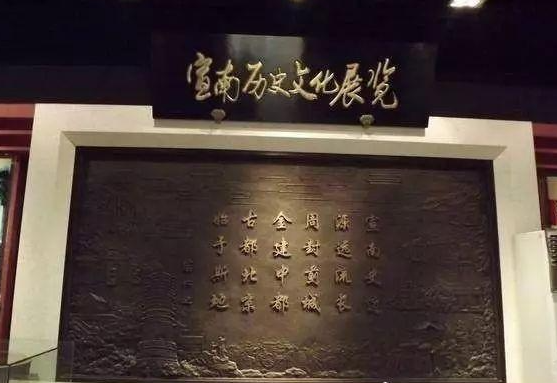
To understand Xuannan Culture Museum, one must first understand the connotation of “Xuannan”. Xuannan generally refers to the area south of Xuanwumen in Beijing. Since the Wei and Jin dynasties, it has been the core area of southern Beijing. After thousands of years of development, it has gradually formed a unique Xuannan Culture——it is a gathering place for scholar culture. During the Ming and Qing dynasties, countless literati, poets, officials and scholars lived in seclusion, studied and wrote books here; it is a fertile land for folk culture, with hutongs, guild halls, opera houses and teahouses all over, nurturing classic Folk Arts such as Peking Opera and cross-talk; it is a melting pot of religious cultures, where Buddhism, Taoism, Islam and Christianity coexist and coexist, leaving many religious relics; it is also the frontier of Chinese and Western cultural exchanges. Since modern times, it has become an important gateway for Western culture to enter China, witnessing the arduous course of China’s modernization. With such a cultural context as the clue, Xuannan Culture Museum comprehensively and multi-angle displays the essence and charm of Xuannan culture through 7 exhibition halls and more than 1,000 cultural relics and exhibits.
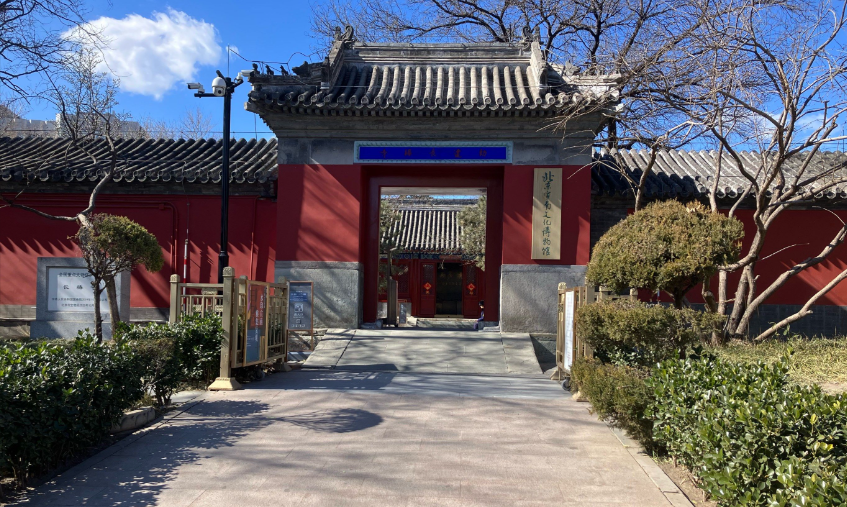
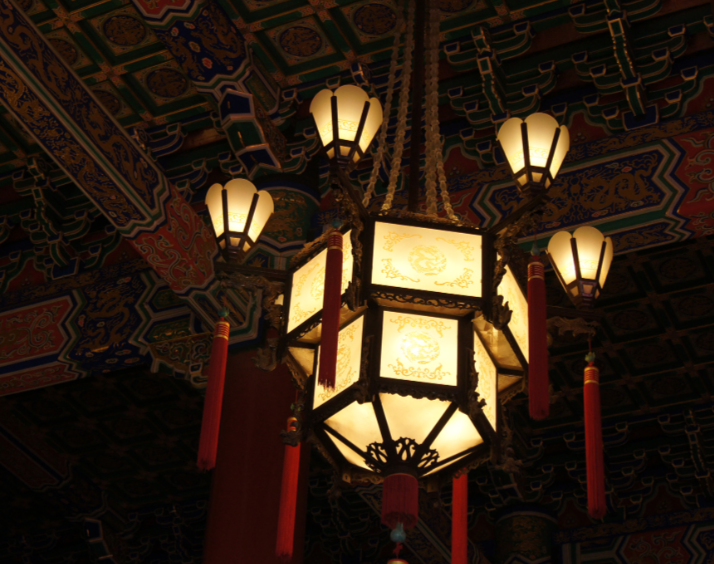
The building of the museum itself is a precious “living cultural relic”. It was rebuilt on the basis of Changchun Temple, which was first built in the 20th year of Wanli in the Ming Dynasty (1592). It retains the pattern and style of temple architecture in the Ming and Qing dynasties. The whole adopts Chinese classical architectural style, with vermilion gates, blue bricks and gray tiles, overhanging eaves and upturned corners, and carved beams and painted buildings, showing simplicity and elegance. Entering the gate of the museum, the first thing that catches the eye is a simple screen wall, which is carved with exquisite patterns, and the seven gilded characters “Xuannan Culture Museum” are written in the middle, solemn and grand. Passing through the screen wall, you come to the original courtyard of the temple. Inside the courtyard, ancient trees tower into the sky and stone tablets stand in rows. Among them, the most famous is the stone tablet inscribed by Emperor Wanli of the Ming Dynasty for Changchun Temple, with vigorous and powerful characters, witnessing the glory of the temple in those years. The exhibition halls of the museum are distributed in various halls of the temple, perfectly integrating ancient architecture with modern exhibitions. While visiting the exhibits, tourists can also appreciate the exquisite craftsmanship of temple architecture in the Ming and Qing dynasties, and feel the collision between history and modernity.
The core exhibition area of the museum is divided into 7 themed exhibition halls, namely “Xuannan Origin”, “Hometown of Scholars”, “Folk Customs”, “Religious Culture”, “Pear Garden Scenery”, “Old Stories of Southern City” and “New Look of Xuannan”. Each exhibition hall has its own focus, progressing layer by layer, comprehensively showing the rich connotation of Xuannan culture. The “Xuannan Origin” exhibition hall is the opening of the museum. Through maps, cultural relics, historical pictures and other exhibits, it details the historical changes of the Xuannan area from the Wei and Jin dynasties to the Ming and Qing dynasties, showing the development course of Xuannan as the core area of southern Beijing, allowing tourists to clearly understand the origin and formation of Xuannan culture. A large number of ancient artifacts are displayed in the exhibition hall, including Han Dynasty pottery figurines, Tang Dynasty porcelain, Song Dynasty coins, etc. These cultural relics silently tell the millennium-old vicissitudes of the Xuannan area, building a basic framework for foreign travelers to understand the history of southern Beijing.
The “Hometown of Scholars” exhibition hall is one of the highlights of Xuannan Culture Museum, focusing on the scholar culture in the Xuannan area during the Ming and Qing dynasties. During the Ming and Qing dynasties, there were numerous guild halls in the Xuannan area. Countless Juren (successful candidates in the provincial imperial examination) and officials from all over the country lived and studied here, forming a unique atmosphere of scholar culture. The exhibition hall restores the living scenes and study patterns of the guild halls in those years, and displays the calligraphy and painting works, letters and manuscripts, and academic tools of literati and poets, including the relics of historical celebrities such as Ji Xiaolan, Gong Zizhen, and Lin Zexu. Tourists can see the inkstone used by Ji Xiaolan, the manuscript of Gong Zizhen’s poems here, and feel their academic spirit and feelings for the country and family. In addition, through multimedia demonstrations, the exhibition hall reproduces the scenes of scholars in Xuannan gathering for literary activities and reciting poems in those years, allowing foreign travelers to intuitively feel the life interest and cultural pursuit of ancient Chinese scholars.
The “Folk Customs” exhibition hall fully shows the market fireworks of old southern Beijing, and is the best window for foreign travelers to understand the folk culture of old Beijing. The exhibition hall restores the hutongs, teahouses, shops, opera houses and other scenes in the Xuannan area during the Ming and Qing dynasties. The lifelike wax figures reproduce the daily life scenes of the people in those years——tea drinkers chatting in the teahouse, shopkeepers shouting in the shop, and audiences cheering in front of the opera house, which are very lively. A large number of folk cultural relics are also displayed in the exhibition hall, including old Beijing’s clothing, shoes and hats, furniture, farm tools, festival supplies, etc. From the Spring Festival couplets in the Spring Festival, the sachets in the Dragon Boat Festival to the moon cake molds in the Mid-Autumn Festival, each exhibit carries the folk memory of old Beijing. In addition, there is an interactive experience area in the exhibition hall. Foreign travelers can experience traditional folk activities such as writing Spring Festival couplets, cutting window grilles, and making dough figurines, personally feel the charm of old Beijing’s folk culture, and leave unique travel memories.
The “Pear Garden Scenery” exhibition hall focuses on the opera culture in the Xuannan area, showing the origin and development of Peking Opera. The Xuannan area is one of the birthplaces of Peking Opera. During the Ming and Qing dynasties, there were numerous opera houses and famous actors here. After the four Huiban (Anhui opera troupes) entered Beijing, they absorbed the essence of local operas in the Xuannan area and gradually formed Peking Opera, the national essence art. The exhibition hall displays Peking Opera costumes, props, musical instruments, scripts and other cultural relics, showing the roles, performing skills, stage art and other contents of Peking Opera. Tourists can see exquisite Peking Opera masks, gorgeous costumes, listen to classic Peking Opera arias, and understand the development context of Peking Opera. In addition, the exhibition hall regularly holds Peking Opera performances, facial mask painting experiences and other activities, allowing foreign travelers to feel the unique charm of Chinese national essence up close.
In addition to the above exhibition halls, the “Religious Culture” exhibition hall shows the coexistence of Buddhism, Taoism, Islam and Christianity in the Xuannan area, displaying cultural relics, ritual vessels, architectural models and other items of various religions; the “Old Stories of Southern City” exhibition hall reproduces the social changes of the Xuannan area in modern times through old photos and historical documents, witnessing the exchange and collision of Chinese and Western cultures; the “New Look of Xuannan” exhibition hall shows the development and changes of the contemporary Xuannan area, comparing the past and the present, allowing tourists to feel the inheritance and rebirth of the Xuannan area. The seven exhibition halls are interrelated and complement each other, forming a complete picture of Xuannan culture, allowing foreign travelers to understand the essence of Xuannan culture in an all-round and multi-angle way.
For foreign travelers, it is very convenient to get to Xuannan Culture Museum. Located in the core area of Xicheng District, it has convenient transportation around and is close to many popular scenic spots. Foreign travelers can take Metro Line 2 to Xuanwumen Station, exit from Exit D, and walk about 8 minutes to reach it; they can also take Metro Line 4 to Caishikou Station, walk about 10 minutes; in addition, they can take many bus routes such as No. 102, 105, 109, 603 to Xuanwumen Outer Station, and walk for a short time to reach the museum entrance. The museum is open from 9:00 AM to 5:00 PM every Tuesday to Sunday (last entry at 4:30 PM), closed on Mondays (except legal holidays), and open to the public free of charge all year round. No ticket is required, only valid ID (passport is applicable) is needed for registration, which greatly facilitates foreign travelers’ visits.
It should be noted that taking photos and videos are prohibited in the museum, as well as making noise and fighting; carrying flammable, explosive and dangerous goods into the museum is prohibited; the temperature in the exhibition hall is comfortable, so it is recommended to wear comfortable clothes; there is a rest area in the museum for tourists to rest; in addition, the museum is equipped with multi-language audio guides (including English, French, Japanese, Korean, etc.). Foreign travelers can rent them at the service desk, with a rental fee of 20 yuan per unit and a deposit of 100 yuan (refundable). The audio guides detail the exhibits and historical background of each exhibition hall, helping foreign travelers better understand Xuannan culture. The best time to visit Xuannan Culture Museum is about 2-3 hours. It is recommended to go on working days, when there are fewer tourists, so you can quietly appreciate the exhibits and feel the cultural atmosphere; when going on weekends, it is recommended to avoid the peak hours from 10:00 AM to 2:00 PM.
There are many other famous scenic spots and delicacies around Xuannan Culture Museum, which are very suitable for foreign travelers to visit in combination to deeply feel Beijing’s historical culture and market fireworks. A 5-minute walk from the museum is the South Church, one of the oldest Catholic churches in Beijing. First built in the Ming Dynasty, it is an important relic of Western culture entering China, with a combination of Chinese and Western architectural styles, which is worth a visit; a 10-minute walk can reach Liulichang Cultural Street, which is a gathering place for old Beijing culture, with calligraphy and painting shops, antique shops, stationery shops all over. Foreign travelers can buy characteristic cultural souvenirs here and feel the cultural atmosphere of old Beijing; in addition, there are scenic spots such as Ji Xiaolan’s Former Residence and Huguang Guild Hall nearby, which are not far away and can be visited together. In terms of food, there are many old Beijing characteristic restaurants around, where you can taste old Beijing characteristic snacks such as fried sauce noodles, stewed pork intestines, pea cake, and donkey rolling, and experience the food culture of old Beijing.
This museum hidden in the downtown area has no noisy crowds or commercial impetuosity, only profound cultural heritage and strong humanistic atmosphere. With ancient architecture as the carrier and cultural relics as the medium, it presents the millennium-old history, culture and folk customs of the Xuannan area, allowing every visitor to understand the other side of old Beijing——not the imperial majesty, but the people’s fireworks; not the grand narrative, but the delicate feelings. For foreign travelers who are eager to deeply experience Beijing’s culture and understand the folk customs of old Beijing, Xuannan Culture Museum is definitely a must-visit hidden gem. Here, you can slow down, listen to the millennium-old cultural context of Xuannan, feel the market fireworks of old Beijing, understand the inclusiveness and profoundness of Chinese culture, and leave an unforgettable travel memory.


暂无评论内容