




When you wander in the core area of Beijing’s Second Ring Road, a 1,552-meter-long street will take you back in time for a hundred years—on one side is the daily life of old Beijing, and on the other is the elegance of European-style architecture. This is Dongjiaominxiang, the only well-preserved modern embassy complex in Beijing, and an excellent place to understand China’s modern history and experience the collision of Eastern and Western Cultures. For foreign tourists, it lacks the crowds of the Forbidden City but boasts a unique historical depth and architectural aesthetics. Every building and every brick tells a story of the intersection of Eastern and Western civilizations.
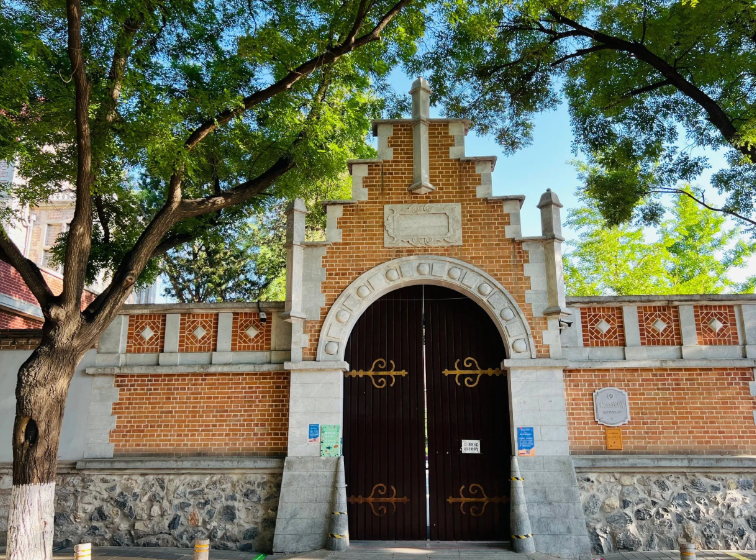
The history of Dongjiaominxiang dates back to the Yuan Dynasty, when it was named “Jiangmi Lane” because it was a vital hub for grain transportation from the south to the north. During the Yongle period of the Ming Dynasty, it became a gathering place for central government offices. In the Yongzheng period of the Qing Dynasty, it gradually became an important area for foreign exchanges, with Russia being the first country to establish an embassy here. After the signing of the Boxer Protocol in 1901, this area was designated as an embassy district. Many countries, including Britain, France, the United States, Germany, Japan, and Russia, successively built embassies, banks, churches, and hotels here, gradually forming a characteristic block integrating various Western architectural styles and becoming an important window connecting modern China with the world. After the founding of the People’s Republic of China, China abolished various unequal treaties, reclaimed Dongjiaominxiang, and preserved its characteristic buildings. Today, it houses both office spaces, Museums, and restaurants, where history and modernity blend perfectly, making it a highly recognizable tourist landmark in Beijing.
When you come to Dongjiaominxiang, the first thing that will attract you is the diverse Western-style buildings along the street. Known as “Beijing’s Museum of Modern Architecture,” it has 43 existing buildings covering Gothic, Neoclassical, Baroque, and other styles, each with its own unique charm and story. St. Michael’s Church is one of the most representative buildings here. As the smallest but most exquisitely crafted church in Beijing, it is a typical Gothic-style building with three spired bell towers standing in the street. The decorations of pointed arches, pilasters, glass windows, and niches are exquisite. The angel reliefs on the church facade are well-preserved. On sunny days, the stained glass casts colorful rainbow light spots. The Gothic spires and the Chinese-style stone lions at the door complement each other, perfectly interpreting the aesthetics of the integration of East and West. This church is also one of the few Catholic churches in downtown Beijing that have not been completely destroyed or rebuilt. It is open to the public during the Sunday Mass (10:00-11:30), allowing you to feel the tranquility and solemnity of religious Culture.
In addition to St. Michael’s Church, the China Court Museum is also a must-visit. This orange-and-white building was once the site of the Yokohama Specie bank, designed in the Dutch style with an elegant and solemn appearance. The cast-iron carvings on the internal spiral staircase are exquisite, witnessing the financial changes of modern China. The museum is open free of charge from Tuesday to Sunday and requires an appointment on the official website one day in advance. It houses a large number of cultural relics and materials related to China’s judicial history. You can not only appreciate the beauty of the building but also deeply understand the development of China’s judicial system. The southwest corner and the south side are the best shooting positions for this building. The sunlight hitting the building at 3-4 p.m. allows you to take retro blockbuster photos casually.
The former site of the French Post Office is another popular check-in spot. Built in the second year of Xuantong in the Qing Dynasty (1910), it is a single-story brick-wood structure with gray brick exterior walls and six arched large windows, forming a rhythmic continuous arcade. It is a typical “colonial-style” building integrated with many Eastern elements. Its Sino-Western style makes it a paradise for street photographers. The mailbox model at the corner still retains the word “POSTES,” and the opening and closing method of the wooden shutters hides ingenuity. The European-style street lamps and the mottled walls make it easy to take old photos full of a sense of age. Couples often come here to take wedding photos, with a full sense of atmosphere.
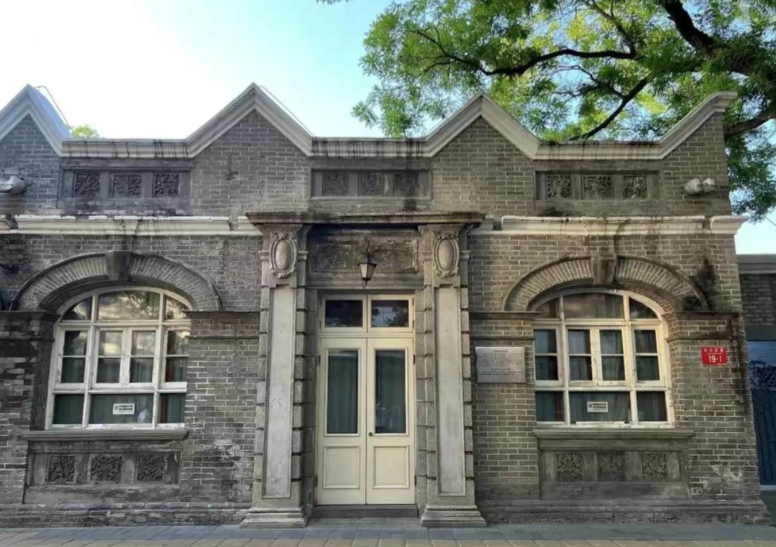
Walking in Dongjiaominxiang, you will also see many historical buildings such as the former site of the Belgian Embassy, the China Police Museum (formerly the site of the American Citibank), and the former site of the Grand Hotel des Wagon-Lits (now Huafeng Hotel). The former site of the Belgian Embassy is now Zijin Hotel. The main building facade has a stepped triangular gable, built in imitation of European classical style. The red building with blue sky and green trees seems to transport you to Brussels, and the building is more gentle under the setting sun. The China Police Museum is a simple and heavy Western classical-style building with a very textured brick structure. The museum displays the development history of the Chinese police and is closed on Mondays. The former site of the Grand Hotel des Wagon-Lits was once one of the tallest Western-style buildings in Beijing and a gathering place for envoys, officials, and upper-class figures from various countries at that time. Today, the restaurant of Huafeng Hotel still retains part of the room structure and decoration style of the former Grand Hotel des Wagon-Lits, allowing people to faintly feel the prosperity of the past.
In addition to architecture and history, the daily life atmosphere of Dongjiaominxiang should not be missed. The streets are lined with green trees. In autumn, the sycamore leaves are flying, and in April, the begonia flower walls complement the European-style window frames, which are the two most beautiful seasons of the year. There are many characteristic restaurants and snack bars along the street. The Aohua Restaurant, a 5-minute walk away, specializes in old Tianjin cuisine. The fried carp with sweet and sour taste is crispy and delicious, which is a must-try dish. The Chunya Sugar-Fried Chestnuts on Taijichang Street are stir-fried in traditional iron pots. Holding hot chestnuts and peeling them while walking, you can feel the daily atmosphere of old Beijing. If you want to rest, you may wish to walk into a café on the street, sit by the window, watch the passing crowd, admire the European-style buildings outside the window, and enjoy a moment of peace.
For foreign tourists, here are some practical tips to note: the exteriors of all buildings are open to the public free of charge, but some internal venues require advance reservations; most buildings are still office spaces, so please keep quiet during the visit, do not speak loudly or take photos randomly; it is recommended to wear comfortable shoes because the entire walking tour takes 1-3 hours; the transportation is very convenient. You can take Metro Line 2 to Chongwenmen Station, Exit E, and tour from east to west, or take Metro Line 1 to Qianmen Station, Exit A, and tour from west to east. You can also take buses such as No. 41 and No. 60 to reach there. There are also scenic spots such as Qianmen Street and Wangfujing Business District nearby. After visiting Dongjiaominxiang, you can go to these places to experience the prosperity and vitality of old Beijing.
Dongjiaominxiang, this street carrying a century of vicissitudes, has both the elegance of Western architecture and the warmth of old Beijing, both the thickness of history and the vitality of modernity. Here, you can slow down, touch the traces of time on the bricks, listen to the historical stories behind the buildings, and feel the unique charm of the collision of Eastern and Western Cultures. For every foreign tourist, a visit to Beijing must include Dongjiaominxiang, because it is not only a tourist street but also a window to understand China’s modern history and experience the integration of Eastern and Western civilizations. A walk here is a time encounter spanning a hundred years.




暂无评论内容