




In Xihu Village, Yanshou Town, Changping District in northern Beijing, there hides a millennium-old secret forgotten by time — Yinshan Pagoda Forest. Located about 60 kilometers from the center of Beijing, it is not only a key cultural relic protection unit at the national level (the third batch), but also one of the “Eight Scenes of Yanping” in the Ming and Qing dynasties. Famous for the magnificent scenery of “Yinshan Iron Wall” and the grand group of ancient Buddhist pagodas, it has become a must-visit destination for Chinese and foreign antiquities lovers. Unlike the bustling Forbidden City and Temple of Heaven in downtown Beijing, Yinshan Pagoda Forest is nestled deep in the mountains, with mountains and rivers embracing each other and ancient pagodas scattered around. Here, you can not only feel the thousand-year accumulation of Buddhist Culture, but also immerse yourself in the tranquility and grandeur of the mountains and rivers in the suburbs of Beijing.
The name of Yinshan Pagoda Forest is quite poetic. It is named “Iron Wall Yinshan” because in winter, the mountains are covered with thick snow, white as silver, and the stone cliffs at the foot of the mountain are black as iron. The Buddhist history here dates back to the Tang Dynasty, when the eminent monk Deng Yinfeng once preached and taught Buddhism here and built Huayan Temple. It reached its peak during the Liao and Jin dynasties, when there were 72 temples and nunneries in the mountains, with more than 500 monks and nuns, making it an important Buddhist sacred place in Northern China. After many eminent monks passed away, they were buried here with spirit pagodas built. After the accumulation of four dynasties — Liao, Jin, Yuan and Ming — the grand pagoda forest today was gradually formed. There is even a folk saying: “You can’t count the lions on Lugou Bridge, nor the Buddhist pagodas on Yinshan Mountain.”
Now there are 18 ancient Buddhist pagodas remaining in the scenic area, with different shapes and scattered distributions, forming a very historical picture. Among them, the most representative are the 5 multi-eaved tomb pagodas from the Jin Dynasty in the site of Fahua Temple, arranged in a plum blossom shape, namely Fojue Pagoda, Yixing Pagoda, Huitang Pagoda, Yuantong Pagoda and Xujing Pagoda, all of which are spirit pagodas of eminent monks in the Jin Dynasty. Among these 5 pagodas, 3 have 13 stories and 2 have 7 stories. Among them, Fojue Pagoda is the tallest, reaching 20.1 meters, with an octagonal plane. The body of the pagoda is carved with exquisite patterns such as apsaras, dragons, phoenixes and flowers, and the base is a granite-carved Sumeru base, showing the exquisite craftsmanship of ancient craftsmen in every detail. In addition to these 5 main pagodas, there is 1 multi-eaved pagoda from the Yuan Dynasty, 1 stupa-style multi-eaved pagoda, and 11 stupa-style small pagodas from the Yuan and Ming dynasties scattered at the foot of the mountain. Some are tall and majestic, some are small and exquisite, and each carries a historical memory.
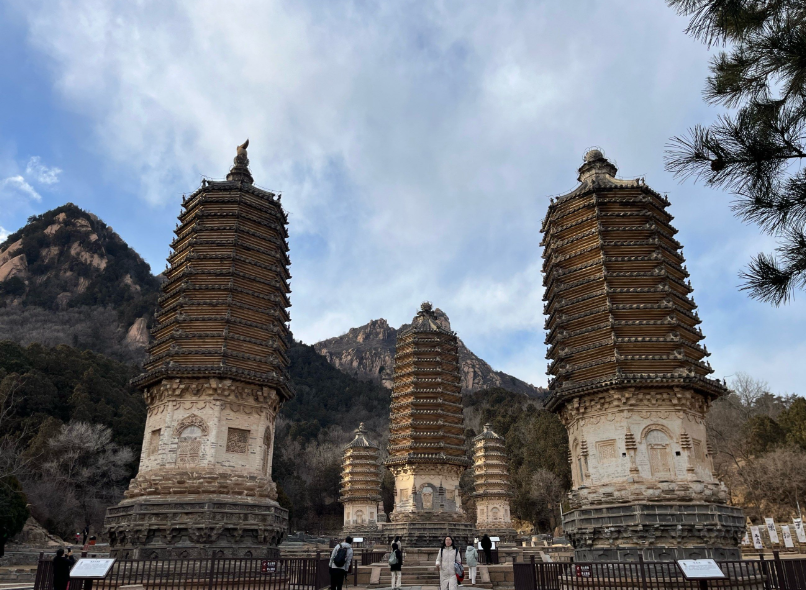
Visiting Yinshan Pagoda Forest, you can not only appreciate the ancient pagodas and visit the ancient temples, but also immerse yourself in the natural beauty of mountains and rivers. The scenic area is not large, but there are various interesting tourist routes. The core tourist area is the square where the site of Fahua Temple and the 5 main pagodas are located. This is the best place to take photos of the ancient pagodas. The simple and magnificent pagoda bodies, matched with the green mountains and trees behind, can take photos with a strong ancient charm casually. Starting from the back of the square, you can climb the mountain along the stone steps. Along the way, you can see more nameless small pagodas, Chaoyang Cave, Shuofa Platform, Zhuanyao Pagoda and other scenic spots. The mountain road is not steep, alternating between steps and flat roads, suitable for tourists of all ages to climb. After reaching the top (Foding Peak, 726.8 meters above sea level), you can overlook the whole panorama of the pagoda forest. 18 ancient pagodas are scattered in the mountains in an orderly manner, surrounded by green mountains and layers of forests, and the magnificent scenery is unobstructed.
For foreign tourists, this is an excellent window to understand ancient Chinese Buddhist Culture and architectural art. The shape and carving of each pagoda reflect the architectural style and Buddhist beliefs of different dynasties: the multi-eaved pagodas of the Liao and Jin dynasties are solemn and simple, the stupa-style pagodas of the Yuan Dynasty are simple and elegant, and the pagodas of the Ming Dynasty are both exquisite and profound. There are also detailed Chinese and English introduction boards in the scenic area, which are convenient for foreign tourists to understand the historical background of each ancient pagoda and each site, and feel the charm of China’s thousand-year-old ancient Culture.
Please collect the practical travel information: the opening hours of the scenic area are adjusted according to the seasons. From April 1 to October 31, it is 8:00-17:00; from November 1 to March 31, it is 8:00-16:00 (ticket sales and admission stop at 16:00). The ticket price is affordable, and there are various preferential policies. Children under 6 years old, the elderly over 60 years old, active military personnel, the disabled, etc. can enter the Park for free with valid certificates; students, social security fund recipients, etc. can enjoy half-price discounts. In terms of transportation, self-driving is the most recommended. It takes about 1.5 hours to drive from the center of Beijing to the scenic area, and there is a free Parking lot at the gate of the scenic area. If you choose public transportation, you can take the Subway to Changping Station on Changping Line, then transfer to a bus or taxi. However, the buses end early, so you need to arrange your return trip reasonably.
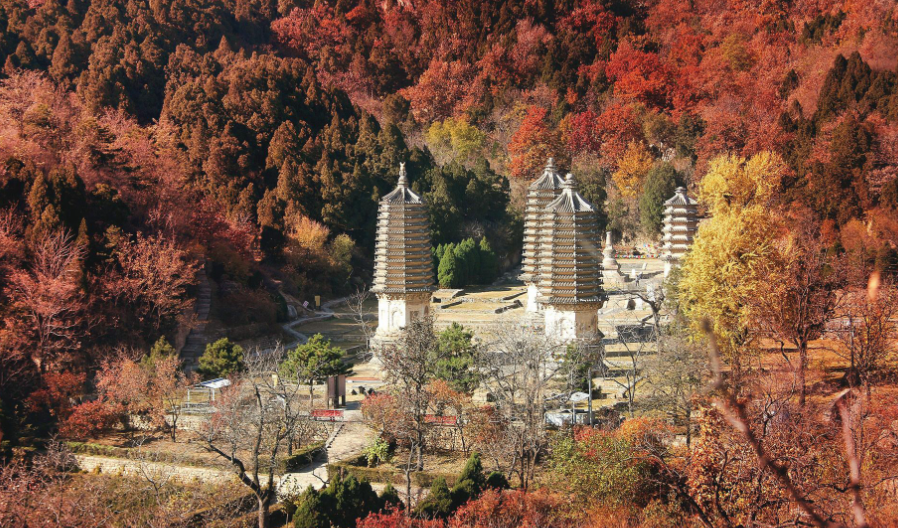
In addition, here are some tips for traveling: there are no canteens or stores on the mountain, so please prepare drinking water and a small amount of snacks in advance; there are many insects in summer, so it is recommended to take anti-mosquito measures. The scenic area reminds that there are snakes, so please do not deviate from the tourist routes without permission; wear comfortable sports shoes when climbing the mountain, some sections are narrow, so please pay attention to safety. The best travel seasons are spring and autumn. In spring, the mountains are covered with blooming flowers; in autumn, the layers of forests are dyed, contrasting with the ancient pagodas. In winter, you can enjoy the stunning snow scenery of “Yinshan Iron Wall”. Each season has its own unique charm.
Away from the hustle and bustle of the city, walking into Yinshan Pagoda Forest is like traveling through a thousand years of time, talking with the ancient pagodas and embracing the quiet mountains and rivers. It has both the thickness of history and the beauty of nature. It is an excellent destination for Chinese and foreign tourists to explore antiquities, relax and hike, and experience traditional Chinese culture. It is worth taking a day to carefully taste this thousand-year-old charm hidden in the suburbs of Beijing.






暂无评论内容