




In Shanghai, there is a street that lacks the prosperity and hustle of Nanjing Road and the simplicity and grandeur of Yu Garden, but with its literary scenery of shaded sycamores and scattered western-style houses, it has become the most touching “literary business card” of this international metropolis — this is Wukang Road. This 1.17-kilometer-long historical and cultural street starts from Huashan Road in the north and ends at Huaihai Middle Road in the south. It was once the core area of the Shanghai French Concession. After a century of changes, it still well preserves dozens of old western-style houses with different styles, carrying Shanghai’s modern history and humanistic customs. For foreign tourists, wandering on Wukang Road, you can not only appreciate the architectural treasures integrating Eastern and Western aesthetics, but also immerse yourself in Shanghai’s literary atmosphere, historical heritage and urban vitality, and understand the unknown tenderness and grandeur of this city.
The history of Wukang Road can be traced back to 1907. At that time, it was named “Route Ferguson” after John Calvin Ferguson, an American missionary. It was an important residential street during the Shanghai French Concession period. From the 1920s to the 1930s, it became a gathering place for Shanghai’s upper class. Diplomats, wealthy merchants, literati and poets all built mansions here, creating the unique pattern of “one western-style house, one story; one step, one scenery” today. In 1943, the road was officially renamed “Wukang Road” and has been used ever since. As one of Shanghai’s first batch of historical and cultural scenic areas, Wukang Road has completely retained the urban texture of modern Shanghai. Every old western-style house, every sycamore tree and every alley here is engraved with the marks of the times, telling the vicissitudes and prosperity of Shanghai over a century.
When it comes to Wukang Road, the most representative landmark is undoubtedly the Wukang Building, which is also the first choice for foreign tourists to check in when coming to Wukang Road. Built in 1924, the Wukang Building, formerly known as the “Normandy Apartments”, was designed by the famous Hungarian architect László Hudec. It is the first arcade-style apartment building in the history of modern Shanghai architecture. Known for its unique ship-shaped appearance, it is hailed as the “Oriental Titanic”. This eight-story building is of reinforced concrete structure, with a warm beige exterior wall, matching red roof and curved corner. It combines the solemnity and elegance of neoclassicism with the simplicity and neatness of modern architecture. Standing at the intersection of Wukang Road and Huaihai Middle Road, looking from a distance, the entire building is like a giant ship about to set sail, magnificent yet exquisite.
The Wukang Building is not only an architectural treasure, but also carries a strong humanistic atmosphere. Many celebrities and scholars in history have lived here. Famous actors Sun Daolin, Qin Yi, writers Ba Jin, Zheng Yimei, etc., have all left their footprints in this building, adding a profound cultural heritage to the Wukang Building. Today, the first floor of the Wukang Building is home to literary bookstores, characteristic cafes and cultural and creative shops, while the upper floors are still residential buildings. The atmosphere of integration of the old and the new makes this century-old building glow with new vitality. For foreign tourists, whether taking photos under the sycamore trees in front of the building to capture the unique beauty of the architecture, or walking into the bookstores and cafes on the first floor, ordering a cup of coffee and flipping through a good book, you can feel the unique literature and tranquility of the Wukang Building. It costs 60 yuan to visit the building. After reaching the top, you can overlook the panoramic view of the sycamores on Wukang Road, and enjoy the beautiful scenery of old western-style houses and sycamore avenues. It is an unmissable experience.
In addition to the Wukang Building, the dozens of old western-style houses on Wukang Road form a unique architectural scenery line, which can be called an “open-air modern architecture Museum”. These western-style houses have different styles, covering neoclassicism, baroque, gothic, Spanish and other architectural styles. Each one is ingenious, and the details are exquisite. Among them, the Italian-style garden villa at No. 393 Wukang Road, with red tiles and white walls, matching a delicate garden and arched doors and windows, is full of Mediterranean style; the former residence of Ba Jin at No. 113 Wukang Road is a simple and elegant western-style villa, with flowers and trees planted in the courtyard, quiet and secluded. This is the place where Mr. Ba Jin lived for more than half a century. The house retains Mr. Ba Jin’s daily necessities and books during his lifetime. Walking here, you can feel Mr. Ba Jin’s literary atmosphere and feelings for family and country. It is open to the public free of charge and is an excellent window to understand modern Chinese literature.
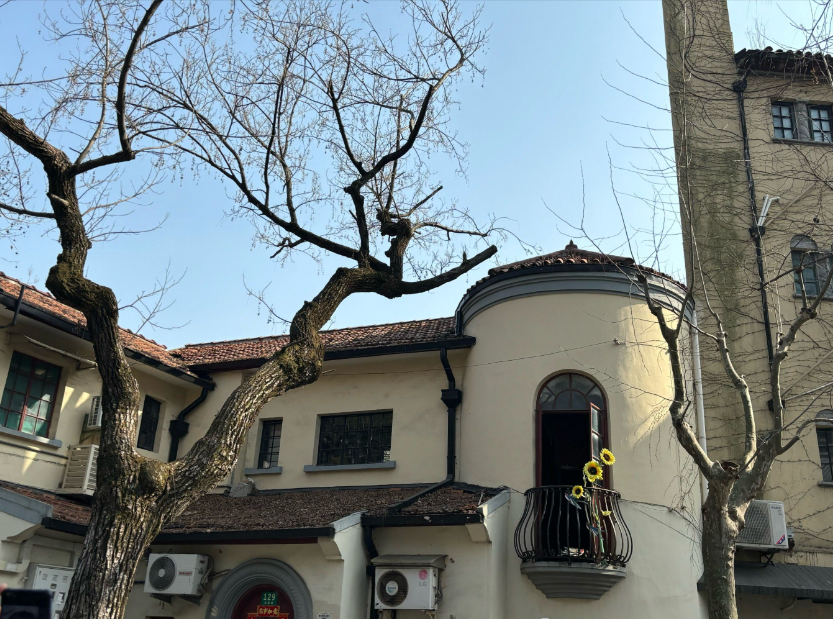
The Romeo Balcony at No. 107 Wukang Road is another popular check-in spot among foreign tourists. This is a Spanish-style western-style house. The balcony on the second floor is exquisitely shaped, with an arched door frame and carved railings, full of romantic atmosphere. It is named after its resemblance to the balcony where Romeo and Juliet met in Shakespeare’s play. Every weekend, many tourists come here to take photos. Standing under the balcony, you can feel the romance across time and space. In addition, the Midan Apartment at No. 210 Wukang Road and the Spanish-style western-style house at No. 314 Wukang Road also have their own characteristics and are worth careful appreciation. Wandering on Wukang Road and shuttling between these old western-style houses, you seem to travel back to the Shanghai French Concession a century ago, feeling the unique charm of the integration of Eastern and Western Cultures. It should be noted that some old western-style houses are private residences. Please keep quiet when visiting and do not disturb the residents.
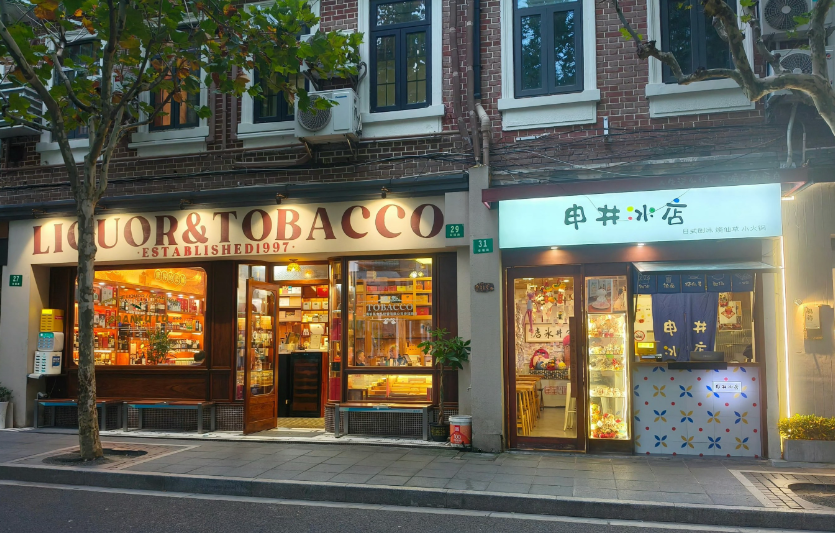
The charm of Wukang Road lies not only in its unique architecture and humanism, but also in the perfect integration of its ubiquitous literary atmosphere and urban vitality. Today’s Wukang Road still maintains a low-key and quiet atmosphere. The sycamore trees on both sides of the street are lush and leafy, providing shade in summer and falling leaves in winter, with beautiful scenery in all seasons. On both sides of the street, there are many literary bookstores, characteristic cafes, cultural and creative shops and niche art galleries. Each shop is exquisitely decorated, full of personality and style, and is a paradise for literary lovers.
For foreign tourists, taking a break in a cafe on Wukang Road is the best way to feel the local literary atmosphere. Whether it is an old-fashioned cafe on the street corner or a niche internet-famous cafe, you can feel the tenderness and tranquility of Wukang Road. Order a cup of coffee and a dessert, sit at an outdoor seat, watch the pedestrians wandering leisurely on the street and the passing bicycles, and listen to the rustling of sycamore leaves, as if time has slowed down. In addition, the cultural and creative shops on Wukang Road are also very distinctive, selling various cultural and creative products with both Shanghai elements and literary styles, such as postcards, bookmarks and canvas bags printed with the pattern of Wukang Building. The packaging is exquisite and the cost performance is high, making them excellent souvenirs. Some cultural and creative shops also provide exclusive stamps of Wukang Road. Tourists can get stamps for free as a souvenir and collect unique memories of Wukang Road.
In addition to literary shops and cafes, the food on Wukang Road is also not to be missed. Here, there are all kinds of characteristic foods, including Shanghai local dishes and flavors from all over the world, meeting the taste needs of different tourists. The old-fashioned restaurants on the street focus on authentic Shanghai local dishes, which are rich in sauce and mellow in taste, allowing foreign tourists to feel the unique charm of Shanghai food; while the niche western restaurants, Japanese restaurants and cafes provide exquisite exotic food, allowing foreign tourists to taste familiar hometown flavors while feeling the Shanghai style. In addition, there are many characteristic food stalls around Wukang Road, selling Shanghai characteristic snacks, such as shengjianbao, xiaolongbao and glutinous rice cakes, which are affordable and fragrant, and are the best choice to experience the urban vitality of Shanghai.
For foreign tourists, the transportation of Wukang Road is very convenient, and it is close to many popular scenic spots. After visiting Wukang Road, you can easily go to other scenic spots to continue your trip. Wukang Road is located in the core area of Xuhui District, Shanghai, with very convenient transportation. It is most recommended to go there by Subway. Take Metro Line 10 or Line 11, get off at Exit 7 of “Jiaotong University Station”, and walk for about 5 minutes to reach the Wukang Building, starting your trip to Wukang Road and avoiding the crowds on the main road; you can also take buses such as No. 26, No. 911 and No. 96, get off at “Huaihai Middle Road Wukang Road Station”, and walk for a few minutes to reach it; if you choose to drive by car, you can navigate to “Parking Lot at No. 393 Wukang Road”, which is free before 8 o’clock on weekends, and the parking fee in the alley on the west side is 10 yuan per hour. However, parking spaces around are tight, so public transportation is more recommended.
Wukang Road is adjacent to popular scenic spots such as Huaihai Middle Road, Anfu Road and Xuhui Binjiang. After visiting Wukang Road, you can walk to Huaihai Middle Road for shopping and tasting food, feeling the prosperity of Shanghai; you can also go to Anfu Road to feel the literature and liveliness different from Wukang Road, where there are many drama theaters, niche bookstores and characteristic shops; you can also take the Subway or bus to Xuhui Binjiang, wander along the Huangpu River, enjoy the river view and urban skyline, and feel the modernity and vitality of Shanghai. Wandering on Wukang Road on a rainy day, you can feel the hazy poetry of the old western-style houses, which has a unique charm.
To make your trip to Wukang Road smoother and more pleasant, here are some practical tips for you. The best visiting time is divided into three periods: 9 am to 11 am, with fewer tourists and suitable light, which is ideal for taking photos, checking in and wandering leisurely, feeling the tranquility and elegance of Wukang Road. At this time, the sycamore avenue and old western-style houses are more charming under the soft light; 2 pm to 5 pm, the sun is just right, and the atmosphere of literary shops and cafes is the strongest, suitable for in-depth tours, tasting food and checking in shops. There are many people on weekends, so it is recommended to avoid peak hours; 6 pm to 8 pm, the sun sets, the sycamore leaves are dyed golden yellow, and the lights on the street are gradually turned on, with a romantic and gentle atmosphere, suitable for wandering and enjoying the scenery, feeling the beautiful dusk of Wukang Road. Wukang Road is suitable for walking or cycling. There are many shared bicycles around. Wearing comfortable shoes can make the trip more relaxed.
In terms of tickets, Wukang Road is open to the public free of charge. No tickets are required, and tourists can enter and exit freely; it costs 60 yuan to visit the Wukang Building, which can be bought on site or booked online in advance; some former residences of celebrities such as Ba Jin’s former residence are open to the public free of charge, and some former residences need to be booked in advance. In addition, motor vehicles are prohibited in some areas of Wukang Road, so tourists can walk at ease; there are many rest areas and toilets on the street, which are convenient for tourists to rest; for foreign tourists, most of the literary shops and cafes on the street have English menus and bilingual staff, and some scenic spots are also equipped with English explanations, which are convenient for communication; pay attention to Wukang Road market activities, such as the Autumn Coffee Festival and Christmas Market, to experience more characteristic activities.
Wukang Road is a street that hides Shanghai’s century-old history and literary customs. It has both the grandeur and elegance of old western-style houses, the poetry and romance of sycamore avenues, the humanistic atmosphere of literati and poets, and the tenderness and liveliness of urban vitality. There are no noisy crowds here, only low-key tranquility and ubiquitous literature. It is the best place for foreign tourists to understand Shanghai and feel the gentle side of Shanghai. When you come to Shanghai, you must slow down, wander in the shade of sycamores on Wukang Road, shuttle between century-old western-style houses, walk into literary shops and cafes, feel the history, humanism and customs here, and let this gentle trip become the most unforgettable memory of your trip to Shanghai.

暂无评论内容