




Deep in the city of Shanghai, there is a place that carries the elegance of Jiangnan gardens and the vitality of old Shanghai — this is Yu Garden and City God Temple. Adjacent to and inseparable from each other, Yu Garden is a treasure of Jiangnan classical gardens hidden in the downtown area, while City God Temple is a cultural landmark embodying folk beliefs. Together with the surrounding old streets and time-honored brands, they form a Jiangnan scroll of “ancient garden hides elegance, and ancient temple gathers prosperity”. For foreign tourists, this place is not only a scenic tourist attraction, but also an excellent window to understand traditional Chinese Culture, experience Shanghai folk customs, and taste characteristic food. Stepping here, you can encounter a century-old appointment of ancient charm and prosperity.
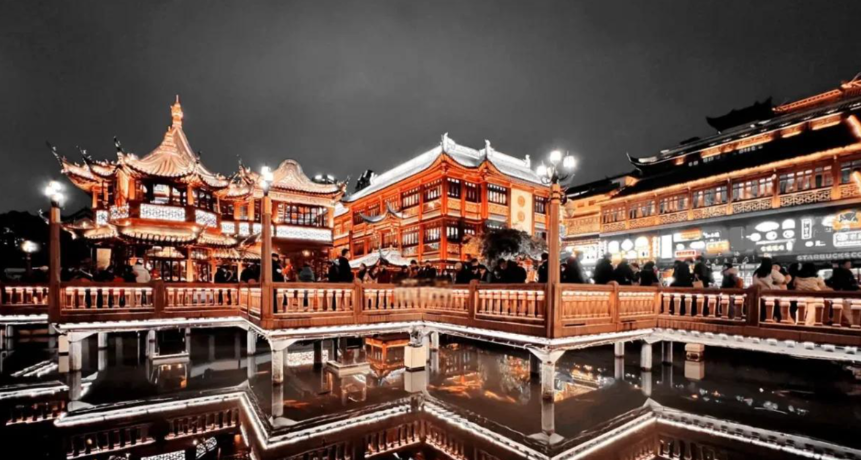
Yu Garden was built during the Jiajing and Wanli reigns of the Ming Dynasty, with a history of more than 400 years. It was built by Pan Yunduan, then the administrative inspector of Sichuan, to honor his father who returned home after retiring. The character “Yu” means “peace and tranquility”, implying “pleasing the elderly parents”, carrying the Chinese Culture of filial piety and feelings for family and country. Covering an area of more than 30 mu, this Jiangnan classical garden is known as “the top garden in the southeast”. After wars and renovations, it still well preserves the architectural art style of Jiangnan gardens in the Ming and Qing dynasties, with scattered pavilions, towering rocks, and green trees. Every step has a view, and every view is like a poem, fully showing the essence of Jiangnan gardens of “made by man, but seemingly natural”.
Walking into Yu Garden, it feels like traveling through time and space into a Jiangnan fairyland. The scenic spots in the garden are scattered in an orderly manner, each with its own ingenuity, worthy of careful appreciation by foreign tourists. Among them, “Yuhua Hall” is one of the core scenic spots of Yu Garden. The hall displays the calligraphy and painting treasures collected by Pan Yunduan in those years, and the “Yulinglong” in front of the hall is even a national treasure — this is a Taihu stone about 3.3 meters high, transparent all over with connected holes, highly ornamental. Together with the “Guanyun Peak” in Lingering Garden in Suzhou and the “Zhouyun Peak” in Hangzhou Flower Garden, it is known as the “Three Famous Stones in the Southeast”. Standing in front of Yulinglong, you can feel the profound heritage of the “stone appreciation” Culture in Chinese classical gardens and the ancient people’s pursuit of natural beauty. In addition, the Mid-Lake Pavilion, Zigzag Bridge, Wanhua Building, Dianchun Hall and other scenic spots also have their own characteristics. The Mid-Lake Pavilion floats on the lake, surrounded by rippling blue waves. When lotus flowers bloom in summer, the breeze blows, and the fragrance of lotus overflows; the Zigzag Bridge winds and turns, with exquisite carvings on the bridge surface. Walking on it, it feels like walking on the lake, and every random shot is a beautiful scenery with strong Jiangnan charm; Dianchun Hall was once the headquarters of the Xiaodao Hui Uprising in the late Qing Dynasty, carrying profound historical memories. The displays and decorations in the hall silently tell that glorious period of time.
Adjacent to Yu Garden, the City God Temple is the most influential folk belief shrine in Shanghai and a gathering place of the vitality of old Shanghai. Founded during the Yongle reign of the Ming Dynasty, the City God Temple enshrines Qin Yubo, the City God of Shanghai. For thousands of years, it has been a place where Shanghai people pray for blessings and place their good wishes. Today, it still has a strong incense, attracting Chinese and foreign tourists to worship. The architectural style of the City God Temple is simple and elegant, with red gates, eaves-curving roofs, exquisite wood carvings and brick carvings, showing the charm of traditional Chinese architecture everywhere. Especially the City God statue in the main hall is solemn and dignified, with various gods enshrined in the side halls, and every detail is worth careful appreciation. For foreign tourists, the City God Temple is not only a temple, but also an excellent window to understand Chinese folk beliefs and traditional festival culture. On traditional festivals such as the Spring Festival and the Lantern Festival, grand temple fairs are held here, with dragon and lion dances, lantern shows, folk performances and other activities, full of atmosphere, allowing you to deeply feel the joy and liveliness of traditional Chinese festivals.
Around Yu Garden and City God Temple, there is even more the most authentic vitality of Shanghai. The old streets here crisscross, with numerous shops, including time-honored brands carrying centuries of craftsmanship, small shops full of Jiangnan characteristics, and various characteristic foods, meeting the shopping and dining needs of foreign tourists. It is worth mentioning that the scenic area has added “Meet China Inbound Tourism Digital Consumption Screens”. Two screens focus on “what to eat” and “what to play and buy” respectively, supporting 10 languages, with detailed multilingual descriptions, ingredient labels and cultural interpretations. They also support one-click payment with foreign bank cards, Apple Pay and Google Pay, no need to bind APPs, completely solving the language and payment problems of foreign tourists and making travel more convenient.
food is an indispensable part of the trip to Yu Garden & City God Temple. Here, there are all kinds of Shanghai characteristic snacks and time-honored delicacies, which can be called “Shanghai’s food holy land”. The xiaolongbao of Nanxiang Steamed Bun Shop is a must-check-in food. This century-old time-honored brand was founded in 1900. The xiaolongbao has thin skin, large filling and delicious soup, with various flavors such as fresh meat and crab roe. The store also offers special packages suitable for foreign tourists. You can directly check the ingredients and allergen information on the screen and taste them at ease. In addition, the Shanghai local dishes of Green Wave Pavilion, the traditional pear paste candy of Pear Paste Candy Store, the cream five-spice beans of Five-Spice Bean Store, and the traditional pastries of Sheng Dacheng are also deeply loved by Chinese and foreign tourists. The gourd cakes and eyebrow cakes of Green Wave Pavilion are exquisitely shaped, delicate in taste, and both ornamental and practical; the pear paste candy is sweet and moistening to the throat, with various flavors to choose from, and the packaging is exquisite, making it an excellent souvenir; the cream five-spice beans are salty and sweet, crispy and delicious, which is the taste of childhood for Shanghainese and a good choice for foreign tourists to understand traditional Chinese snacks. Most shops in the scenic area have launched bilingual menus and equipped with bilingual staff, further improving the dining experience of foreign tourists.
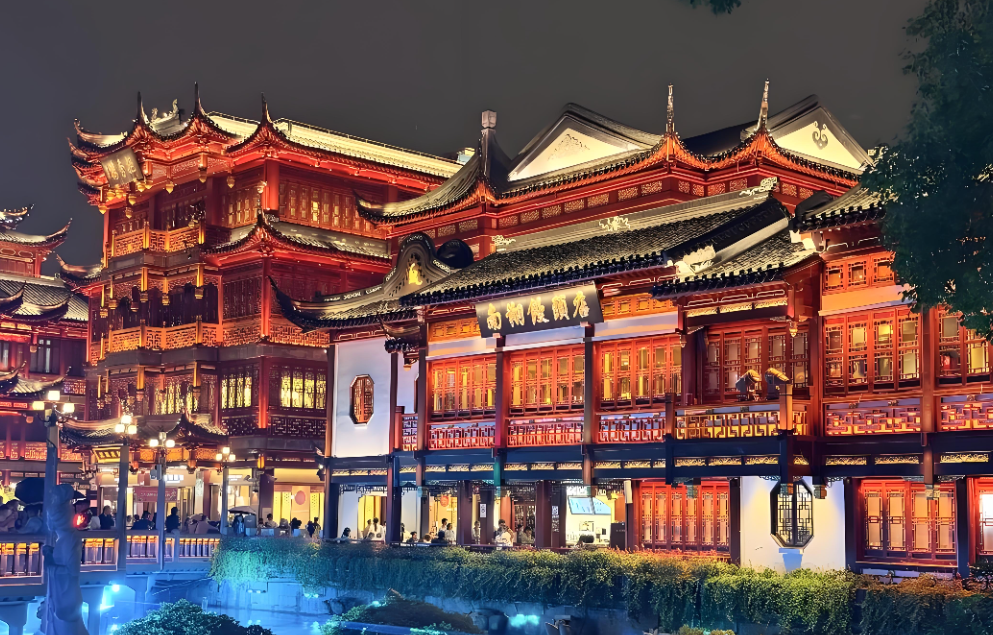
In terms of shopping, the time-honored brands and characteristic small shops around Yu Garden & City God Temple can make foreign tourists return with a full load. Century-old time-honored brands such as Laofengxiang Silver Building, Wangxingji Fanzhuang, Zhang Xiaoquan Scissors, and Shanghai Chopsticks Store carry the charm of traditional Chinese craftsmanship. Laofengxiang’s silverware and jewelry are exquisitely crafted, Wangxingji’s fans are elegant and refined, Zhang Xiaoquan’s scissors are sharp and durable, and the chopsticks in Shanghai Chopsticks Store are of various materials and exquisite patterns. Each product carries a century of craftsmanship, which can be taken back as a souvenir or let you feel the profound heritage of traditional Chinese culture. In addition, there are many small shops around selling Jiangnan characteristic crafts, such as Su Embroidery, embroidery, jade carving, bamboo weaving, etc. Each craft is exquisite, showing the exquisite skills of Jiangnan craftsmanship, suitable for foreign tourists who like traditional culture and crafts to purchase. The consumption screen also marks the “must-buy reasons” and material information of various commodities, helping foreign tourists quickly select their favorite products.
In addition to sightseeing, food and shopping, Yu Garden & City God Temple is also an excellent place to experience Shanghai folk culture. This place has a profound folk culture heritage. In addition to temple fairs and lantern shows on traditional festivals, various folk performances can be seen on weekdays, such as sugar painting, dough figurines, Paper Cutting, etc. These traditional craftsmen make on-site with skilled techniques, turning simple ingredients or paper into exquisite works of art. Foreign tourists can not only watch, but also experience it personally, feeling the fun of traditional Chinese handicrafts. The scenic area is also equipped with bilingual maps and English guide signs. During the 2025 Yu Garden Lantern Festival, temporary Japanese and Korean voice broadcasts were added to provide all-round convenience for foreign tourists and help them better understand the scenic culture and folk customs. In addition, Yu Garden is the birthplace of the “Shanghai School of Painting”. In the late Qing Dynasty, famous calligraphers and painters such as Ren Bonian and Wu Changshuo gathered here to create. In the calligraphy and painting shops in the scenic area, you can still see various exquisite calligraphy and painting works, suitable for calligraphy and painting lovers to visit and purchase.
For foreign tourists, the transportation of Yu Garden & City God Temple is very convenient, and it is close to many popular scenic spots. After visiting, you can easily go to other scenic spots to continue your trip. The scenic area is located on Yu Garden Road, Huangpu District, Shanghai, close to Yu Garden Station of Metro Line 10 and Line 14. After getting off the Subway, you can walk to it in a few minutes; you can also go there by bus or taxi, with very convenient transportation. The scenic area is adjacent to popular scenic spots such as Nanjing Road Pedestrian Street and the Bund. After visiting Yu Garden & City God Temple, you can take the subway or bus to Nanjing Road Pedestrian Street for shopping and tasting food, or walk or take a ferry to the Bund to enjoy the beautiful scenery on both banks of the Huangpu River and feel the unique charm of the integration of ancient and modern Shanghai.
To make your trip to Yu Garden & City God Temple smoother and more pleasant, here are some practical tips for you. The best visiting time is divided into three periods: 9 am to 11 am, with fewer tourists and suitable light, which is ideal for taking photos, checking in, and leisurely viewing the garden scenery and City God Temple buildings, feeling the tranquility and elegance of the scenic area; 2 pm to 5 pm, the commercial atmosphere and vitality are strong, all shops are open, suitable for in-depth shopping, tasting food, and experiencing folk activities; 7 pm to 9 pm, all the lights in the scenic area are on. The ancient gardens and buildings are more charming with the light, especially the Zigzag Bridge and Mid-Lake Pavilion, which are bright and magnificent, making it the best time to enjoy the night view and take photos.
In terms of tickets, Yu Garden requires a ticket purchase. Foreign tourists can book online in advance or buy on site at the scenic area entrance. The ticket price is affordable, and some special groups can enjoy discounts; the City God Temple is open to the public free of charge, no ticket required, and you can enter and exit freely. In addition, the consumption screens in the scenic area can be used free of charge, convenient for querying food, goods and travel information; some areas in Yu Garden have many steps, so it is recommended to wear comfortable shoes; the temperature in the scenic area is slightly different from that outdoors. You can prepare sun protection products and drinking water in hot summer, and warm clothes in cold winter; when taking photos, you can choose locations such as Zigzag Bridge, Mid-Lake Pavilion, Yulinglong, and City God Temple Main Hall, where you can not only take photos of the elegance of Jiangnan gardens, but also the simplicity of the City God Temple, and capture the vitality of the scenic area; if you encounter problems, you can go to the scenic area service center for consultation. The staff will provide enthusiastic help, and some staff can speak English, Japanese, Korean and other languages, convenient for foreign tourists to communicate.
Yu Garden & City God Temple are the ancient charm business cards of Shanghai and the symbols of Shanghai’s vitality. Here, there is the elegance and poetry of Jiangnan gardens, the simplicity and solemnity of the City God Temple, the ingenuity and persistence of time-honored brands, the freshness and authenticity of characteristic food, and the strong folk culture and vitality. It has both the profound heritage of traditional Chinese culture and modern convenient services suitable for foreign tourists. Whether you are a garden enthusiast, a food lover, a culture enthusiast, or a folk custom enthusiast, you can find your own fun here. When you come to Shanghai, you must walk into Yu Garden & City God Temple, step into the elegance of the ancient garden, embrace the appointment of prosperity, feel the charm of Jiangnan culture and the vitality of old Shanghai, and let this trip become the most unforgettable memory of your trip to Shanghai.




暂无评论内容