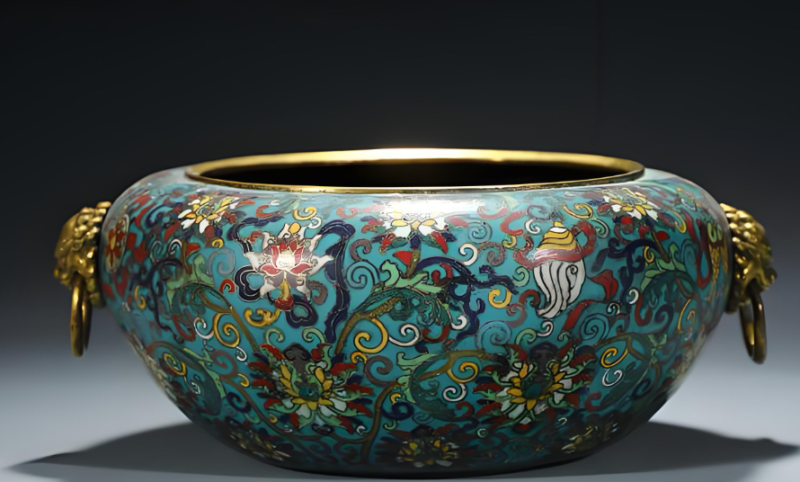





Among the imperial crafts of the “Eight Great Arts of Yanjing”, cloisonné (Copper-body Wire Inlay Enamel) is undoubtedly the most visually stunning treasure. The centuries-old proverb “One cloisonné equals ten imperial porcelain pieces” not only highlights its rarity but also holds the cultural code of this craft spanning over 600 years—it is a crystallization of Eastern and Western technical integration, a symbol of imperial exclusivity, and a legend of intangible cultural heritage guarded by generations of artisans with kiln fire and fingertips. When you embark on a cultural journey in Beijing, cloisonné is the key to understanding the imperial aesthetics and craftsmanship of this ancient capital.
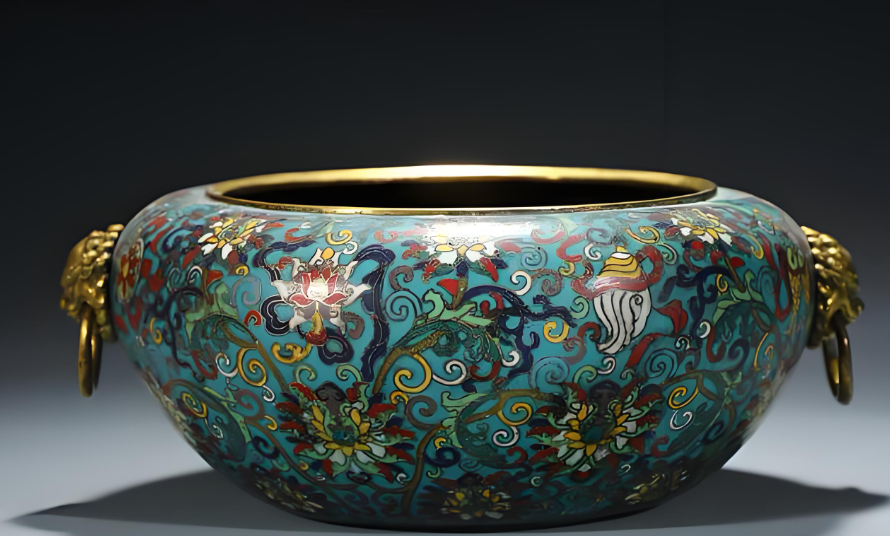
The origin of cloisonné is a story of cultural integration across mountains and seas. Academic circles generally believe that at the end of the 13th century, along with the Western Expeditions of the Yuan Dynasty, enamel craftsmanship from the Arab region was introduced to China, colliding and merging with local Metalworking techniques to gradually form the unique Copper-body Wire Inlay Enamel craft. It got its name during the Jingtai period of the Ming Dynasty, when the court strongly supported this craft, and the glaze was dominated by rich and luxurious blue tones, hence the name “Cloisonné” has been passed down to this day. Its peak appeared in the Qianlong period of the Qing Dynasty; Emperor Qianlong favored intricate and magnificent aesthetics, promoting Cloisonné from sacrificial vessels and ornaments to daily utensils such as tables, chairs, and curtain hooks. Even a 2.4-meter-tall Cloisonné Buddha pagoda was created, combining the efforts of more than a dozen craftsmen, becoming a masterpiece handed down from generation to generation.
The birth of a Cloisonné piece can be called a game with fire and a dialogue with time. It needs to go through six core steps: artistic design, mold-making, wire inlay, enamel application, polishing, and gilding, subdivided into dozens of processes, all completed by hand. Mold-making uses red copper as the raw material; artisans cut, beat, and weld copper sheets into shape, laying the foundation of the artifact. Wire inlay is the most demanding link—copper wires as thin as hair are bent, shaped with tweezers, and attached to the copper body to outline complex patterns, with each line requiring precision and neatness, like “Embroidery” on metal. Enamel application endows the artifact with soul; artisans fill the gaps between the wire patterns with various enamel glazes, repeating glazing and firing three or four times, allowing the glaze to melt into a smooth and bright surface at 700-800 degrees Celsius, making the color layers more abundant. Finally, it is polished three times with coarse sandstone, yellow stone, and charcoal, and finished with gilding, making the copper wire and glaze complement each other, showing the magnificent imperial style.
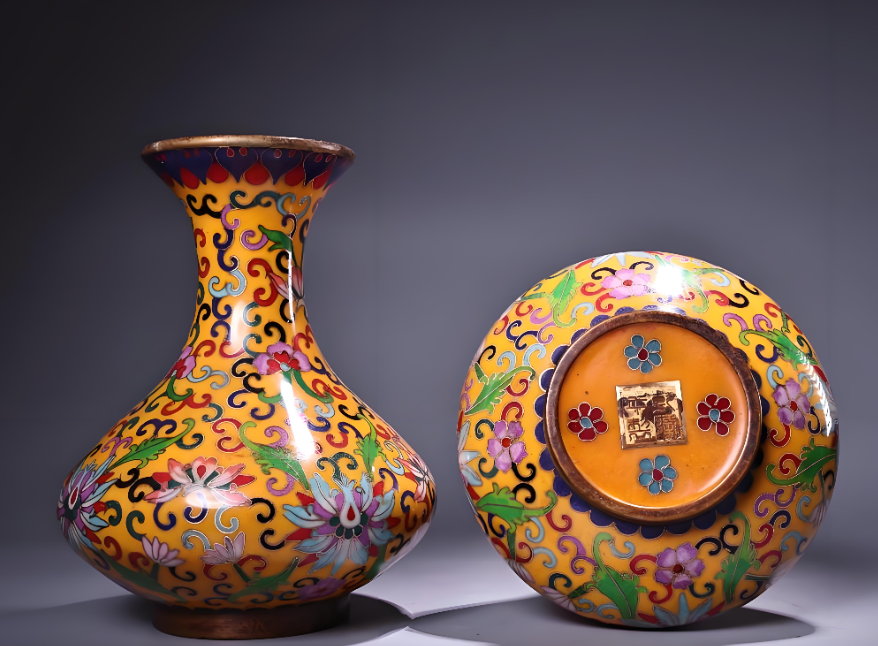
In modern times, Cloisonné was once on the verge of extinction, but fortunately, it was rescued and supported by scholars such as Lin Huiyin and Liang Sicheng. In 1950, they established an art group at Tsinghua University to explore and sort out traditional Cloisonné patterns and train inheritors. In 1956, Beijing Enamel Factory was established, integrating more than 40 private workshops and imperial workshop techniques, giving this craft a new lease of life. Today, it is not only the core inheritance base of Chinese Cloisonné art but also houses China’s first Cloisonné Art Museum, displaying exquisite works from the Yuan Dynasty to the present, from archaized imperial artifacts to modern cross-border works, comprehensively showing the evolution and innovation of the craft.
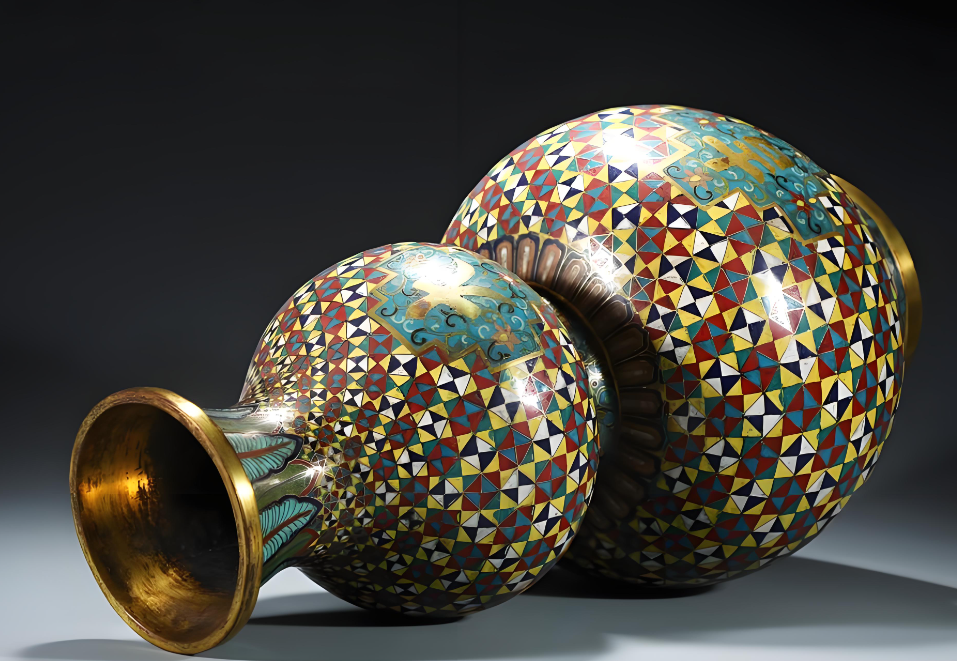
For foreign travelers, Beijing Enamel Factory is the best place to experience the charm of Cloisonné immersively. It extends its opening hours every Saturday evening, allowing you to watch artisans demonstrate the delicacy of wire inlay and enamel application up close, and witness the moment when the glaze transforms into brilliant colors in the kiln. What’s more exciting is the hands-on experience project—the simplified experience course retains the three core links of wire inlay, enamel application, and firing. Even beginners can make miniature enamel paintings under the guidance of teachers, and children can exclusively experience the enamel application process. After completion, you can also buy your work at cost price. Every National Day holiday, a vintage Cloisonné market is held here, with tens of thousands of export vintage pieces from the 1970s and 1980s on display at affordable prices, from ornaments to jewelry boxes, hiding unique marks of the era.
Today, Cloisonné has long transcended the imperial court and become a “cultural calling card” of China. From the “Four Seas Peace” vase at the 2014 APEC meeting to state gifts at the Belt and Road Summit, it conveys Eastern aesthetics to the world with its profound craft heritage and auspicious meanings. At the same time, it is constantly “breaking boundaries”, integrating with lacquerware and ivory carving, and deriving cultural and creative products such as refrigerator magnets and keychains, allowing this ancient craft to integrate into modern life. When you touch the warm glaze and gilded lines of Cloisonné, you touch the most vivid intangible cultural heritage pulse of Beijing—it nirvana in the kiln, innovates in inheritance, and waits for every traveler to understand its past and new life.






暂无评论内容