




Among the imperial crafts of the “Eight Great Arts of Yanjing”, Beijing Imperial jade carving stands out with its “natural jade texture and exquisite craftsmanship”, carrying the thousand-year heritage of Chinese jade Culture. The ancients said, “A gentleman compares his virtue to jade”, and Beijing Imperial Jade Carving integrates the warmth of jade with the majesty of the imperial family, refined through the Yuan, Ming and Qing dynasties, becoming an ancient capital memory carved in jade. For foreign travelers, understanding this craft means grasping the deep code of “harmony between man and nature” in Eastern aesthetics.
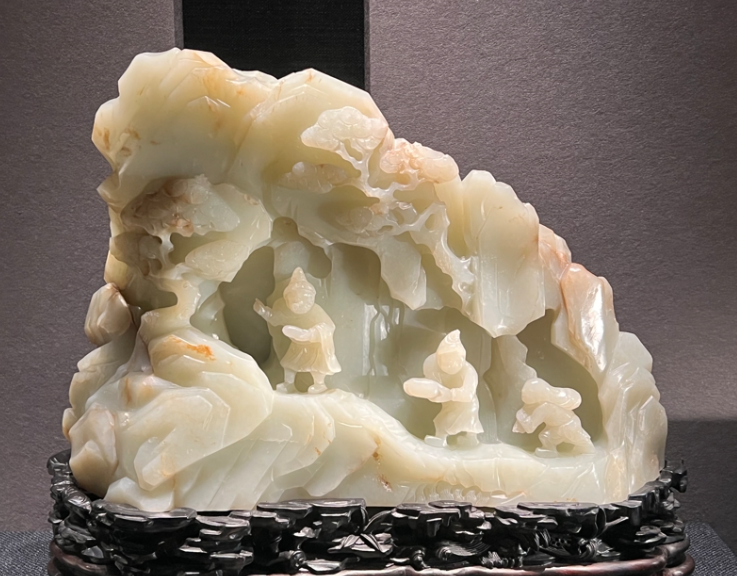
The origin of Beijing jade carving can be traced back to the Yuan Dynasty, founded by Quanzhen Taoist Qiu Chuji, and its real prosperity began in the Ming Dynasty. At that time, the Imperial Household Department set up a “Jade Workshop”, recruiting top jade craftsmen from across the country, upgrading folk techniques to imperial standards, forming an artistic style of dignity, elegance and grandeur. The Qing Dynasty marked its peak; Emperor Qianlong’s extreme love for jade promoted jade carving from ritual vessels and ornaments to daily utensils. He also ordered the Imperial Household Department to establish the “Western Workshop” to imitate Hindustan gold and silver inlaid jadeware, creating numerous Golden Inlaid Jade masterpieces, and decreed that “Golden Inlaid Jade shall be exclusive to the imperial palace and not passed on to the outside world”, highlighting royal dignity.
The birth of an imperial jade artifact is a interpretation of craftsmanship that “three parts depend on materials, seven parts on craftsmanship”. It goes through six core links: material inspection, material cleaning, cutting, design, polishing and finishing, all completed by hand with almost zero error tolerance. Material inspection is the first key step; craftsmen judge the internal texture of jade by experience, avoiding impurities and cracks, achieving “removing flaws”. The design stage emphasizes “adapting to the material”, creating according to the jade’s color and texture, with clever color carving as the essence, integrating natural jade color with shape perfectly. Polishing determines the warm texture of jade; after repeated polishing, jade can show a lard-like luster, which is the core meaning of “polishing jade” rather than “carving jade” in Beijing jade carving—not about cutting, but about countless refinements.
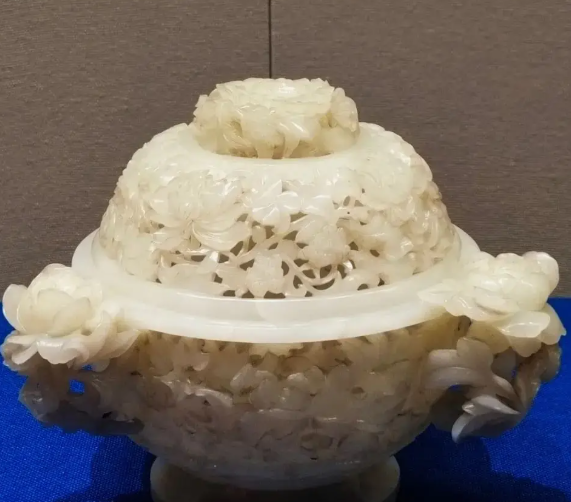
In modern times, Beijing Jade Carving has experienced ups and downs in inheritance, thanks to the persistence of generations of craftsmen. Yang Genlian, a national-level intangible cultural heritage inheritor, is a representative. He was inspired by the jade-making atmosphere of “Qingshan Ju” in southern Beijing, once the most prosperous jade distribution center in China in the late Qing Dynasty and the early Republic of China, and a gathering place for imperial jade craftsmen. Yang Genlian not only pushed the thin-walled jadeware craftsmanship to the peak, creating the “Four Seas Peace” thin-walled pair of vases with hair-thin carvings and distinct layers, but also spent ten years restoring the centuries-lost imperial “Golden Inlaid Jade” craft, embedding gold wires less than 0.5mm into jade, controlling the hammering force by hand to achieve perfect integration of gold and jade, abandoning traditional adhesive technology to make the craft more exquisite.
Today, there are several must-visit places to experience the charm of Beijing Jade Carving immersively. “Xiangbo Ju” Jade Carving Studio founded by Yang Genlian is both a heritage site and an exhibition space for fine works. Works here such as “Blessings and Prosperity for Generations” and “Three-Faced Guanyin” are amazing—the former is carved from a single piece of white jade, achieving a three-dimensional wonder of “gourds hidden in gourds and chains nested in chains”, while the latter hides sutra tubes and scriptures, showing exquisite craftsmanship. China National Arts and Crafts Museum collects four national jade treasures made after the founding of New China—”Mount Tai Wonder”, “Fragrance Gathering”, “Universal Joy” and “Flower Collection”, which are masterpieces of exquisite craftsmanship. In addition, Qingshan Ju in southern Beijing, though no longer a prosperous distribution center, still retains the cultural imprint of old Beijing’s jade making, suitable for exploring the roots of the craft.
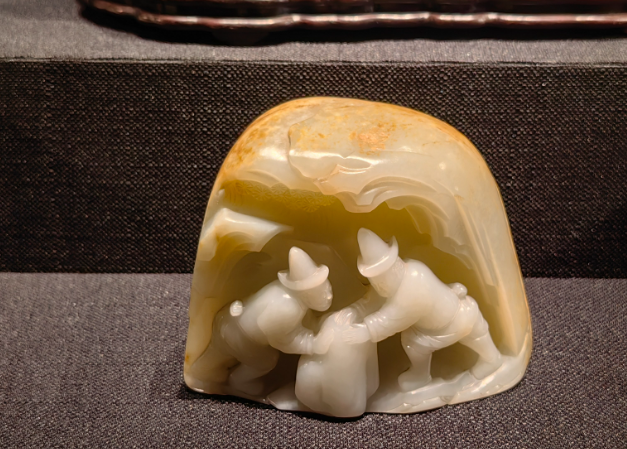
Contemporary Beijing Jade Carving is regenerating in inheritance. Yang Xiaoya, Yang Genlian’s daughter and a young inheritor, integrates traditional craftsmanship with modern jewelry design, spreading the charm of jade carving through live broadcasts and university lectures, making the ancient craft accessible to young people. From the rare treasures exclusive to the imperial palace to the intangible cultural heritage that can be closely watched and understood today, Beijing Jade Carving has always used jade as a medium, telling the craftsman spirit of “jade must have craftsmanship, and craftsmanship must have virtue”. When you touch the warm texture of jade carving, you touch the warm background of Eastern civilization—that is the secret of its timeless appeal.




暂无评论内容