




As China’s economic, financial, trade, and shipping center, Shanghai is not only an international city with both historical heritage and modern vitality, but also a core hub connecting China’s inland areas with the global market, undertaking an important mission of China’s opening-up. With a permanent population of over 24 million, this city has become a magnet for global capital, talents, and technologies, thanks to its superior geographical location, improved infrastructure, open business environment, and diverse industrial ecology. It is also the best destination for foreign tourists to understand China’s economic development and explore business opportunities. Whether for business inspections, investment research, or simply to learn about the cutting-edge trends of China’s Economy, stepping into Shanghai allows you to intuitively feel the city’s economic vitality, development resilience, and the pulse of global economic integration.
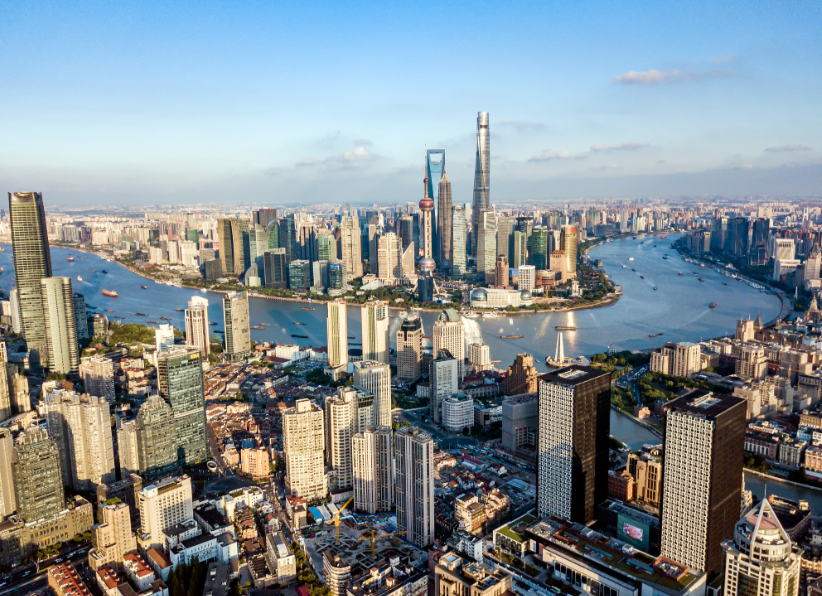
Shanghai’s economic strength has long been ranked first among Chinese cities. Its GDP has exceeded 4.7 trillion yuan for many consecutive years, with a per capita GDP of over 180,000 yuan, and the quality and efficiency of economic development have continued to improve. Adhering to the concept of “opening-up leading and innovation-driven”, Shanghai has formed a diversified industrial pattern where four pillar industries – finance, trade, shipping, and technological innovation – develop in coordination, and strategic emerging industries rise rapidly. It not only has a mature modern service industry system, but also possesses strong advanced manufacturing capabilities, becoming a “weather vane” for China’s high-quality economic development. For foreign tourists, there is no need to delve into complex economic data; just wandering around Shanghai’s core business districts, industrial Parks, and ports, you can truly feel the city’s economic pulse.
The financial industry is the core pillar of Shanghai’s Economy. The Lujiazui Financial and Trade Zone in Shanghai is known as “China’s Wall Street”, gathering the world’s top financial institutions and talents, and serving as the core carrier of China’s financial market. Here stand iconic buildings such as the Shanghai Tower, the Shanghai World Financial Center, and Jinmao Tower, with rows of financial institutions including banks, securities, insurance, and funds at your feet – not only leading domestic financial enterprises such as Industrial and Commercial Bank of China and Bank of China, but also China headquarters or regional headquarters of internationally renowned financial institutions such as Citibank, HSBC, and Goldman Sachs. At present, Shanghai has formed a comprehensive financial market system covering stocks, bonds, futures, foreign exchange, gold, and other categories. Core financial infrastructure such as the Shanghai Stock Exchange and China Financial Futures Exchange are all located here, and the total transaction volume of the financial market has ranked among the top in the world for many consecutive years. Foreign tourists can visit the Lujiazui Financial City, enter the Shanghai Stock Exchange Exhibition Hall (by appointment in advance) to intuitively understand the development history and operation mechanism of China’s financial market, or stroll along the Lujiazui Binjiang Walk to feel the flow and integration of global financial capital.
The trade and shipping industries are important business cards of Shanghai’s opening-up. Relying on its geographical advantage at the estuary of the Yangtze River, Shanghai Port has become the world’s largest container port in terms of throughput, with a container throughput exceeding 47 million TEUs in 2024, ranking first in the world for many consecutive years. Connecting more than 600 ports in over 200 countries and regions around the world, Shanghai Port is an important node in the global shipping network. Yangshan Deep-Water Port, as the core port area of Shanghai Port, has become a model for the intelligent development of global ports with its automated and intelligent operation mode. Foreign tourists can go to the Yangshan Deep-Water Port Observation Platform to watch the busy scene of large ships shuttling and containers being loaded and unloaded, and feel the vitality of global trade. Meanwhile, Shanghai is China’s largest foreign trade city, with its total import and export volume ranking first in China for many consecutive years. Various trade exhibitions such as the China International Import Expo (CIIE), Shanghai Import Expo, and Shanghai Free Trade Zone International Import Commodities Fair are held regularly. Among them, the CIIE is the world’s first national-level exhibition themed on imports, attracting thousands of enterprises from more than 100 countries and regions every year. It serves as an important bridge for foreign enterprises to enter the Chinese market and also provides foreign tourists with an opportunity to closely understand high-quality global goods and services.
The technological innovation industry is the core driving force for Shanghai’s high-quality economic development. In recent years, Shanghai has continuously increased investment in technological innovation, focusing on strategic emerging industries such as integrated circuits, artificial intelligence, biomedicine, and aerospace. It has built a number of national-level technological innovation Parks such as Zhangjiang Science City and Caohejing New Technology Development Zone, and cultivated a number of technologically innovative enterprises with global competitiveness. Known as “China’s Silicon Valley”, Zhangjiang Science City gathers top universities and research institutes such as Fudan University and Shanghai Jiao Tong University, as well as well-known domestic and foreign technological innovation enterprises such as Huawei, Tesla, and SMIC. It has formed an integrated technological innovation ecosystem of “research, incubation, production, and application”. The scale of the integrated circuit industry here accounts for more than one-third of the country, and the artificial intelligence and biomedicine industries are also in the leading position in China. Foreign tourists can visit the Zhangjiang Science City Exhibition Hall to learn about the achievements of Shanghai’s technological innovation industry, or visit the Tesla Shanghai Gigafactory (by appointment in advance) to experience the intelligent production process of the new energy vehicle industry and intuitively feel the innovative vitality of Shanghai’s technological innovation industry.
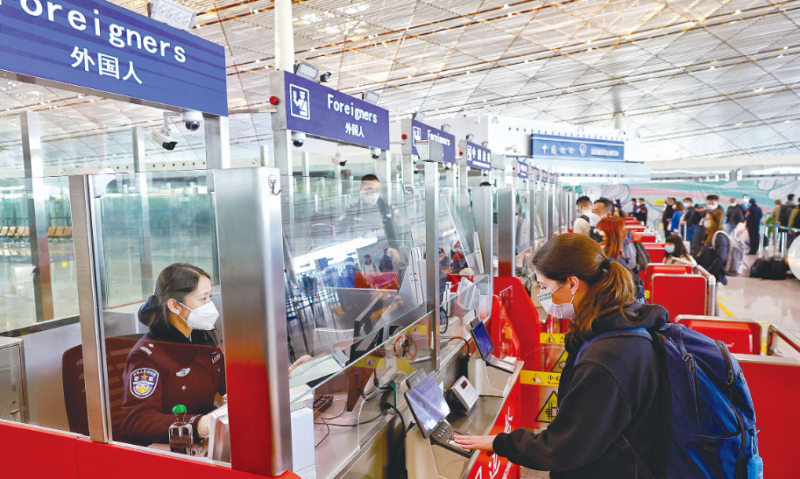
An open business environment is an important advantage for Shanghai to attract global capital and talents. As one of the earliest cities in China to open up to the outside world, Shanghai has always adhered to a market-oriented, law-based, and international business philosophy, continuously optimizing foreign investment services, simplifying the registration process for foreign-invested enterprises, and implementing national treatment for foreign-invested enterprises. At present, Shanghai has established more than 100,000 foreign-invested enterprises, and the total amount of foreign investment attracted has ranked first among Chinese cities for many consecutive years. Nearly 400 of the world’s top 500 enterprises have established headquarters or branches in Shanghai. To facilitate foreign tourists and foreign-funded personnel, Shanghai has improved its multilingual service system. Bilingual signs and English-speaking staff are available in key areas such as government service halls, core business districts, airports, and railway stations, and the foreign-invested enterprise service hotline also provides multilingual services to solve various problems encountered by foreign-funded personnel in work and life. In addition, Shanghai has complete supporting services such as transportation, accommodation, and catering, which can meet the business and leisure needs of foreign tourists.
For foreign tourists who want to fully understand Shanghai’s Economy, in addition to visiting core industrial Parks and landmark venues, they can also go to Shanghai’s core business districts to feel the vitality of the consumer economy. Shanghai’s business districts each have their own characteristics. Nanjing Road Pedestrian Street is the most representative commercial street in Shanghai, gathering world-renowned brands and time-honored stores with a daily passenger flow of over 1 million; Huaihai Middle Road Business District focuses on high-end consumption, gathering many flagship stores of international luxury brands; Lujiazui Business District integrates financial and consumption functions, with both high-end shopping malls and characteristic catering and leisure venues; Xintiandi Business District combines historical features with modern consumption, retaining the old Shanghai Shikumen buildings while introducing world-renowned catering, entertainment, and retail brands, becoming an important window for foreign tourists to feel the integration of “old and new” in Shanghai. These business districts are not only important carriers of Shanghai’s consumer economy, but also intuitive manifestations of Shanghai’s economic vitality. Foreign tourists can shop, dine, and relax here, feel Shanghai’s diverse consumer Culture, observe changes in the demand of Shanghai’s consumer market, and understand the potential of China’s domestic demand market.
To help foreign tourists better understand Shanghai’s economy, here are some practical reference tips. In terms of transportation, Shanghai has convenient transportation, with Subways, buses, taxis, and ride-hailing services covering the entire city. Core industrial parks and landmark venues are all accessible by subway. For example, Lujiazui can be reached by taking Metro Line 2 to Lujiazui Station; Zhangjiang Science City can be reached by taking Metro Line 2 to Guanglan Road Station and transferring; Yangshan Deep-Water Port can be reached by taking Metro Line 16 to Dishui Lake Station and then transferring to a bus. Foreign tourists can use Alipay, WeChat Pay (by binding an overseas bank card) or cash to pay for transportation fees, or purchase a Shanghai Public Transport Card for convenient travel.
In terms of visit tips, venues such as Lujiazui Financial City and Zhangjiang Science City Exhibition Hall are open for free. Venues such as the Shanghai Stock Exchange Exhibition Hall and Tesla Shanghai Gigafactory need to be booked in advance on the official website or applet. An English interface is available for booking, and some venues also provide English explanation services. The China International Import Expo is held every November. Foreign tourists can book tickets for free on the official website in advance. In terms of accommodation, Shanghai has a variety of accommodation options from budget hotels to high-end hotels. There are many high-end hotels in areas such as Lujiazui, the Bund, and Nanjing West Road, which are suitable for business tourists, and most hotels provide English services and overseas bank card payment services.
Other notes: Government service halls, banks, shopping malls, and other venues in Shanghai all support overseas bank card payments, and some venues also support foreign currency exchange. If you need to consult information about Shanghai’s economy, you can go to the service window of the Foreign Affairs Office of the Shanghai Municipal People’s Government, where staff can provide multilingual consultation services. It is recommended that foreign tourists learn about Shanghai’s industrial distribution and opening hours of key venues in advance and plan their itinerary reasonably. When visiting industrial parks, you must abide by the park regulations, do not randomly take photos of confidential areas, and respect corporate privacy.
The development of Shanghai’s economy is a microcosm of China’s economic opening-up and high-quality development. This city has both the grandeur and inclusiveness of a global financial center, the innovation and vitality of a technological innovation city, and the open and inclusive urban heritage. For foreign tourists, Shanghai is not only an international city worth visiting, but also a core window to understand China’s economy, explore business opportunities, and feel the integration of global economies. When you come to Shanghai, take 2-3 days to walk into Lujiazui, Zhangjiang Science City, and Shanghai Port, stroll around the core business districts, feel the economic vitality and development charm of this city, understand the past, present, and future of China’s economy, and leave an unforgettable memory of an economic exploration journey.



暂无评论内容