




In January 2026, Shenzhen’s ports, airport, border checkpoints, metro lines and railway stations operated steadily, boasting a sustained boom of passenger flow and vibrant vitality across all hubs.
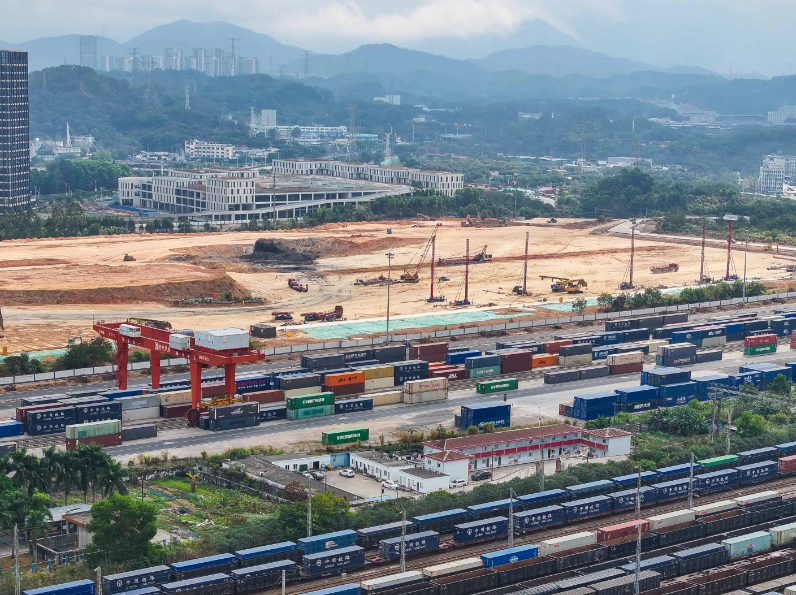
Shenzhen Port achieved a strong start to the year with remarkable container throughput performance. In January, the port handled 3.298 million twenty-foot equivalent units (TEUs) of containers, an 8.9% year-on-year increase, setting a new all-time monthly record for container volume. Among this total, the throughput of laden containers rose 4.9% from the same period last year, accounting for 66% of the overall container volume, reflecting the port’s robust operational momentum.
For Shenzhen Bao’an International Airport, traffic volumes maintained a steady growth trajectory in January. The airport recorded 5.88 million passenger trips, a 2.8% year-on-year rise, including 551,300 international and regional passenger trips (a 4.3% year-on-year increase). Its cargo and mail throughput reached 168,200 tons, up 1.7% year-on-year, with 87,000 tons of international and regional cargo and mail handled, a 2.7% year-on-year growth. To better serve passengers for the upcoming Spring Festival travel rush, the airport launched a new domestic passenger route to Tongren in Guizhou Province and increased flight frequencies on popular routes to Shenyang, Dali, and Kuala Lumpur in Malaysia, offering more travel options for local residents.
Shenzhen’s border checkpoints witnessed a sharp surge in cross-border flow in January. A total of 25.0225 million cross-border travelers passed through the city’s border checkpoints, a 12.19% year-on-year increase, including 12.6531 million outbound travelers and 12.3694 million inbound travelers. Cross-border vehicle trips also rose by 10.35% to 1.1225 million trips, underscoring the close cross-border connectivity and booming personnel and cargo exchanges.
Shenzhen’s urban rail transit system, covering metro lines and trams, saw a substantial jump in passenger volume in January, with a total of 299 million trips made and a daily average of 9.66 million trips, a 26.7% year-on-year increase. The significant growth is mainly attributed to the fact that the 2025 Spring Festival fell in January, when urban travel demand was far lower than usual, creating a relatively low comparison base. Notably, the metro system registered daily passenger traffic exceeding 10 million on 9 separate days in January, marking a regular trend of daily passenger volume surpassing 10 million on workdays—a clear sign of the city’s restored vitality and busy urban mobility.
Railway traffic in Shenzhen posted a mixed but stable performance in January, with a total of 15.35 million rail passenger arrivals and departures, a 3.3% year-on-year increase. Specifically, 7.98 million passengers departed from Shenzhen’s railway stations (a 20.9% year-on-year decrease), while 7.37 million arrived (a 24.2% year-on-year increase). Shenzhen North Railway Station, the city’s major railway hub, handled 10.23 million passenger arrivals and departures (a 1.7% year-on-year decrease), including 5.25 million outbound passengers (a 21.0% year-on-year drop) and 4.98 million inbound passengers (a 23.2% year-on-year rise). According to local railway authorities, the year-on-year decline in outbound passenger numbers is due to the delayed start of the 2026 Spring Festival travel rush, which officially kicks off on February 2 this year. In contrast, the 2025 travel rush commenced in mid-to-late January, resulting in a later peak of outbound passenger flow this year compared with last year.









暂无评论内容