




In Gongming Sub-district, Guangming District, Shenzhen, a Lingnan snack with a history of hundreds of years has long integrated into the daily life of local people, becoming an essential delicacy to awaken the morning and soothe the taste buds — Gongming Laisifen. As a representative of Shenzhen’s local characteristic food, this delicious dish with delicate rice noodles and rich soup originated from the agricultural civilization of the Ming and Qing dynasties. After years of precipitation, it not only retains the traditional essence of Cantonese Laisifen but also integrates the local ingredients and dietary wisdom of Gongming, becoming a taste link connecting the rural memories of western Shenzhen and the fireworks of the modern city. For foreign travelers, tasting Gongming Laisifen is not only a culinary feast but also an excellent journey to deeply understand Lingnan agricultural dietary Culture and experience the local warmth of Shenzhen.
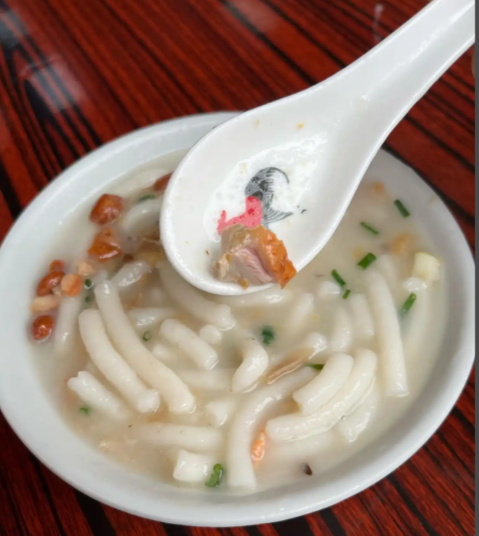
The origin of Gongming Laisifen is closely linked to the local agricultural Culture and geographical environment. During the Ming and Qing dynasties, Gongming was mainly an agricultural area, rich in rice. Villagers developed a variety of rice-based snacks using rice as the main ingredient, and Laisifen was one of the best. In Cantonese, “Lai” means “flowing and dripping”. It is named “Laisifen” because rice batter needs to be poured into boiling water from a special colander during production to form long and flexible rice noodles. Initially, Gongming Laisifen was a convenient staple food for farmers during work breaks, with a simple production method and strong satiety, which could quickly replenish physical strength. With the development of the times, villagers continuously optimized the ingredient matching and production process, adding fresh meat, dried shrimps, preserved vegetables and other ingredients, upgrading Laisifen from a home-cooked staple food to a flavorful characteristic snack, which gradually spread in the Pearl River Delta and became a symbolic food of Gongming Sub-district. Today, during traditional festivals, local people in Gongming still have the custom of making and sharing Laisifen, continuing this centuries-old taste inheritance.
The ultimate Gongming Laisifen lies in the double persistence of rice noodles and soup, which is the core feature distinguishing it from Laisifen in other regions. The production of rice noodles is particularly exquisite. traditional Gongming Laisifen uses late indica rice grown locally, which has moderate stickiness and strong rice aroma. After soaking in clean water for 6 to 8 hours, it is ground into fine and residue-free rice batter. A small amount of lime water or edible alkali is added to adjust the acidity and increase toughness, and it is left to ferment for 1 hour to fully release the rice aroma. The fermented rice batter is poured into a special tile basin with round holes at the bottom. Hold the tile basin over the boiling pot, shake it gently, and the rice batter will pour into the water along the round holes, quickly solidifying into long and thin rice noodles about 2 millimeters in diameter when heated. After boiling until floating, take them out and put them in cold water to cool, making the taste more smooth and flexible. This hand-made rice noodle has a stronger rice aroma than machine-made ones, with no hard core when bitten, and slides into the mouth smoothly without sticking to the teeth, which is the essence of Gongming Laisifen.
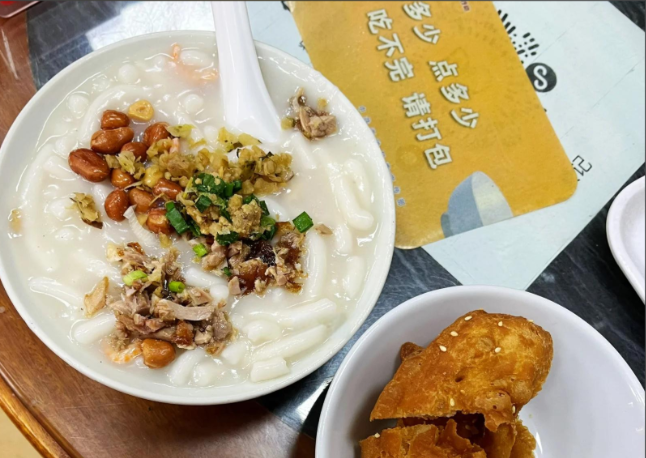
The soup is the finishing touch to the flavor of Gongming Laisifen. Every time-honored shop has its own secret recipe, passed down from generation to generation. The traditional soup is based on pork bones, dried croaker and dried shrimps. The pork bones need to be blanched in advance to remove blood foam, then put into a pot together with dried croaker and dried shrimps, added with enough clean water, boiled over high heat and then simmered over low heat for more than 4 hours until the soup becomes thick and milky white. The fresh aroma of bones, the salty freshness of dried croaker and the sweet aftertaste of dried shrimps are fully integrated. During the simmering process, dried tangerine peel and ginger slices are also added to remove fishiness and enhance aroma, and a small amount of rock sugar is added to neutralize the saltiness, making the soup fresh but not greasy, mellow and long-lasting. In addition to the classic salty soup, Gongming Laisifen has also derived clear soup, spicy soup and other flavors to meet the needs of different diners. However, the traditional pork bone and dried croaker soup is still the most respected, which can maximize the original flavor of rice noodles and the fresh aroma of ingredients.
Rich ingredients make the flavor of Gongming Laisifen more layered, highlighting the inclusiveness and delicacy of Lingnan cuisine. The classic ingredients are mainly local to Gongming, including braised pork slices, crispy fried fish skin, salty dried shrimps, refreshing dried radish, and tender lettuce leaves. Some shops also add homemade fish balls and meat rolls to balance nutrition. When eating, take the cooled rice noodles out and put them into a bowl, ladle in the boiling secret soup, spread various ingredients in turn, and finally sprinkle with chopped green onions, coriander, white sesame seeds, and drizzle a small amount of garlic oil or chili oil to enhance aroma. A qualified bowl of Gongming Laisifen has smooth rice noodles, mellow soup and rich ingredients. Suck a mouthful of rice noodles, drink a mouthful of thick soup, paired with crispy fish skin and salty dried radish, the multiple tastes of salty freshness, crispiness and smoothness interweave in the mouth, leaving a lasting aftertaste.
Gongming Laisifen is not only a dish but also deeply integrated into the local folk Culture and life scenes. In Gongming Sub-district, Laisifen can be seen everywhere, whether it is a street stall in the morning, a lively vegetable market, or a time-honored restaurant. In the early morning, there is always a long queue in front of Laisifen shops. Office workers, the elderly and students come one after another. A bowl of hot Laisifen with a fried dough stick is the most authentic Gongming breakfast. During festivals, every household will make Laisifen to entertain relatives and friends, giving it as a gift to neighbors, symbolizing “longevity and reunion”. In addition, Gongming Sub-district also holds characteristic food festivals, taking Laisifen as the core exhibit, inviting tourists to taste different flavors of Laisifen and feel the unique charm of this local food.
To taste the most authentic Gongming Laisifen, time-honored shops in the old street area of Gongming are the best choices. “Gongming Old Place Laisifen Shop” located on Zhenming Road, Gongming Sub-district, has been in operation for decades, adhering to hand-made techniques, with smooth rice noodles, mellow soup and sufficient ingredients, which is the first choice of locals and tourists. “Heshukou Laisifen Shop” in Gongming Old Street, Guangming District, inherits the family secret recipe. The soup is simmered for a longer time, with a richer flavor, and paired with homemade fish balls, it has a unique taste. Most of these time-honored shops have simple decorations, full of urban warmth. Diners sit around the table, sucking Laisifen and chatting, showing the warmth of Gongming. For foreign travelers, you may wish to walk into these old shops in the morning, order a bowl of classic Gongming Laisifen, and feel this centuries-old taste in the curling heat, understanding the profound heritage of Shenzhen’s local dietary culture.





暂无评论内容