




On the land steeped in Hakka cultural heritage in Kuiyong Sub-district, Dapeng New District, Shenzhen, a traditional tea snack carrying thousands of years of folk memory has long integrated into the daily life of local people — Kuiyong Hakka Tea Cakes. As a vivid carrier of Hakka dietary Culture, this delicacy made from glutinous rice and grains, paired with seasonal ingredients, took root in Lingnan along with the migration of Hakka ancestors, precipitating a unique flavor between the mountains and rivers of Kuiyong. It not only retains the simple essence of Central Plains cuisine but also absorbs the characteristics of Lingnan ingredients, becoming a taste link connecting Hakka cultural roots and Shenzhen’s local warmth. For foreign travelers, tasting Kuiyong Hakka Tea Cakes is not only a taste encounter but also an excellent journey to deeply understand Hakka folk customs and touch traditional lifestyles, comprehending the Hakka elegance hidden in tea snacks through their soft, glutinous and sweet taste.
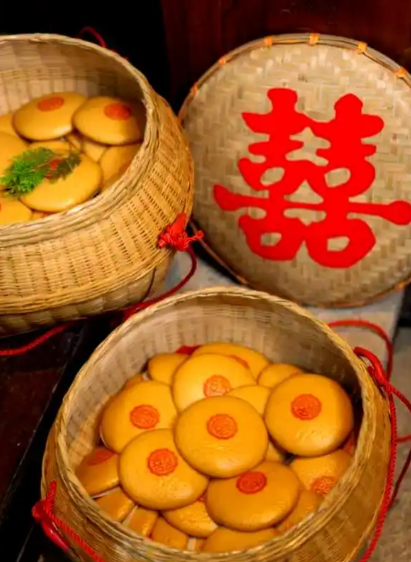
The origin of Kuiyong Hakka Tea Cakes is deeply engraved with the migration marks and survival wisdom of the Hakka ancestors. Since the late Western Jin Dynasty, gentry from the Central Plains moved south on a large scale several times to avoid wars, and finally settled in the border area of Fujian, Guangdong, Jiangxi and Lingnan, forming a unique Hakka people. In the dietary Culture of the Central Plains, grain and glutinous rice products occupied an important position, and the ancestors were used to making various rice cakes and pastries as daily tea snacks and festival foods. After moving south, Kuiyong has a mild climate and abundant products, rich in glutinous rice, mugwort leaves, mung beans, sesame and other ingredients. The intelligent Hakka people adapted to local conditions, combining the production techniques of the Central Plains with local ingredients to create the characteristic category of Hakka Tea Cakes. Initially, tea cakes were energy supplements for Hakkas during field work, as well as essential delicacies for festival sacrifices and visiting relatives and friends. After thousands of years of inheritance, they have gradually become a symbolic delicacy of Kuiyong Hakka culture, carrying Hakkas’ love for life and adherence to traditions.
The ultimate Kuiyong Hakka Tea Cakes lie in the strict selection of ingredients and respect for seasons, which is the core secret of maintaining their unique flavor. The ingredients of traditional tea cakes are all locally sourced, following the dietary concept of “eating in season”, with the gift of nature in every bite. Glutinous rice uses local round glutinous rice grown in Kuiyong, with moderate stickiness and plump grains. After soaking in clean water for more than 8 hours, it is ground into powder after absorbing enough water, with a delicate texture without residue, soft and not sticky to the teeth after steaming. Mugwort leaves are selected from fresh wild mugwort leaves in spring, blanched and mashed into mud, mixed with glutinous rice flour, which not only adds a unique herbal aroma but also has the effect of dispelling dampness and cold, making it the most representative raw material in Hakka Tea Cakes. In addition, the matching of fillings is also very particular. Salty tea cakes mostly use fresh bamboo shoots, dried radish, pork belly, dried shrimps, etc., which are fragrant and rich after stir-frying; sweet tea cakes are mainly made of mung bean paste, red bean paste, sesame and crushed peanuts, sweet but not greasy, with a mellow aroma, satisfying the taste preferences of different diners.
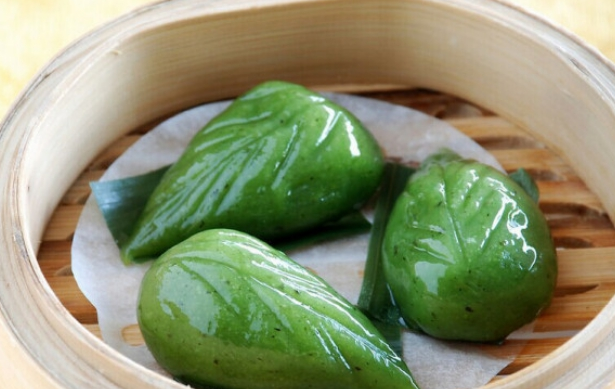
Handmade craftsmanship is the essence of Kuiyong Hakka Tea Cakes inherited for thousands of years. Each step embodies the ingenuity and experience of Hakka craftsmen, which cannot be replaced by mass production. The production process of tea cakes is cumbersome and tests craftsmanship, requiring precise control from ingredient processing to wrapping and steaming. Taking the classic mugwort leaf tea cakes as an example, first blanch the soaked mugwort leaves to remove the astringency, put them into a stone mortar and mash them into a delicate mugwort paste, mix with glutinous rice flour, a small amount of sugar and water, knead repeatedly until the dough is smooth and elastic, and let it stand for 30 minutes to blend the flavors. Divide the proofed dough into uniform small portions, press into thin skins with the palm of the hand, put in the adjusted fillings, gently close the mouth with fingers, knead into a circle, and then press out exquisite patterns with a mold, which is not only beautiful but also easy to distinguish flavors. The steaming process is also crucial. Put the wrapped tea cakes into a steamer lined with zongzi leaves, boil over high heat and then steam over medium heat for 15 to 20 minutes. The fragrance of zongzi leaves fully blends with the softness of tea cakes and the freshness of fillings, emitting a strong aroma when taken out of the pot, making people’s mouths water. The production processes of different types of tea cakes are slightly different, but the core of hand kneading and fresh wrapping and steaming has never changed, which is the essential difference between traditional tea cakes and mass-produced food.
Kuiyong Hakka Tea Cakes have a variety of flavors, covering both sweet and salty categories. Each type has its unique taste and meaning, highlighting the richness and delicacy of Hakka cuisine. Among the sweet tea cakes, mugwort leaf tea cakes are the most classic, with a green and soft skin, a faint mugwort aroma, and the sweet and smooth mung bean paste filling, making people salivate with every bite; sesame tea cakes are made of pure glutinous rice flour, with a full filling of crushed sesame and peanuts mixed with sugar, sweet and rich, becoming more fragrant as you chew. Salty tea cakes are more homely. Bamboo shoot tea cakes use diced fresh local bamboo shoots, stir-fried with pork belly and dried radish, with a savory and refreshing filling, combining the crispness of bamboo shoots and the mellow aroma of meat; radish tea cakes use shredded radish as the main filling, paired with dried shrimps and chopped green onions, with a refreshing and non-greasy taste, making them the first choice for Hakkas’ daily tea snacks. Whether it is the warm sweetness of sweet tea cakes or the savory mellow of salty tea cakes, Kuiyong Hakka Tea Cakes are based on a soft and glutinous texture, with rich layers and a long aftertaste, suitable for most people’s tastes.
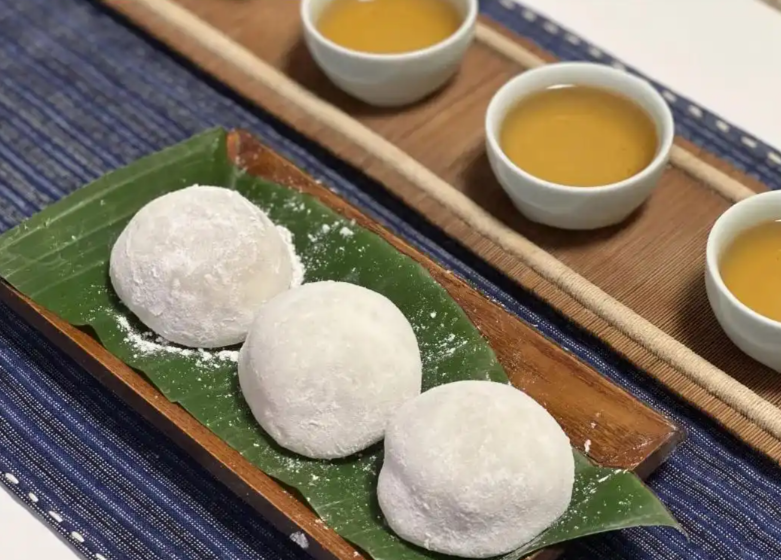
Kuiyong Hakka Tea Cakes have long surpassed food itself, deeply integrated into local folk Culture and life scenes, becoming an important carrier to maintain Hakka emotions and inherit local culture. During traditional Hakka festivals such as Spring Festival, Qingming Festival and Mid-Autumn Festival, every household in Kuiyong makes tea cakes by hand. Families sit around, dividing labor and cooperating. From mashing mugwort paste, kneading dough to wrapping fillings and steaming tea cakes, the whole process is full of warm homely atmosphere. Tea cakes are not only a delicacy for home consumption but also a good gift for festival sacrifices and visiting relatives and friends. Different styles of tea cakes carry different meanings — mugwort leaf tea cakes symbolize dispelling evil spirits and disasters, sesame tea cakes symbolize a sweet life, and bamboo shoot tea cakes symbolize rising step by step. Each tea cake hides Hakkas’ good wishes for a better life. In addition, Kuiyong Sub-district holds the Hakka Culture Festival every year, taking Hakka Tea Cakes as the core exhibit, carrying out tea cake making competitions, food tastings and other activities, allowing this traditional delicacy and Hakka culture to be widely spread.
To taste the most authentic Kuiyong Hakka Tea Cakes, time-honored workshops and family-style restaurants around Hakka ancient villages are the best choices. “Kuiyong Old Hakka Tea Cake Workshop” located in Tuyang Community, Kuiyong Sub-district, has been in operation for decades, adhering to traditional handmade techniques, using fresh ingredients of the day, wrapping and steaming on the spot. Each type of tea cake retains the ancient flavor, which is the first choice of locals and tourists. Family workshops in Kuiyong Hakka Ancient Villages are mostly run by Hakkas who have lived here for generations, inheriting family recipes for making tea cakes. The tea cakes are full of homely flavor. Tourists can also witness the whole process of handmade production, experience the fun of making tea cakes by hand, and feel the Hakka ingenuity. In addition, during the Hakka Culture Festival, various tea cake stalls are set up on the streets of Kuiyong, where you can taste classic tea cakes and explore innovative flavors, while enjoying Hakka folk songs, folk performances and other activities, immersively feeling the unique charm of Kuiyong Hakka culture. For foreign travelers, you may wish to walk into the Hakka villages of Kuiyong, order a plate of steaming Hakka Tea Cakes, paired with a cup of Hakka rice wine or strong tea, and touch the inheritance and warmth of thousands of years of Hakka culture in the soft, glutinous, fresh and fragrant taste.





暂无评论内容