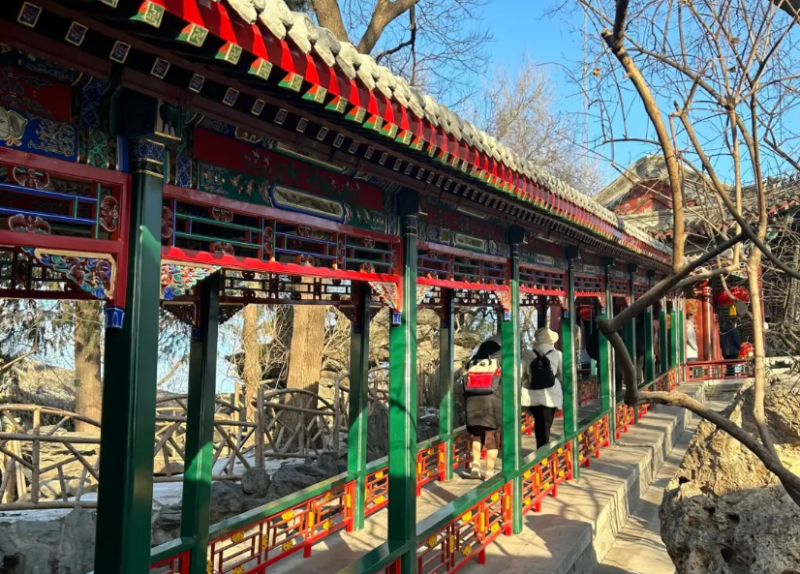





Beijing intangible heritage landmarks, Yuanmingyuan, Prince Gong’s Mansion, Imperial College, Zhengyi Temple Opera House, Peking Opera, Kunqu Opera, Beijing travel for foreigners
Among Beijing’s brilliant cultural landmarks, Yuanmingyuan and Prince Gong’s Mansion, though not listed as World Heritage Sites, are key to understanding the soul of the ancient capital with their profound intangible heritage. They carry the ultimate craftsmanship of Chinese architecture, the vicissitudes of dynastic rise and fall, and the inheritance of traditional arts such as Peking Opera and Kunqu Opera. For foreign tourists eager to go beyond conventional scenic spots and explore Beijing in depth, wandering these landmarks is a dialogue with time, touching the essence of Chinese Culture among the ruins and ancient buildings.
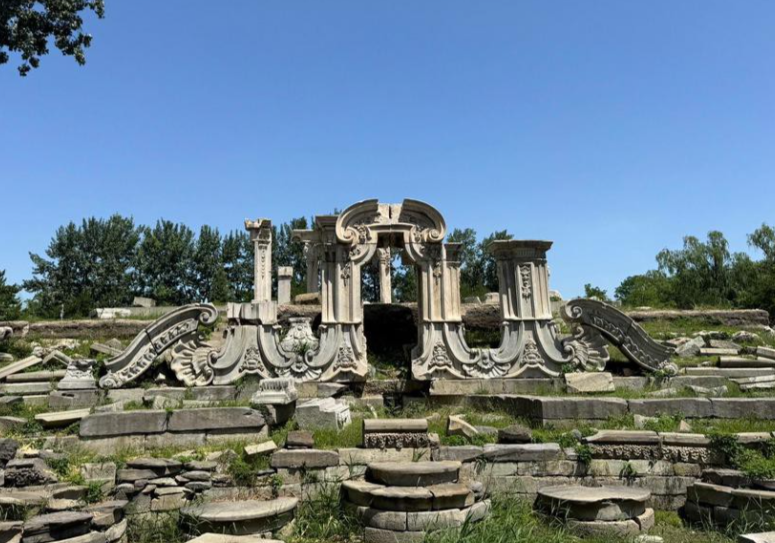
Known as the “Garden of Gardens”, Yuanmingyuan is the pinnacle of Chinese classical garden art and an intangible heritage carrier integrating architecture, craftsmanship and garden aesthetics. Composed of three parts—Yuanmingyuan, Changchun Garden and Qichun Garden—this imperial garden was first built during the Kangxi reign and expanded by six generations of emperors, combining the grace of Jiangnan gardens, the grandeur of northern gardens and the delicacy of Western architecture. There were once “Forty Scenes” in the garden, each exquisitely designed: “Pinghu Qiuyue” reproduces the poetic charm of Jiangnan, while the “Western Mansions” introduce exotic styles. The corridor pillars, stone carvings and murals all come from top craftsmen, fully demonstrating the gardening philosophy of “made by man, yet seemingly natural”.
The catastrophe in 1860 reduced the garden to ruins, but the remaining sites still possess a shocking power, becoming an important symbol of remembering history and inheriting craftsmanship. Today, visiting Yuanmingyuan, you can focus on the Western Mansions Ruins Area and Qichun Garden. The Dashuifa (Great Fountain) and Guanshuifa (Water Observation Platform) in the Western Mansions, with their broken colonnades and arches, still outline the delicacy of the Western-style buildings of that year, with traces of integrated Chinese and Western craftsmanship between the bricks and tiles. The broken bridge and lotus pond in Qichun Garden retain the gentleness of Chinese gardens, with lotus fragrance in spring and falling leaves in autumn, showing unique charm in all seasons. It is recommended to take an English guide to gain a deep understanding of gardening techniques, historical background and the craftsmanship inheritance behind the cultural relics. The visit takes about 3 hours. Note that the ruins area has many gravel roads, so it is advisable to wear comfortable sports shoes, respect history and protect cultural relics.
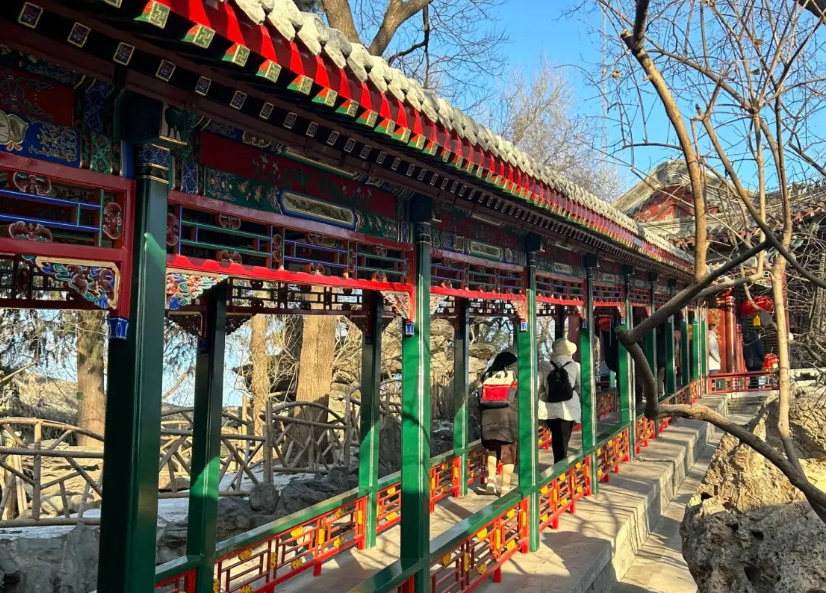
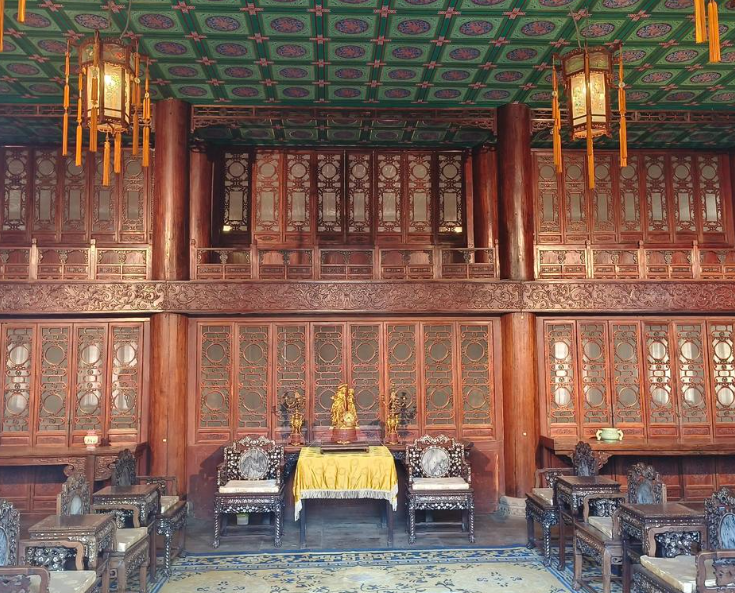
Prince Gong’s Mansion is a model of Qing Dynasty mansion architecture and the most well-preserved mansion in Beijing, known as “One Prince Gong’s Mansion, Half of Qing Dynasty History”. Its architectural craftsmanship and cultural connotation are regarded as intangible heritage treasures. Originally the private residence of He Shen, a powerful minister during the Qianlong reign, the mansion went through three dynasties and finally became the residence of Prince Gong Yixin. Its architectural layout strictly follows the Qing Dynasty hierarchy, with exquisite craftsmanship in every detail. The core Xijin Studio of the mansion is built of precious golden nanmu, with luxurious interior decoration. It is connected only by mortise and tenon structure without a single nail, remaining stable for hundreds of years, making it a masterpiece of Chinese ancient architectural craftsmanship. As a ritual venue, Jiale Hall has plaques and couplets written by famous artists, showing the dignity of the mansion.
The “Cuijin Garden” of Prince Gong’s Mansion is also worth exploring, with well-proportioned rockeries, flowing water, pavilions and terraces. Among them, the “Blessing Stele” is a must-visit. Written by Emperor Kangxi, this stele is hidden deep in the rockery. The character “Fu” (blessing) contains five meanings: more children, more land, more talent, more longevity and more blessings, integrating Qing Dynasty calligraphy art and auspicious Culture. During the visit, pay attention to the carvings and paintings on the buildings. The bat and peony patterns on the doors and windows symbolize “blessing” and “nobility” respectively, with Chinese aesthetics and craftsman’s wisdom in every detail. It is recommended to visit in the morning to avoid the afternoon peak, with a duration of about 2.5 hours. Afterward, you can wander the hutongs around Shichahai to experience the daily life of old Beijing.
In addition to these two core landmarks, niche intangible heritage attractions such as the Imperial College, Confucius Temple and Zhengyi Temple Opera House can enrich your journey. As the highest institution of learning in ancient China, the Imperial College follows Confucian etiquette in its architecture. The Dacheng Hall and Pi Yong Hall have witnessed the inheritance of the imperial examination system and educational Culture, with inscriptions in the halls carrying profound Confucian thoughts. Adjacent to it, the Confucius Temple has towering ancient trees, and the Jinshi Inscription Stele records the footprints of scholars of past dynasties, serving as physical evidence for studying ancient educational history. Zhengyi Temple Opera House is an important heritage site for Peking Opera and Kunqu Opera. Founded in the Ming Dynasty, it is one of the oldest existing opera houses in Beijing. Its unique acoustic design allows singing to spread throughout the venue without sound amplification equipment, showing the wisdom of ancient architectural acoustics. Today, traditional operas are regularly performed here. Foreign tourists can book in advance, paired with costume experience and singing explanation, to immerse themselves in the charm of traditional Chinese opera.
You can arrange a one-day niche cultural itinerary to connect these intangible heritage landmarks: visit Yuanmingyuan in the morning to feel the integration of ruins and intangible heritage in the morning light; have lunch at a time-honored restaurant near Shichahai, tasting local snacks like pea cake and donkey rolling; explore Prince Gong’s Mansion in the afternoon to discover the mansion culture and craftsmanship; in the evening, go to Zhengyi Temple Opera House to enjoy a Peking Opera excerpt, ending a fulfilling day with singing. These intangible heritage landmarks, though baptized by time, remain vivid, allowing every foreign tourist to understand the diversity and depth of Beijing’s culture during the tour.




暂无评论内容