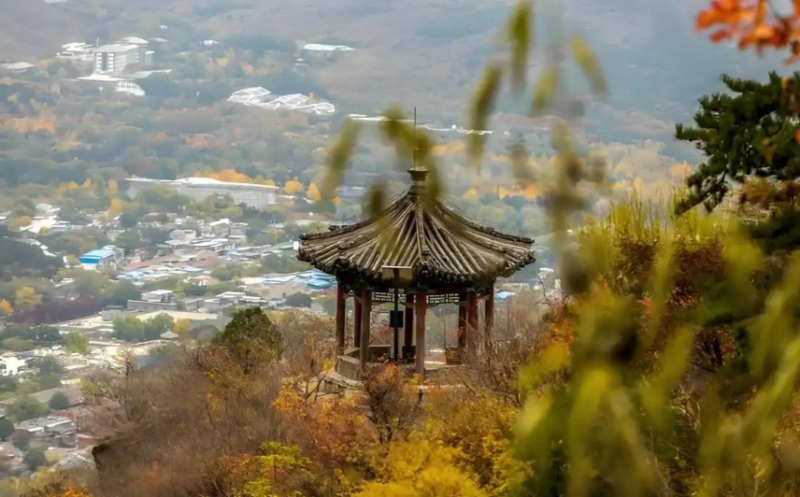





Xiangshan Park is a centuries-old imperial garden in Beijing, famous for autumn red leaves. This guide covers its history, seasonal scenery and travel tips for international visitors.
Located at No. 40 Maimai Street, Haidian District, Beijing, about 20 kilometers from the city center, Xiangshan Park (Fragrant Hills Park) is a historic garden blending mountain wildness with imperial grandeur. Covering an area of 188 hectares, it was first built in 1186 during the 26th year of Emperor Dading’s reign in the Jin Dynasty, and was continuously constructed by the imperial families of the Yuan, Ming and Qing dynasties. Expanded into “Jingyi Garden” during Emperor Qianlong’s reign, it became part of the famous “Three Hills and Five Gardens” in western Beijing, carrying nearly 900 years of historical accumulation. With a forest coverage rate of 96% and more than 5,800 first and second-class ancient trees, accounting for a quarter of the total ancient trees in downtown Beijing, it is not only a natural oxygen bar and summer resort but also world-famous for its red leaves in autumn. Rated as one of the “Sixteen Scenes of New Beijing” in 1986 and a national AAAA-level scenic spot in 2001, it is a must-visit destination for international tourists to experience the natural beauty and cultural heritage of Beijing.
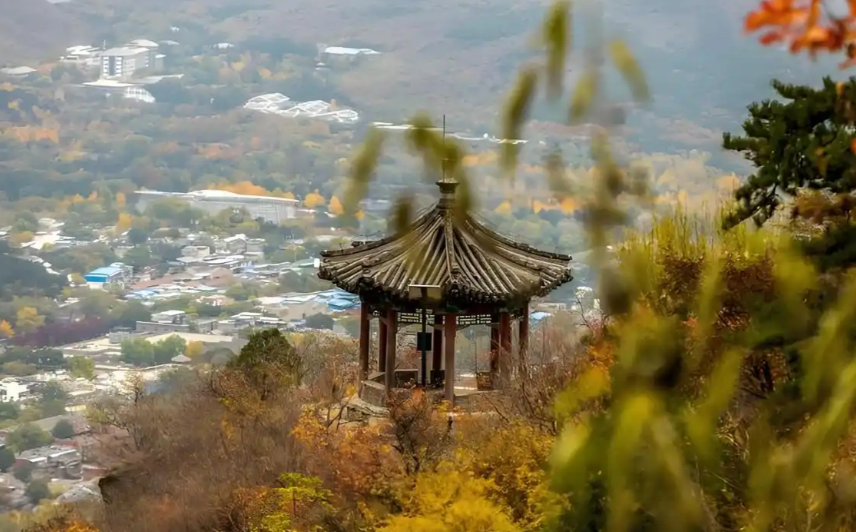
The origin of the name “Xiangshan” is quite interesting. One theory is that the boulder on the top of the main peak resembles an incense burner, and when surrounded by clouds and mist, it looks like curling incense smoke, hence named “Xianglu Mountain” (Incense Burner Mountain), abbreviated as Xiangshan. Another theory is that the Park was once full of apricot trees, which exuded a strong fragrance when in bloom, thus gaining the name. Its historical context is tortuous: in the Jin Dynasty, it was converted from a private residence into Xiangshan Temple, becoming a royal tourist and hunting resort; in the Ming Dynasty, it gradually developed into a scenic spot visited by many emperors; in the Qing Dynasty, an imperial palace was built during Emperor Kangxi’s reign, and Emperor Qianlong carried out large-scale construction on this basis to create the grand Jingyi Garden, forming the prosperity of “Twenty-Eight Scenes”. Unfortunately, in 1860 and 1900, the garden was successively burned down by British and French troops and the Eight-Nation Alliance, with treasures looted and buildings reduced to ruins. During the Republic of China, a children’s home was established here, and Mr. Sun Yat-sen’s coffin was temporarily placed in Biyun Temple. In 1949, the Central Committee of the Communist Party of China stationed in Xiangshan, where Mao Zedong and other revolutionary elders commanded the Crossing the Yangtze River Campaign and prepared for the founding of New China, adding a profound revolutionary heritage to the garden. In 1956, Xiangshan was officially opened as a people’s park, and regained its former glory after renovation.
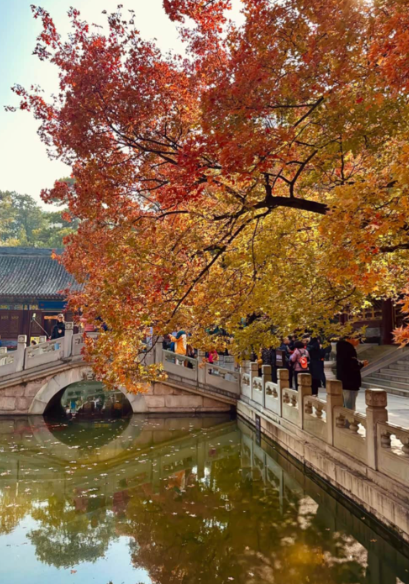
Xiangshan Park centers on Xianglu Peak (Incense Burner Peak), the main peak with an altitude of 575 meters. Known as “Guijianchou” (Ghosts Fear to Climb) due to its steep terrain, climbing to the top offers a panoramic view of the entire park and downtown Beijing. Scenic spots in the park are scattered all over, divided into imperial temple area, Jiangnan courtyard area, revolutionary memorial area and natural landscape area according to functions and styles, showing diverse charm with changing scenery. The core of the imperial temple area is Biyun Temple, first built in 1331 during the 2nd year of Emperor Zhishun’s reign in the Yuan Dynasty. Expanded during the Ming and Qing dynasties, it covers an area of more than 40,000 square meters, with six courtyards ascending along the mountain, and the halls are magnificent. The Diamond Throne Pagoda in the temple is 37.7 meters high, fully built with bricks and stones, with a solemn shape. The Arhat Hall houses the only existing wooden gilded statues of 500 Arhats in China, with exquisite craftsmanship. During the Republic of China, it once served as the temporary resting place for Mr. Sun Yat-sen’s coffin, and later the Sun Yat-sen Memorial Hall was built to house the glass-covered steel coffin presented by the Soviet Union, becoming an important place to cherish the memory of the great man. It was listed as a national key cultural relic protection unit in 2001.
The Jiangnan courtyard area is represented by Jianxin Zhai (Studio of Seeing the Heart), built in the Ming Dynasty. It is a circular courtyard-style building, combining the grace and elegance of southern gardens with the stability and grandeur of northern architecture. In the center of the courtyard is a semicircular pool, surrounded by corridors painted with exquisite colorful paintings on three sides. Emperor Jiaqing personally inscribed the plaque “Jianxin Zhai” and wrote poems on it, showing strong literati charm. Zongjing Dazhao Temple (Temple of the Great Light of the Dharma Mirror) south of Jianxin Zhai, also known as “Panchen’s Temporary Palace”, was built in 1780 during the 45th year of Emperor Qianlong’s reign to welcome the Sixth Panchen Lama to Beijing for the emperor’s 70th birthday. Its architectural style integrates Tibetan Tashilhunpo Monastery and traditional Han Chinese forms, with a towering glazed pagoda at the back, colorful and brilliant, witnessing the integration of Han and Tibetan Cultures. In addition, Yanjing Lake (Glasses Lake) south of Biyun Temple, composed of two pools shaped like glasses, has a single-arch stone bridge spanning the lake, and a stone cave in the north leads to Zhuoxi Spring to form a water curtain cave landscape, with a quiet and pleasant scenery.
The revolutionary memorial area is the spiritual core of Xiangshan Park, with Shuangqing Villa as the main body. Named after two gushing clear springs, it was once Emperor Qianlong’s “Songwu Yunzhuang” (Pine Villa in Clouds) and later converted into a villa. In 1949, Mao Zedong lived and worked here, commanded the Crossing the Yangtze River Campaign, and wrote glorious poems such as “The People’s Liberation Army Captures Nanjing”, witnessing the key turning point of China’s revolution from rural to urban areas. Eight surrounding former sites, including Laiqing Xuan (Pavilion of Coming Green), Siqin She (House of Missing Relatives) and Xiaobai Lou (Little White Building), form the former site of the Central Committee of the Communist Party of China in Xiangshan, Beijing, which were the office and residence of leaders such as Zhu De and Liu Shaoqi, and various central departments. Renovated and opened to the public in 2019, it has become a patriotic education demonstration base. Wandering here, you can deeply feel the historical changes on the eve of the birth of New China.
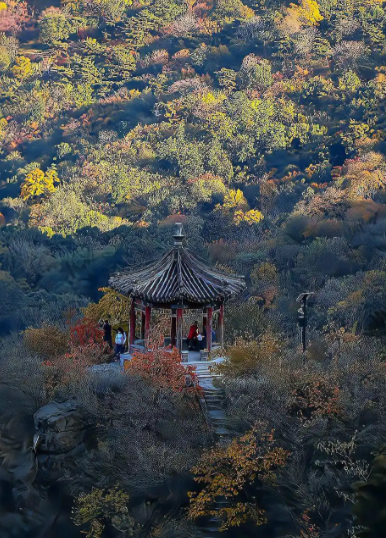
The red leaf landscape is the iconic feature of Xiangshan Park. There are 14 species of red leaf trees in the park, with a total of 140,000 plants. Among them, more than 100,000 smoke trees constitute the main body of red leaves, covering an area of nearly 80 hectares. Every late autumn after frost, the temperature difference between day and night increases, and the anthocyanin in the leaves gradually appears. The smoke trees, maple leaves all over the mountains show deep red, orange red, golden yellow and other colors, with layers of forests dyed, contrasting beautifully with ancient temples and pavilions, becoming the strongest autumn charm in Beijing. Besides autumn, Xiangshan is beautiful in all seasons: in spring, flowers bloom and ancient trees sprout, full of vitality; in summer, dense shade blocks the sun and clear springs gurgle, making it a natural oxygen bar for summer resort; in winter, after snow, Xianglu Peak is covered in silver, and you can enjoy the “Western Hills Snow Scene”, one of the Eight Scenes of Yanjing.
For travel tips, Xiangshan Park implements seasonal ticketing and real-name reservation. International visitors can purchase tickets through the official mini-program or ticket windows with their passports. The ticket price is 10 yuan in peak season (April 1 – November 15) and 5 yuan in off-season (November 16 – March 31 next year). Opening hours are 6:00-19:30 (peak season) and 6:00-19:00 (off-season), with the last entry time one hour before closing. Recommended route: Enter from the East Gate, pass through Qinzheng Dian (Hall of Diligent Government) and Zhiyuan Zhai (Studio of Distant Vision) to Shuangqing Villa, visit the revolutionary former sites, then go to Xiangshan Temple and Jianxin Zhai, take the cable car or hike to the top of Xianglu Peak, and visit Biyun Temple and Yanjing Lake when going down the mountain. The whole tour takes about 4-5 hours. For transportation, take Metro Line 10 to Bagou Station and transfer to Suburban Line to Xiangshan Station directly. The cable car in the scenic area can take you to and from Xianglu Peak, suitable for visitors with limited physical strength. It should be noted that the eight revolutionary former sites and Xiangshan Temple are closed every Monday (except legal holidays). The red leaf season (mid-October – early November) attracts a large number of tourists, so it is advisable to arrive early in the morning to avoid crowds and visit respectfully to protect ancient trees and cultural relics.




暂无评论内容