




Beijing Central Axis, Yongding Gate, Tiananmen Square, Forbidden City, Jingshan Hill, Bell and Drum Towers, Central Axis World Heritage bid, Beijing travel for foreigners, Beijing ancient and modern landmarks
In Beijing’s urban layout, a 7.8-kilometer Central Axis stretches northward through the entire city, serving as both the soul of the ancient capital’s planning and a cultural link connecting history and the present. Extending from Yongding Gate to the Bell and Drum Towers, this axis gathers core landmarks such as Tiananmen Square, the Forbidden City, and Jingshan Hill, embodying the Confucian ritual concept of “the king resides in the center” and witnessing the functional transformation from an imperial ceremonial road to a civic life axis. For foreign tourists, wandering along the Central Axis is a journey across time, allowing them to understand Beijing’s thousand-year urban planning wisdom and contemporary vitality amid red walls, yellow tiles, and daily urban life.
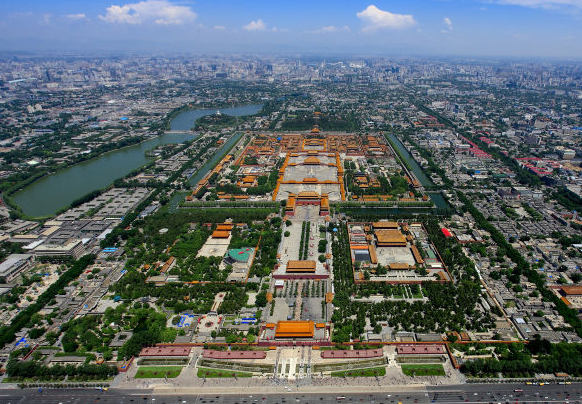
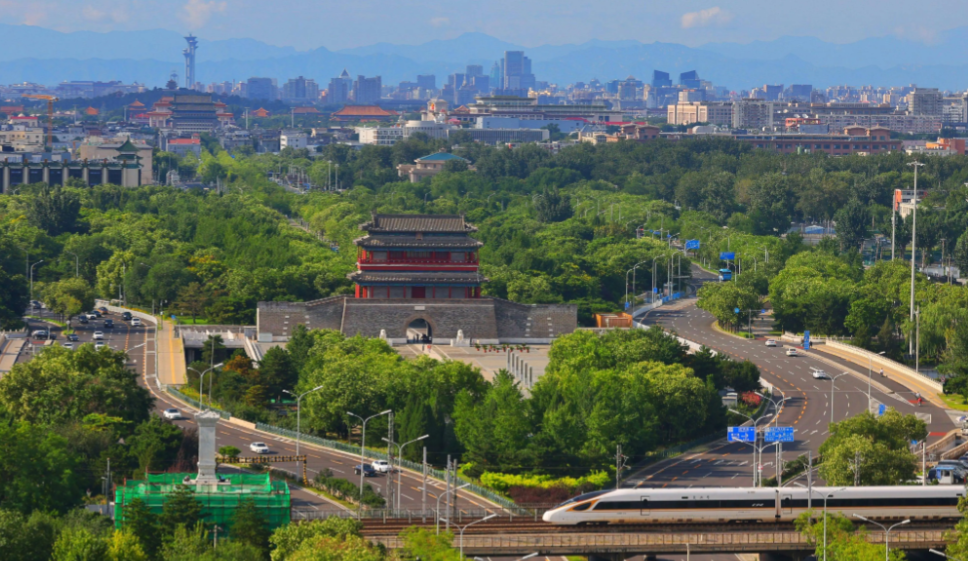
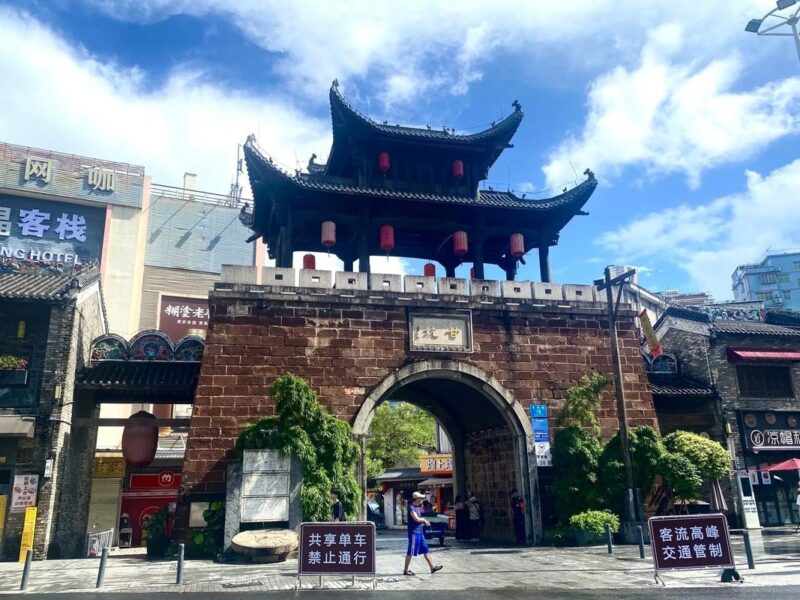
The southern starting point of the Central Axis is Yongding Gate, a reconstructed Ming and Qing Dynasty city gate that marks the beginning of understanding the axis’s symmetrical aesthetics. As the only remaining gate of Beijing’s outer city, Yongding Gate strictly follows ritual systems in its architectural layout, with a double-eaved gable roof, gray tiles, and green ridges, paired with the arrow tower and urn city below, fully demonstrating the defense system and dignity of the ancient capital. Today, Yongding Gate Square is lush with vegetation, and the gate tower houses exhibits and historical materials related to the Central Axis, where visitors can initially learn about the axis’s origin and development. Walking north from Yongding Gate, you enter the core section of the axis, with neat and symmetrical streets and uniform building heights and styles on both sides, perfectly interpreting the integration of Confucian “doctrine of the mean” and capital planning. It takes about 20 minutes on foot to reach Zhengyang Gate.
The area between Zhengyang Gate and Tiananmen Square is the ceremonial core of the Central Axis. Commonly known as “Qianmen”, Zhengyang Gate is the main gate of Beijing’s inner city. Its arrow tower and main tower form an iconic landscape of Ming and Qing Beijing. Today, the arrow tower houses a Museum displaying the urban style and folk Culture of old Beijing. Passing through Zhengyang Gate, you reach Tiananmen Square, one of the largest urban squares in the world. The Monument to the People’s Heroes and the Mausoleum of Mao Zedong in the center of the square echo the Great Hall of the People and the National Museum of China on both sides, forming a solemn and symmetrical layout. Tiananmen Rostrum, as the core node of the Central Axis, with its red walls, yellow tiles, and carved beams and painted pillars, is not only the main gate of the Ming and Qing imperial families but also a symbol of modern China. Foreign tourists can take photos here to feel the intersection of history and the times.
Entering Tiananmen Rostrum, you step into the Forbidden City, the core hinterland of the Central Axis. As the imperial palace of the Ming and Qing dynasties, the Forbidden City strictly follows the layout principle of “outer court for state affairs and inner court for daily life”. Along the Central Axis, there are three main halls (Hall of Supreme Harmony, Hall of Central Harmony, Hall of Preserving Harmony) and three rear palaces (Palace of Heavenly Purity, Palace of Union, Palace of Earthly Tranquility), throughout embodying the ritual concept of “the king resides in the center”. The three main halls are where the imperial family held grand ceremonies and handled state affairs. As the largest and highest-ranked building in the Forbidden City, the Hall of Supreme Harmony features dragon thrones and coiled dragon pillars, all highlighting the supremacy of imperial power. The three rear palaces are the living areas of the emperor and empresses, with a relatively compact layout that fully demonstrates the regulations of imperial daily life. When visiting the Forbidden City, it is recommended to walk along the Central Axis while exploring the palace complexes on both the east and west sides, to experience the aesthetics of symmetrical layout and gain an in-depth understanding of imperial life details, taking about 3-4 hours in total.
Outside the north gate (Shenwu Gate) of the Forbidden City lies Jingshan Hill, the best spot to overlook the panoramic view of the Central Axis. With an altitude of 43 meters, Jingshan Hill was an imperial garden during the Yuan, Ming, and Qing dynasties. The Wanchun Pavilion on the top of the hill is the highest point of the Central Axis. Climbing to the top, you can clearly overlook the entire Forbidden City and the magnificent north-south extension of the axis, where the red-walled and yellow-tiled palace complexes stand alongside modern urban buildings, showcasing Beijing’s unique charm of “ancient and modern in the same frame”. Jingshan Hill is not only a scenic viewing spot but also features five pavilions and ancient cypress forests, with blooming flowers in spring and golden fallen leaves in autumn, offering beautiful scenery in all seasons. It takes about 15 minutes on foot north from Jingshan Hill to reach the Bell and Drum Towers, the northern endpoint of the Central Axis.
The Bell and Drum Towers, consisting of the Bell Tower and the Drum Tower, are the last group of landmarks on the Central Axis of Ming and Qing Beijing and the timekeeping center of the Ancient City. The Drum Tower is 46.7 meters high, with large drums hanging upstairs that were struck morning and evening to tell the time for the whole city. The Bell Tower, adjacent to the north of the Drum Tower, is 47.9 meters high and houses the 63-ton “Yongle Bell”, whose deep and distant sound could be heard throughout the city. Today, although the Bell and Drum Towers no longer serve as timekeeping centers, they still retain their traditional style. Foreign tourists can climb the towers to experience ancient timekeeping Culture and enjoy the surrounding hutong scenery. The hutongs around the Bell and Drum Towers, such as Nanluoguxiang and Yandai Xiejie, are full of old Beijing’s daily life. After the tour, you can visit here to taste authentic snacks and feel the comfort of civic life.
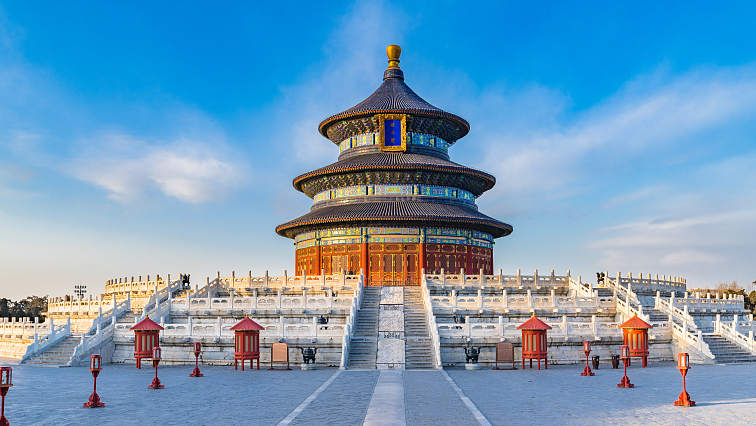
Currently, Beijing’s Central Axis is actively promoting its application for World cultural heritage status. Its unique planning concept, complete architectural sequence, and living cultural inheritance make it a promising candidate to become Beijing’s eighth World Heritage Site. The function of this axis has also transformed from an ancient imperial ceremonial road to a modern civic life axis, with morning exercisers in the early morning, tourists during the day, and brilliant night lighting, always maintaining vibrant vitality. For foreign tourists, a one-day tour route is recommended: start from Yongding Gate in the morning, visit Zhengyang Gate, Tiananmen Square, and the Forbidden City by walking north along the axis; climb Jingshan Hill to overlook the panoramic view in the afternoon; visit the Bell and Drum Towers in the evening; and wander the hutongs at night to immerse yourself in the ancient and modern charm of the Central Axis. It is necessary to book tickets for the Forbidden City, Tiananmen Rostrum, and other attractions in advance. It is advisable to wear comfortable sports shoes and take an English guide service to deeply understand the cultural connotation behind the axis.





暂无评论内容