




Beijing’s food map is an epic of Culture spanning thousands of years. From imperial cuisine exclusive to royalty to street snacks hidden in hutongs, every bite carries the texture and warmth of the city. For foreign tourists, exploring Beijing’s food is not only a feast for the taste buds, but also an excellent way to understand the ancient capital’s culture—exquisite imperial dishes reflect imperial etiquette, popular local specialties embody regional characteristics, and down-to-earth hutong snacks reveal the warmth of daily life. Following this guide, wandering between imperial restaurants and hutong lanes, you can fully unlock the diverse charm of Beijing’s food.
Imperial cuisine is the “pinnacle” of Beijing food, embodying the peak level of ancient cooking skills. Although it has lost its royal exclusivity today, it still allows tourists to experience the dietary style of emperors and nobles in the past. Among them, Fangshan Restaurant is a representative of imperial cuisine, derived from the skills of the Qing Palace Imperial Kitchen, focusing on imperial dishes with perfect “color, aroma, taste, shape and utensil”. The signature dishes in the “Manchu-Han Feast Selection” such as stir-fried fish slices, pea cake and kidney bean roll, not only retain the rigorous procedures of imperial cooking, but also adapt to modern tastes. The pea cake melts in the mouth, sweet and not greasy, and the kidney bean roll is soft and sweet, making them the first choice for trying imperial cuisine for the first time.
Different from the royal elegance of Fangshan, Tan Family Cuisine is famous for the delicacy of “official cuisine” and is known as the “King of Chinese Official Cuisine”. Tan Family Cuisine emphasizes “slow cooking over low heat” and focuses on the original flavor of ingredients. The signature dishes, Tan Family Shark Fin and Braised Fish Maw, are stewed for hours, with rich and mellow soup and tender ingredients, each bite showing ingenuity. Today, many restaurants in Beijing have inherited the skills of Tan Family Cuisine, and some also provide English menus and dish explanations, allowing foreign tourists to understand the food Culture behind them and immerse themselves in the unique charm of imperial and official cuisine.
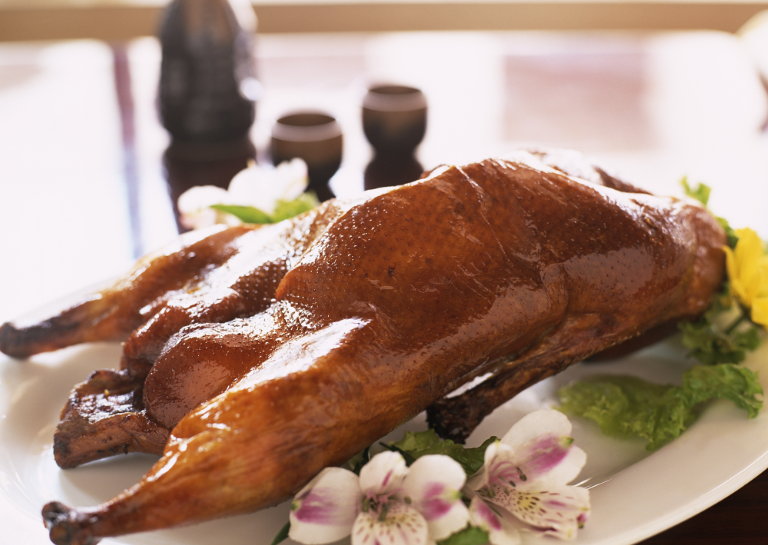
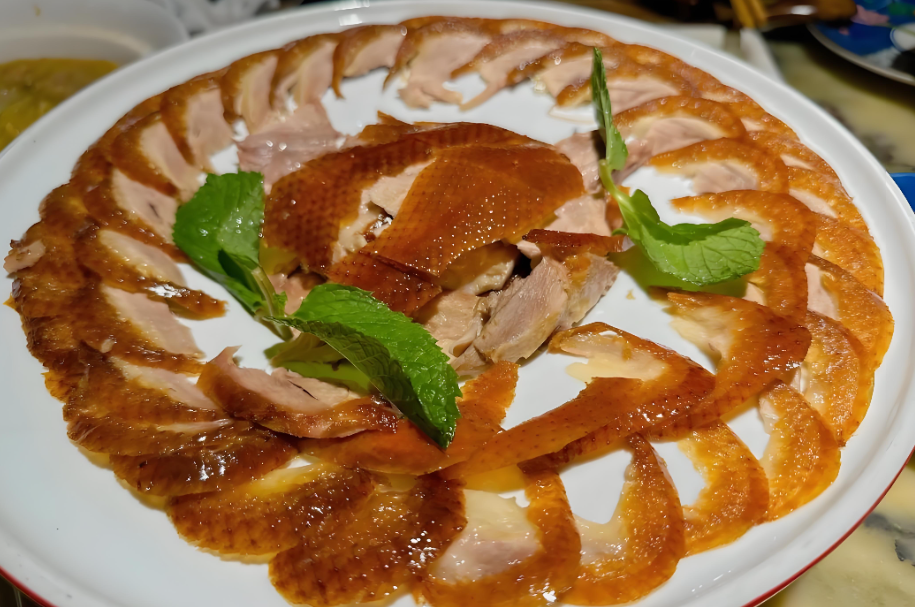
If imperial cuisine is the “elegance” of Beijing food, then local specialty dishes are the “soul” of the city, among which Peking duck is undoubtedly a must-try for global tourists. The essence of Peking duck lies in “crispy skin and tender meat”, with strict standards from the selection of duck embryos, oven roasting to slicing techniques. The well-known Quanjude and Dadong Roast Duck Restaurants represent traditional and innovative styles respectively: Quanjude adheres to the fruit wood charcoal roasting process, with crispy and shiny duck skin, which is rolled with lotus leaf cakes, sweet bean sauce, shredded green onions and cucumber strips for a rich taste; Dadong focuses on “crispy and non-greasy roast duck”, improved on the traditional basis, the duck skin can be eaten directly with white sugar, sweet and fragrant, and also launched an innovative way of eating roast duck with caviar to meet diverse taste needs.
In addition to roast duck, copper pot hot pot and grilled meat on iron griddle are also representative of Beijing’s hearty dishes. Copper pot hot pot emphasizes “clear soup base and freshly cut meat”. The soup base only uses clear water, ginger slices and green onion segments to enhance the flavor, retaining the tenderness of lamb to the maximum extent. It is served with a dipping sauce made of sesame paste, chive flower and fermented tofu, embodying the boldness of northern diet of “eating meat in big bites”. Grilled meat on iron griddle is full of warmth. Sliced beef and mutton are grilled on an iron griddle with onions and coriander, emitting a strong aroma. Diners can grill by themselves to experience interactive fun. Many old shops still retain traditional grills and eating methods, creating a full atmosphere.
Hutong snacks are the “warm background” of Beijing food, hidden in the crisscrossing lanes, each bite is an authentic street flavor. Douzhi (fermented mung bean juice) with jiaoquan (fried dough rings) is the most controversial yet most representative Beijing snack. Douzhi is made from fermented mung beans, with a sour and salty taste. Served with crispy jiaoquan, it is a standard breakfast for old Beijingers. For foreign tourists, douzhi may require courage to try, but it is a unique way to experience local life. In addition, luzhu huoshao (stewed pork intestines with baked wheat cake), chaogan (stir-fried liver) and baodu (quick-boiled tripe) are also distinctive Beijing snacks. Luzhu huoshao is rich in ingredients, with pork intestines, pork lungs and baked wheat cake soaked in soup, salty and fragrant; baodu is crispy and tender, served with sesame paste sauce, becoming more delicious as you chew.
To experience a one-stop tour of Beijing’s food, Niujie Street and Nanluoguxiang are must-visit food blocks. Niujie Street is a gathering place for Beijing’s halal food. In addition to Jubao Yuan’s copper pot hot pot, there are also time-honored brands such as Baiji Nian Gao and Hongji Snacks. Baiji Nian Gao’s ludagun (soybean paste roll) and aiwowo (glutinous rice cake) are soft, glutinous and sweet, full of ethnic characteristics; Nanluoguxiang integrates tradition and trend, with both traditional shops such as Wenyu Cheese and Huguosi Snacks, as well as innovative snack shops, suitable for eating while wandering around the hutongs, feeling the collision between tradition and modernity.
For practical tips, foreign tourists can check in advance whether the restaurant provides English menus and reservation services. It is recommended to book popular roast duck restaurants 1-2 days in advance to avoid queuing; when trying hutong snacks, choose popular old shops for fresher ingredients, and some stalls have picture menus for easy ordering; some shops in Niujie only accept cash, so it is recommended to prepare change in advance; most Beijing food is rich and heavy, which can be paired with sour plum soup or Arctic Ocean soda to relieve greasiness and experience the authentic food matching.





暂无评论内容