




As the only Embroidery craft among the “Eight Great Arts of Yanjing”, Beijing Palace Embroidery (also known as Jingxiu) stands out in the history of Chinese Embroidery with its imperial standards of “exquisite materials and ultimate craftsmanship”. This ancient craft, exclusively serving the royal family, has spanned a thousand years from the embryonic form of court embroidery in the Tang Dynasty to its heyday in the Ming and Qing dynasties. With needles and threads as brushes and silks as paper, it sews the majesty of the royal family and the elegant aesthetics of the East into every inch of fabric, becoming an imperial memory carved on silk. For foreign travelers, exploring the charm of Palace Embroidery means grasping the most delicate code to understand Beijing’s imperial life and traditional aesthetics.
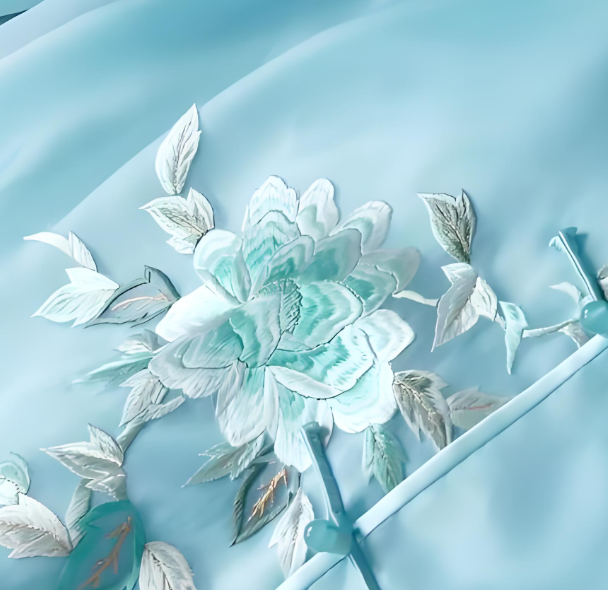
The history of Beijing Palace Embroidery can be traced back to the Tang Dynasty, when the court set up special embroidery workshops to make costumes, furnishings and other items for the royal family. In the Song Dynasty, embroidery techniques gradually matured, and Beijing Palace Embroidery began to form a unique style, focusing on the auspicious meanings of patterns and the solemn harmony of colors. After the Yuan Dynasty established its capital in Beijing, the scale of court embroidery workshops expanded, and craftsmen integrated Western brocade techniques with local embroidery, enriching the expression of Beijing Palace Embroidery. It was in the Ming Dynasty that Beijing Palace Embroidery truly established its status as “Palace Embroidery”. During the Yongle period, the “Imperial Household Department” set up an embroidery workshop under it, recruiting top craftsmen from the four major embroidery schools (Su, Xiang, Shu, Yue), and formulating strict craft standards in combination with the royal aesthetic needs, finally forming the dignified, magnificent and regular characteristics of Beijing Palace Embroidery, which became an exclusive embroidery craft for the royal family.
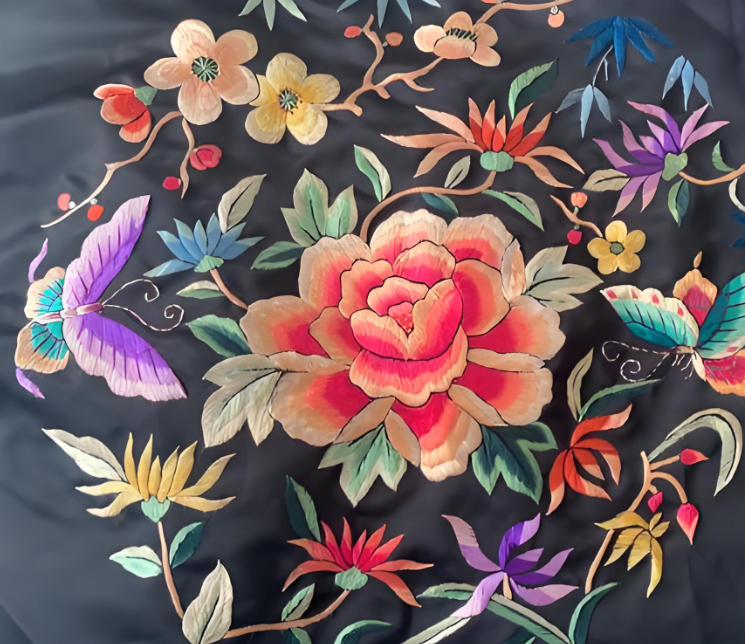
The Qing Dynasty was the heyday of Beijing Palace Embroidery, with its craft level and application scope reaching the peak. The Imperial Workshop under the Imperial Household Department was specially responsible for the production of Beijing Palace Embroidery. The works covered various utensils such as imperial dragon robes, empress consorts’ phoenix coronets, court hanging screens, and Buddhist shrine curtains, ranging from small purses and fan covers to large screens over ten feet high, all of which were exquisite. The artistic style of Qing Dynasty Beijing Palace Embroidery was extremely distinctive: in terms of color, it followed the principle of “respect for primary colors”, with imperial exclusive colors such as bright yellow, bright red, and sapphire blue as the main tones, with bright but harmonious colors, showing dignity; in terms of patterns, it mostly used auspicious patterns such as dragons and phoenixes, peonies, cranes, and bats, with full and symmetrical compositions, implying the eternal stability of imperial power and long life; in terms of techniques, it pursued excellence, forming core techniques such as gold thread coiling, seed stitching, flat gold stitching, and nested stitching. Among them, gold thread coiling embroidery is the most representative. Craftsmen coil gold threads to outline the contours of patterns, making the embroidery three-dimensional and dazzling. The saying “an inch of gold thread coiling is worth a thousand taels of gold” is the best interpretation of its preciousness.
The birth of a Beijing Palace Embroidery work is the most extreme interpretation of “craftsmanship”, requiring dozens of manual procedures including design, material selection, thread matching, embroidery, and mounting, each with strict standards. The material selection link is extremely exquisite. The fabric needs to be high-quality silk and satin, and the threads include not only ordinary threads but also precious threads such as gold thread, silver thread, and peacock feather thread. Among them, peacock feather thread needs to be split and combed from peacock feathers, which is time-consuming and labor-intensive; the design link is drawn by court painters, which can only start after being approved by the emperor or empress to ensure that the patterns conform to imperial regulations; the embroidery link is the core. Craftsmen need to control the stitching method and strength with years of experience. Gold thread coiling embroidery must ensure that the gold threads are evenly coiled and the stitches are dense. Seed stitching requires each “seed” to be the same size and neatly arranged. Nested stitching should make the color transition natural and soft. A high-quality Qing Dynasty imperial dragon robe often requires dozens of craftsmen to spend several years to complete, with almost zero error tolerance.
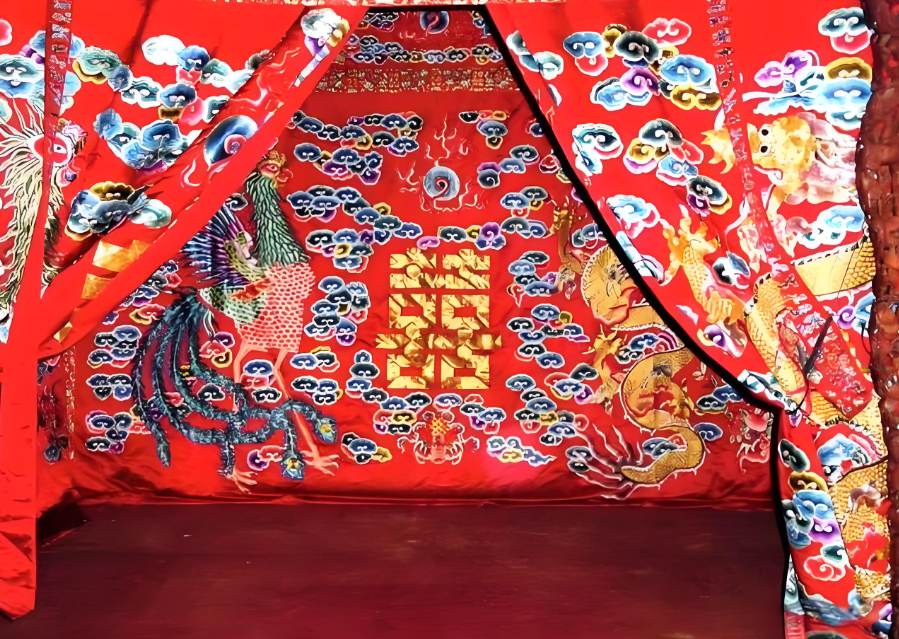
At the end of the Qing Dynasty and the beginning of the Republic of China, court embroiderers scattered among the people, and Beijing Palace Embroidery gradually moved out of the court and into the market, forming a school of hand workshops mainly engaged in embroidering theatrical costumes and palace dresses. However, affected by wars and modern industrial impact, the craft of Beijing Palace Embroidery was once on the verge of extinction. It was not until the founding of New China that the government gathered scattered embroiderers to establish a Beijing Palace Embroidery cooperative, sorting out and restoring traditional techniques, giving this ancient craft a new lease of life. Today, Beijing Palace Embroidery is constantly innovating in inheritance, not only restoring traditional court embroidery works but also integrating techniques into modern clothing and cultural and creative products, allowing the thousand-year-old craft to enter daily life. Liu Xiuhua, a national-level intangible cultural heritage inheritor, is a leading figure in contemporary Beijing Palace Embroidery. She has been deeply engaged in the craft for decades, restoring the Qing Dynasty gold thread coiling dragon robe technique. Her works such as “Hundred Birds Paying Homage to the Phoenix” and “Dragon and Phoenix Bringing Prosperity” reproduce the imperial elegance of Beijing Palace Embroidery and become rare heritage works.
To experience the charm of Beijing Palace Embroidery immersively, Beijing Yanjing Eight Great Arts Museum is a must-visit. The museum collects exquisite Beijing Palace Embroidery works from past dynasties, from Ming and Qing court dragon robes and phoenix coronets to contemporary masterpieces, comprehensively showing the evolution and innovation of the craft. Among them, the Qing Dynasty gold thread coiling dragon robe exhibit, with lifelike dragon patterns outlined by gold threads, shows royal dignity. The museum also offers Beijing Palace Embroidery experience courses. Under the guidance of embroiderers, travelers can experience the basic procedures of seed stitching and flat stitching, and make simple Beijing Palace Embroidery bookmarks and purses by hand, feeling the Eastern aesthetics between needles and threads. In addition, The Palace Museum collects a large number of rare Qing Dynasty Beijing Palace Embroidery works, especially the empress consorts’ phoenix coronets and costumes in the Treasure Gallery, allowing visitors to intuitively feel the peak craftsmanship of Beijing Palace Embroidery. The Beijing Palace Embroidery cultural and creative store on Qianmen Street offers portable cultural and creative products such as Beijing Palace Embroidery pendants and scarves, making it convenient for travelers to take this “imperial elegance” home.
From an exclusive royal craft to an intangible cultural heritage accessible to everyone, Beijing Palace Embroidery has gained new vitality in inheritance. The dense stitches hide the thousand-year imperial charm, and the bright gold threads embody the craftsmen’s piety. When you touch the warm fabric and exquisite patterns of Beijing Palace Embroidery works, you can understand the essence of “every stitch is craftsmanship” in Eastern aesthetics and feel the artistic shock spanning a thousand years.




暂无评论内容