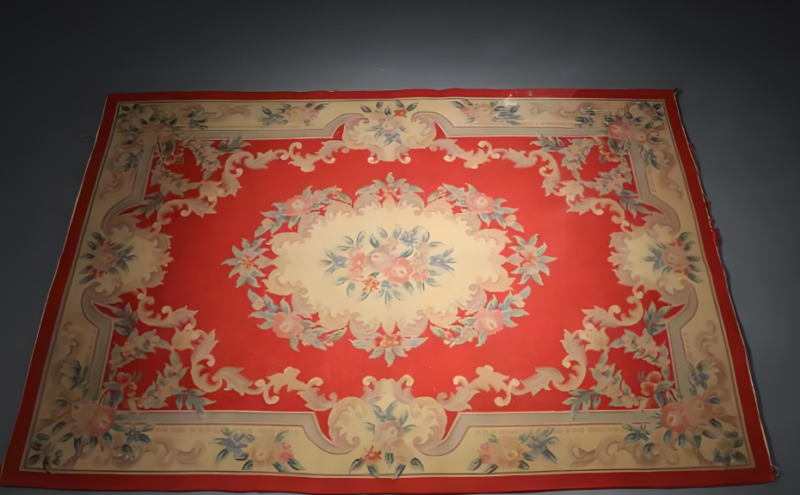





As one of the “Eight Great Arts of Yanjing” that combines practicality and artistic value, Beijing Palace carpets (formerly known as “Official Workshop Carpets”) hold a prominent position in the history of Chinese hand weaving with their unique charm of “elegance hidden in warp and weft, grace condensed in pile”. This ancient craft, with wool as the skeleton and gold thread as decoration, has spanned a thousand years from its embryonic form in the Tang Dynasty court to its heyday in the Ming and Qing dynasties when “every floor was covered with carpets”. It integrates royal dignity and multi-ethnic aesthetics into every knot, becoming a “flowing treasure” spread on the palace floors. For foreign travelers, exploring the charm of Palace Carpets means understanding the most textural Eastern aesthetic code in Beijing’s imperial life.
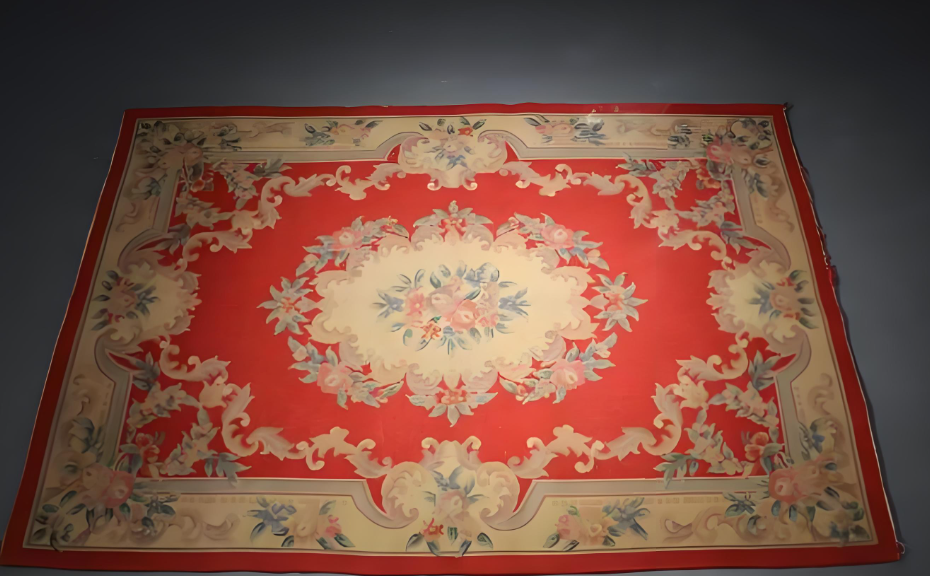
The historical context of Beijing Palace carpets is profound. Its weaving technique can be traced back to the Neolithic Age, and the wool pile carpets unearthed in Xinjiang during the Eastern Han Dynasty have shown mature craft prototypes. In the Tang Dynasty, carpets were commonly laid in courts and wealthy mansions, symbolizing status and taste. Influenced by the Mongolian lifestyle in the Yuan Dynasty, the court set up wool-cutting carpet workshops, making the carpet weaving industry prosperous. The craft was introduced to Beijing with the flow of craftsmen, laying the foundation for Palace Carpets. Official carpet weaving institutions were officially established in the Ming Dynasty to produce high-quality “Official Workshop Carpets”, reaching their peak in the Qing Dynasty. During the Yongzheng period, the Beijing Weaving and Dyeing Bureau specially assigned craftsmen to weave for the royal family. Most floors of the Forbidden City halls were covered with Palace Carpets, whose patterns integrated multi-ethnic elements of Manchu, Han, Tibetan, forming an exclusive style of solemnity, regularity, and luxury.
In modern times, Beijing Palace Carpets have repeatedly amazed the world. In 1900, they won the gold medal at the Paris World’s Fair in France, and in 1904, they won the championship at the St. Louis World’s Fair in the United States, becoming a representative of Oriental hand art. In the mid-20th century, the Beijing No.5 Carpet Factory established through public-private ownership integrated industry resources, ushering in a golden age of Palace Carpet exports, which were sold overseas and widely praised. Today, although this craft faces inheritance challenges due to the impact of modern industry, it has gained new vitality under the persistence of craftsmen, restoring traditional techniques while integrating modern aesthetics.
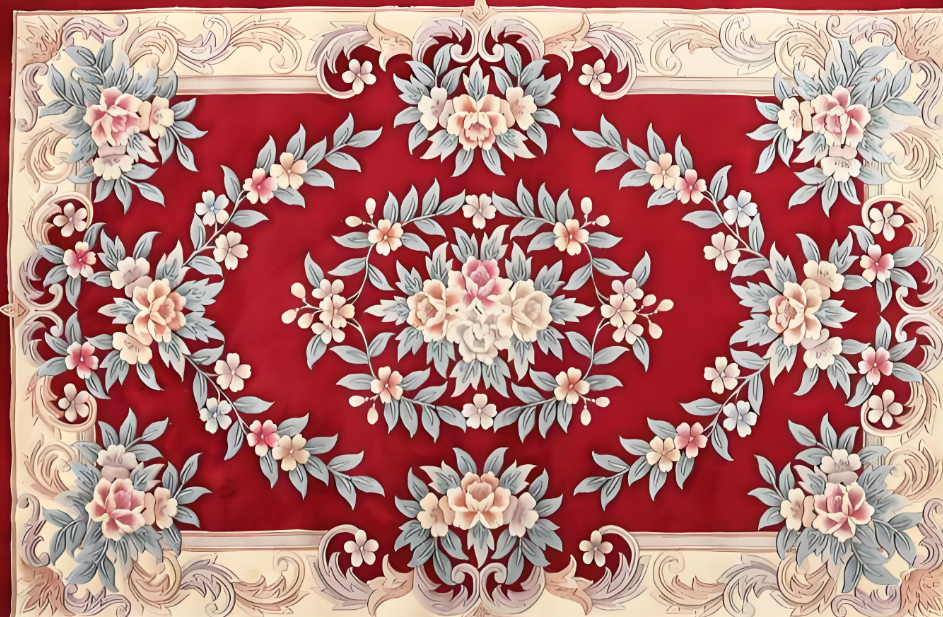
The birth of a Palace Carpet is the ultimate interpretation of “slow work yields fine products”, requiring three major links: pre-preparation, carpet weaving, and finishing, subdivided into dozens of manual procedures with almost zero error tolerance. Material selection is extremely exquisite, mostly using high-quality wool from Xining in Qinghai or New Zealand wool, and some high-end products are mixed with mulberry silk. After sorting, spinning, and plant dyeing, the wool yarn is soft and shiny. A carpet with complex patterns needs to use seventy to eighty colors of wool yarn, which can be called a “palette on warp and weft”. The core of weaving is the “pile weaving” technique. Craftsmen sit in front of tall beam looms, pass the wool yarn through the warp threads to tie “figure-eight knots” for fixation, then cut off the excess parts. A square meter of Palace Carpet requires weaving more than 100,000 knots, which even a skilled craftsman needs more than ten days of overtime to complete.
The most distinctive feature that highlights the royal style of Palace Carpets is the restored gold-thread coiled carpet technique. This craft uses gold foil strips wrapped around silk threads to twist into gold threads, weaving into a gorgeous background. The “Lotus and Peony Pattern Gold-Thread Coiled Carpet” from the Qianlong period is a treasure collected by the Palace Museum. The gold-thread coiled carpet technique was once lost in the early Republic of China. In 2005, craftsmen from Beijing No.5 Carpet Factory successfully restored this unique skill after repeated research based on cultural relics in the Palace Museum, reviving the magnificent imperial style. The finishing link is also crucial. After flattening, shearing, washing and other processes, craftsmen use special scissors to “shape” the patterns, creating a three-dimensional layering through shearing techniques. After washing, the carpet surface has a silk-like luster, showing luxurious texture.
Faced with the impact of modern industrial carpet weaving, the production of pure hand-woven Palace Carpets is confronted with the conflict between “slow craftsmanship” and “fast-paced life”, making the inheritance path full of challenges. Industrial carpets, with their low cost and high efficiency, have occupied most of the market, while hand-woven Palace Carpets, which take months or even years to complete, are gradually marginalized due to their high price. However, generations of craftsmen have always adhered to their original aspirations, not only devoting themselves to restoring traditional techniques but also actively exploring the way of integrating tradition with modernity.
Master Zhou Zihua, a Hebei Provincial Arts and Crafts Master, is a core representative of inheritors. He has been deeply engaged in the craft for more than 40 years, not only restoring traditional patterns but also integrating modern aesthetics into design, developing diverse products such as carpets, tapestries, and pendants. His works have been displayed in important venues such as the Great Hall of the People and the National Centre for the Performing Arts. Beyond him, many young inheritors have also joined this craft. While learning traditional techniques such as pile weaving and gold-thread coiling from senior craftsmen, they integrate modern design concepts into their creations, expanding the application scenarios of Palace Carpets from grand imperial furnishings to home wall hangings and cultural ornaments. Some workshops have adopted the model of “senior craftsmen mentoring apprentices + digital recording”, preserving technique details through high-definition videos and 3D scanning to ensure the inheritance of this thousand-year-old art.
It is worth mentioning that contemporary Palace Carpets have also made innovative breakthroughs in materials and patterns. On the basis of adhering to traditional raw materials such as wool and mulberry silk, craftsmen try to combine new materials such as cashmere and bamboo fiber with traditional techniques, which not only retain the warm texture of Palace Carpets but also improve their practicality and comfort. In terms of pattern design, in addition to replicating classic Ming and Qing patterns such as dragons and phoenixes, flowers and birds, and interlocking lotus, they also integrate regional cultural elements such as Beijing hutongs and Forbidden City roof beasts. These works, which combine royal heritage with contemporary charm, allow foreign travelers to understand more Beijing cultural symbols from the patterns of Palace Carpets.
To make this ancient craft known to more people, many intangible cultural heritage institutions and workshops in Beijing have launched immersive experience projects. Compared with simply appreciating finished products, participating in the weaving process with one’s own hands can better help people feel the craftsmanship of Palace Carpets. Most experience activities start with basic wool sorting and simple pile knot weaving, guided one-on-one by senior craftsmen. Even travelers with no foundation can complete the prototype of a small pendant or Coaster within 1 to 2 hours, intuitively experiencing the fun of “weaving elegance with every knot and thread”. Some high-end experiences also open up simple operations of gold-thread coiling craftsmanship, allowing travelers to closely touch the royal texture of interwoven gold threads and wool. After the experience, they can take their hand-made works home, leaving a unique intangible cultural heritage memory.
To experience the charm of Palace Carpets immersively, two places are a must-visit. The Palace Museum collects numerous rare Ming and Qing Palace Carpets, especially the gold-thread coiled carpets and pile tapestries from the Qianlong period, showcasing the peak craftsmanship intuitively. The Beijing Yanjing Eight Great Arts Museum displays exquisite Palace Carpets from past dynasties and production tools, presenting the complete evolution of the craft. For a hands-on experience, you can book classes at Master Zhou Zihua’s workshop or other intangible cultural heritage workshops, trying simple pile weaving under craftsmen’s guidance. The intangible cultural heritage stores on Qianmen Street offer portable items like Palace Carpet-patterned pendants and bookmarks, letting you take this royal elegance home.
From the exclusive paving on the palace floors to a cultural card going global, Beijing Palace Carpets carry not only weaving techniques but also the wisdom of multi-ethnic cultural integration. Every delicate “figure-eight knot” hides a thousand years of inheritance, and every wisp of gold thread reflects royal elegance. When you touch the warm and thick pile of the Palace Carpet, you can understand the essence of “interweaving warp and weft, interplaying emptiness and reality” in Eastern aesthetics, and feel the artistic shock of this thousand-year-old weaving art.



暂无评论内容