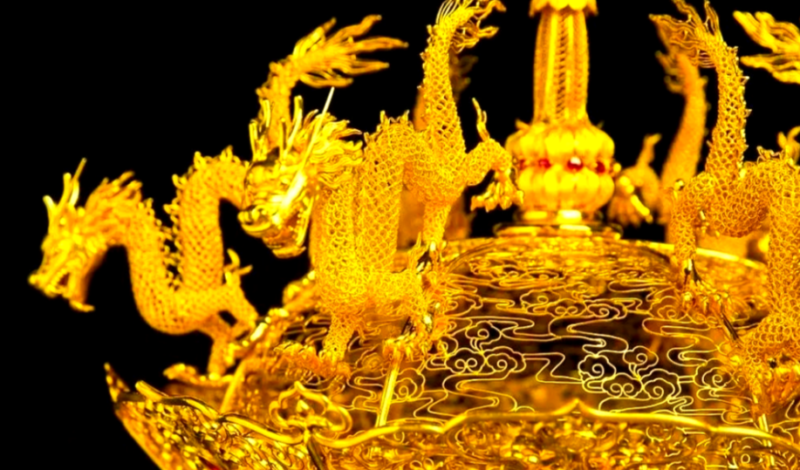





As the most exquisite imperial craft among the “Eight Great Arts of Yanjing”, Beijing Filigree Inlay (Fine Gold Craft) stands out in the history of Chinese jewelry craftsmanship with its unique style of “taking silk as the skeleton and gold as the soul”. This ancient craft, made of gold and silver threads through countless weaving and carving processes, has spanned 3,000 years from its embryonic form in the Shang and Zhou dynasties to its heyday in the Ming and Qing imperial courts, integrating the splendor of gold with the ingenuity of craftsmen, and becoming an artistic treasure that showcases royal dignity and Eastern aesthetics. For foreign travelers, exploring the charm of Filigree Inlay means touching the most delicate “finger temperature” in Beijing’s imperial crafts.
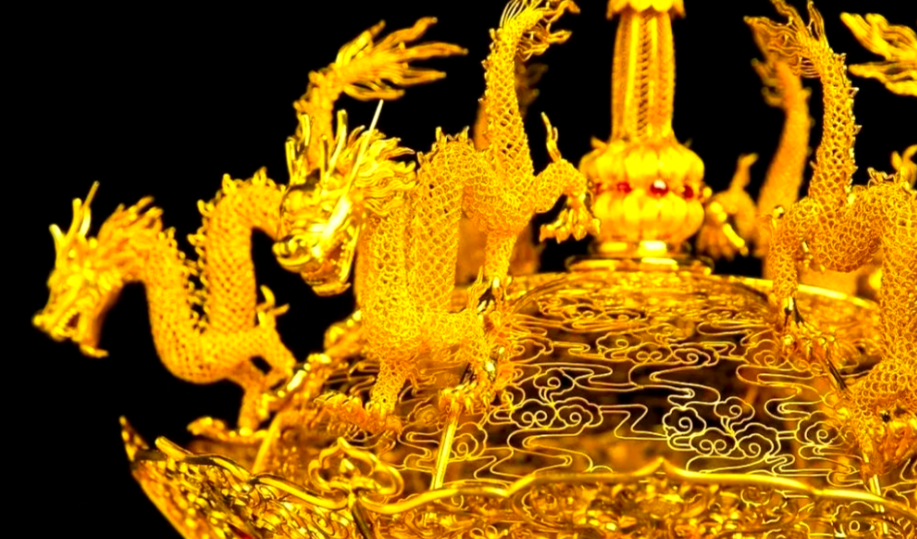
The history of Beijing Filigree Inlay can be traced back to the Shang and Zhou dynasties more than 3,000 years ago. The gold foil ornaments unearthed from the Yin Ruins in Anyang, Henan, have shown the embryonic form of early filigree craftsmanship. During the Spring and Autumn Period and the Warring States Period, filigree techniques gradually matured, and jewelry with gold thread weaving and inlaid jade appeared. The jade burial suit sewn with gold thread unearthed from the Mancheng Han Tomb in Hebei, which connects jade pieces with slender gold threads, is amazing for its exquisite craftsmanship and has become the pinnacle work of Han Dynasty filigree craftsmanship. After the Yuan Dynasty established its capital in Beijing, the court set up a “Silver Bureau” to manage the production of gold and silverware. Filigree Inlay began to form a large-scale imperial craft system, and craftsmen integrated Western inlay techniques with local weaving craftsmanship, laying the artistic tone of Beijing-style filigree.
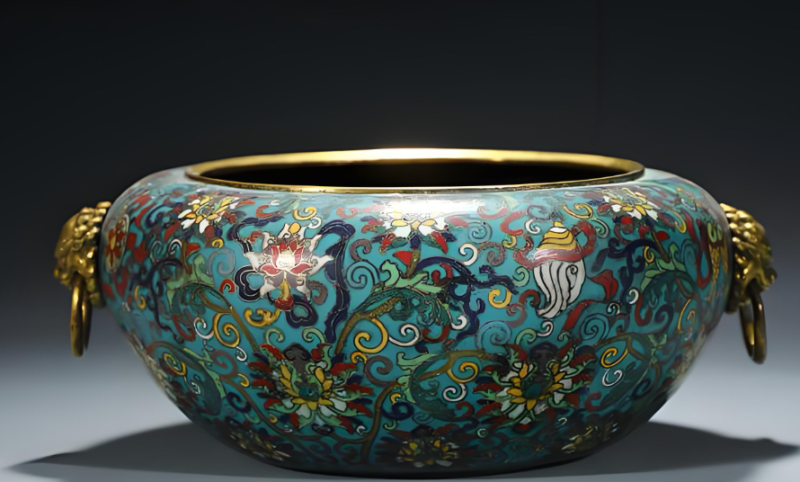
The Ming Dynasty was an important development period for Filigree Inlay. During the Yongle period, the “Imperial Household Department” set up a gold and silver workshop under it, recruiting top craftsmen from across the country, and deeply integrating filigree craftsmanship with jade carving, cloisonné and other techniques, creating cross-border categories such as “filigree inlaid jade carving” and “filigree cloisonné”. The Qing Dynasty was the heyday of Filigree Inlay. The Imperial Workshop under the Imperial Household Department was specially responsible for the production of imperial filigree jewelry and furnishings. The works not only covered jewelry such as headdresses, necklaces and bracelets, but also expanded to large utensils such as ornaments, Buddhist niches and screens, with more complex and exquisite craftsmanship. Emperor Qianlong had a special preference for Filigree Inlay and ordered the creation of a large number of gorgeous works. Among them, the “Gold Thread Inlaid Gem Court Beads” collected in The Palace Museum, with a base woven from gold threads as thin as hair and inlaid with dozens of precious gems, shows royal dignity and becomes a rare heritage treasure.
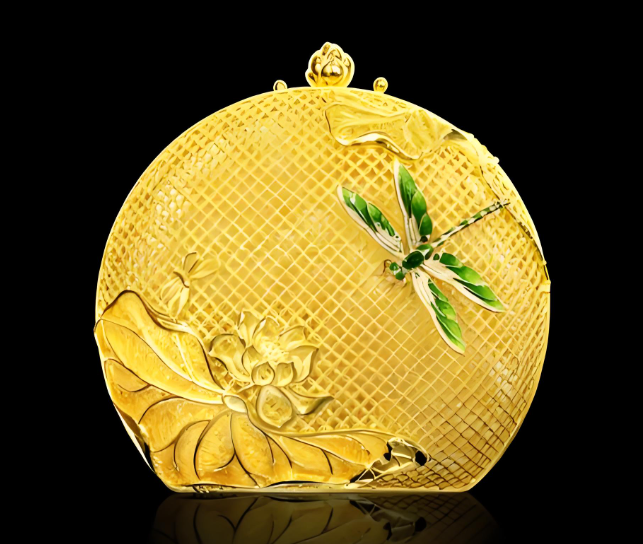
The production process of Filigree Inlay can be called “every inch of gold requires every inch of craftsmanship”, requiring six core techniques including design, matrix making, wire drawing, wire pinching, assembling and welding, and inlaying, subdivided into hundreds of manual procedures, each testing the craftsman’s skills and patience. Wire drawing is the most basic and critical link. Craftsmen need to repeatedly forge and draw gold into uniform and smooth gold threads as thin as hair. The finest gold thread is only 0.08 millimeters in diameter, thinner than a hair, and needs to be operated under a magnifying glass. The wire pinching link fully shows craftsmanship. Craftsmen use tweezers to bend and shape gold threads to outline complex patterns, just like “Embroidery” on metal. The curvature and direction of each gold thread need to be accurately controlled. Assembling and welding is to splice and weld scattered filigree parts into shape. The control of fire is crucial. A slight mistake will lead to the melting of gold threads and the ruin of all previous efforts. Finally, after inlaying gems, polishing and finishing, a Filigree Inlay work is completed. The whole process takes months or even years with extremely low error tolerance, truly interpreting the craftsman spirit of “slow work yields fine products”.
At the end of the Qing Dynasty and the beginning of the Republic of China, imperial craftsmen scattered among the people, and Filigree Inlay gradually moved to the market, forming various distinctive hand workshops, but its inheritance once faced difficulties. After the founding of New China, scattered craftsmen were gathered to form Beijing Filigree Inlay Factory, giving this ancient craft a new lease of life. Wang Shuwen, a national-level intangible cultural heritage inheritor, is a leading figure in contemporary Filigree Inlay. He studied under the famous artist Bi Shangbin and has been deeply engaged in the craft for more than 60 years. He not only restored a number of lost techniques, but also integrated traditional craftsmanship with modern aesthetics. His works such as “Filigree Inlaid Hundred Treasure Stove” and “Gold Thread Inlaid Jadeite Ornament” have won the “Hundred Flowers Award” of Chinese arts and Crafts many times, becoming national treasure-level works of art. He is also committed to craft inheritance, founding a studio to train young inheritors, making this ancient craft gain new vitality.
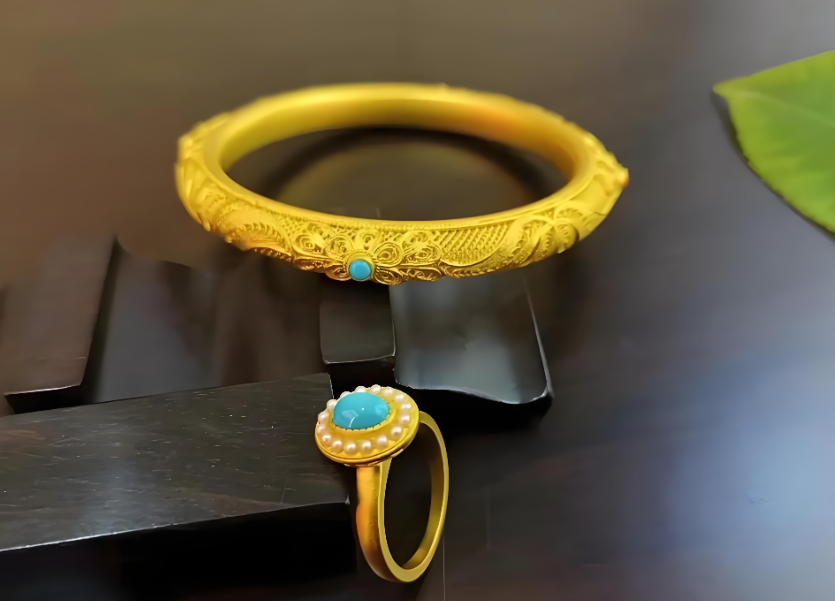
Today, to experience the charm of Filigree Inlay immersively, Beijing Yanjing Eight Great Arts Museum is a must-visit. The museum collects exquisite Filigree Inlay works from past dynasties, from Ming and Qing imperial jewelry to contemporary masterpieces, comprehensively showing the evolution and innovation of the craft. Among them, the representative works of Master Wang Shuwen are the treasures of the museum. The museum also offers Filigree Inlay experience courses. Under the guidance of craftsmen, travelers can experience the basic procedures of wire drawing and wire pinching, and make simple filigree jewelry by hand, feeling the delicacy of fine gold craftsmanship. In addition, The Palace Museum collects a large number of rare Ming and Qing imperial Filigree Inlay works, allowing visitors to intuitively feel the craftsmanship at its peak. The cultural and creative store of Beijing Filigree Inlay Factory has launched portable cultural and creative products such as filigree bookmarks and pendants, making it convenient for travelers to take this “imperial elegance” home.
From an exclusive imperial luxury jewelry craft to an intangible cultural heritage accessible to everyone, Beijing Filigree Inlay has continuously gained new vitality in inheritance. The intertwined gold threads hide the thousand-year imperial charm and the craftsmen’s piety; the dazzling gems reflect the delicacy and thickness of Eastern aesthetics. When you touch the warm texture and exquisite patterns of Filigree Inlay works, you can understand the essence of this “every inch of gold requires every inch of craftsmanship” and feel the artistic shock spanning 3,000 years.




暂无评论内容