




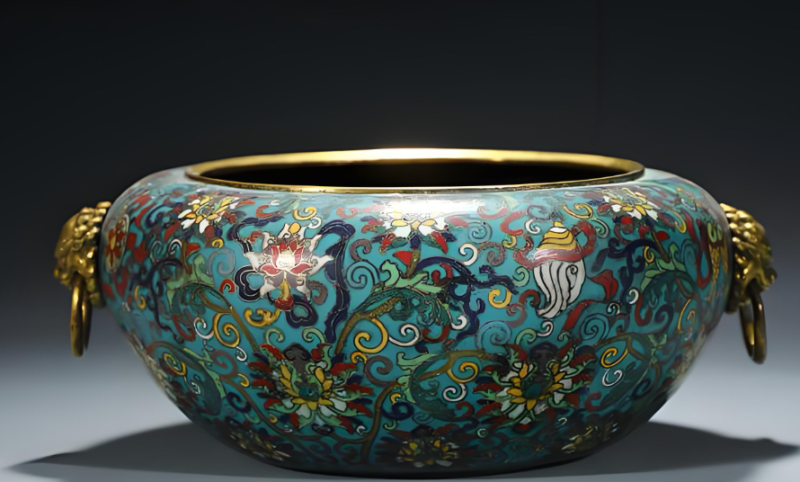
As one of the “Eight Great Arts of Yanjing” that combines luxury and elegance, Beijing Gold Lacquer Inlay has written a brilliant chapter in the history of lacquer art with its unique style of “gold lacquer as the base and inlay as decoration”. This ancient craft integrating goldwork, lacquer art and inlay techniques has spanned 3,000 years from its embryonic form in the Shang and Zhou dynasties to its heyday in the Ming and Qing imperial courts, blending the splendor of gold, the warmth of lacquer and the elegance of inlaid materials into a treasure of art that showcases imperial dignity and Eastern aesthetics. For foreign travelers, exploring the charm of Gold Lacquer Inlay is the key to unlocking the diversified integration of Beijing’s imperial crafts.
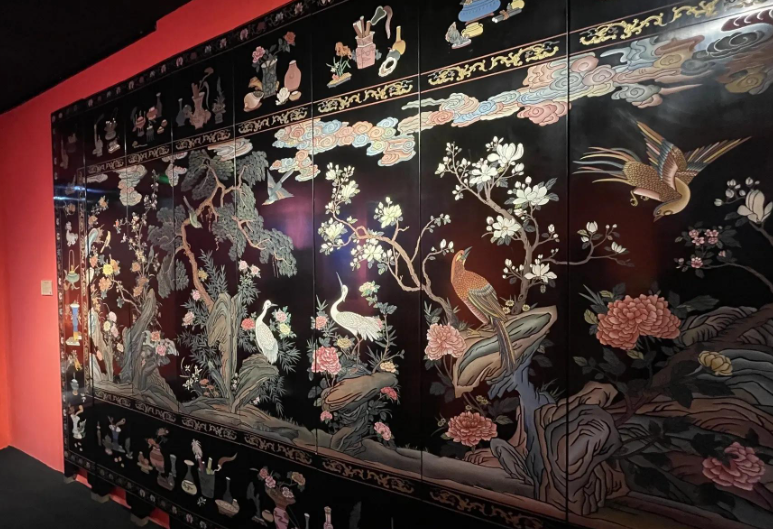
The history of Beijing Gold Lacquer Inlay can be traced back to the Shang and Zhou dynasties more than 3,000 years ago. The mother-of-pearl inlaid carved lacquerware unearthed from the Liulihe Shang and Zhou site in Fangshan District confirms the early germination of this craft in the Beijing area. The painted lacquer table unearthed from the Laoshan Han Tomb in the Han Dynasty further demonstrates the integrated development of lacquer art and decorative techniques. After the Yuan Dynasty established its capital in Beijing, it set up a “Paint Bureau” to specially manage the production of imperial lacquerware, and Gold Lacquer Inlay began to form a large-scale imperial craft system. The black lacquer plate unearthed from the Houyingfang Yuan Dadu site, inlaid with small shell slices to depict the moon palace scene, is amazing for its exquisite craftsmanship. During the Yongle period of the Ming Dynasty, Guoyuan Chang, as the core of the imperial lacquerware workshop, gathered top craftsmen from across the country, deeply integrating Gold Lacquer Inlay with techniques such as carved and filled lacquer, laying the artistic tone of dignified and profound Beijing-style imperial lacquerware.
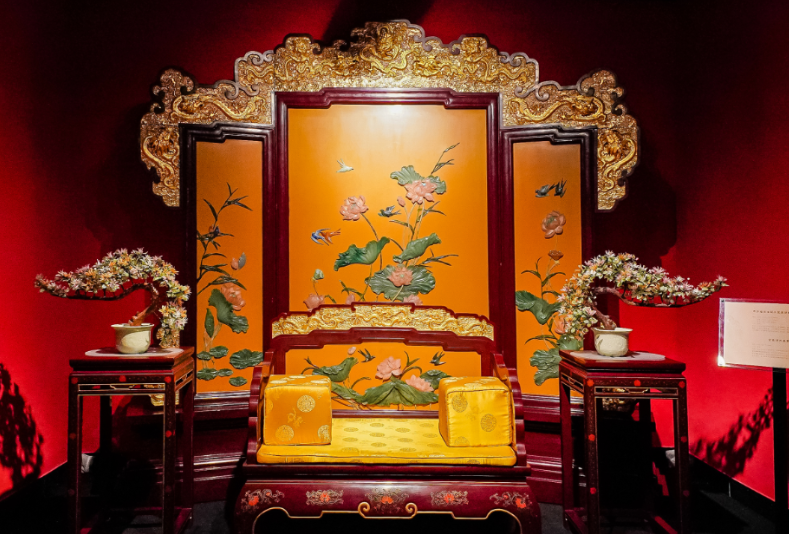
The Qing Dynasty was the heyday of Gold Lacquer Inlay. The Lacquer Workshop under the Imperial Household Department pushed this craft to the peak of art. At that time, the works were not only diverse in categories, covering screens, furniture, boxes, plaques and other utensils, but also more complex and exquisite in craftsmanship, forming two core systems: “gold lacquer” and “inlay”. Gold lacquer includes techniques such as gold painting, gold pasting and carved and filled lacquer. Craftsmen mix gold powder with lacquer to outline patterns on the lacquer base, or carve and fill colored lacquer before pasting gold foil, showing great magnificence. Inlay is represented by mother-of-pearl inlay and multi-treasure inlay. Mother-of-pearl creates a vivid texture with the natural luster of shells, while multi-treasure inlay uses precious materials such as jade, agate and ivory to splice compositions with rich layers. Most of the Qing Dynasty Gold Lacquer Inlay works took auspicious patterns such as dragons and phoenixes, flowers and birds, landscapes as themes, with bright and harmonious colors, both practical and ornamental value, becoming the core category of imperial furnishings and ritual supplies.
The production process of Gold Lacquer Inlay can be called “thousands of processes and refinements”, requiring dozens of manual procedures including matrix making, lacquering, decoration, polishing and gold tracing, each testing the craftsman’s skills and patience. The matrix is mostly made of high-quality wood, dried and polished to ensure the stability and durability of the utensil. Lacquering requires repeated application of natural lacquer, at least dozens of layers, up to hundreds of layers, until the lacquer surface is smooth and warm like jade. The decoration link is the core of the craft. According to the design drawings, craftsmen either use carved and filled techniques to cut grooves and fill colors, or carefully select inlaid materials for cutting and splicing. Mother-of-pearl inlay also needs special treatment of shells to highlight their pearlescent texture. Finally, after fine polishing and gold tracing, a Gold Lacquer Inlay work is completed. The whole process takes months or even years with extremely low error tolerance, and each finished product is the ultimate embodiment of craftsmanship.
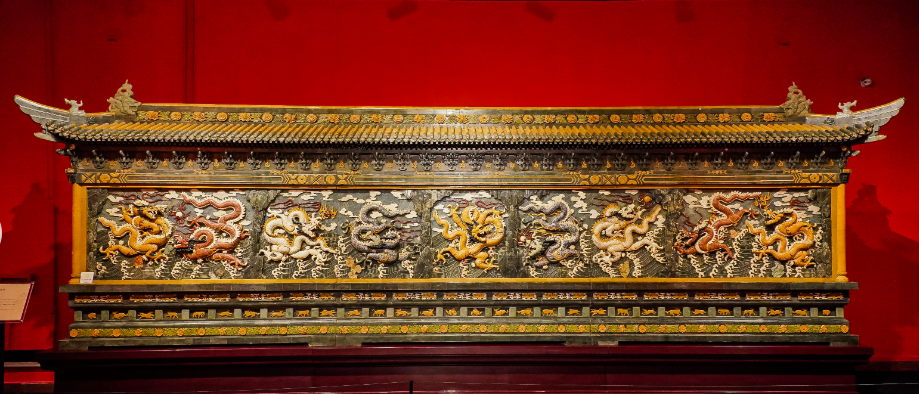
At the end of the Qing Dynasty and the beginning of the Republic of China, imperial craftsmen scattered among the people, and Gold Lacquer Inlay gradually moved to the market, forming various distinctive hand workshop schools, such as the “Su Lacquer Workshop” good at painted and carved lacquer, and the “Small Ware Workshop” focusing on inlay techniques. However, affected by the war, the industry was once on the verge of decline. It was not until the founding of New China that 16 workshops were merged into Beijing Gold Lacquer Inlay Factory through public-private ownership, giving this ancient craft a new lease of life. Bai Deyuan, a national-level inheritor, as a leader in the industry, inherited the craftsmanship of Han Qilong’s school, led the team to restore a number of lost techniques. His works such as the carved and filled screen “Thousand-Armed and Thousand-Eyed Guanyin” and the three-dimensional inlay “Nine-Dragon Wall” won the “Hundred Flowers Award” of Chinese arts and Crafts, becoming national treasure-level works of art.
Today, to experience the charm of Gold Lacquer Inlay immersively, Beijing Gold Lacquer Inlay Art Museum is a must-visit. This characteristic museum, opened in 2022, is located in Xiaohongmen Township, Chaoyang District. It collects hundreds of rare heritage works and contemporary masterpieces, covering various crafts such as carved and filled lacquer, inlay and ash carving. It also displays national gift-level works, production tools and drawings, comprehensively presenting the evolution of the craft. The museum offers experience projects such as floating lacquer fans, handbags and seals. Among them, the handbags are designed by Master Hu Xin, allowing visitors to experience the core craftsmanship of Gold Lacquer Inlay in person, suitable for travelers of all ages. In addition, The Palace Museum collects a large number of rare Ming and Qing imperial Gold Lacquer Inlay works, allowing visitors to intuitively feel the craftsmanship at its peak. Beijing Gold Lacquer Inlay Co., Ltd. continues to promote technological innovation, integrating ancient crafts into modern life.
From an exclusive imperial luxury craft to an intangible cultural heritage accessible to everyone, Beijing Gold Lacquer Inlay has continuously gained new vitality in inheritance. The gilded patterns hide the thousand-year imperial charm, and the inlaid texture embodies the craftsmen’s piety. When you touch the warm lacquer surface and bright gold patterns, you can understand the essence of “integrating the strengths of all schools” in Eastern aesthetics and feel the artistic shock spanning 3,000 years.



暂无评论内容