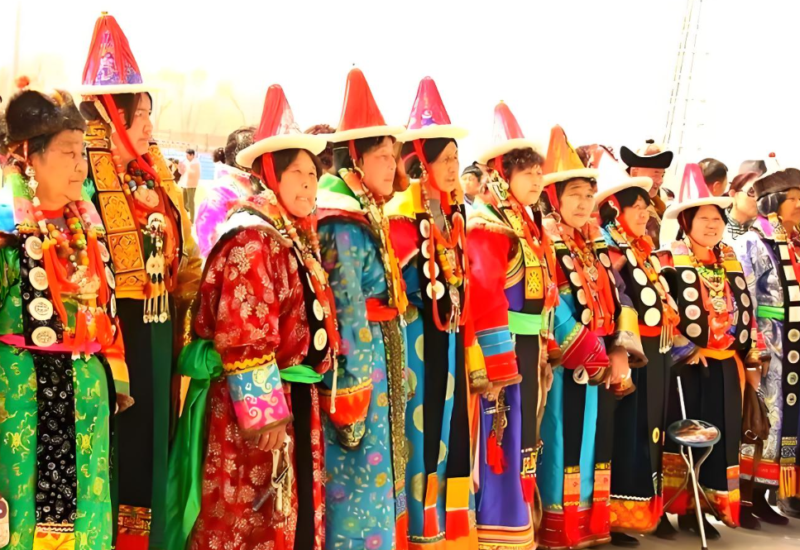





In the immersive exhibition area of Beijing’s National Community Experience Hall, a Mongolian robe embroidered with cloud and flame patterns is on display. The neckline outlined by gold and silver threads embodies both the boldness of grassland nomads and the warmth of multi-ethnic cultural integration. As the most vivid carrier of Mongolian Culture, traditional Mongolian costumes center on the Mongolian robe, becoming a cross-regional cultural symbol with practical designs for nomadic life and meaningful decorative patterns. For foreign travelers, visiting Beijing’s characteristic venues and workshops and wearing Mongolian robes offer an immersive experience of the collision between grassland civilization and the inclusive charm of the ancient capital—every detail tells the nomadic wisdom of coexistence between humans and nature.
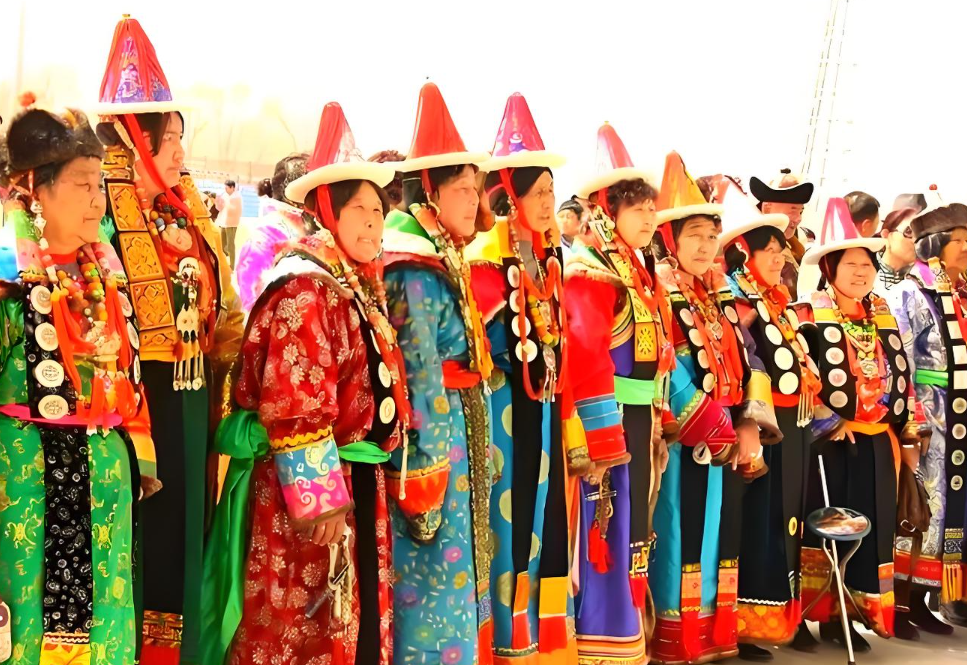
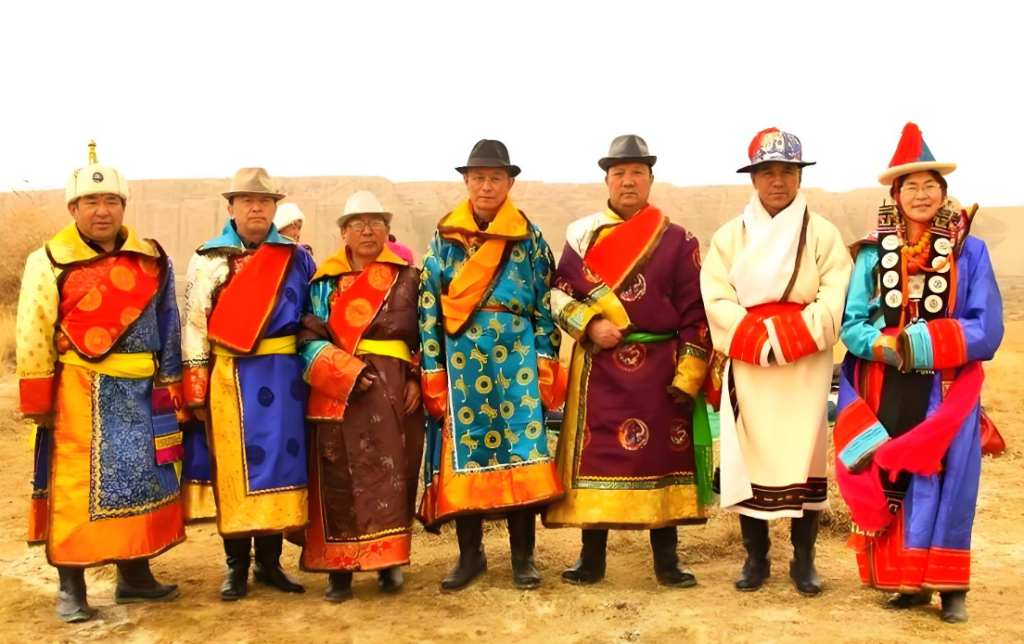
The Mongolian robe is the core of traditional Mongolian costumes. Its design fully serves the needs of grassland nomadic life and has retained its essence for centuries. The classic Mongolian robe is a right-cross collared, loose-sleeved long robe with an unslit hem. The wide robe can be used as a quilt to keep warm on cold nights and stretch freely when riding horses, resisting the strong winds and harsh cold of the Mongolian Plateau. The high standing collar effectively blocks wind and sand, while the narrow-sleeved and waist-fitted details facilitate galloping on horseback. Fabrics are selected according to seasons and scenarios: thick sheepskin and fox fur edging are used in winter for warmth and durability, while light satin and cotton are adopted in summer for breathability and comfort. Men’s Mongolian robes are mostly in calm colors such as dark blue and black, with simple decorations—only a few geometric patterns embroidered on the neckline and cuffs. Women’s robes are brightly colored, interweaving red, blue, white and other hues, with full Embroidery patterns on the robe body, showing elegance and vitality.
Accessories are the finishing touches of Mongolian costumes, each combining practical functions and cultural meanings to form a complete costume system. The waist belt is an essential item, mostly made of 3-4 meters of satin. Men tighten the belt to fix the robe and assist in riding and archery, while women wear it loosely to highlight their figure curves. Some belts are embroidered with endless knot and scroll patterns, symbolizing continuous auspiciousness. Headdresses are a symbol of Mongolian women’s identity and status, exquisitely woven with coral, agate and silver chains. Headdresses of some tribes can weigh more than ten catties, and the collision of pearls and coral shows luxury. Men’s headdresses are mainly round-tipped fur hats, with fur edging for warmth in winter and light and breathable in summer, suitable for nomadic hunting scenarios. Boot design also contains ingenuity: the upturned toe facilitates walking on sand, and the boot upper is embroidered with auspicious patterns such as cloud and scroll patterns, which are both non-slip and beautiful, making them essential for grassland life.
The colors and patterns of Mongolian costumes carry nomads’ reverence for nature and praise for life, embodying profound cultural connotations. Color matching follows the concept of nature worship: white symbolizes purity and milk, blue represents the eternal sky, and red implies life and enthusiasm. These colors are particularly common in costumes for major occasions. Patterns are mostly derived from nature: cloud and flame patterns express awe for natural forces, scroll patterns symbolize endless life, antler patterns represent good luck and health, and sun, moon and star patterns convey gratitude to heaven and earth. Costumes of different tribes have unique characteristics: Wulate tribe headdresses are strung with pearls and coral, while Jasaaktu tribe Embroidery focuses on natural colors. 28 Mongolian tribes have developed 108 sets of standard costumes, demonstrating the richness of costume Culture.
As a core of multi-ethnic cultural integration, Beijing has many high-quality spots to experience traditional Mongolian costumes. The National Community Experience Hall is the first choice, with an ethnic costume experience area offering a variety of Mongolian robe rentals and costume-changing services. Combined with professional explanations, visitors can learn about the historical evolution and tribal differences of costumes in detail, and participate in Mongolian Embroidery experiences to feel the ingenuity of silver needles and colored threads. The special exhibition at the former site of the Mongolian and Tibetan School displays physical Mongolian costumes related to revolutionary ancestors such as Ulanhu, allowing visitors to feel the ethnic emotions carried by the costumes while understanding history. In addition, some intangible cultural heritage workshops and cultural shops in Beijing provide customized Mongolian robe services, which can integrate modern aesthetics according to needs to create exclusive grassland finery.
When personally experiencing Mongolian costumes, it is necessary to balance cultural etiquette and scenario adaptation to make the experience more meaningful. Choose robe styles according to scenarios: simple women’s or men’s plain Mongolian robes are recommended for daily check-ins, while grand costumes embroidered with traditional patterns are suitable for major cultural events. Follow tribal customs when wearing headdresses: women’s coral headdresses should match the corresponding robe color, and men’s fur hats should be worn neatly without tilting randomly. During the experience, photos can be taken in the grassland scene exhibition area of the experience hall, Olympic Park and other open venues, with horse-head fiddles and hada as props to freeze the nomadic cultural atmosphere. If encountering Nadam Festival-related performances, wearing Mongolian robes to participate will better feel the power of wrestlers’ “Banjile” costumes and the lively festival atmosphere.
Wearing Mongolian costumes requires following basic etiquette to show respect for nomadic Culture. For major occasions, the “robe, boots and hat” must be complete, and the placket should be folded upward to show solemnity. White Mongolian robes are preferred for sacrificial scenarios, symbolizing holiness. Maintain a dignified posture when walking, avoiding random pulling of the robe and accessories. When interacting with others, do not touch their headdresses and belts at will, which is a respect for their identity. In venues such as experience halls and intangible cultural heritage workshops, follow the guidance of staff to understand the cultural stories behind the costumes, do not arbitrarily change the costume shape, and jointly protect cultural inheritance.
Beyond costume experience, visitors can deeply feel the close bond between Mongolian culture and costumes in Beijing. Some cultural venues regularly hold Mongolian costume shows, displaying the characteristics and evolution of costumes from different tribes, combined with horse-head fiddle performances and Mongolian dances to fully experience the charm of grassland culture. In intangible cultural heritage workshops, senior craftsmen demonstrate Mongolian embroidery techniques on site. Visitors can closely observe the use of gold and silver threads and the outlining of patterns, understanding the ingenuity of “weaving splendor with countless threads”. In addition, tasting grassland delicacies such as roast lamb and milk tea while wearing Mongolian robes allows for an immersive experience of the nomadic lifestyle where “clothing and food are of the same origin”.
Traditional Mongolian costumes are more than just finery—they are the crystallization of nomadic survival wisdom and cultural beliefs. With practical shapes adapting to the grassland environment and brilliant patterns telling nature worship, they bloom more inclusive charm in the integration with Beijing’s ancient capital culture. When you walk in Beijing’s cultural venues wearing a Mongolian robe, touching the embroidery patterns with your fingers and hearing the horse-head fiddle in your ears, you can cross geographical barriers, feel the boldness and warmth of grassland civilization, and add profound cultural depth and unique nomadic memories to your Beijing trip.




暂无评论内容