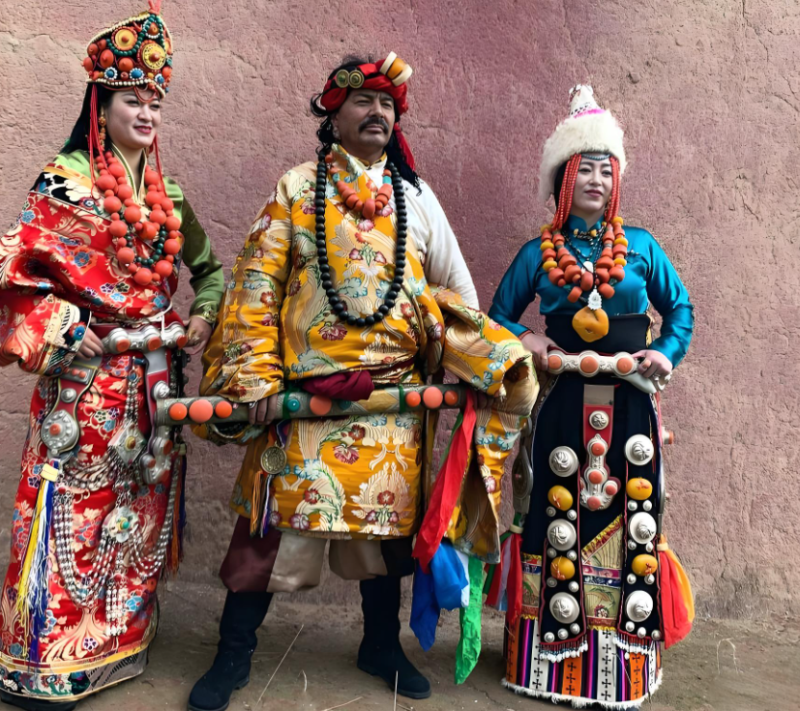





Niujie, located in Xicheng District of Beijing, is the core settlement of the Hui ethnic group. Among its gray streets and lanes, mosques and halal shops are scattered, and Hui people in traditional costumes walk around, forming a unique cultural landscape. Hui traditional costumes, characterized by “simplicity, dignity and faithfulness to beliefs”, not only carry the etiquette norms of Islamic Culture but also integrate the lifestyle of Beijing, becoming the most intuitive symbol of Niujie’s Culture. For foreign travelers, stepping into Niujie and wearing Hui traditional costumes is an immersive journey to experience Islamic culture and the inclusive charm of the ancient capital—every detail of the costumes embodies the coexistence of faith and life.
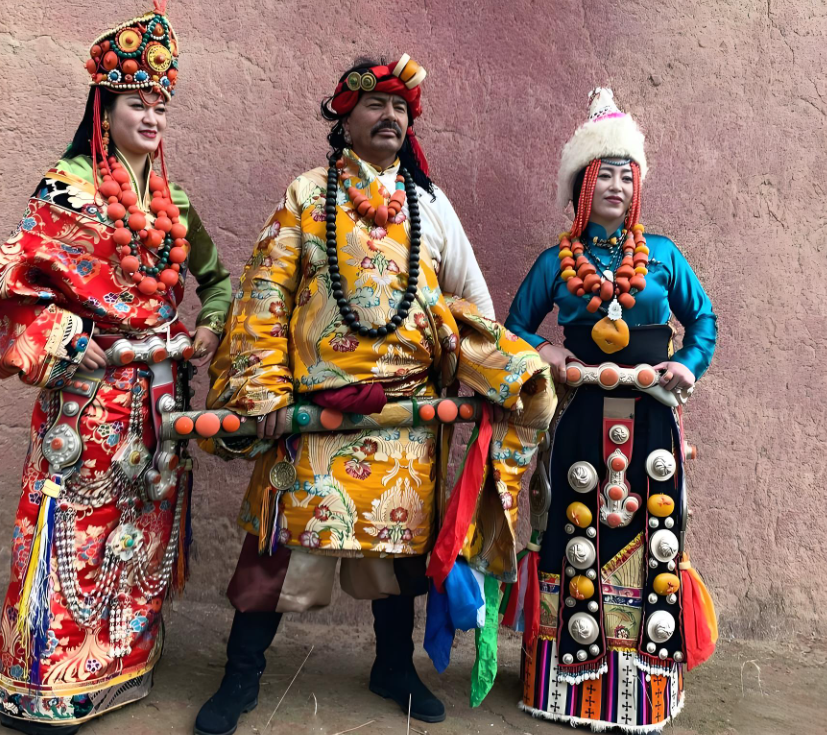
The core feature of Hui traditional costumes is their adaptability to daily and religious scenarios. Both men’s and women’s costumes are simple in design but with subtle conventions, retaining the essence and ensuring practicality as times change. Men’s costumes center on “prayer cap + plain casual wear”. The prayer cap (also known as “hao mao”), a iconic item, is round and brimless. Made of cotton, satin, wool and other fabrics according to seasons, it mainly comes in white, black and dark blue—white symbolizes purity, while black and dark blue represent solemnity. It can be worn casually in daily life, and a clean, solid-color one is required for religious ceremonies. Men’s casual wear mostly includes stand-collar front-opening shirts and trousers, mainly in plain colors without fancy patterns. In winter, cotton robes or waistcoats are added for warmth and etiquette, exuding a calm and modest temperament when walking on Niujie’s streets.
Women’s costumes focus on “headscarf + plain dresses/skirts”. The headscarf, a core symbol, serves both covering and etiquette functions, with different styles according to age and occasions. Young girls’ headscarves are mostly light-colored (pink, light blue, etc.), made of light fabrics with simple patterns, showing vitality. Married women’s headscarves are mainly dark-colored (black, dark blue), thick and covering hair and neck. Elderly women’s headscarves are mostly white, symbolizing purity and simplicity. When wearing a headscarf, it should be wrapped neatly without loosening. Daily wear can be matched with stand-collar long skirts or trousers, with hemlines below the knees and sleeves not too short to avoid exposing the body, complying with the etiquette norms of Islamic Culture. Today, many women in Niujie match traditional headscarves with modern plain coats, retaining traditions while adapting to the rhythm of urban life.
The color and pattern selection of Hui traditional costumes always follows the principle of “solemnity and simplicity”, rejecting complicated decorations and implying reverence for faith. The costumes are mainly in plain colors such as white, black, blue and gray, rarely in bright and fancy colors. Patterns are mostly simple geometric and plant motifs, and animal patterns are prohibited, in line with the Islamic understanding of life. For fabrics, breathable and wear-resistant cotton and linen are preferred, adapting to Beijing’s distinct four seasons and the needs of daily labor and religious activities. This “removing complexity for simplicity” design reflects the cultural core of Hui costumes—valuing inner cultivation over external display.
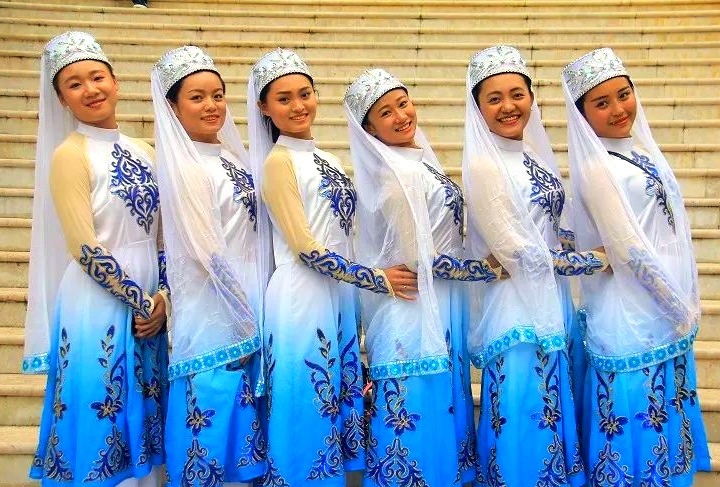
As the core carrier of Beijing’s Hui culture, Niujie is not only the best place to experience Hui traditional costumes but also has multiple spots to explore costume culture. Niujie Mosque, one of the oldest mosques in Beijing, attracts believers in traditional costumes to participate in religious activities. Tourists can visit during non-prayer hours, observe different styles of traditional costumes, and listen to staff explain the connection between costumes and religious etiquette. Outside the mosque, many shop owners in halal shops and time-honored brands still wear traditional costumes while operating, contrasting with the antique shops to form a vivid cultural picture. In addition, some cultural venues around Niujie regularly hold Hui costume shows, displaying the evolution of costumes in different eras. Tourists can closely appreciate the craftsmanship details of traditional costumes and feel the charm of cultural inheritance.
To experience Hui traditional costumes personally, characteristic shops around Niujie provide rental services, covering core men’s and women’s items suitable for different scenarios. When renting, it is necessary to follow cultural etiquette—choose plain styles and avoid matching fancy accessories. Shop staff will offer wearing guidance to help tourists properly put on prayer caps and headscarves and explain basic etiquette norms. During the experience, tourists can take photos around Niujie streets and the mosque, matching halal food shops and ancient building signs to capture unique cultural moments. Note that religious ceremony scenes should be avoided when taking photos, respect believers’ religious habits, and do not randomly take photos of others.
Wearing Hui traditional costumes requires following basic etiquette, which is not only a respect for the culture but also the key to integrating into the scene. Men should wear prayer caps neatly without tilting or taking them off casually. Women’s headscarves should be wrapped properly, not exposing hair or neck, and maintain a dignified posture when walking. Costumes should be clean and tidy, free of stains and wrinkles, showing respect for others and the scene. In places like Niujie Mosque and halal restaurants, complete costumes are required—short sleeves, shorts and other exposed clothes are not allowed. Ask for permission before taking photos to avoid offending religious habits and personal privacy, and always maintain a modest and polite attitude.
Beyond costume experience, tourists can deeply feel the close bond between costumes and life in Niujie. In halal food shops on the streets, such as Jubao Yuan and Hongji Snacks, many staff serve in traditional costumes. Tourists can taste hot pot, steamed buns and other delicacies while observing the presentation of traditional costumes in daily business scenarios. In surrounding cultural shops, mini prayer caps and headscarf crafts can be bought as souvenirs, and the basic craftsmanship of costume making can be learned. In addition, some shops invite senior craftsmen to demonstrate traditional costume sewing skills. Tourists can closely observe fabric cutting and sewing details, feeling the “ingenuity behind simplicity”.
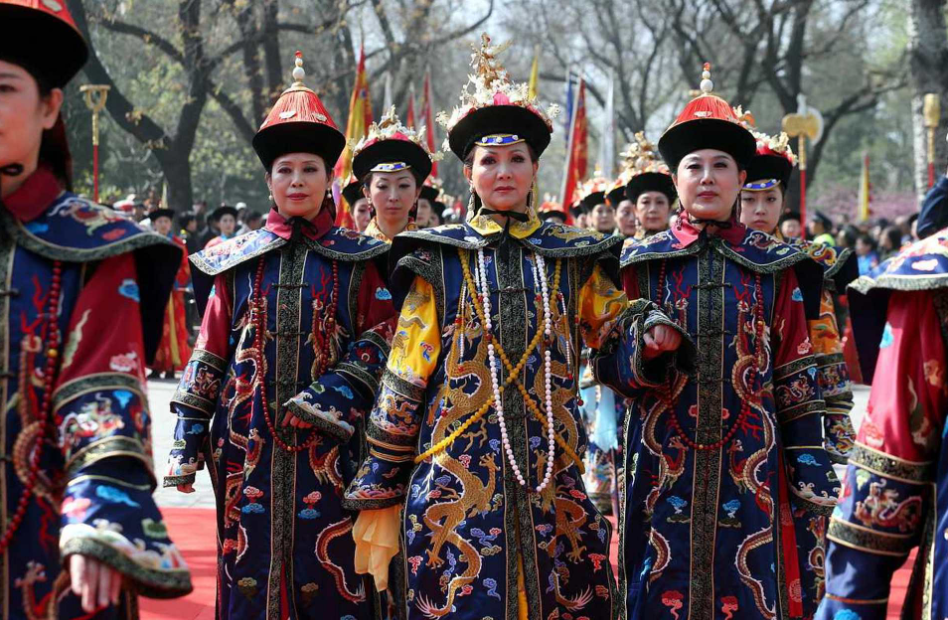
With Niujie as its carrier, Hui traditional costumes are more than just clothing—they are a vivid witness to Hui culture, beliefs and lifestyle. Based on plain colors and simple shapes, they carry reverence for faith and love for life, as well as reflecting the cultural inclusiveness of Beijing as an ancient capital. When you walk on Niujie in traditional costumes, watching the mosque’s dome shining in the sun and listening to the interweaving of street cries and scriptures, you can deeply feel this time-honored cultural inheritance, adding a unique sense of faith and cultural depth to your Beijing trip.





暂无评论内容