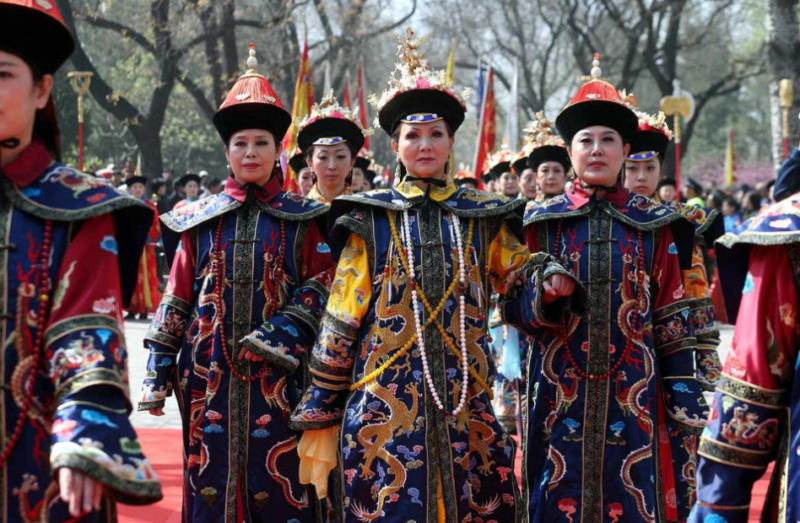





As the most iconic ethnic attire in Beijing, Manchu traditional costumes are deeply rooted in the cultural fabric of the ancient capital. From the gorgeous court robes of the Qing Dynasty to the practical daily wear of the people, Manchu costumes not only retain the functional genes of a nomadic and equestrian people but also absorb the essence of Han Embroidery and silk craftsmanship, forming a unique Beijing-style aesthetic. For foreign travelers, wearing Manchu costumes while visiting royal relics like the Forbidden City and Prince Gong’s Mansion is an immersive journey into centuries-old court Culture, with every detail embodying the hierarchy, etiquette and aesthetic pursuit of the Qing Dynasty.
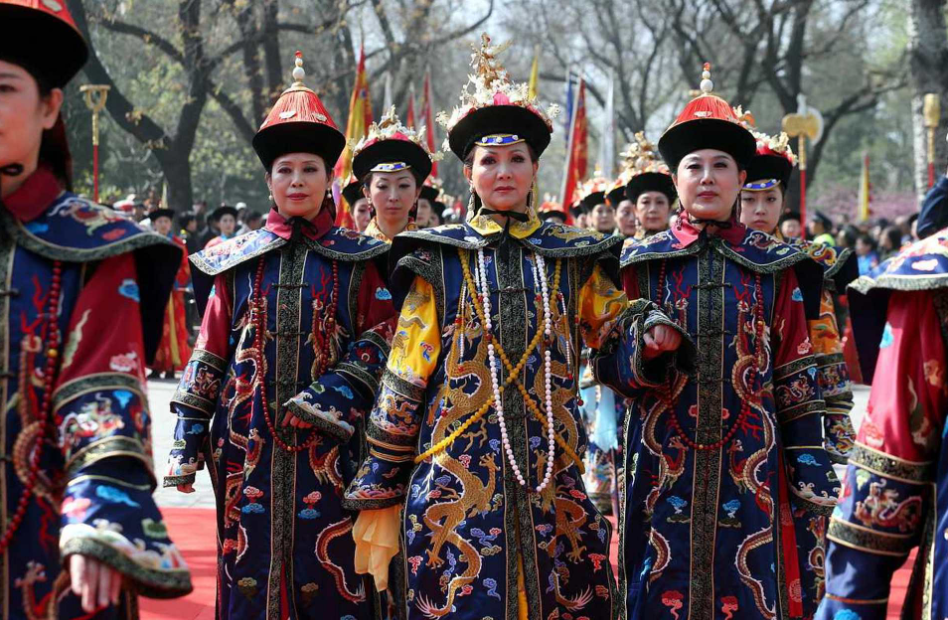
Manchu women’s costumes are the core of Manchu costume Culture, featuring intricate designs and strong ritual sense. The combination of cheongsam (banner costume), Manchu headdress and lotus-bottom shoes is the most recognizable. Originally, the cheongsam was a straight robe reaching the ankles, with a saddle-shaped standing collar, slanting front fastened by exquisite frog buttons, and horse-hoof sleeves that could be rolled up for warmth or lowered for salutations. The neckline, cuffs and hem were trimmed with multiple layers of edging; the more complex the patterns and the more layers of edging, the higher the wearer’s status.
In the mid-to-late Qing Dynasty, influenced by Han clothing, the cheongsam’s silhouette was slightly adjusted with slits at the hips for easier movement, and its decorative craftsmanship became more sophisticated. Cheongsams for noble women were made of high-quality satin, embroidered with auspicious patterns such as dragons, phoenixes and interlocking lotus, showcasing extreme luxury. Headdresses and shoes are the finishing touches to Manchu women’s looks. Manchu headdresses include “Liangbatou” (double flat buns) and “Dalaqi” (large wing-like headdress). Liangbatou, popular in the mid-Qing Dynasty, divided the hair into two parts combed into flat buns on both sides, with a swallow-tailed lock of hair at the back.
Dalaqi, prevalent in the late Qing Dynasty, used iron wire as the frame, covered with indigo satin and adorned with pearl flowers and jade hairpins, creating a more plump and gorgeous look. Lotus-bottom shoes had wooden soles 5-15 centimeters high, shaped like flower pots, with embroidered uppers. They not only made women stand taller and more graceful but also prevented the hem of the robe from getting dusty, being exclusive to noble women. In addition, the “changyi” (loose robe) was a daily formal wear for Manchu noble women, with a floor-length design, wide sleeves and intricate decorations, balancing beauty and practicality.
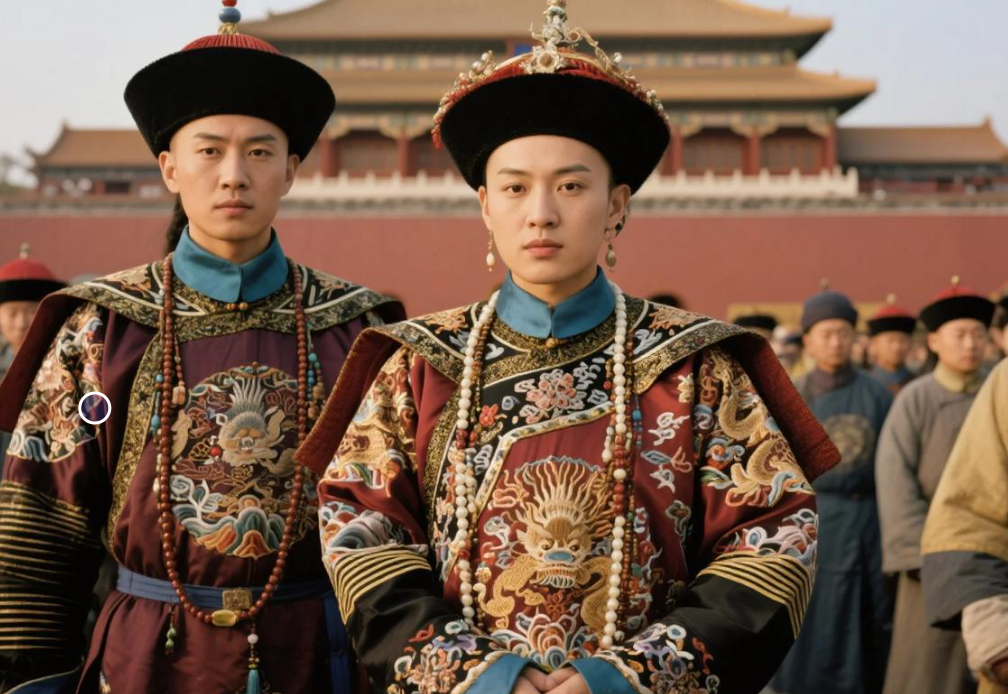
Manchu men’s costumes focused more on functionality and hierarchy, with core items including arrow-sleeve long robes, mandarin jackets, waistcoats and official hats with peacock feathers. The arrow-sleeve long robe had narrow sleeves and a wide hem, suitable for horseback riding and archery. It could be lined with cotton for warmth in winter, and the horse-hoof cuffs were a signature design—they should be lowered to cover the hands when saluting, showing solemnity. The mandarin jacket, a short front-opening outer garment reaching the waist, was often worn over the long robe. It was divided into daily wear and official wear; the official version had rank badges on the chest and back, distinguishing official grades with animal patterns.
The waistcoat (sleeveless jacket) was made of satin or animal skin, worn inside or outside the robe for warmth and decoration. The official hat with peacock feathers (dingdai hualing) was a symbol of status in the Qing Dynasty—the bead on the top indicated the official rank, and the peacock feather was a royal reward for meritorious officials, only granted to those with outstanding achievements.
Historically, Manchu costumes became prevalent in Beijing after the Manchu conquest of China, becoming the mainstream attire in both the Qing court and among the people. The in-depth integration of Manchu and Han craftsmanship gave birth to a unique Beijing style. In the early Qing Dynasty, costume designs strictly followed the hierarchy system, with clear regulations on fabrics, patterns and styles that common people could not violate. From the Qianlong to Jiaqing periods, costumes gradually transformed from solemn court wear to daily attire, with more abundant decorative elements in folk costumes. By the late Qing Dynasty, Manchu costume craftsmanship reached its peak, becoming an important symbol of Beijing Culture. Even after the Republic of China, when it was no longer daily wear, it has been inherited in traditional weddings and cultural performances.
To experience authentic Manchu traditional costumes in Beijing, time-honored brands are the best choice, as they preserve the essence of traditional designs and intangible cultural heritage craftsmanship. Rui Fuxiang’s Qianmen Store (No. 5 Dashilan Street, Xicheng District, Tel: 010-63035313) inherits Qing Dynasty Manchu costume-making techniques, offering customization and rental services for cheongsams, arrow-sleeve long robes, Manchu headdresses and other items. Fabrics are custom satin, and Embroidery is done by hand using Beijing embroidery techniques. The daily rental price ranges from 300 to 1000 RMB (including supporting accessories), and customization takes 20-40 days, suitable for travelers pursuing high authenticity.
Longqingxiang (No. 93 Qianmen Street, Dongcheng District, Tel: 010-63135472) focuses on high-end customization, slightly adjusting cheongsam silhouettes to fit modern aesthetics, and matching them with lotus-bottom shoes, jade hairpins and other accessories to create a complete court look. In addition, many Hanfu experience stores on Guozijian Street, Dongcheng District, offer affordable Manchu costume rentals, mainly daily-style cheongsams, with staff providing professional wearing guidance for first-time experiencers.
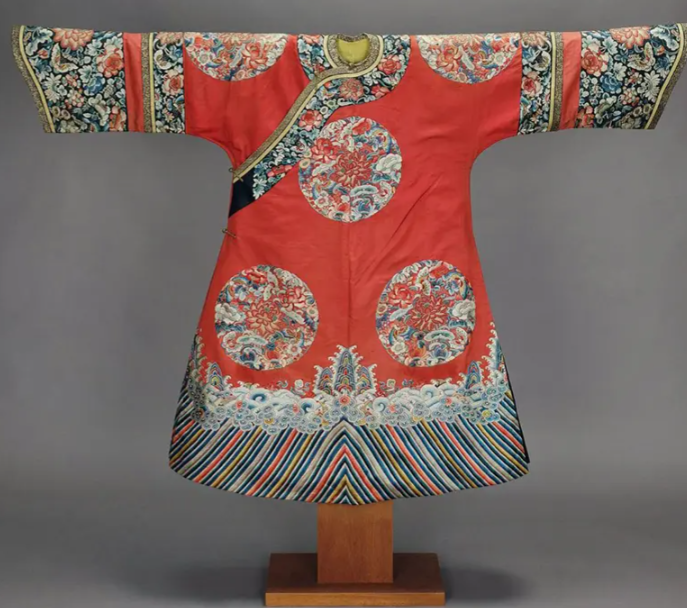
Wearing Manchu traditional costumes requires following basic etiquette to show respect for the culture. For women, frog buttons on the cheongsam should be fastened properly, and the hem should hang naturally. When matching with a Manchu headdress and lotus-bottom shoes, walk slowly and gracefully, avoiding running or jumping. For men, horse-hoof cuffs of the arrow-sleeve long robe should be lowered on formal occasions; the mandarin jacket should be aligned at the front. Official hats with peacock feathers are only suitable for ritual scenarios; plain official hats can be used for daily experiences.
Royal gardens and noble mansions such as the Forbidden City, Summer Palace and Prince Gong’s Mansion are the most suitable venues, echoing the court attribute of the costumes and creating photos with a strong historical atmosphere. They can also be worn in traditional wedding performances and intangible cultural heritage festivals to enhance ritual sense. For daily streets, simple cheongsams are recommended instead of overly complex court styles.
To deepen your understanding of Manchu costume culture, visit the Treasure Gallery of the Palace Museum to view physical examples of Manchu costumes of different ranks in the Qing Dynasty, observe Embroidery craftsmanship, edging details and pattern meanings up close, and listen to guides share court stories behind the costumes. The Wenchang Courtyard in the Summer Palace houses late Qing Dynasty Manchu costumes, allowing you to intuitively feel their style evolution. Some time-honored brands offer frog button and embroidery experience courses, where travelers can make decorative details of cheongsams by hand, experiencing the exquisite intangible cultural heritage craftsmanship.
When taking photos in Manchu costumes, props such as round fans and oil-paper umbrellas can be used to highlight the elegant temperament. Old Beijing streets like Nanluoguxiang and Qianmen Street are ideal backdrops, freezing unique Beijing-style memories. Manchu traditional costumes are not only clothing but also a vivid witness to the integration of Manchu and Han cultures in Beijing. With functional designs carrying the genes of an equestrian people and gorgeous decorations embodying court culture, they have been passed down for centuries, allowing travelers to touch the historical warmth of the Qing Dynasty in the ancient capital and add profound cultural significance to their Beijing trip.



暂无评论内容