




In the Tibetan Culture exhibition area of Beijing’s National Community Experience Hall, a chuba made of pulu (woolen fabric) with colored borders is on display. The coral and turquoise accessories dotted on the placket shine brightly, embodying both the harsh wind and frost of the Qinghai-Tibet Plateau and the Tibetan people’s reverence for nature and faith. Centered on the chuba, Tibetan costumes have evolved over thousands of years, adapting to the harsh environment of plateau nomadic life and integrating profound religious cultural connotations, forming a unique costume system. For foreign travelers, visiting Beijing’s characteristic venues and workshops and wearing chubas offer an immersive experience of the collision between plateau civilization and the inclusive charm of the ancient capital—every detail tells the survival wisdom of coexistence between humans and nature.
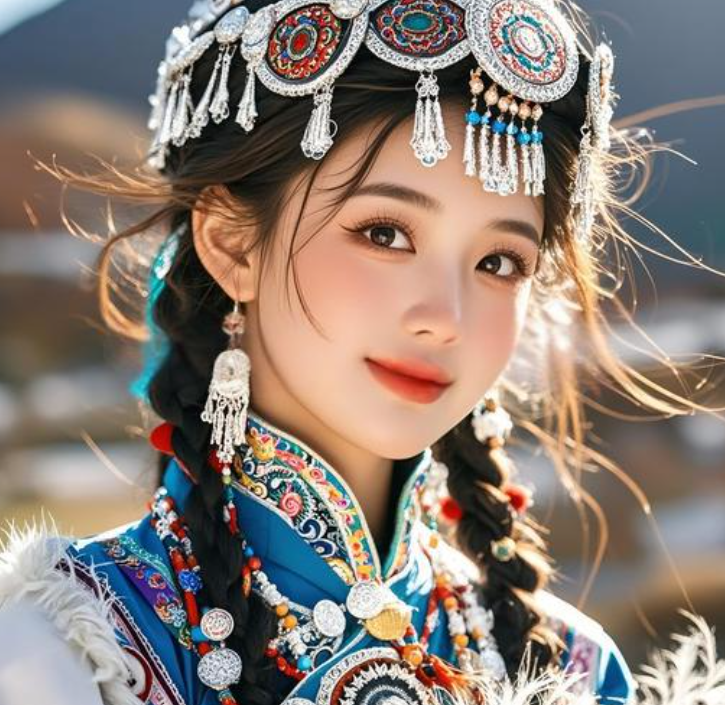
The chuba is the soul of Tibetan costumes. Its design fully serves the needs of plateau climate and nomadic life, combining practicality and ritual sense. The classic chuba is a right-cross collared, collarless and buttonless long robe, sewn with thick pulu fabric. Pulu is divided into three grades, with the top-grade “Xierima” being fine-textured and preferred for festival costumes. The wide robe can be used as a quilt to keep warm on cold nights; when it’s hot or working, simply expose the right arm and tie the sleeve around the waist, allowing flexible adjustment without untying the belt, balancing windproof, sun protection and mobility.
Men’s chubas are mostly in calm colors such as black and dark blue, with a wide and simple style. After tying the waist, a natural pocket is formed on the chest for storing items. Women’s chubas are slightly narrower, available in sleeved and sleeveless styles. Married women wear a colored apron called “bangdian” around the waist, hand-woven from wool with bright colors, which is a iconic accessory for married women in the U-Tsang region.
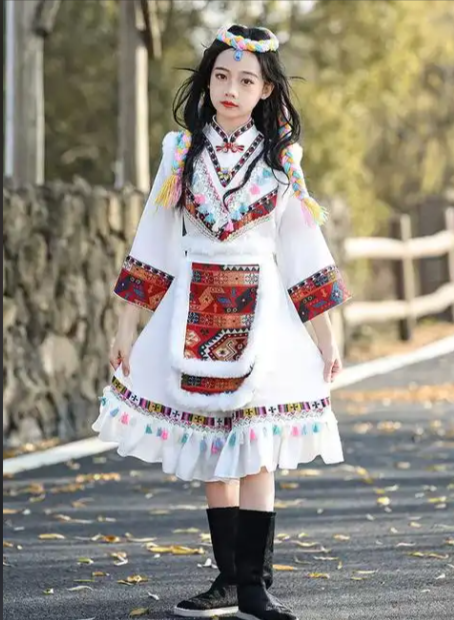
Accessories are the finishing touches of Tibetan costumes, serving as both symbols of wealth and carriers of religious meanings, forming a complete costume system. Tibetans prefer to make accessories from gold, silver, coral, turquoise, dzi beads and other materials. These treasures are partly relics from ancient plateau oceans and partly introduced through ancient caravan trade, with both collection and practical value. Women’s headdresses are the most gorgeous, centered on “bazhu” strung with coral and agate, paired with silver hairpins and earrings. Headdresses of some tribes can weigh more than ten catties, only worn during festivals.
Men’s accessories are simple and elegant, mostly silver gau boxes (for holding scriptures or Buddha statues) and turquoise necklaces, embodying prayers for blessings. In addition, waist accessories such as flint and tsampa bags are essential tools for nomadic life, and their exquisite patterns showcase craftsmanship.
The colors and patterns of Tibetan costumes are deeply marked by religious Culture and nature worship. Red symbolizes courage and auspiciousness, blue represents the sky and eternity, and white implies purity and sacredness. These colors interweave in festival costumes, showing enthusiasm and unrestraint. Patterns are mostly derived from religious symbols and natural things: eight treasures patterns and lotus patterns express piety to faith, cloud patterns and water patterns symbolize natural gifts, and animal patterns are mostly related to totem worship.
Costumes vary by region: U-Tsang costumes are dignified and elegant with colorful bangdian; Khampa costumes are decorated with intricate accessories, showing boldness; Amdo costumes are thick and warm, adapting to grassland cold. More than 200 costume types together form a rich lineage of Tibetan costumes.
As a core of multi-ethnic integration, Beijing has many high-quality spots to experience Tibetan costumes. The National Community Experience Hall is the first choice, displaying characteristic costumes from U-Tsang, Khampa and Amdo regions, and providing rental services for various chubas. Combined with professional explanations, visitors can learn about the evolution of chubas and the cultural meanings of accessories in detail, and participate in pulu weaving and simple accessory making experiences.
Tibetan cultural shops around Yonghe Temple not only offer customization and rental services but also match complete accessories to create festival costumes. Some intangible cultural heritage workshops invite Tibetan senior craftsmen to demonstrate skills on site, allowing visitors to closely feel the craftsmanship of pulu weaving and silver ornament polishing.
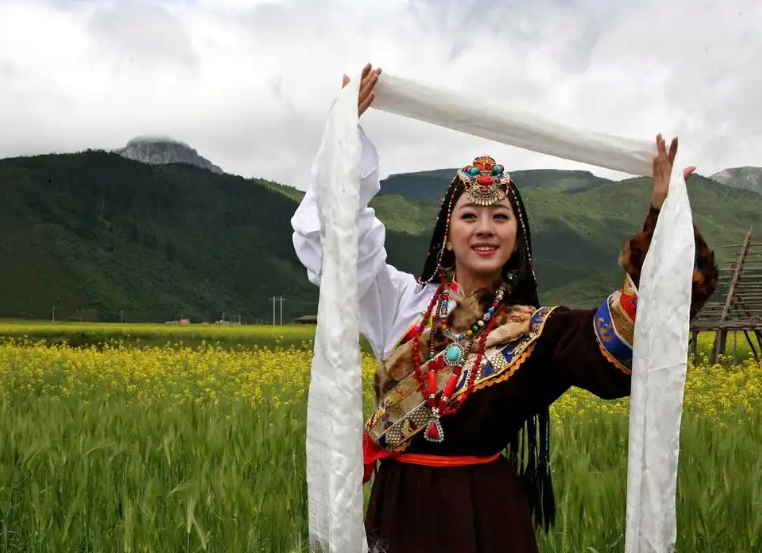
When personally experiencing Tibetan costumes, it is necessary to balance cultural etiquette and scenario adaptation. For daily check-ins, simple men’s chubas or sleeveless women’s chubas are recommended; for festival performances, grand costumes with complete accessories can be chosen. When wearing, men should naturally expose their right arms—a classic Tibetan costume etiquette symbolizing labor and piety; women should tie bangdian neatly and not mix accessories randomly.
Photo spots can be the plateau scene exhibition area of the experience hall and streets around Yonghe Temple, with prayer wheels and hada as props to freeze the plateau cultural atmosphere. If encountering Tibetan calendar festival-related performances, wearing chubas to participate will better feel the solemnity of traditional rituals.
Wearing Tibetan costumes requires following basic etiquette to show respect for the Culture. Costumes should be kept clean and neat, and accessories should not be randomly disassembled or discarded; when interacting with others, do not touch their gau boxes and headdresses, which is a respect for their faith. For major religious occasions, solid-color chubas should be chosen with simple accessories to avoid excessive ostentation; matching can be flexible for daily experiences, but the shape of chubas should not be arbitrarily changed.
In experience halls and shops, follow the guidance of staff to understand the religious stories behind the costumes, and do not wear them in inappropriate ways such as exposing the left arm, jointly protecting cultural inheritance.
Beyond costume experience, visitors can deeply feel the close bond between Tibetan culture and costumes in Beijing. Some cultural venues regularly hold Tibetan costume shows, combined with Guozhuang dance performances, to display the flexible posture of chubas in dances. In intangible cultural heritage workshops, senior craftsmen explain pulu making and accessory selection skills, allowing visitors to understand the complete process of chubas from raw materials to finished products.
In addition, tasting Tibetan delicacies such as butter tea and tsampa while wearing chubas allows for an immersive experience of the plateau lifestyle where “clothing and food are of the same origin”, fully feeling the charm of Tibetan culture. As a crystallization of plateau survival wisdom, Tibetan costumes are also carriers of religious faith and national spirit. With thick pulu resisting cold and bright accessories embodying wishes, they retain the pure characteristics of plateau nations and bloom inclusive charm in integration with Beijing’s ancient capital culture. When you walk in Beijing’s venues and streets wearing a chuba, touching warm coral and tough pulu with your fingers, you can understand the Tibetan cultural core of “expressing ideals through clothing and emotions through accessories”, adding profound plateau cultural depth to your Beijing trip.




暂无评论内容