




In the Guochao block of Changxindian Old Town in Beijing, a set of Zhuang brocade costumes is on display. The vivid phoenix patterns woven with colorful silk threads dance gracefully, and the contrast between indigo background and bright yellow Embroidery creates a warm style, embodying both the gentle atmosphere of Lingnan water towns and the Zhuang people’s yearning for a better life. Famous for “taking brocade as soul and totem as charm”, Zhuang costumes feature Zhuang brocade, one of China’s top four brocades, which carries thousands of years of textile craftsmanship and national beliefs, making Zhuang costumes a perfect integration of intangible heritage and life aesthetics. For foreign travelers, visiting Beijing’s characteristic exhibition halls and intangible heritage workshops and wearing Zhuang costumes offer an immersive experience of the collision between Zhuang Culture and the ancient capital’s Guochao trend, understanding the cultural codes behind every inch of brocade.
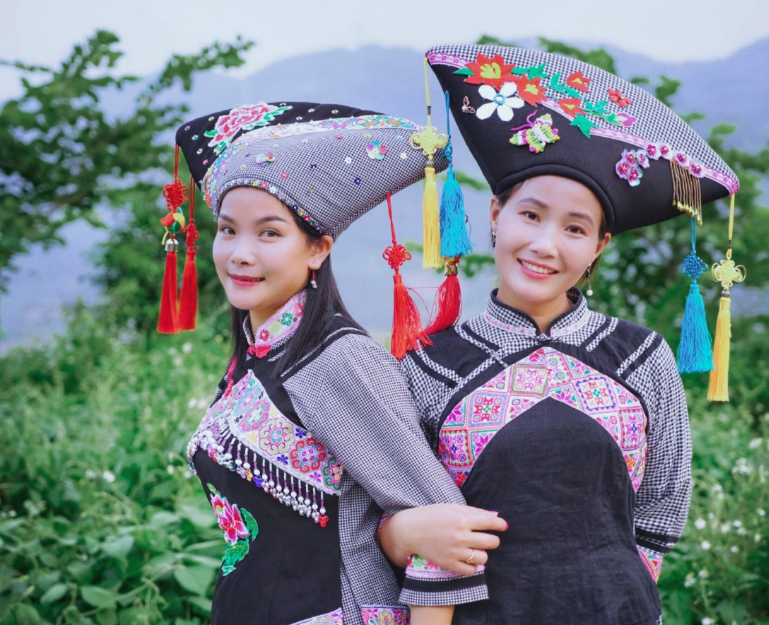
The soul of Zhuang costumes lies in the deep integration of Zhuang brocade craftsmanship and totem patterns. Men’s and women’s costumes are distinctly different but both reflect national style. Women’s costumes are the most gorgeous, consisting of Zhuang brocade tops, pleated skirts and silver ornaments. Zhuang brocade adopts the ancient “warp-faced weft-patterned” technique. Embroiderers weave patterns into the cotton and linen warp and weft through the arrangement of bamboo weaving pieces, shuttling more than 200 times per square centimeter. It takes 8 hours to weave 15 centimeters of brocade. Even for the same pattern, each piece is unique due to the embroiderer’s shuttle strength and color preference. Pleated skirts are mostly dyed with natural indigo plant dyes, with dense and stiff pleats that sway gracefully when walking. The hem is often inlaid with Zhuang brocade lace and silver bells, showing agility in movement and stillness. As the finishing touch, silver ornaments mainly include simple silver collars and bracelets, with patterns echoing Zhuang brocade to avoid overshadowing the main part.
Men’s costumes focus on practicality and solemnity, mainly indigo front-opening short shirts with narrow Zhuang brocade borders on collars, cuffs and hems. The patterns are mostly simple geometric or plant patterns, paired with wide-leg trousers and waistbands and leg wraps for farming work. During festivals, men change into grand costumes, wear Zhuang brocade capes and blue cloth turbans. Men of some branches also wear belts embroidered with phoenix patterns. Although not as complex as women’s costumes, they exude a calm and bold national spirit. In addition, Zhuang costumes have distinct branch characteristics: Xincheng Zhuang costumes are famous for geometric patterns on brocade with intense and harmonious colors; Longzhou Zhuang costumes prefer phoenix and butterfly patterns to convey auspicious meanings; southern Guangxi Zhuang costumes are more light and simple, suitable for hot and humid climates, with regional cultural marks hidden in costume details.
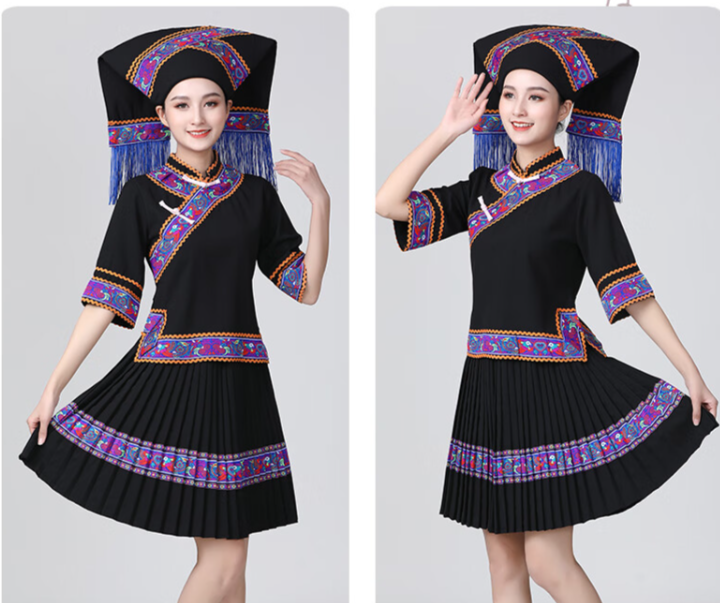
The patterns and colors of Zhuang brocade are a concentrated embodiment of the Zhuang people’s spiritual beliefs, known as “national epics woven on brocade”. Patterns are widely sourced: phoenix patterns are the Zhuang people’s favorite totem, symbolizing auspiciousness, wealth and national patron saint; frog patterns imply reproduction and prosperity, carrying reverence for nature; plant patterns such as peonies and kapok are derived from “Flower Goddess worship”, expressing love for life; artistic character patterns such as “Shou” (longevity) and “Fu” (blessing) directly convey wishes for good fortune. Color matching is mainly based on black, white, red, yellow and blue, extracted from natural plant dyes such as sappanwood, indigo and turmeric. The contrast is strong but harmonious, highlighting the Zhuang people’s cheerful and enthusiastic character, and maintaining bright colors through the years.
As a core of multi-ethnic cultural integration and Guochao trend, Beijing has many high-quality spots to experience Zhuang costumes. Changxindian Old Town is the first choice. It once held the “Longzhou · Yiwen Zhuang Brocade Culture Exhibition”, displaying more than 100 Zhuang brocade treasures all year round. Visitors can watch embroiderers operate bamboo cage looms to weave brocade up close. Some venues provide Zhuang costume rental and photography services, paired with Tianqin performances, to immerse in Zhuang customs. China Ethnic Museum has restored Zhuang dwellings, collected physical costumes of different branches, and provided professional explanations, allowing visitors to deeply understand the inheritance context of Zhuang brocade’s “warp-faced weft-patterned” technique. Rongyi Guochao Experience Base offers Zhuang brocade experience courses, guided by intangible heritage craftsmen, allowing visitors to make simple Zhuang brocade pendants by hand and feel the temperature of thousands of years of craftsmanship.
When personally experiencing Zhuang costumes, it is necessary to balance cultural etiquette and scenario adaptation. For daily photography, simple Zhuang brocade tops with pleated skirts are recommended, paired with small silver ornaments for easy shooting; for festival performances, grand costumes with phoenix-patterned Zhuang brocade can be chosen to show solemnity and grandeur. When wearing, Zhuang brocade costumes should be handled gently to avoid snags from sharp objects; clothes dyed with natural dyes should avoid exposure to the sun to prevent fading. Photo spots can be Changxindian Guochao Block and the Zhuang dwelling area of China Ethnic Museum, paired with bamboo cage looms, Tianqin and other props to freeze the beauty of intangible heritage and Guochao; for an ancient style atmosphere, you can go to the Summer Palace to take photos against the background of ancient buildings, combining the unique charm of ethnic costumes and royal gardens.
Wearing Zhuang costumes requires following basic etiquette to show respect for national Culture. Costumes should be kept neat and clean; as an intangible heritage carrier, Zhuang brocade should not be folded or pulled at will. When interacting with others, do not touch the Zhuang brocade patterns on each other’s costumes at will, which is a respect for craftsmanship and beliefs. Complete costume sets should be chosen for major occasions, symbolizing reverence for rituals; matching can be flexible for daily experiences, but the core elements of Zhuang brocade patterns should not be arbitrarily changed. In exhibition halls and workshops, follow the guidance of staff to understand the inheritance story of Zhuang brocade craftsmanship and jointly protect intangible cultural heritage.
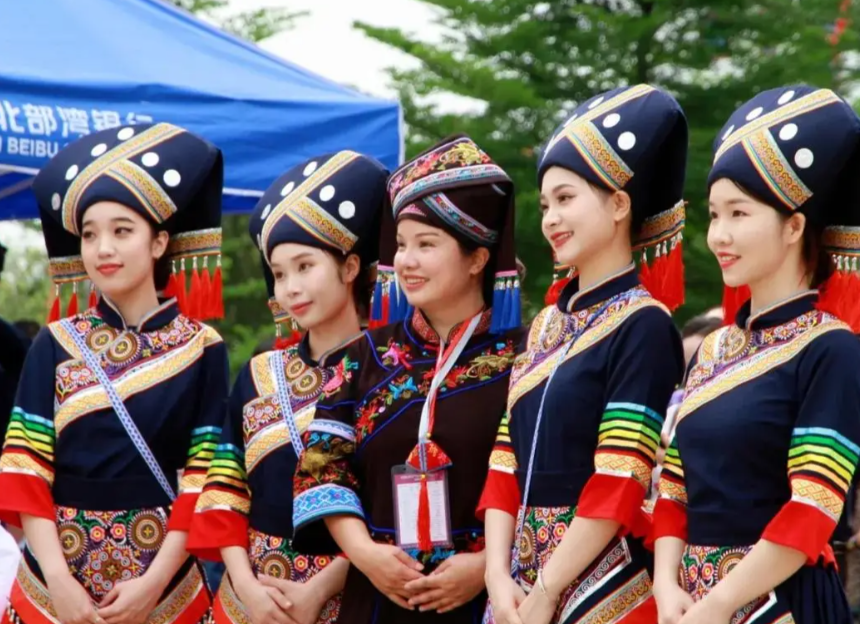
Beyond costume experience, visitors can deeply feel the close bond between Zhuang culture and costumes in Beijing. Changxindian Old Town often holds Zhuang brocade-themed performances, where embroiderers demonstrate weaving techniques on site, paired with Tianqin performances and Zhuang folk songs, showing the vivid integration of costumes and art. Some Guochao shops launch Zhuang brocade cultural and creative products, combining traditional patterns with modern shapes, allowing visitors to buy characteristic souvenirs. In addition, tasting Zhuang specialties such as five-color glutinous rice and sour porridge while wearing traditional costumes allows for an immersive experience of the ethnic lifestyle where “clothing and food share the same origin”, fully feeling the charm of Zhuang culture.
traditional Zhuang costumes are not only a master collection of intangible heritage techniques but also a carrier of the Zhuang people’s national memories and aesthetic pursuits. With Zhuang brocade carrying thousands of years of textile wisdom and totems embodying auspicious wishes, they retain pure national characteristics and regain new vitality in the Guochao revival. When you walk in Beijing’s blocks and exhibition halls wearing this finery, touching the embossed brocade patterns with your fingers, you can understand the Zhuang cultural core of “using brocade as a medium and patterns to express emotions”, adding profound intangible heritage and Guochao depth to your Beijing trip.

暂无评论内容