




The origin of traditional Chinese Festivals is deeply rooted in the Chinese agricultural civilization, centering on natural worship, ancestor sacrifice, solar terms and phenology, myths and legends, as well as historical commemoration. Their development is a process of evolving from primitive sacrificial rituals to formalized folk festivals, which has been continuously enriched through ethnic integration, religious infiltration and social changes. On the whole, it can be divided into the origin stage and the dynasty-specific development and finalization stage, eventually forming a festival system with both cultural connotations and folk characteristics, and it has always been deeply integrated with traditional Chinese Culture (Confucianism, Buddhism and Taoism) and regional folk customs.
I. Core Origins of traditional Chinese Festivals (Four Categories)
In the early days, there was no clear concept of “festivals”; most were ritual activities adapted to agricultural seasons. Later, cultural meanings were endowed and fixed times were set, thus forming festivals. The origins of all traditional festivals can be classified into four categories, and most festivals are the integration of multiple origins:
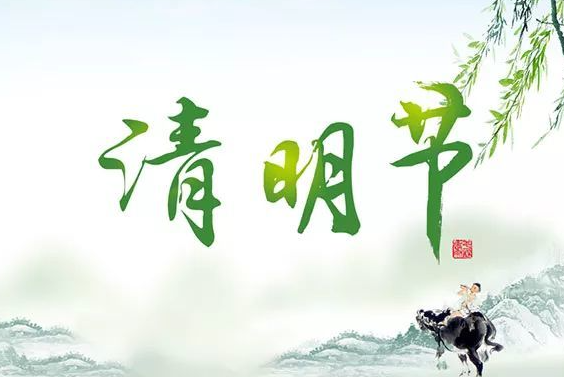
- Origins in natural worship and solar terms & phenology (the core foundation)As an ancient agricultural civilization, the ancient Chinese judged farming seasons by astronomical phenomena and solar terms. The natural worship of heaven and earth, the sun and the moon, and the four seasons gave birth to the earliest embryonic form of festivals. Most of these festivals also have the attribute of solar terms, being the most primitive type of festival origin.Representative festivals: Spring Festival (the Lunar New Year, praying for a good harvest at the start of the year), Qingming Festival (going for an outing and offering sacrifices to ancestors after the Spring Equinox), Winter Solstice (counting the nine cold periods and welcoming winter, a sub-new year for prayer), Dragon Head-Raising Day (the second day of the second lunar month, praying for rain and a bumper harvest after the Awakening of Insects), Mid-Autumn Festival (the 15th day of the eighth lunar month, offering sacrifices to the moon at the Autumn Equinox).Core logic: For example, the “start of the lunar year” (Spring Festival) was the beginning of the new year determined by the ancient Chinese according to the rotation of the Big Dipper’s handle; the Winter Solstice and Summer Solstice are the nodes of the extreme length of day and night. The ancient Chinese offered sacrifices to heaven, earth, the sun and the moon to pray for favorable weather and a good harvest, and these rituals gradually became fixed festivals.
- Origins in ancestor sacrifice and ghost worshipThe ancient Chinese attached great importance to “honoring the ancestors and remembering the past”. The memory of ancestors and the awe of ghosts and gods gave birth to festivals centered on sacrifice, which are the direct embodiment of Chinese filial piety Culture and folk beliefs.Representative festivals: New Year’s Eve (offering sacrifices to ancestors and staying up late, bidding farewell to the old and welcoming the new), Ghost Festival (offering sacrifices to ancestors and redeeming the souls of the dead), Winter Clothing Festival (offering winter clothes to ancestors), Little New Year (offering sacrifices to the Kitchen God for good fortune).Core logic: For example, the Kitchen God was regarded as the “protector of the family”. Offering sacrifices to the Kitchen God on Little New Year was the ancient Chinese’s prayer for family peace; the Ghost Festival integrated Taoism’s “Day of the Earth Official’s Blessing” and Buddhism’s “Ullambana Festival”, but its core is still folk ancestor worship and soul sacrifice, the fusion of primitive ghost worship and religious Culture.
- Origins in myths, legends and folk storiesSome festivals were endowed with romantic or commemorative meanings due to folk myths and legends, and the original ritual activities were given a story core, becoming cultural symbols of the festivals and passing down to this day.Representative festivals: Qixi Festival (the Cowherd and the Weaver Girl meeting on the Magpie Bridge), Dragon Boat Festival (legends such as Qu Yuan throwing himself into the Miluo River and Wu Zixu sinking into the river), Lantern Festival (Taoist legends such as the Heavenly Official bestowing blessings).Core logic: For example, the Dragon Boat Festival was originally an ancient ritual of “warding off evil spirits and plagues” (because the fifth day of the fifth lunar month was regarded as an “unlucky day in an unlucky month”). Later, with legends of historical figures such as Qu Yuan and Wu Zixu, it gradually became a festival to commemorate virtuous men, integrating the original plague-warding customs with commemorative meanings; the Qixi Festival was originally a “star sacrifice” (offering sacrifices to the Weaver Girl Star), and later evolved into China’s traditional Valentine’s Day due to the legend of the Cowherd and the Weaver Girl.
- Origins in the commemoration of historical figures and eventsSome festivals were formed to commemorate virtuous men and loyal ministers in history, combining historical events with folk rituals and gradually solidifying into festivals. The cultural connotations of such festivals are more humanistic.Representative festivals: Cold food Festival (commemorating Jie Zitui), Dragon Boat Festival (centered on commemorating Qu Yuan), Double Ninth Festival (originally offering sacrifices to heaven and earth, and later gradually integrating the culture of respecting the elderly).Core logic: For example, the Cold food Festival originated from the story of “Jie Zitui cutting his flesh to feed his lord and burning himself to death in a tree” during the Spring and Autumn Period. To commemorate him, Duke Wen of Jin ordered a ban on fire and the eating of cold food. Later, the Cold Food Festival merged with the Qingming Festival, and its ancestor-worshiping customs were inherited by the Qingming Festival; although the theory of “commemorating Qu Yuan” is not the earliest origin of the Dragon Boat Festival, it has become the mainstream cultural core, elevating the Dragon Boat Festival from a “plague-warding festival” to a festival commemorating the patriotic poet.
II. Development and Finalization of Traditional Chinese Festivals (By Dynasty)
The development of traditional festivals was not achieved overnight, but evolved with the change of dynasties, social development and ethnic integration. From court sacrificial rituals to national folk festivals, from a single sacrificial function to a diversified function of sacrifice, reunion, entertainment and prayer, it has experienced six core stages: germination – finalization – integration – prosperity – solidification – innovation.
- Pre-Qin Period: Germination stage – sacrificial rituals as the main form, no formal folk festivalsThe Pre-Qin Period was the foundation period of Chinese civilization. At this time, there were no real “folk festivals”, only ritual activities adapted to agricultural seasons. The core was collective activities of tribes and the court, with very low folk participation.Core activities: La Festival (the predecessor of New Year’s Eve, offering sacrifices to ancestors and gods in the 12th lunar month to pray for a good harvest), Double Ninth Festival of sacrificing to heaven (the predecessor of the Double Ninth Festival), Shangsi Festival (the third day of the third lunar month, going near water to ward off evils and pray for good fortune, later merged into the Qingming Festival), the Lunar New Year’s Day (the predecessor of the Spring Festival, the start of the year was different in the Xia, Shang and Zhou dynasties, with no fixed first day of the first lunar month).Characteristics: All activities centered on “praying for a good harvest in farming, natural worship, and ancestor sacrifice”, with no fixed festival customs, only ritual activities.
- Qin and Han Dynasties: Finalization stage – unified calendar, fixed time and customs for festivals for the first timeThe unification of the Qin and Han Dynasties laid a calendar foundation for the finalization of festivals. During the reign of Emperor Wu of the Han Dynasty, the Taichu Calendar was issued, officially designating the first day of the first lunar month as the “start of the lunar year”, establishing the corresponding relationship between the 24 solar terms and the lunar calendar. Core festivals had fixed times and initial folk customs for the first time, spreading from the court to the people.Key finalized festivals:① Spring Festival (Lunar New Year’s Day): Fixed on the first day of the first lunar month, with customs such as paying New Year’s calls, drinking Tusu wine, and hanging peach wood charms emerging;② New Year’s Eve: Becoming a fixed ritual at the end of the year, the custom of staying up late on New Year’s Eve appeared;③ Dragon Boat Festival: Fixed on the fifth day of the fifth lunar month, with plague-warding customs such as hanging wormwood and wearing sachets emerging;④ Qixi Festival: Fixed on the seventh day of the seventh lunar month, offering sacrifices to the Weaver Girl Star, and the embryonic form of praying for dexterity initially formed;⑤ Double Ninth Festival: Fixed on the ninth day of the ninth lunar month, the disaster-avoiding customs of climbing high and wearing dogwood began to appear;⑥ Winter Solstice: Designated as a “sub-new year”, with customs of ancestor sacrifice and feasting, and began to be valued by the people.Characteristics: The festival time was completely fixed, initially forming the dual function of “sacrifice + prayer”. The people began to participate in festival activities, which is the most critical finalization period of traditional festivals.
- Wei, Jin, Southern and Northern Dynasties: Integration stage – ethnic and religious integration, enrichment of festival customsThis period witnessed frequent regime changes and great ethnic integration (the integration of northern nomadic peoples and southern Han people). At the same time, Buddhism and Taoism began to spread widely and deeply integrate with folk customs. The entertainment and folk characteristics of festivals were enhanced, the sacrificial function was gradually weakened, and some festivals integrated foreign cultures and ethnic customs.Core development and changes:① Ghost Festival: Integrating Taoism’s “Day of the Earth Official’s Blessing” and Buddhism’s “Ullambana Festival”, it evolved from a simple ancestor-worshiping activity to a comprehensive festival of “soul sacrifice + releasing river lanterns + Ullambana Festival”;② Qixi Festival: The custom of praying for dexterity became the core, with women threading needles to pray for dexterity and offering sacrifices to the Weaver Girl, becoming a festival exclusive to women;③ Double Ninth Festival: The customs of climbing high and appreciating chrysanthemums became popular, evolving from a heaven-worshipping ritual to a folk festival of going out and praying for good fortune;④ Lantern Festival (Shangyuan Festival): Integrating the Taoist legend of “the Heavenly Official bestowing blessings”, the embryonic form of displaying and appreciating lanterns began to appear.Characteristics: Dual integration of ethnicity and religion, the festival customs changed from “single” to “diversified”, and entertainment began to become an important part of festivals.
- Tang and Song Dynasties: Prosperity stage – economic prosperity, festivals becoming a national entertainment grand ceremonyThe Tang and Song Dynasties were the golden age of China’s ancient Economy, culture and the rise of the urban citizen class. The secularization and entertainment of festivals reached their peak. The court set statutory holidays for core festivals, and festivals completely transformed from “sacrifice and prayer” to national entertainment and reunion activities. Many classic customs were formed and passed down to this day in this period.
- Ming and Qing Dynasties: Solidification stage – customs finalized, formation of north-south regional differencesIn the Ming and Qing Dynasties, China’s feudal system matured, and folk culture developed highly. On the basis of the Tang and Song Dynasties, traditional festivals were completely solidified, all core customs were finalized. At the same time, due to the economic and cultural differences between the north and the south, north-south differentiation of festival customs began to form. Royal etiquette and folk customs influenced each other, making festivals more ritualistic.Core development and changes:① Little New Year: The north-south difference of “officials on the 23rd, common people on the 24th, boatmen on the 25th of the 12th lunar month” formed (offering sacrifices to the Kitchen God on the 23rd in the north, the 24th in the south, and the 25th for boatmen), with house cleaning and Kitchen God sacrifice becoming standard customs;② Spring Festival: The north-south food custom differences of pasting the character “Fu” (pasting it upside down for “blessings arriving”), hanging lanterns and having the New Year’s Eve dinner formed (dumplings in the north, fish and rice cakes in the south);③ Mid-Autumn Festival: Eating mooncakes became a “must” for the Mid-Autumn Festival, the mooncake making technology was upgraded, family reunion became the core theme, with no other new customs added;④ Qingming Festival: The Cold Food Festival was completely integrated into the Qingming Festival, the fixed combination of ancestor worship and tomb sweeping + going for an outing formed, and the customs of inserting willows and flying kites became popular;⑤ Winter Solstice: The north-south food custom differences were finalized (dumplings in the north, glutinous rice balls in the south), and the folk saying that “the Winter Solstice is as important as the Spring Festival” took root in people’s hearts.Characteristics: No major innovations in festival customs, focusing on “inheritance”. North-south regional differences became a prominent feature, the cultural connotations and ritual sense of festivals were further strengthened, which is the last solidification period of traditional festivals.
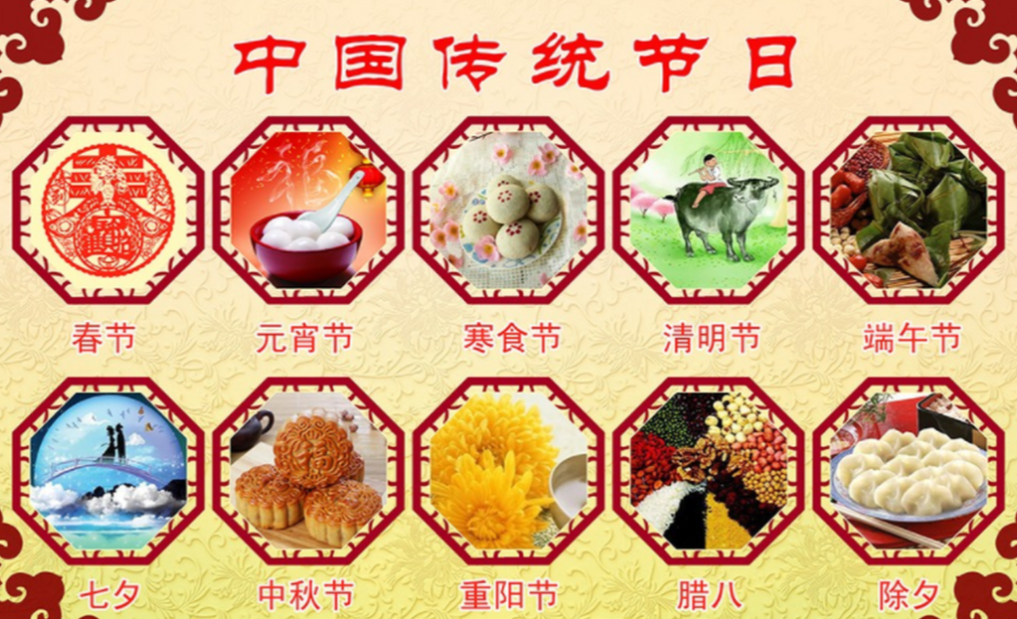
- Modern and Contemporary Times: Inheritance and innovation stage – abandoning the backward and keeping the essence, integration of tradition and modernitySince modern times, affected by the impact of Western culture and social changes, traditional festivals have experienced a process of “decline – recovery – innovation”. The influence of some non-mainstream festivals (such as Shangsi Festival and Winter Clothing Festival) declined, while core festivals (Spring Festival, Qingming Festival, Dragon Boat Festival, Mid-Autumn Festival) have always been inherited, and at the same time been endowed with modern connotations, eliminating feudal superstitious elements, and becoming an important carrier of traditional Chinese culture.Core development and changes:① Modern times (the Republic of China to the founding of the People’s Republic of China): Influenced by the Western Gregorian calendar, the Gregorian New Year (New Year’s Day) appeared, the traditional Lunar New Year was renamed the “Spring Festival”, and some festival customs were simplified due to wars;② Modern times (after the founding of the People’s Republic of China): Eliminating feudal superstitious elements (such as simplifying burning paper money and banning firecrackers), designating the Spring Festival, Qingming Festival, Dragon Boat Festival and Mid-Autumn Festival as statutory holidays, establishing the status of core festivals;③ Contemporary times: Integration of tradition and modernity, the emergence of new forms such as online New Year greetings, cultural and creative mooncakes/zongzi, and folk festival activities in scenic spots. At the same time, traditional festivals were included in the Intangible cultural heritage (e.g., the Dragon Boat Festival was inscribed on the UNESCO Intangible cultural heritage List in 2009), and the traditional festivals of ethnic minorities were also valued and protected;④ Cultural regression: The core cultural connotations such as respecting the elderly, reunion and patriotism were strengthened. For example, the Double Ninth Festival was officially designated as the “Senior Citizens’ Festival”, highlighting the culture of respecting the elderly.Characteristics: Abandoning the backward and keeping the essence, inheriting the core culture and customs, integrating into modern lifestyles, and at the same time, through intangible cultural heritage protection and statutory holidays, traditional festivals have regained vitality in the new era.
III. Core Characteristics of the Development of Traditional Chinese Festivals
- Always rooted in agricultural civilization: The time and customs of all festivals are in line with agricultural seasons and solar terms, such as the Spring Festival (before spring ploughing) and the Mid-Autumn Festival (after autumn harvest), reflecting the ancient Chinese’s adaptation to the laws of nature;
- Strong cultural integration: Integrating Confucianism, Buddhism, Taoism and the customs of various ethnic groups, such as the Ghost Festival integrating Buddhism and Taoism, the Spring Festival integrating the food customs of ethnic groups in the north and south, with no single cultural core;
- Continuous diversification of functions: From the initial “sacrifice and prayer”, it has gradually developed into diversified functions such as reunion, entertainment, respecting the elderly and patriotism, meeting the social needs of different eras;
- Coexistence of north-south differences and national unity: The core customs (such as Spring Festival reunion and Mid-Autumn moon appreciation) are unified nationwide, while food customs and detailed customs (such as glutinous rice balls for the Lantern Festival, sweet vs. salty zongzi) form north-south differences, which is the embodiment of the diversity of Chinese culture;
- Enduring inheritance: After thousands of years, although the customs have been simplified and innovated, the core cultural connotations (honoring the ancestors, family reunion, praying for good fortune) have never changed, becoming a cultural bond that unites the Chinese nation.
In summary, the origin and development of Traditional Chinese Festivals is a history of the evolution of Chinese agricultural civilization, as well as an epitome of traditional Chinese culture, ethnic integration and social changes. The core reason for their enduring prosperity for thousands of years is that they have always been in line with the emotional needs and cultural roots of the Chinese people.


暂无评论内容