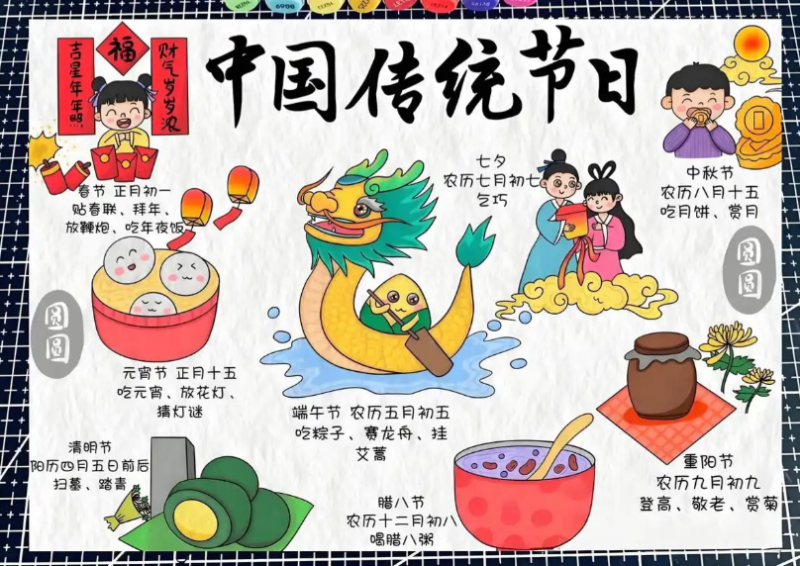





The Tang and Song Dynasties were the golden age of the development of China’s ancient social Economy, Culture and urban citizen class, as well as the peak prosperity stage of the development of traditional Chinese Festivals. Driven by the institutional support of the court, the prosperity of the commodity Economy, the rise of the urban citizen class and the open and inclusive Culture, festivals completely broke away from the single function of “sacrifice and prayer” from the Pre-Qin Period to the Wei, Jin, Southern and Northern Dynasties, realizing the national penetration from the court to the people, the functional diversification from rituals to entertainment, and the paradigm establishment from embryonic customs to classic finalized ones. They also gave birth to new characteristics of commercialization, secularization and literaryization.
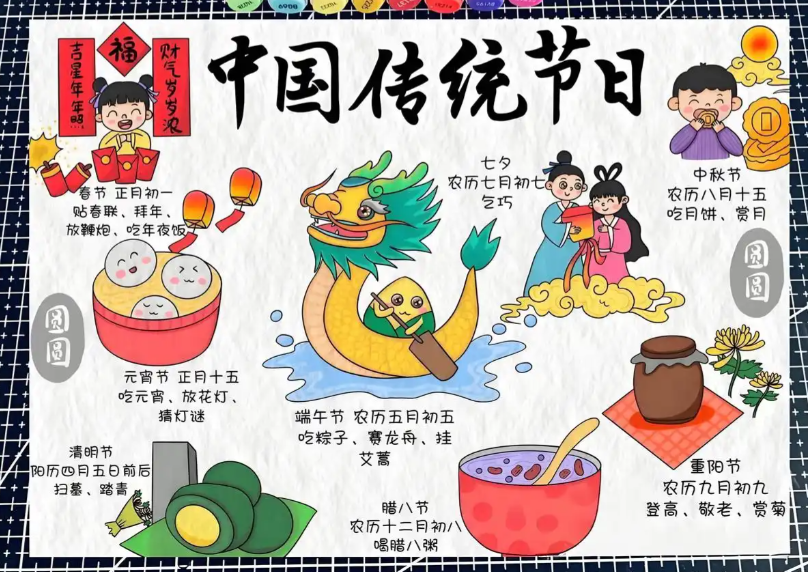
The grand scene of festivals in the Tang Dynasty was centered on the magnificent prosperity of the linkage between the court and the people, while the Song Dynasty, due to the highly developed commodity Economy and the collapse of the fang-shi system (residential and commercial zoning system), presented the ultimate characteristics of urbanization, civilianization and entertainment. Together, the two dynasties pushed traditional festivals to an unprecedented prosperity. Almost all the core festival customs we know today were finalized in the Tang and Song Dynasties and passed down to this day. The following details their prosperous manifestations from seven dimensions: institutional support, national participation, finalization of customs, entertainment and secularization, commercial empowerment, cultural sublimation, and linkage between the court and the people, while distinguishing the characteristic differences between the Tang and Song Dynasties.
I. Institutional support from the court: Improved statutory holiday system, officialization of festival status
Both the Tang and Song Dynasties included core traditional festivals in the official statutory holiday system, which not only provided a time basis for national participation in festivals, but also established the social status of festivals in an official form, breaking the pattern of festivals in the Pre-Qin to Qin and Han Dynasties where “sacrifice was the main form and folk participation was limited”. This is the core institutional guarantee for the prosperity of festivals.
- Tang Dynasty: Initial establishment of the holiday system, fixed holidays for festivalsThe official system of the Tang Dynasty clearly set holidays for core festivals. According to the Treatise on the Six Codes of the Tang Dynasty, the Lunar New Year’s Day (Spring Festival) and the Winter Solstice each had a 7-day holiday, the longest of the year, known as the “golden week”; the Lantern Festival, Dragon Boat Festival, Mid-Autumn Festival and Double Ninth Festival each had a 1-3 day holiday, and the Cold food Festival, merged with the Qingming Festival, had a 4-day holiday, an important sacrificial festival at that time. The court also issued festival edicts requiring the whole country to celebrate together, and even allowed officials to “feast and entertain”, encouraging a festive atmosphere.
- Song Dynasty: Upgraded holiday duration, more humanized festival benefitsThe Song Dynasty attached far more importance to festivals than the Tang Dynasty, with a more complete holiday system, longer duration and additional festival benefits. For example, the Spring Festival and the Winter Solstice still had a 7-day holiday, the lantern display period of the Lantern Festival was extended from 3 days in the Tang Dynasty to 5 days (during the reign of Emperor Taizong of Song), and even to 7 days during the reign of Emperor Huizong of Song; the Dragon Boat Festival, Mid-Autumn Festival and Double Ninth Festival each had a 3-day holiday, and the Cold food Festival plus the Qingming Festival had a total 7-day holiday. In addition, the Song court would issue festival benefits to officials (such as giving zongzi on the Dragon Boat Festival, mooncakes on the Mid-Autumn Festival and chrysanthemum wine on the Double Ninth Festival), and the people followed this form, making festivals a “national welfare moment”.More importantly, the Song official also provided administrative support for festival activities, such as lifting the curfew during the Lantern Festival, allowing water towns to hold dragon boat races on the Dragon Boat Festival, and encouraging people to climb high on the Double Ninth Festival, completely breaking the official restrictions on folk festivals.
II. National participation: Breaking the boundaries of class and region, celebrated by all regardless of status and gender
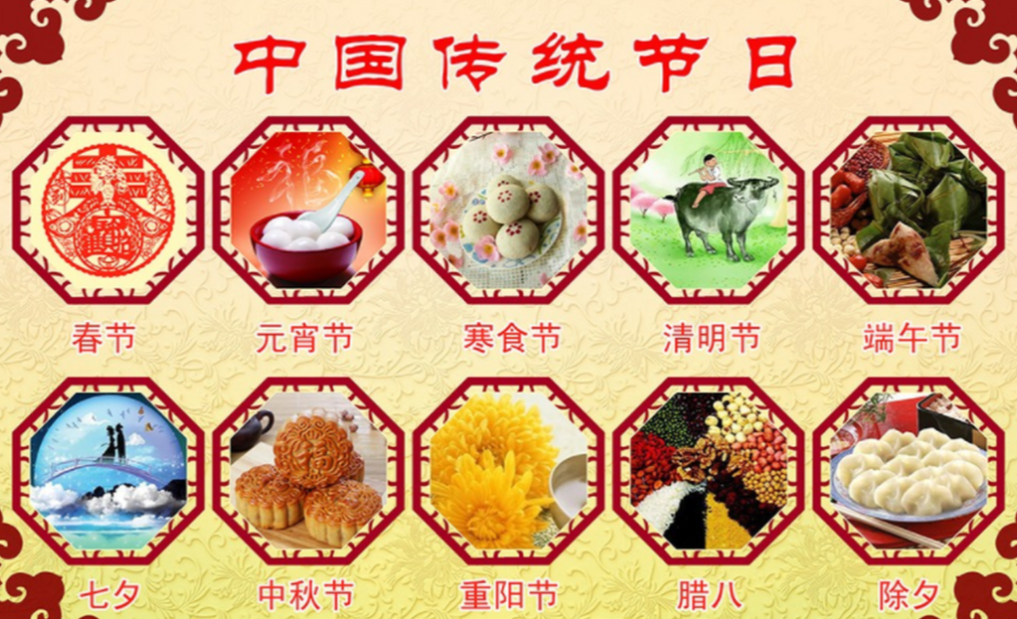
Before the Tang and Song Dynasties, festival activities were mostly exclusive to the nobility and the court, with low civilian participation. Moreover, due to the constraints of feudal ethics, women rarely participated in outdoor festivals. However, in the Tang and Song Dynasties, with social openness (Tang Dynasty) and the rise of the urban citizen class (Song Dynasty), festivals completely became a national carnival, breaking the triple boundaries of class, gender and region, which is the social foundation for the prosperity of festivals.
- Breaking class: Celebration by both the nobility and the common people, regardless of statusFor the Lantern Festival in Chang’an and Luoyang of the Tang Dynasty, the court built magnificent lantern towers, while the people hung flower lanterns on the streets and alleys. The emperor would climb the tower to watch the lanterns and enjoy them with the people; for the Mid-Autumn moon appreciation in Bianjing and Lin’an of the Song Dynasty, the royal family held a moon sacrifice feast in the palace, while the common people set up wine to appreciate the moon on the streets and lakesides. Even peddlers and craftsmen would stop their business to participate in the festivals, truly realizing “joy for all regardless of high or low status”.
- Breaking gender: Women going out of the boudoir to participate in outdoor festivalsDue to the open social atmosphere in the Tang Dynasty, women could freely participate in lantern appreciation on the Lantern Festival, dragon boat watching on the Dragon Boat Festival and mountain climbing on the Double Ninth Festival; although feudal ethics were slightly stricter in the Song Dynasty, the government allowed women to go out during festivals. On the Lantern Festival, “women going out, carriages and horses blocking the road” in Bianjing, and on the Qixi Festival, women went together to offer sacrifices to the Weaver Girl and thread needles to pray for dexterity, becoming a unique scenery in the festivals, completely breaking the feudal restriction of women “not going out of the house”.
- Breaking region: Integration of north-south customs, forming a unified national festive atmosphereThe Tang and Song Dynasties were a great unification of the whole country, with frequent economic and cultural exchanges between the north and the south, and festival customs were no longer exclusive to a certain region: for example, dragon boat racing on the Dragon Boat Festival spread from the southern water towns to the central plains of the north, and dragon boat races were held in Chang’an of the Tang Dynasty and Bianjing of the Song Dynasty; Mid-Autumn moon appreciation spread from the northern court to the south, and the Jiangnan region formed the characteristics of “appreciating the moon, appreciating sweet osmanthus and drinking sweet osmanthus wine”. The north-south customs integrated with each other, forming a festival pattern of unified core customs and supplementary local characteristics.
III. Finalization of core customs: Becoming a “classic model” for inheritance in later generations
The Tang and Song Dynasties were the critical period for the finalization of traditional festival customs. Most of the festival customs from the Pre-Qin Period to the Wei, Jin, Southern and Northern Dynasties were in an “embryonic state”. After the development of the Tang and Song Dynasties, the core customs we know today, such as pasting Spring Festival couplets for the Spring Festival, guessing lantern riddles for the Lantern Festival, eating mooncakes for the Mid-Autumn Festival, dragon boat racing for the Dragon Boat Festival and appreciating chrysanthemums for the Double Ninth Festival, were all completely finalized in this period, and became the “model” for the inheritance of festivals in the Ming, Qing and even modern times. The following details the finalization of customs combined with core festivals:
- Spring Festival (Lunar New Year’s Day): From “peach wood charms” to “Spring Festival couplets”, all classic customs took shape
- Tang Dynasty: Paying New Year’s calls, drinking Tusu wine, hanging peach wood charms and staying up late on New Year’s Eve became core customs. The court would hold a “Grand Court Meeting on the Lunar New Year’s Day”, while the people would have a family reunion New Year’s Eve dinner and visit relatives and friends to pay New Year’s calls on the first day of the new year, forming the etiquette of “the younger generation paying New Year’s calls to the elder generation, and the elder generation giving auspicious words”;
- Song Dynasty: Pasting Spring Festival couplets replaced peach wood charms (peach wood charms were an evil-warding custom from the Pre-Qin Period to the Tang Dynasty; Meng Chang, the Lord of Later Shu, wrote the first Spring Festival couplet in the Five Dynasties, which was completely popularized in the Song Dynasty). The custom of lucky money appeared (called “amulet money” in the Song Dynasty, given by the elder generation to the younger generation to ward off evil spirits and disasters). At the same time, detailed customs such as “burning God of Door paper and eating dumplings on the fifth day of the new year” emerged, and the core etiquette and customs of the Spring Festival were completely finalized.
- Lantern Festival (Shangyuan Festival): From “displaying lanterns” to “national lantern show”, becoming an ancient “carnival”The prosperity of the Lantern Festival is the most typical representative of the prosperity of festivals in the Tang and Song Dynasties. It developed from the “embryonic form of lantern display” in the Wei and Jin Dynasties to the “national lantern show” in the Tang and Song Dynasties, becoming the most entertaining festival in ancient times.
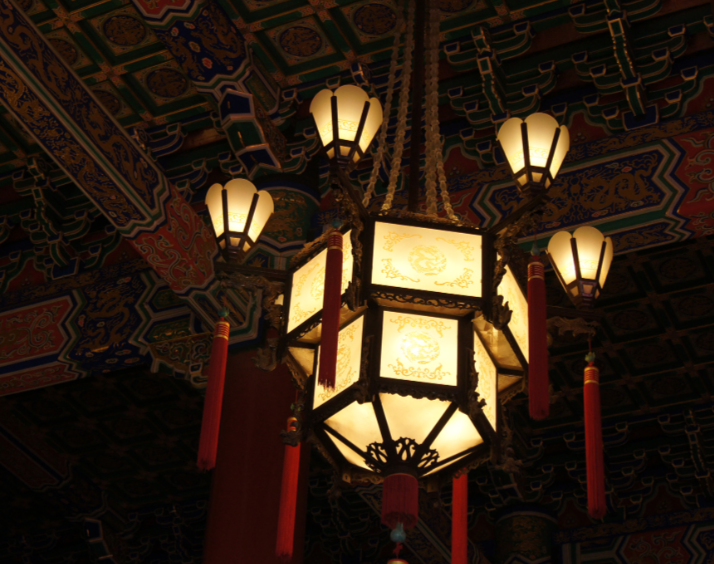
- Tang Dynasty: The government ordered the imperial guards to lift the curfew (canceling the night curfew). In Chang’an, “a lantern wheel with a height of 20 zhang was built, covered with brocade, decorated with gold and silver, and 50,000 lanterns were lit, clustering like a flower tree”. There were various types of flower lanterns (palace lanterns, revolving lanterns), and folk performances such as dragon dance, lion dance and stilt walking also appeared;
- Song Dynasty: The lantern display period was extended to 5-7 days, and the scale of the lantern shows in Bianjing and Lin’an far exceeded that of the Tang Dynasty. The custom of guessing lantern riddles was born and rapidly popularized in the Song Dynasty (riddles were written on flower lanterns, and the winners got prizes), becoming the core entertainment activity of the Lantern Festival; in addition, glutinous rice balls (fuyuanzi) appeared in the Song Dynasty for the Lantern Festival, becoming a seasonal exclusive food. The four core customs of the Lantern Festival – “appreciating lanterns, guessing riddles, eating glutinous rice balls and visiting night markets” – were completely finalized.
- Mid-Autumn Festival: From “court moon sacrifice” to “folk reunion”, officially becoming the “Reunion Festival”Before the Tang Dynasty, the Mid-Autumn Festival was only a “court moon sacrifice ritual” with low attention from the people. In the Tang and Song Dynasties, it was pushed to the people and became one of the three major traditional festivals together with the Spring Festival and the Dragon Boat Festival.
- Tang Dynasty: Appreciating the moon became the core of the Mid-Autumn Festival. The court and literati took the lead in the custom of moon appreciation, and the lakesides and terraces of Chang’an and Luoyang became popular moon appreciation resorts. The Mid-Autumn Festival began to break away from “sacrifice” and turn to “entertainment and reunion”;
- Song Dynasty: The custom of eating mooncakes was finalized (mooncakes were called “palace cakes” or “small cakes” in the Song Dynasty, becoming an exclusive seasonal food for the Mid-Autumn Festival, and merchants began to sell them in bulk). “Family reunion” became the core cultural connotation of the Mid-Autumn Festival. The people formed a fixed mode of “appreciating the moon on the Mid-Autumn Festival, placing mooncakes and fruits to sacrifice the moon, and the family sitting around for a feast”, and the Mid-Autumn Festival was officially designated as China’s “Reunion Festival”.
- Dragon Boat Festival: From “warding off evil spirits and plagues” to “commemorating Qu Yuan + dragon boat racing”, diversification of customs finalizedThe Dragon Boat Festival was originally an ancient ritual of “warding off evil spirits and plagues on an unlucky day”. The connotation of commemorating Qu Yuan began to integrate in the Wei and Jin Dynasties, and the customs and cultural core of the Dragon Boat Festival were completely finalized in the Tang and Song Dynasties.
- Tang Dynasty: The custom of dragon boat racing spread from the southern water towns to the whole country, becoming the core activity of the Dragon Boat Festival. Dragon boat races were held in the Qujiang Pool of Chang’an and Luoyang, and the government even organized competition evaluations; plague-warding customs such as hanging wormwood and calamus, wearing sachets and smearing realgar on the forehead also became national standards;
- Song Dynasty: Eating zongzi became a “must” for the Dragon Boat Festival. Zongzi evolved from a single glutinous rice zongzi in the Tang Dynasty to various flavors such as candied jujube, red bean paste and meat zongzi, and merchants sold them along the street as seasonal commodities; at the same time, commemorating Qu Yuan became the mainstream cultural core of the Dragon Boat Festival, completely breaking away from the simple attribute of “warding off plagues” and elevating it to a festival commemorating patriotic virtuous men.
- Qingming Festival: In-depth integration of the Cold Food Festival and the Qingming Festival, the fixed combination of “tomb sweeping + going for an outing” took shapeFrom the Pre-Qin Period to the Wei and Jin Dynasties, the Cold Food Festival and the Qingming Festival were two independent festivals. In the Tang and Song Dynasties, due to their close time, the ancestor-worshiping and cold food customs of the Cold Food Festival were deeply integrated with the outing and willow-inserting customs of the Qingming Festival. The Cold Food Festival gradually declined, and the Qingming Festival became a festival with both “sacrifice” and “entertainment” functions.
- Tang Dynasty: Going for an outing on the Qingming Festival became a national activity. People in Chang’an “went out of the city for an outing, with an endless stream of carriages and horses”, and tomb sweeping and ancestor worship began to combine with going for an outing;
- Song Dynasty: The Cold Food Festival was completely integrated into the Qingming Festival, the fixed combination of tomb sweeping and ancestor worship + going for an outing formed. Customs such as inserting willows, flying kites and eating green rice cakes (Qingming cakes) became popular. The folk saying of flying kites “cutting the kite string to let go of bad luck” also formed in the Song Dynasty, and the core customs of the Qingming Festival were completely finalized.
- Double Ninth Festival: From “climbing high to avoid disasters” to “respecting the elderly and appreciating chrysanthemums”, sublimation of cultural connotationThe Double Ninth Festival was a ritual of “sacrificing to heaven and avoiding disasters” in the Pre-Qin Period, and the customs of climbing high and wearing dogwood began in the Wei and Jin Dynasties. In the Tang and Song Dynasties, it realized the enrichment of customs and sublimation of cultural connotation.
- Tang Dynasty: Climbing high, wearing dogwood and drinking chrysanthemum wine became national customs. Literati and refined scholars would hold “Double Ninth Poetry Fairs”, and Wang Wei’s Thinking of My Brothers on Mountain Climbing Day is a classic representative of the Double Ninth Culture in the Tang Dynasty;
- Song Dynasty: The customs of appreciating chrysanthemums and eating Double Ninth cakes became popular. Double Ninth cakes became an exclusive seasonal food, implying “stepping up to a higher position”; at the same time, the Song Dynasty began to combine the Double Ninth Festival with “respecting the elderly”. The court would give gifts to elderly officials, and the people also had the custom of “visiting the elderly and presenting Double Ninth cakes”, laying a cultural foundation for the Double Ninth Festival to become the “Senior Citizens’ Festival” in later generations.
IV. Ultimate entertainment and secularization: From “sacrificial rituals” to “national entertainment grand ceremony”
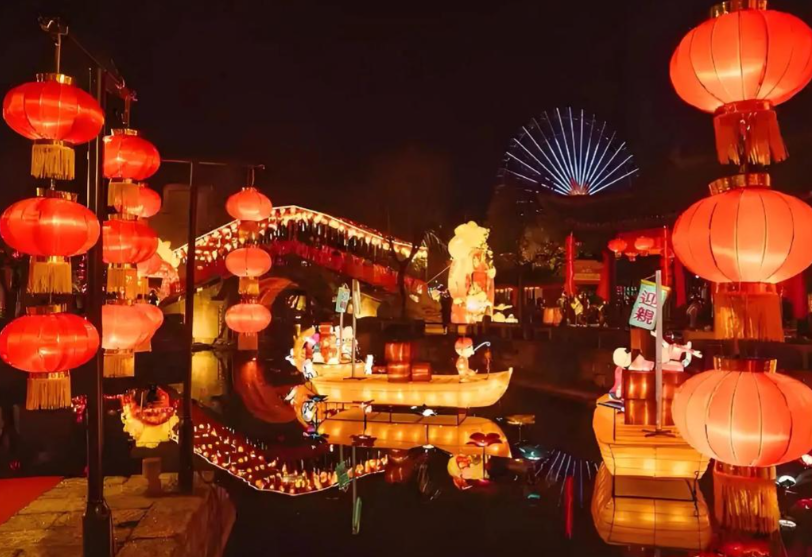
Before the Tang and Song Dynasties, the core function of traditional festivals was offering sacrifices to heaven and earth, ancestors, praying for good fortune and avoiding disasters, and entertainment was only an accessory. However, in the Tang and Song Dynasties, with social prosperity and openness, the sacrificial function of festivals gradually weakened, and the entertainment function became the core. Festivals completely transformed from “solemn rituals” to “national entertainment grand ceremonies”, which is the core characteristic of the prosperity of festivals.
- A wide variety of entertainment activities covering all age groupsThe entertainment activities of festivals in the Tang and Song Dynasties broke through the previous monotony, forming three categories: appreciation, competition and interaction. Appreciation activities include flower lanterns, dragon and lion dances, shadow puppetry and vaudeville; competition activities include dragon boat racing on the Dragon Boat Festival, mountain climbing competitions on the Double Ninth Festival and lantern riddle guessing competitions on the Lantern Festival; interaction activities include praying for dexterity on the Qixi Festival, moon appreciation and feasting on the Mid-Autumn Festival, and New Year’s greetings on the Spring Festival. These activities are suitable for all ages, making festivals a real “happy moment”.
- “Secularization” of festivals: Close to civilian life, breaking away from the constraints of religion and sacrificeIn the Tang and Song Dynasties, festivals gradually broke away from the strict constraints of Confucian, Buddhist and Taoist religions and primitive sacrifices, and were more in line with the daily life needs of the common people: for example, the Mid-Autumn Festival was no longer a “religious ritual of moon sacrifice in the court”, but a “family reunion feast for the common people”; the Qixi Festival was no longer simply “offering sacrifices to the Weaver Girl Star”, but an “entertainment activity of praying for dexterity for women”; the Lantern Festival was no longer a “religious festival of the Heavenly Official bestowing blessings in Taoism”, but a national “carnival of visiting lantern shows and guessing riddles”. The cultural connotations of festivals are closer to the smoke and fire of human life.
V. Highlighted commercial characteristics: The rise of seasonal commodities, driving the prosperity of urban economy
In the Tang and Song Dynasties, especially the Song Dynasty, the commodity economy developed highly and the fang-shi system completely collapsed (began to break in the late Tang Dynasty and was completely abolished in the Song Dynasty, with night markets legalized). Traditional festivals became an important opportunity to drive the urban economy, and the “commercialization” of festivals became an important manifestation of their prosperity, as well as a new characteristic of the development of ancient Chinese festivals.
- Commercialization of seasonal food, formation of professional festival fairsSpecialized vendors and fairs selling festival-exclusive food appeared in the Song Dynasty: glutinous rice balls for the Lantern Festival, mooncakes for the Mid-Autumn Festival, zongzi for the Dragon Boat Festival and Double Ninth cakes for the Double Ninth Festival were all made in bulk and sold along the street by merchants. Even high-end seasonal foods such as “custom-made mooncakes” and “fancy zongzi” appeared to meet the needs of different classes; Spring Festival couplets for the Spring Festival, flower lanterns for the Lantern Festival, sachets for the Dragon Boat Festival and dogwood sachets for the Double Ninth Festival also became special festival commodities, forming a scene of “busy pre-festival fairs and short supply of seasonal commodities”.
- Combination of night markets and festivals, building a “festival economic industrial chain”Night markets were legalized in the Song Dynasty, and night markets during festivals became the core of the urban economy: during the Lantern Festival, the night markets in Bianjing “stayed open all night with bright lights”, with flower lanterns, snacks and vaudeville available; during the Mid-Autumn Festival, the West Lake night markets in Lin’an were “crowded with people setting up wine to appreciate the moon”, and peddlers sold sweet osmanthus wine, mooncakes and fruits, forming an industrial chain of “festival entertainment + commodity consumption”. Festivals were no longer just “eating, drinking and having fun”, but an important force promoting the development of the commodity economy.
VI. Cultural empowerment: Support from literati creation, complete sublimation of festival cultural connotation
The Tang and Song Dynasties were the peak period of ancient Chinese literature. The highly developed poetry, prose, calligraphy and painting endowed traditional festivals with profound cultural connotations. The classic works created by literati with festivals as the theme not only enriched the cultural heritage of festivals, but also made festival customs widely spread through literary works, becoming national cultural memories. This is the cultural core of the prosperity of festivals in the Tang and Song Dynasties, and also an important reason why traditional festivals have been passed down for thousands of years.
- Tang Dynasty: Combination of frontier fortress poetry, pastoral poetry and festivals, highlighting the prosperity of the ageTang poets created a large number of festival poems, such as Wang Wei’s Thinking of My Brothers on Mountain Climbing Day (Double Ninth Festival), Cui Ye’s On the Night of the Shangyuan Festival (Lantern Festival), Dai Fugu’s New Year’s Eve (Spring Festival) and Wenxiu’s Dragon Boat Festival (Dragon Boat Festival). These poems either express the feeling of homesickness, describe the grand scene of festivals, or eulogize the prosperity of the age, making festivals an important theme of literary creation and making festival customs deeply rooted in people’s hearts through poetry.
- Song Dynasty: Integration of graceful poetry, bold and unconstrained poetry and festivals, close to urban lifeSong poets deeply combined festivals with civilian life and personal emotions, and the festival ci poems created are more full of urban atmosphere and emotional warmth, such as Su Shi’s Prelude to Water Melody: When Will the Moon Appear? (Mid-Autumn Festival), Xin Qiji’s Green Jade Table: The Lantern Festival (Lantern Festival), Li Qingzhao’s Drunken Flower Yin: Thin Mist and Thick Clouds Bring Sorrow All Day (Double Ninth Festival) and Wang Anshi’s Lunar New Year’s Day (Spring Festival). These ci poems have become eternal masterpieces, not only depicting the grand scene of festivals in the Song Dynasty, but also pushing the cultural connotations of festivals (such as “reunion” for the Mid-Autumn Festival, “prosperity” for the Lantern Festival and “missing relatives” for the Double Ninth Festival) to a new height.In addition, calligraphers and painters of the Tang and Song Dynasties created calligraphy and painting works with festivals as the theme (for example, Zhang Zeduan’s Along the River During the Qingming Festival in the Song Dynasty depicts the grand urban festival scene during the Qingming Festival in Bianjing), making festival culture inherited through various art forms.
VII. Linkage between the court and the people: Integration of the prosperity of the age and the smoke of urban life, an unprecedented strong festive atmosphere
The prosperity of festivals in the Tang and Song Dynasties is also reflected in the in-depth linkage between the court and the people. They influence and integrate with each other, forming a pattern of “the court leading the festival trend and the people enriching the festival connotation”, making the festive atmosphere reach an unprecedented height.
- Tang Dynasty: Court-led, leading the festival trend of the prosperous ageThe Tang court led the national festive atmosphere with magnificent festival activities. For example, building giant lantern towers during the Lantern Festival, holding dragon boat races during the Dragon Boat Festival and holding a Grand Court Meeting on the Lunar New Year’s Day during the Spring Festival. These activities not only demonstrated the prosperity of the Tang Dynasty, but also drove the people’s enthusiasm for festivals. The people followed the court’s festival forms, making the scale and atmosphere of festivals continue to upgrade.
- Song Dynasty: Folk-led, the court integrating into the smoke of urban lifeWith the rise of the urban citizen class in the Song Dynasty, the dominant power of festivals gradually shifted from the court to the people. The court was no longer a “high-ranking festival organizer”, but a participant integrated into the people: for example, during the Lantern Festival, Emperor Huizong of Song would climb the Xuande Tower in Bianjing to watch the lanterns and interact with the people by waving his hand; during the Mid-Autumn Festival, Emperor Gaozong of Song would hold a moon sacrifice feast by the West Lake in Lin’an, allowing the people to watch; during the Double Ninth Festival, the court would organize officials to climb high with the common people, truly realizing “sharing joy with the people”. The participation of the court made the folk festive atmosphere more intense, and the urban forms of the people also made the court’s festival activities more full of life.
Historical Significance of the Prosperity of Festivals in the Tang and Song Dynasties
The Tang and Song Dynasties pushed Traditional Chinese Festivals to prosperity, not only realizing the finalization of customs, diversification of functions and national participation, but also completely transforming traditional festivals from “sacrificial rituals” to national cultural grand ceremonies with both cultural connotations, entertainment functions and commercial value, laying a solid foundation for the solidification and inheritance of festivals in the Ming and Qing Dynasties, and also making traditional festivals a cultural bond that unites the Chinese nation.
More importantly, the secularization, civilianization and entertainment characteristics of festivals in the Tang and Song Dynasties made traditional festivals completely close to the lives of ordinary people, breaking away from the constraints of religion and feudal hierarchy, and forming a core cultural connotation of reunion, praying for good fortune, respecting the elderly and patriotism. These connotations have never changed for thousands of years, becoming an important part of traditional Chinese culture, and also the core reason why Traditional Chinese Festivals can still regain vitality in modern society.


暂无评论内容