




Among China’s traditional festivals, the Mid-Autumn Festival stands out as the most romantic and humanistic one, centered on the moon and the theme of family reunion. On the 15th day of the 8th lunar month every year, when a round full moon hangs high in the night sky, Chinese people will gather with their families, admire the moon, and taste mooncakes, expressing longing for their loved ones and wishes for a better life. For foreign travelers, visiting China during the Mid-Autumn Festival not only allows them to encounter the poetic scene of “perfect moon and happy reunion” but also deeply experience the spiritual core of “unity between family and country, and family love first” in Chinese Culture. This festival with a thousand-year history retains ancient rituals while radiating new vitality in modern times, serving as an important window for Sino-foreign cultural exchanges.
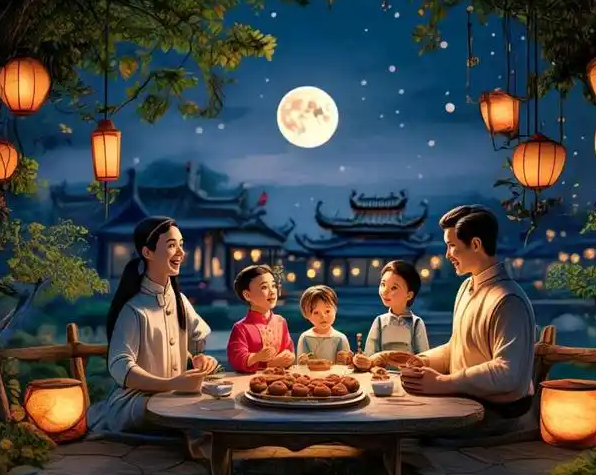
The origin of the Mid-Autumn Festival can be traced back to the moon-worshipping customs in the ancient times. After the sacrificial rituals in the Shang and Zhou dynasties, the initial development in the Qin and Han dynasties, it finally took shape and became popular in the Tang and Song dynasties. By the Ming and Qing dynasties, it had become one of the four major traditional festivals alongside the Spring Festival, Qingming Festival, and Dragon Boat Festival. There are many legends about the Mid-Autumn Festival, among which “Chang’e Flying to the Moon”, “Wu Gang Chopping the Cassia Tree”, and “Jade Rabbit Pounding Medicine” are the most widely spread, adding a strong mythical color to the festival. Legend has it that Chang’e flew to the moon to guard the elixir of immortality and lived in the Guanghan Palace on the moon. Her husband Hou Yi would set up an altar to worship her every 15th day of the 8th lunar month to express his longing. These legends not only carry the ancient people’s imagination of the universe but also embody praise for loyal love and perseverance, becoming an important part of Mid-Autumn Culture.
“Reunion” is the unchanging core theme of the Mid-Autumn Festival, and the customs formed around this theme run through the entire festival. Family reunion is the most important ritual of the Mid-Autumn Festival. No matter how far apart they are, people will try their best to return to their hometowns and sit around with their families. In the evening, every household will place tables and chairs in the courtyard or on the balcony, display sacrifices such as mooncakes, pomegranates, grapes, and grapefruits, and hold a simple moon-worshipping ceremony. The ancients believed that the moon has a god, and worshipping the moon can pray for good weather and the safety of the family. Today, this ceremony mainly carries the significance of praying for blessings and inheriting family traditions. When the full moon rises, the family sits around to admire the moon and chat, and the moonlight blends with family love, forming the most touching Mid-Autumn scene.
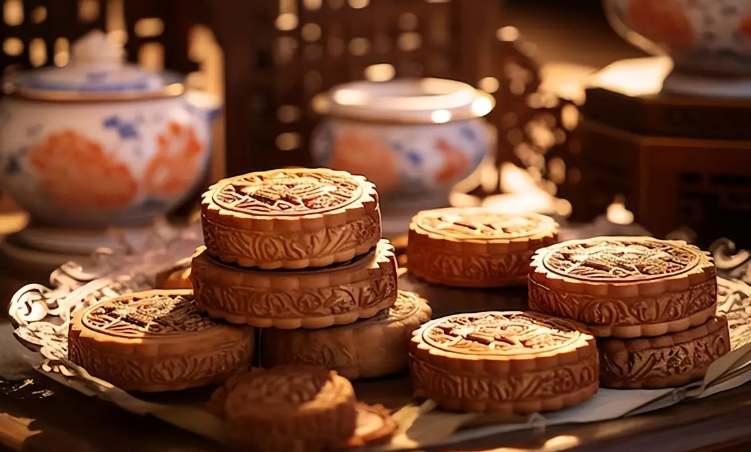
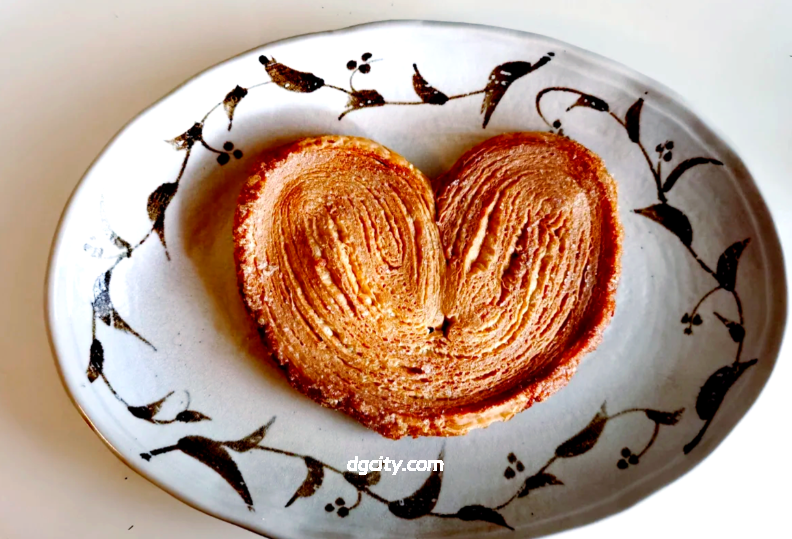
Eating mooncakes is a iconic dietary custom of the Mid-Autumn Festival. Its history can be traced back to the Tang Dynasty, when it was initially a tribute for moon worship, and later gradually became a must-have food for the Mid-Autumn Festival. Most mooncakes are round, with a diameter ranging from a few centimeters to more than ten centimeters, symbolizing “reunion and perfection”, which fits the theme of the Mid-Autumn Festival. Today’s mooncakes come in a wide variety of flavors, divided into sweet and savory categories: sweet mooncakes are filled with red bean paste, lotus seed paste, five-kernel, jujube paste, etc., with a soft and sweet taste; savory mooncakes are centered on fresh meat, ham, egg yolk, etc., with a rich and mellow flavor. Mooncakes in different regions have their own characteristics: Cantonese-style mooncakes have thin skins and abundant fillings, Suzhou-style mooncakes have layered crispy skins, and Beijing-style mooncakes have a solid taste. Foreign travelers can try them according to their preferences and experience the craftsmanship of Chinese pastries. It is worth mentioning that most mooncakes are in gift boxes, making them ideal gifts for the Mid-Autumn Festival. If you want to experience local customs, you can try choosing mooncake gift boxes for relatives and friends to convey festival blessings.
In addition to moon-gazing and eating mooncakes, various regions have unique Mid-Autumn customs, adding diverse charm to the festival. In the water towns in the south of the Yangtze River, people hold “floating water lanterns” activities, putting lanterns carrying wishes into the river. The lights drift with the current, reflecting the moonlight, creating a very beautiful scene; in Guangdong, Hong Kong and other places, “dragon dancing with fire” is popular. Villagers hold dragon-shaped props and shuttle through the streets, praying for blessings and driving away evil spirits accompanied by gongs and drums; in some regions, activities such as lantern riddles, osmanthus appreciation, and osmanthus wine tasting are also carried out to make the Mid-Autumn Festival more interesting. For foreign travelers, these folk activities are excellent opportunities to experience local Culture. They can participate in them while respecting traditions and gain unique experiences.
To immerse yourself in the Mid-Autumn atmosphere, choosing the right moon-viewing spot is crucial. There are many well-known moon-viewing spots in China: Kunming Lake in the Summer Palace in Beijing offers the classical beauty of “moon reflecting on the lake and pavilions contrasting with each other”; Three Pools Mirroring the Moon in West Lake, Hangzhou is one of the “Ten Scenes of West Lake”, where the full moon blends with the reflections of stone towers, like a fairyland; Humble Administrator’s Garden in Suzhou is set off by garden scenery, and the moonlight shines through pavilions and terraces, showing the elegance of the south of the Yangtze River; in addition, attractions such as Giant Wild Goose Pagoda in Xi’an, Lijiang River in Guilin, and Erhai Lake in Dali can also add a unique charm to moon-gazing. It is recommended to learn about the Mid-Autumn activity arrangements of the scenic spots in advance, avoid peak crowds, and pay attention to keeping warm at night and travel safety.
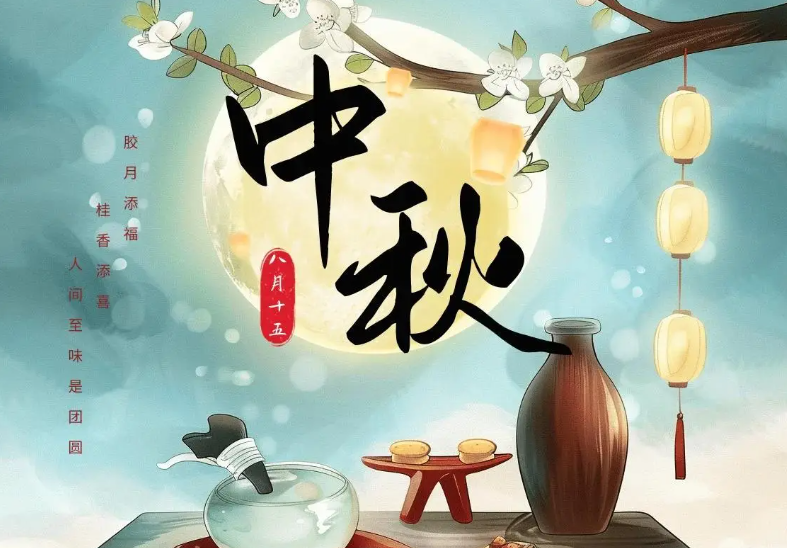
When participating in Mid-Autumn activities, foreign travelers need to respect local customs and cultural details. Although the moon-worshipping ceremony is not complicated, it is necessary to keep solemn, do not touch the sacrifices at will, or laugh loudly; mooncakes are high in calories, and some fillings contain nuts, egg yolks, etc. You can confirm the ingredients before eating to avoid allergies; when participating in folk activities, follow the on-site guidelines and do not arbitrarily disrupt the activity order. In addition, the Mid-Autumn Festival is an important travel peak in China, with strong demand for transportation and accommodation. It is recommended to book round-trip tickets and accommodation in advance and plan the itinerary reasonably.
The Mid-Autumn Festival is not only a feast for the taste and vision but also a condensation of Chinese culture. It takes the moon as the carrier, integrating emotions such as family love, homesickness, and prayer, interpreting the Chinese people’s pursuit of “reunion”. In the process of experiencing Mid-Autumn customs, foreign travelers can not only taste authentic Chinese food but also understand the deep connotation of “interdependence between family and country” in Chinese culture, making this journey more unforgettable because of the beautiful meaning of “full moon and happy reunion”.


暂无评论内容