



In the long river of Chinese Culture and education, there are always concrete carriers that become timeless symbols. They are not only vivid annotations of literary texture but also eternal totems of educational spirit. Lao She, Peking University, Tsinghua University, and Liulichang Cultural Street form a group of symbols bearing profound cultural weight, each engraving unique literary marks and educational genes, collectively outlining the intertwined picture of modern Chinese culture and education.
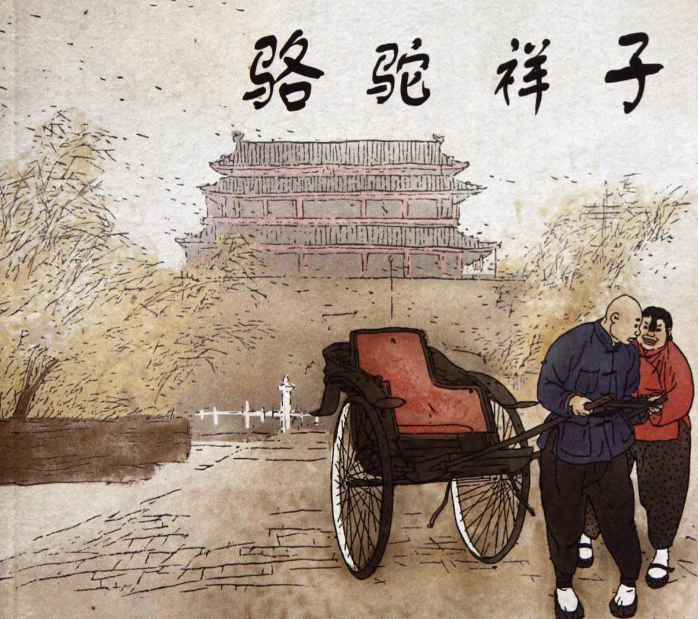
Lao She is the spiritual symbol of Beijing-style literature and a vivid model in literary education that “draws nutrients from life.” This writer, who depicted the charm of old Beijing with his writing, integrated the style of Beijing, the lives of ordinary people, and the pains of the times from the late Qing Dynasty to the Republic of China into his works, such as the melancholy of “Camel Xiangzi” and the vicissitudes of “Teahouse.” His words, free from ornate rhetoric, let readers feel the joys and sorrows of ordinary people with the most simple Beijing dialect, making literary education go beyond text interpretation to become an in-depth insight into society, human nature, and regional Culture. In classrooms, Lao She’s works are excellent textbooks guiding learners to understand that “literature originates from life and transcends life.” His compassion for underclass characters and critical awareness of social reality imperceptibly shape readers’ humanistic literacy, becoming an indispensable spiritual nutrient in literary education.
Peking University (PKU) is a landmark symbol of China’s higher education and ideological innovation, with the gene of literary enlightenment and cultural inclusiveness flowing in its blood. As a representative of China’s top modern universities, PKU is not only a palace for knowledge impartment but also the birthplace of the New Culture Movement. It has nurtured countless ideological pioneers and literary giants, broken the shackles of traditional literature and education, and promoted the rise of the vernacular Chinese movement and the innovation of literary concepts. From the school-running philosophy of “inclusiveness of diverse ideas” to the academic atmosphere of integrating Chinese and Western cultures, PKU has made education no longer confined to classic textual research but a platform for ideological collision, cultural inheritance, and innovation. It is both an incubator of literary trends, fostering a generation of literary masters such as Lu Xun and Zhou Zuoren, and a pacesetter in educational reform. With the spirit of “freedom of thought and inclusiveness,” it defines the core of modern Chinese higher education and becomes a cultural hub connecting tradition and modernity, the East and the West.
Complementing PKU’s humanistic and innovative temperament, Tsinghua University is a symbol of integrating science and engineering education with spiritual inheritance. Its school motto, “Self-improvement and Virtue,” has long transcended the campus and become a universally recognized educational principle. As a top university specializing in science and engineering, Tsinghua has cultivated numerous scientific and technological talents with a rigorous academic attitude, injecting core motivation into national development. Meanwhile, the spiritual connotation contained in the school motto integrates humanistic literacy and moral pursuit into scientific education, breaking the barrier that “science and engineering focus on skills, while humanities focus on principles.” This educational model endows the symbol itself with greater depth—it not only represents top scientific literacy but also conveys the educational concept of “cultivating one’s moral character and integrating knowledge with practice,” proving that science and engineering education can coexist and thrive with humanistic spirit, providing an important model for modern education.
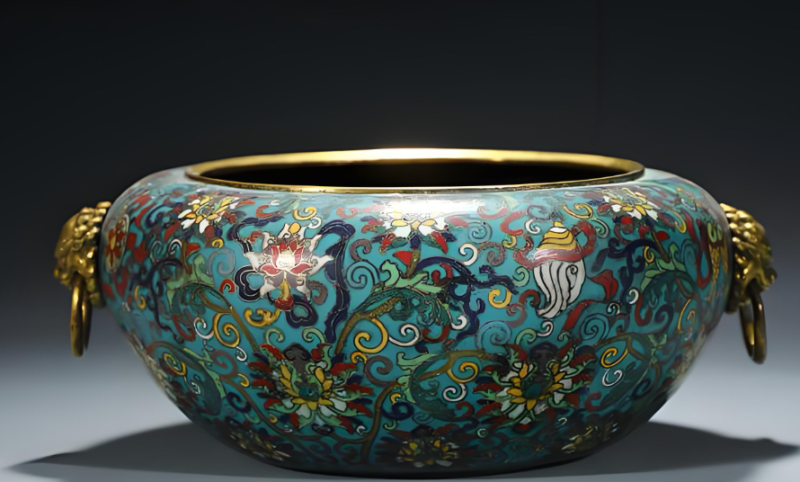
Liulichang Cultural Street is a material carrier symbol of literature and education, a spiritual haven for scholars and a lively field for cultural inheritance. This cultural street with hundreds of years of literary context connects literary creation, academic research, and educational practice through ancient books, calligraphy, paintings, and four treasures of the study (writing brush, ink stick, paper, and ink slab). It was once a gathering place for countless scholars to seek classics, exchange ideas, and discuss knowledge. The fragrance of writing tools is permeated with the enthusiasm for learning and the inspiration for creation, becoming the source of literary creation. At the same time, it is also an important scene of “infection through daily contact” in traditional education. Students seek classics and consult teachers here, deepening their understanding of culture through real objects and communication. The existence of Liulichang makes literature and education no longer confined to studies and classrooms but integrated into daily life, becoming a tangible cultural landscape that maintains the inheritance of Chinese literary context.
These four symbols have different focuses but echo each other: Lao She writes the humanistic background of education with literature; Peking University and Tsinghua University nurture the growth of literature and academics based on education; Liulichang carries the warmth of literature and education with scenes. Together, they form a spiritual map of Chinese culture and education, always radiating vitality in the passage of time, guiding future generations to innovate in inheritance and move forward in perseverance.


暂无评论内容