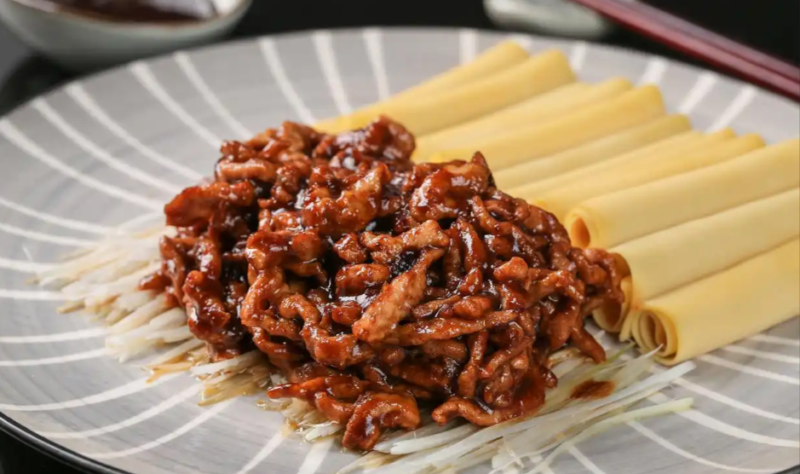





Among the diverse Beijing-style delicacies, Jingjiang Rousi (Shredded Pork with Sweet Bean Sauce) is not a rare delicacy from imperial banquets, but one of the best representatives of old Beijing’s homestyle flavors. With simple ingredient matching and rich sauce aroma, this dish has remained a staple on Beijing families’ dining tables for decades, and is also an excellent choice for foreign tourists to experience local food Culture. Unlike the grandeur of Peking duck and the fireworks of Zhizi Grilled Meat, Jingjiang Rousi has a warm homestyle touch. Wrapped in thin pancakes with tender shredded pork and sweet side dishes, each bite releases a sweet and salty sauce aroma in the mouth, embodying old Beijingers’ ultimate pursuit of “freshness” and “fragrance”.
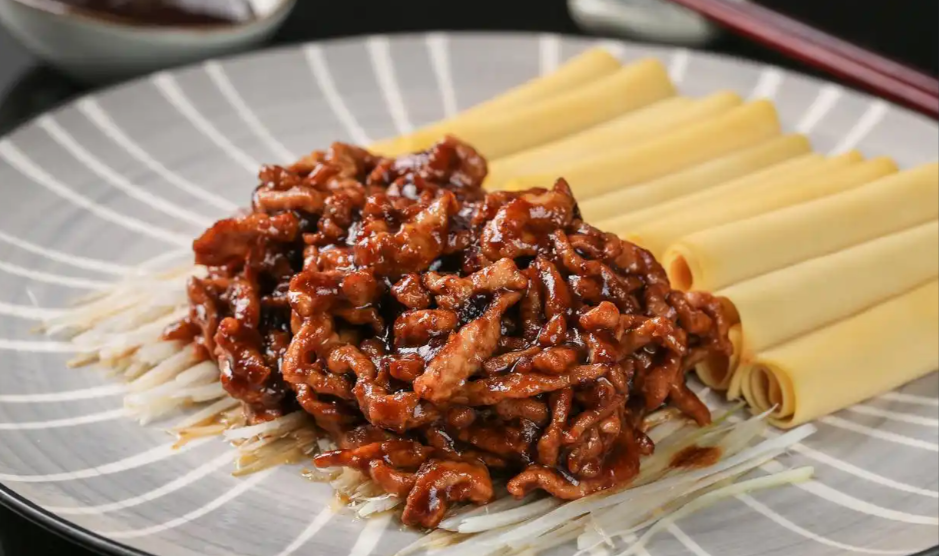
Although there is no conclusive historical record of the origin of Jingjiang Rousi, it is deeply rooted in northern folk food Culture. In the early years, northerners preferred to match meat with sauce, which could not only enrich the taste but also mask the fishy smell of meat. Jingjiang Rousi was improved on this basis, using sweet sweet bean sauce as the main ingredient, paired with tender pork tenderloin, abandoning heavy and spicy seasonings, and adapting to Beijingers’ taste preference for mellow flavor in lightness. It gradually moved from street homestyle dishes to banquet tables, becoming a Beijing-style representative dish with both homestyle charm and a sense of ritual. Today, this dish can be made in both time-honored restaurants and ordinary families, and the subtle differences in different versions add a touch of flexibility to its fireworks.
The soul of this dish lies in the perfect integration of “sauce” and “meat”, and every step of ingredient selection and processing hides sophistication. First, the selection of meat: authentic Jingjiang Rousi must use pork tenderloin. This part of the meat is tender without tendons, with extremely low fat content. Cut into shreds, it is easy to absorb flavor and has a tender taste, which cannot be replaced by other parts. When processing pork, the pork tenderloin should be cut into evenly thick shreds against the grain. Cutting against the grain can break the meat fibers, making the shreds easier to chew. Then marinate with cooking wine, light soy sauce and a little starch for 15 minutes. The starch can form a protective film on the surface of the shreds, lock in moisture, and avoid drying out during stir-frying.
The sauce is the core of Jingjiang Rousi’s flavor. The traditional method adopts a golden ratio of “sweet bean sauce + yellow soybean paste”. The combination of the two can neutralize the sweetness of the sweet bean sauce and enhance the salty and mellow flavor of the sauce. Usually, the two sauces are mixed in a ratio of 2:1, diluted with a little water and white sugar. The white sugar not only enhances freshness but also gives the sauce a warm luster. When stir-frying the sauce, use a low heat and stir constantly until the sauce is thick, bubbling and emitting a strong aroma. At this time, the sauce can evenly coat the shredded meat without being too sticky, with the best taste. Using only sweet bean sauce will make the taste too sweet, while using only yellow soybean paste will make it too salty, losing the soft flavor of Jingjiang Rousi.
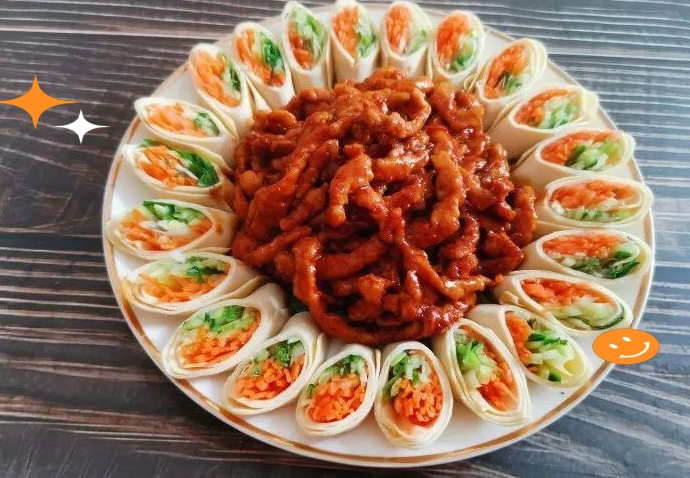
The matching of side dishes and staple food is the key to the taste layering of Jingjiang Rousi. The classic side dish is mainly shredded green onion whites. Choose tender green onion whites and cut into evenly thick shreds. The sweet and slightly spicy taste can neutralize the sweetness and saltiness of the sauce, relieve greasiness and enhance aroma. Some restaurants will match shredded cucumbers to further improve the freshness, suitable for tourists who prefer light flavors. The staple food is mainly mint leaf pancakes or spring pancakes. This kind of pancake skin is thin, soft and tough. It can wrap a sufficient amount of shredded meat and side dishes without masking the flavor of the sauce. It tastes better after heating, avoiding the cold pancakes affecting the overall taste.
Mastering the authentic stir-frying and eating methods is the key to unlocking the complete charm of Jingjiang Rousi. When stir-frying, first put the marinated shredded meat into hot oil and stir-fry quickly. Take it out immediately when the shredded meat changes color and sets, avoiding over-stirring which will make the meat tough. Then pour in the adjusted sauce, stir-fry over low heat until thick, add the stir-fried shredded meat, stir well quickly, and let each shred of meat be evenly coated with the sauce before serving. The whole process emphasizes “quick stir-frying and quick serving”, which can not only ensure the tenderness of the shredded meat but also make the aroma of the sauce fully penetrate.
When eating, the most classic way is “wrapping shredded meat in thin pancakes”, which is also the traditional way of old Beijingers: take a warm thin pancake, put it in the palm of your hand, add 2-3 spoons of Jingjiang Rousi, with an appropriate amount of shredded green onion whites (or shredded cucumbers), and a little coriander if you like. Roll the pancake tightly from one end and eat it. The softness of the pancake, the tenderness of the shredded meat, the sweetness and saltiness of the sauce, and the freshness of the green onion blend with each other, with multiple layers of taste. It is not too heavy, but can fully feel the richness of the sauce aroma. In addition to the classic pancake wrap, you can also try the “rice bowl method”: spread Jingjiang Rousi on rice, mix well and eat. The sauce aroma soaks into the rice, full of satiety, which is a convenient homestyle eating method.
Choosing the right restaurant can add more layers to the Jingjiang Rousi experience. Different restaurants have their own characteristics, adapting to different taste needs: Quanjude (Wangfujing Store), as a century-old time-honored brand, adheres to traditional craftsmanship for Jingjiang Rousi. The sauce ratio is precise, the shredded meat is tender and not tough, paired with freshly baked thin pancakes, full of a sense of ritual, suitable for tourists who want to experience authentic Beijing-style banquets; Haiwan Ju (Nanluoguxiang Store) focuses on old Beijing homestyle dishes. Jingjiang Rousi has high cost performance, rich sauce aroma, paired with hand-made thin pancakes in the store, full of homestyle atmosphere, and you can feel the Beijing flavor in the alley; Bianyifang (Chongwenmen Store) slightly improves Jingjiang Rousi on the basis of tradition, with a slightly lower sauce sweetness, more suitable for tourists who prefer light flavors. Eating it with braised duck is a classic combination; Meizhou Dongpo (Sanlitun Store) integrates Sichuan flavor elements, with a touch of spiciness in the sauce, more impactful taste, suitable for tourists who like innovative flavors.
There are a few practical tips for tasting Jingjiang Rousi: first, thin pancakes should be eaten immediately after baking. If they cool down, they can be heated for 10 seconds to avoid hardening and affecting the taste; second, the heat should be sufficient when stir-frying shredded meat. Quick stir-frying can keep the tenderness, and slow stewing over low heat is not advisable; third, the sauce contains a high amount of sugar. Pairing with light drinks such as jasmine tea and barley tea can neutralize the sweetness and greasiness; fourth, some restaurants provide vacuum-packed sweet bean sauce, which can be taken back as souvenirs to replicate a simple version of Jingjiang Rousi at home.
Jingjiang Rousi has no complicated craftsmanship or rare ingredients, but with its warm sauce aroma and tender meat quality, it has become an indispensable part of Beijing-style food. It hides on the dining tables of ordinary families and on the menus of time-honored restaurants, carrying old Beijingers’ adherence to homestyle flavors. For foreign tourists, tasting Jingjiang Rousi is not only a culinary enjoyment but also an experience of getting close to Beijing’s local life — wrapped in a thin pancake, feeling the purest and warmest Beijing flavor memory. It is hoped that this guide can help you understand the charm of Jingjiang Rousi and appreciate the homestyle aesthetics of old Beijing in the sweet and salty sauce aroma.








暂无评论内容