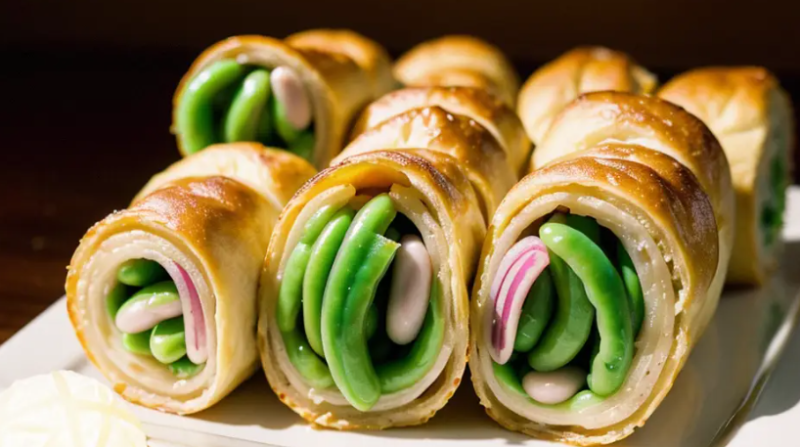





In the spectrum of old Beijing imperial snacks, Yundoujuan (Kidney Bean Roll) is a representative “exquisite style” delicacy. Unlike the sweet and rich Wandouhuang (Pea Cake) or the glutinous Ludagun (Glutinous Rice Roll with Red Bean Paste), it has become a regular on royal banquets with its delicate and mild kidney bean puree, sweet and palatable filling, and artwork-like appearance. This snack, made with pure kidney beans as the base and wrapped with fillings, melts in the mouth with a lingering aftertaste. It not only embodies the strict craftsmanship of imperial cuisine but also shows the gentle elegance of Chinese desserts, making it an excellent choice for foreign tourists to experience Beijing’s imperial food Culture and the “light, sweet and glutinous” flavor.
The origin of Yundoujuan also bears the mark of integration between folk and imperial cuisine. In the early years, there was a tradition of making snacks with kidney beans among the people. Most of them were made by steaming kidney beans, mashing them, and eating them directly or wrapping them with fillings simply. With a rough texture and simple shape, they were affordable daily desserts for ordinary people. In the mid-Qing Dynasty, Yundoujuan was introduced into the imperial kitchen. To cater to the royal family’s extreme pursuit of “color, aroma, taste and shape”, imperial chefs comprehensively improved it: optimized the kidney bean processing technology to remove rough fibers and make the puree more delicate; innovated the rolling method to make the shape neat and exquisite; enriched the types of fillings, matching red bean paste, sesame and sugar, etc., to make the flavor more layered. It is said that Empress Dowager Cixi loved this snack and often enjoyed it as an afternoon tea treat. Thus, Yundoujuan was promoted from a folk snack to an imperial delicacy, retaining the essence of the imperial craftsmanship of that year to this day.
The soul of Yundoujuan lies in the “delicacy of kidney bean puree” and the “exquisiteness of rolling craftsmanship”, which together create its core trait of “melting in the mouth”. Authentic Yundoujuan has strict requirements for raw materials: only plump, bright white kidney beans are used, and shrunken, discolored ones are rejected. White kidney beans have a moderate starch content, a mild taste, and are not easy to residue after mashing, making them the foundation for making delicate puree. Before production, white kidney beans need to be soaked for more than 12 hours until the shells swell and can be peeled off with a light pull. Then the skins are removed manually, leaving only the plump kernels — this is the first step to ensuring a grain-free puree.
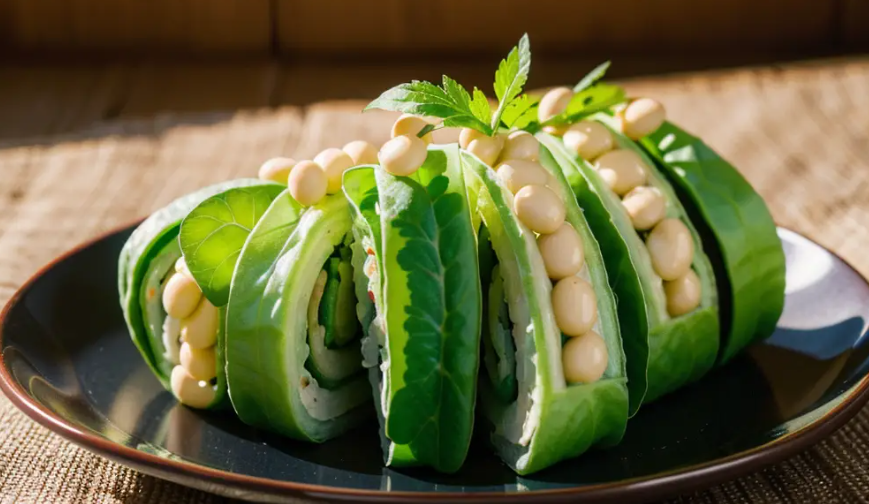
The peeled kernels are put into a pot with an appropriate amount of water (kidney bean-water ratio 1:2.5), boiled over high heat and then steamed slowly over low heat for 40-50 minutes until the kernels are so soft that they can be crushed with fingers. Take out the steamed kernels, put them into a fine sieve, repeatedly mash and sieve, and gently scrape the delicate kidney bean puree under the sieve with the back of a spoon to remove residual fine fibers and bean skin debris. This step is the key to Yundoujuan’s “melting-in-mouth” texture — the sieved puree is as soft as a cloud without any roughness. Then put the puree into a clean container, add a little sugar (very low sweetness, only to enhance freshness) and a small amount of butter or sesame oil while it is hot, stir well to make the puree more sticky and mild, and cool it until it is not hot enough for rolling.
The filling is the finishing touch to the flavor of Yundoujuan. traditionally, it is mainly red bean paste filling and sesame-sugar filling. The two fillings have different flavors to meet different taste needs. Red bean paste filling is made of high-quality red beans, soaked, boiled until soft, mashed and sieved to remove bean skins, added with an appropriate amount of rock sugar and stir-fried until thick. It has a creamy, sweet taste without greasiness, echoing the mildness of kidney bean puree. Sesame-sugar filling is made by grinding roasted black sesame into powder and mixing it with soft white sugar in a ratio of 1:1. It has a rich aroma and direct sweetness, and you can feel the mellow aroma of sesame and the sweetness of sugar in your mouth with distinct layers. Some time-honored brands also launch innovative flavors such as hawthorn filling and jujube paste filling, balancing tradition and novelty.
The rolling process directly determines the appearance and taste of Yundoujuan. The traditional method emphasizes “thinness, uniformity and neatness”. Take an appropriate amount of cooled kidney bean puree, put it on a cutting board covered with plastic wrap or gauze, roll it into a thin, uniform rectangular sheet with a rolling pin (about 0.3 cm thick — too thick affects the taste, too thin is easy to break). Spread the filling evenly on one side of the sheet (the filling thickness is about 0.5 cm, not too much to avoid overflow when rolling). Then gently roll it up from the side with the filling to form a tight cylinder, press it gently with your hands to shape it, and then cut it into 3-4 cm long sections with a knife, and tidy up both ends of each section. An exquisitely shaped, white Yundoujuan is completed. High-quality Yundoujuan has a neat cross-section, distinct layers of kidney bean puree and filling, no damage or filling overflow, with both appearance and taste.
The authentic eating method is simple but can maximize the flavor of Yundoujuan. Yundoujuan can be eaten at room temperature without heating, and the taste is more refreshing after refrigeration, suitable for summer. When eating, pick up a section by hand or scoop it with a spoon, chew gently after taking a bite. The mildness of kidney bean puree and the sweetness of the filling blend instantly. The texture is soft and delicate, which melts naturally without much chewing. The aftertaste has a faint natural aroma of kidney beans and the sweetness of the filling, non-sticky and non-greasy, with just the right sweetness. For matching, it can be paired with warm jasmine tea or chrysanthemum tea — the tea aroma can neutralize the slight sweetness and make the taste more layered. It can also be combined with other imperial snacks such as Wandouhuang and Ai Wo Wo (Glutinous Rice Balls with Sweet Fillings) to create a one-stop imperial dessert experience.
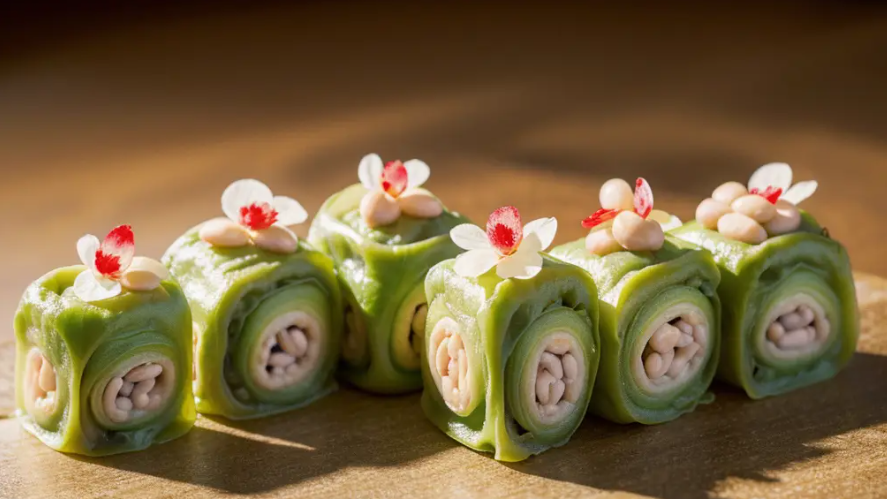
Choosing the right store is crucial to encountering Yundoujuan with the most traditional imperial flavor. Beijing’s time-honored brands have their own characteristics, balancing craftsmanship inheritance and taste adaptation: Fangshan Restaurant (Beihai Park Store) is a benchmark for imperial flavor, making Yundoujuan strictly following imperial cuisine craftsmanship. The kidney bean puree is delicate without residue, the filling has a moderate sweetness, and the shape is neat and exquisite. Paired with the imperial banquet set meal in the store, the ritual sense is full, suitable for tourists pursuing an extreme experience; Huguosi Snacks (multiple branches) offers cost-effective Yundoujuan, retaining the traditional flavor while having sufficient filling, with a taste closer to public preferences, suitable for tourists trying it for the first time; Niujie Hongji Snacks (Niujie Store) uses solid ingredients for Yundoujuan, with a strong natural aroma of kidney beans and a creamy, non-sweet red bean paste filling, a hidden gem among old Beijingers, which can be enjoyed with other Beijing-style snacks in the store; Daoxiangcun (multiple branches) offers vacuum-packed Yundoujuan that is easy to carry. Although the taste is slightly inferior to freshly made ones, the core flavor is intact, suitable as a souvenir for relatives and friends.
There are several practical tips for tasting Yundoujuan to help foreign tourists better unlock this imperial snack. First, storage method: freshly made Yundoujuan can be stored at room temperature for 4-6 hours and refrigerated for 1-2 days. It should be eaten as soon as possible after opening to avoid drying and cracking affecting the taste. Second, filling selection: for the first try, red bean paste filling is recommended for its mild flavor and low risk of dislike; those who prefer a rich aroma can choose sesame-sugar filling. Third, portion control: Yundoujuan has a mild texture and should be eaten in moderation to avoid excessive satiety caused by overlapping with other desserts. Fourth, appearance adaptation: some time-honored brands decorate the surface of Yundoujuan with wolfberries and osmanthus, which are more attractive in appearance and suitable for taking photos.
Beijing Yundoujuan has no complex flavor combinations or gorgeous plating, but achieves the elegance and mildness of imperial snacks with the simplest raw materials and the most exquisite craftsmanship. It hides in the windows of time-honored brands and on the afternoon tea tables of old Beijingers, carrying the imperial memories and culinary ingenuity of this city. For foreign tourists, tasting Yundoujuan is not only a sweet taste experience but also an immersive opportunity to feel the aesthetics of Chinese desserts — in the moment when a bite of softness melts away, understand the dual pursuit of “exquisiteness” and “natural flavor” in imperial snacks.





暂无评论内容