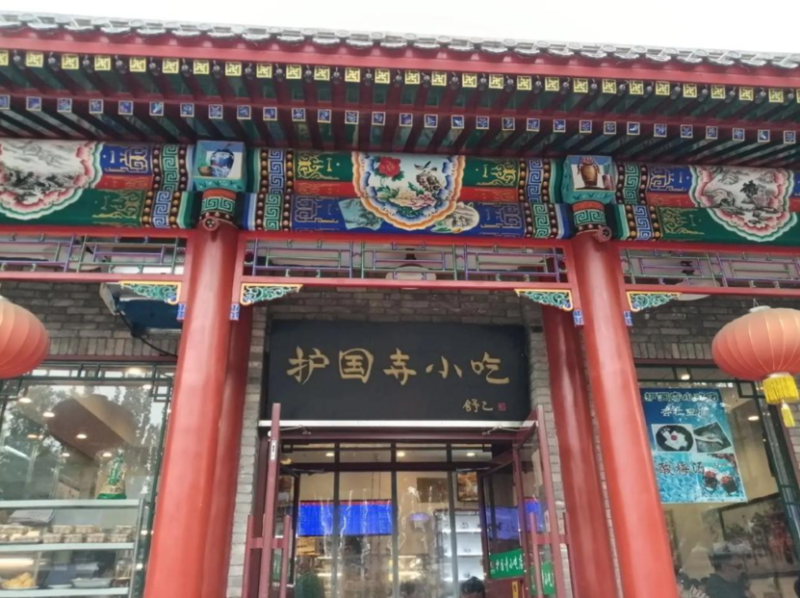





On the dense food map of Beijing, Huguosi Snacks is undoubtedly a core landmark carrying old Beijing’s taste memories. Known as the “Museum of Old Beijing Snacks”, this time-honored Chinese brand is not a single store, but a flavor hub that condenses centuries of temple fair food Culture. From the mobile stalls at the Yuan Dynasty Huguo Temple Fair to the chain stores across the city today, it boasts more than 80 types of snacks and adheres to time-honored intangible cultural heritage craftsmanship, allowing every diner to experience the street charm and imperial legacy of old Beijing in one stop. It is also an excellent window for foreign tourists to understand Beijing’s culinary Culture.
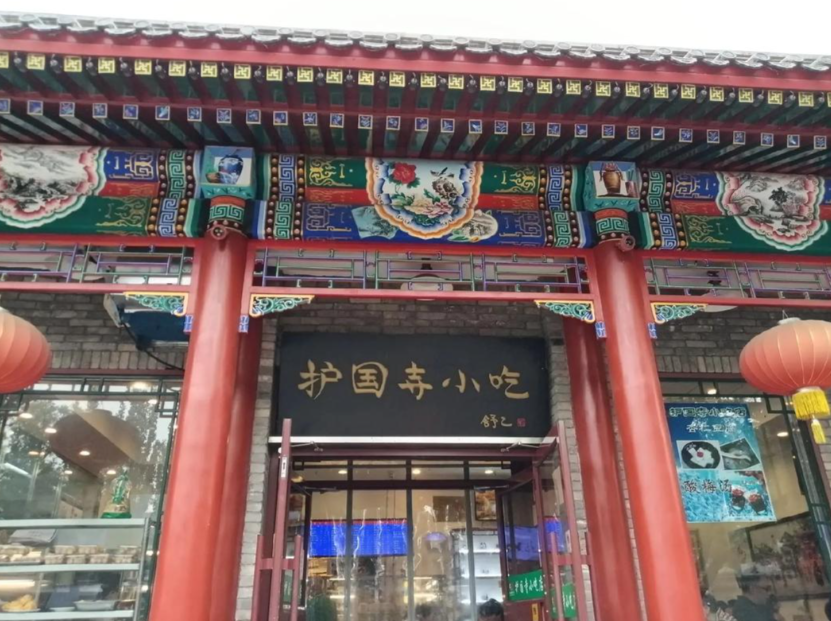
The origin of Huguosi Snacks is deeply rooted in Beijing’s temple fair Culture and urban changes. Huguo Temple, first built in the Yuan Dynasty, was renamed Dalongshan Temple in the Xuande period of the Ming Dynasty and officially named Huguo Temple in the Kangxi period of the Qing Dynasty. The temple fair held on the 7th and 8th day of each lunar month has long been a gathering place for Beijing’s top snacks. Famous vendors such as “Tangcha Ying”, “Bagaonian” and “Baishu Wang” showed their skills here, with flavors like Guanchang (fried starch sausage), Baodu (quick-boiled tripe) and Tangcha (sweet soup) passed down through generations. In 1956, the government integrated more than a dozen temple fair vendors and opened the first Huguosi Halal Snack Shop near Huguo Temple, turning the mobile street charm into a stationary brand. After 69 years of inheritance, it has now become a carrier of municipal intangible cultural heritage, bringing old Beijing snacks from the streets to standardized time-honored brand halls while retaining their most authentic street flavors.
Stepping into Huguosi Snacks is like opening a vivid album of old Beijing snacks, with sweet, salty, meat and vegetarian options, cooked in various ways such as steaming, frying, boiling and roasting. Among them, the “Four Great Classics” are must-try signatures that uphold the essence of old Beijing snacks. Douzhi (fermented mung bean juice) with Jiaoquan (fried dough rings) is the soul of old Beijing breakfast. Douzhi, made from fermented mung beans, has a sweet-sour and mellow taste, rich in probiotics. First-time tasters may need to adapt to its unique flavor, while the golden and crispy Jiaoquan is its perfect match — take a bite of Jiaoquan to hear the “crunch”, sip a mouthful of Douzhi, and then chew a piece of pickled vegetable. The three flavors blend in the mouth, instantly unlocking the breakfast ritual of old Beijingers.
Ludagun (glutinous rice roll with red bean paste) is a representative sweet snack. Steamed and pounded glutinous rice is wrapped in dense red bean paste and evenly coated with soybean flour, showing distinct yellow, white and red colors, excellent in both appearance and taste. Its texture is soft and sticky on the outside, sweet but not cloying on the inside, and the mellow aroma of soybean flour neutralizes the sweetness of red bean paste, offering rich layers in every bite. Its interesting name comes from the final step of rolling in soybean flour, which resembles a wild donkey rolling, reflecting the street humor of old Beijing snacks. Wandouhuang (pea cake), once a favorite of Empress Dowager Cixi, is a seasonal delicacy in spring and summer. Selected white peas are soaked for 8-10 hours, simmered until soft, sieved into puree and cooled to set. The finished product is light yellow and pure, melts in the mouth, with a sweet taste of peas, refreshing and crisp, and also has health benefits.
Miancha (millet paste with sesame paste) stands out with its unique eating method and flavor. The golden paste made from broomcorn millet flour is drizzled with thick sesame paste and sprinkled with sesame salt and dried ginger powder, offering a dense and rich taste. The most special part is its eating way — no spoons or chopsticks needed. Hold the bowl with one hand, tilt it slightly, and suck it in circles, so that every bite can taste the richness of sesame paste, the saltiness of sesame salt and the warmth of Miancha at the same time. This is a time-honored eating skill passed down by old Beijingers, and also a fun part to experience street culture. In addition to classic options, the Cream Fritters at Huguosi Snacks are also popular, with a crispy outer layer and tender inner part wrapped in pure cream aroma, connecting traditional and young tastes.
The characteristics of different branches make Huguosi Snacks full of exploration fun. The Di’anmen Store (No. 180, Di’anmen Outer Street) hides exclusive secret braised chicken, inherited from Shijiazhuang Ma’s Braised Chicken craftsmanship, without any preservatives, with tender and flavorful meat, a hidden gem among regular customers. It can be paired with the store’s exclusive glutinous rice candied fruit and milk skin yogurt for a more distinctive flavor. The headquarters (No. 93, Huguosi Street, Xicheng District) best restores the temple fair style, with the most complete variety and strongest street charm. Every morning, you can see locals and tourists queuing up for breakfast. Many branches also launch innovative products, such as low-sugar Wandouhuang, egg yolk cheese-filled Longdan, and Chongyang Festival limited Chongyang cakes, adapting to modern tastes while adhering to ancient methods, reviving old flavors.
Practical tips for tasting Huguosi Snacks can help foreign tourists better unlock these flavors. For ordering, single diners can choose the “Classic Breakfast Set” (Douzhi + Jiaoquan + sugar baked cake, about 15 yuan). For two people, the “Signature Platter Set” (Douzhi with Jiaoquan, Ludagun, Wandouhuang, Miancha, about 50 yuan) is recommended. For group sharing, order a snack platter with lamb offal soup, and you can enjoy a full meal with about 30 yuan per person. For benefits, some stores have special activities and limited snacks on the 7th and 8th day of each lunar month (original temple fair days), and Meituan and Dazhong Dianping often launch discounted sets with high cost performance. For eating suggestions, Douzhi can be paired with Jiaoquan to balance the flavor. Don’t hesitate to try the “sucking” method for Miancha. Freshly baked fritters and Wandouhuang have the best taste, so eat them immediately after making to enjoy the ultimate flavor.
Without exquisite plating, Huguosi Snacks has become a microcosm of Beijing’s food culture with solid ingredients, exquisite craftsmanship and rich varieties. It hides the lively memories of temple fairs, carries the ingenuity of intangible cultural heritage, and contains the daily warmth of old Beijingers. For foreign tourists, it is not only a place to taste snacks, but also a space to immerse themselves in Beijing’s culture — in the unique flavor of Douzhi and the interesting eating method of Miancha, understand the inclusive, simple and mellow culinary heritage of this city.



暂无评论内容