




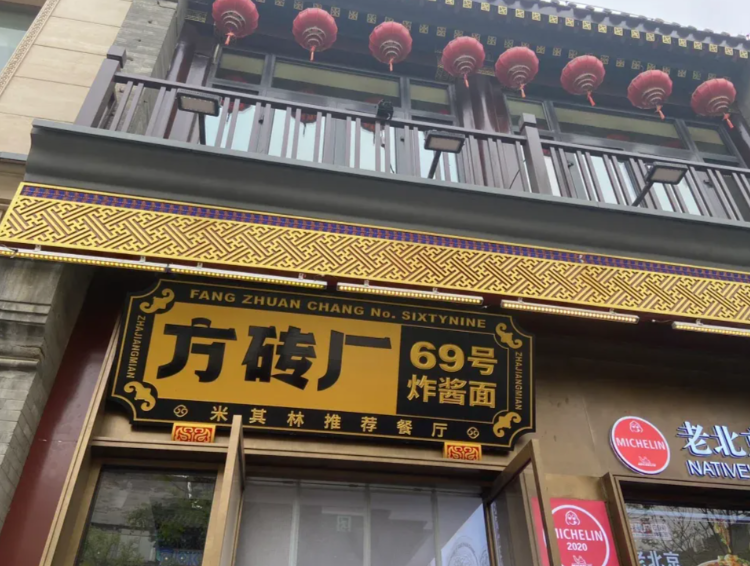
Amidst the hutong textures at the northern end of Beijing’s central axis, Fangzhuanchang No.69 shines like a hidden gem, painting the flavor background of old Beijing with a bowl of Zhajiangmian (noodles with soybean paste) passed down for three generations. Tucked between Nanluoguxiang and the Bell and Drum Towers, this small shop has no gorgeous decoration, but relies solely on authentic old Beijing Zhajiangmian to be recommended by Michelin Bib Gourmand for four consecutive years, becoming a core check-in spot for foreign tourists to explore hutong food and Beijing-style Culture. Since Grandpa Song set up a stall in Fangzhuanchang Hutong in 1996, it has expanded to branches in core business districts, always adhering to the old recipe of “slow cooking, no quick fixes”, making every bowl of noodles full of hutong charm and the weight of time.
The soul of Fangzhuanchang No.69 lies in the bowl of soybean paste simmered for one and a half hours. Different from the quick-cooking method of ordinary soybean paste, it insists on locking in flavor with traditional craftsmanship: selected black pork raised slowly for 365 days, only the fat belly pork is cut into evenly sized cubes, fried in a cast-iron pot to extract oil. When the pork cubes turn golden and crispy, add proportionally blended yellow soybean paste and sweet bean paste, simmer on low heat for 60 minutes to enhance aroma, then stew for another 30 minutes to absorb flavor. No extra seasonings are added, and the rich taste comes only from the natural collision of ingredients. This adherence to “one catty of pork belly with six taels of paste” makes the sauce rich but not greasy, with firm and tender pork cubes, allowing every bite to taste the deep integration of meat and sauce aroma.
A qualified bowl of old Beijing Zhajiangmian cannot do without noodles, sauce and side dishes, and Fangzhuanchang No.69 achieves the ultimate balance of these three. The noodles are handmade with high-gluten flour, repeatedly kneaded and proofed before rolling and cutting. Cooked noodles are chewy and smooth, able to hold every drop of sauce without becoming mushy. The side dishes are surprisingly abundant, with 13 kinds of ingredients filled on a plate: crisp cucumber strips, refreshing bean sprouts, sweet and sour heart-shaped radish strips, soft green peas, tender egg skin strips, as well as carrot strips, fungus strips, lettuce strips, etc. The colorful side dishes not only look attractive, but also neutralize the richness of the sauce, making the taste layered.
Dining here, you can also unlock the “correct way to eat” old Beijing Zhajiangmian. The staff will kindly inform you of the “three-step noodle mixing method”: first mix the noodles to coat them with a thin layer of oil; then add the soybean paste and stir thoroughly to make the sauce penetrate every part; finally add your favorite side dishes and mix well before enjoying. Pair it with free preserved garlic provided in the shop, the sweet, sour and slightly spicy taste can further enhance the flavor. A bite of noodles with a clove of garlic fully shows the dining ritual of old Beijingers. More thoughtfully, both noodles and sauce can be refilled for free, ensuring that both big eaters and those who want to taste more can enjoy to their fullest.
The shop’s environment exudes the charm of old Beijing hutongs. The headquarters is located at No.69 Fangzhuanchang Hutong, Dongcheng District, with several tile-roofed houses forming a square courtyard. Simple square tables are placed indoors, and the walls are covered with photos of celebrities checking in and old Beijing style. There is no deliberate decoration, but it reveals a simple and warm atmosphere. Every meal time, a long queue forms in front of the shop, with local neighbors and Chinese and foreign tourists waiting in order. The air is filled with the aroma of soybean paste and noodles, lively but not noisy, showing the unique charm of hutong food. Today, there are also branches in business districts such as Nanluoguxiang and Zhonghai Daji Lane. Although located in prosperous areas, they still retain the simple background of hutong shops.
In addition to the signature Zhajiangmian, some branches also offer old Beijing specialty snacks, bringing a richer experience to diners. Cold Douzhi (fermented mung bean juice) with Jiaoquan (fried dough rings) has a unique flavor at first taste, but allows you to experience the most authentic Beijing flavor; Baodu (quick-boiled tripe) is crispy and chewy, drizzled with rich sesame paste, showing the essence of old Beijing snacks; there are also sweet and glutinous Ai Wo Wo (glutinous rice rolls) and crispy fried cakes, which can be used as post-meal desserts to make up for the monotony of staple food. If you want to take the Beijing flavor home, the shop also launched bottled diced pork sauce and instant Zhajiangmian, making it convenient for tourists to share this crafted taste with relatives and friends.
Practical tips can make the trip smoother. For transportation, the headquarters can be reached by taking Metro Line 8 to Shichahai Station and walking 10 minutes through the hutongs; the Nanluoguxiang branch is located at the north entrance of the main street, just a short walk from Nanluoguxiang Station on Metro Line 6. Business hours are 9:30-21:00. It is recommended to avoid the peak period from 11:30 to 13:30 to reduce waiting time. The average consumption is about 25-30 yuan, with high cost performance. You can visit nearby attractions in a combined trip. After eating noodles, stroll around Nanluoguxiang, visit the Bell and Drum Towers and Shichahai, and feel the old Beijing hutong style among the blue bricks and gray tiles, forming a perfect “food + sightseeing” route.
The success of Fangzhuanchang No.69 lies not in gorgeous packaging, but in adherence to old craftsmanship and respect for ingredients. It uses a bowl of Zhajiangmian to connect the memories of three generations, and allows foreign tourists to understand the dietary wisdom of old Beijing on their taste buds. In the fast-paced city, the slow cooking time and simple taste here are exactly the most touching expression of hutong Culture, worthy of a special visit by every diner.



暂无评论内容