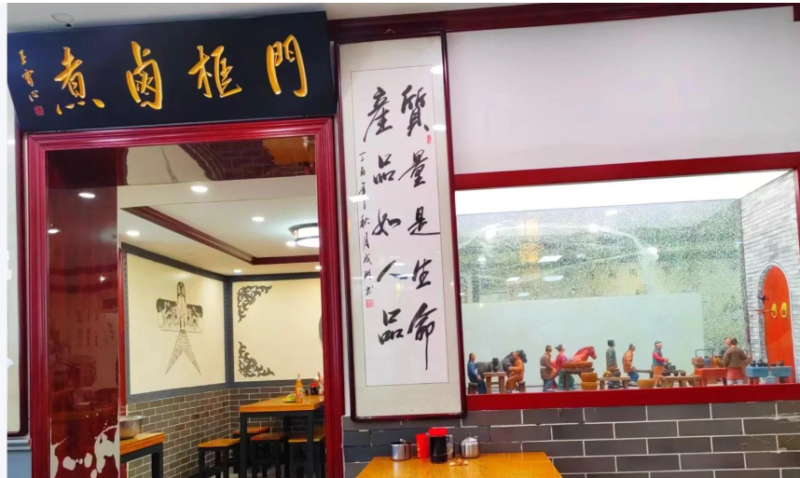





Next to Dashilar in downtown Beijing, Menkuang Hutong—a narrow alley only 165 meters long and 3 meters wide—hides the most flavorful secret of old Beijing: Luzhu Huoshao (Braised Offal with Baked Wheat Cake). Once a prosperous commercial alley with a century of history, it has now become a core landmark for Chinese and foreign tourists to explore Beijing’s culinary heritage, thanks to this iconic dish. Though rooted in street food, Luzhu traces its origin to Suzao Meat, a royal delicacy of the Qing Dynasty. Evolving over a hundred years, it transformed from imperial cuisine to a popular folk dish, using rich braised broth to depict the essence of Beijing’s “elegance in simplicity” food Culture, and serving as an advanced choice for foreign tourists to experience authentic Beijing flavors.
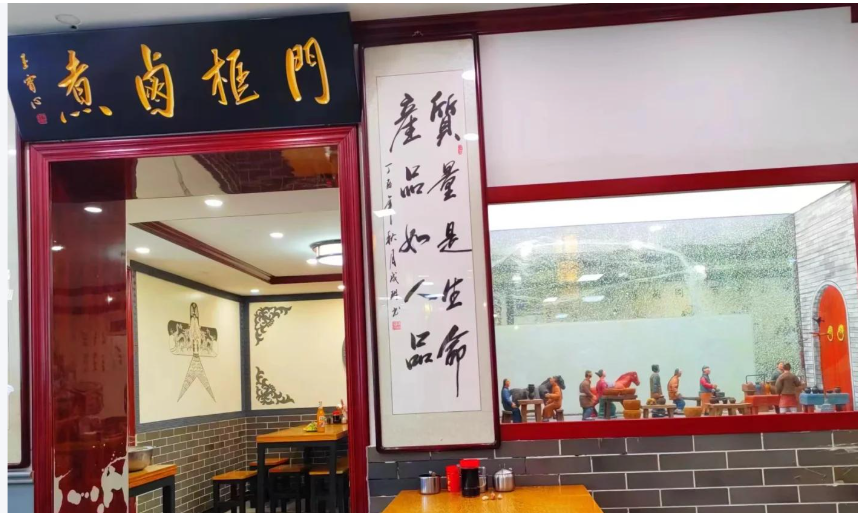
The origin of Luzhu tells a story of flavor flowing from the imperial palace to the people. During the Qianlong period of the Qing Dynasty, the imperial kitchen had a Suzao workshop, where chefs from Suzhou cooked Suzao Meat—select pork belly braised with more than a dozen spices, a favorite delicacy of Emperor Qianlong. In the Republic of China era, Suzao Meat spread to the folk. To save costs, people replaced pork belly with affordable pork offal such as intestines and lungs, retained the traditional braising process of Suzao Meat, and added fried tofu and unleavened baked cakes to the pot. This not only preserved the essence of the imperial broth but also enriched the texture of the dish, giving birth to Luzhu Huoshao. Due to its proximity to the bustling Dashilar business district, Menkuang Hutong gradually became a gathering place for Luzhu shops, maintaining its vitality for a century and turning this flavor into a taste symbol of old Beijing.
An authentic bowl of Menkuang Hutong Luzhu requires meticulous craftsmanship from ingredient preparation to broth simmering. Cleanliness of ingredients is the foundation of its flavor. Pork intestines are repeatedly rubbed and turned inside out with salt and vinegar to remove mucous membranes and odors, then rinsed with clean water until clear—this step directly determines whether the Luzhu is free of fishy smell. Pork lungs are cleaned leaf by leaf, impurities removed, and blanched to eliminate blood foam, ensuring a tender and non-fishy taste. The broth is the soul of Luzhu: it is made with large pork bones as the base, simmered slowly for more than 4 hours with over a dozen spices including Chinese prickly ash, star anise, cinnamon, and fermented soybeans, until the broth thickens and turns red, with spices, bone and meat aromas deeply integrated into a rich and mellow flavor.
The cooking process of Luzhu is highly ornamental and crucial to its flavor. Chefs cut cleaned pork intestines and lungs into pieces, simmer them with fried tofu and unleavened baked cakes (cut into a cross pattern) in the old broth over low heat for 20 minutes. The unleavened cakes absorb the broth, becoming soft but chewy, while the tofu soaks up the meaty flavor, and the intestines and lungs are tender and flavorful without losing texture. When serving, the intestines, lungs, cakes and tofu are cut into smaller pieces with scissors, placed in a bowl, and topped with a ladle of boiling old broth. Diners can add minced garlic, chili oil, fermented tofu sauce, chive flowers and other condiments according to their preferences, releasing an instant burst of aroma—salty and slightly spicy, with rich and impactful layers.
Time-honored shops in and around Menkuang Hutong are the best places to taste authentic Luzhu, each with unique features and carrying different taste memories. Menkuang Hutong Century-Old Luzhu (Xinjiekou Branch) is a popular choice, located at No. A2 Zhaodengyu Road, just a short walk from Exit B of Xinjiekou Station on Metro Line 4. Open from 9:00 AM to 2:00 AM, it caters to diners at different times. Its Luzhu has fatty but not greasy intestines and rich broth, with an average cost of about 39 yuan, a hidden gem among local residents. The headquarters at No. 19 Menkuang Hutong (near Langfang Third Lane) is open from 9:00 AM to 9:00 PM, with an average cost of only 23 yuan, generous portions and authentic broth. Surrounded by well-preserved old hutongs, it allows diners to stroll and experience the old Beijing street charm after meals.
As a benchmark in the Luzhu industry, Xiaochang Chen is also worth a special visit. Founded in 1886, Xiaochang Chen has been passed down for five generations, adhering to the authentic craftsmanship of Suzao Meat, and is famous for “fat but not greasy intestines, tender but not mushy meat, and fully soaked but not sticky cakes”. In addition to classic Luzhu, the shop also offers innovative dishes such as Luzhu Assorted Hot Pot and Luzhu Clay Pot, meeting the needs of different diners and revitalizing traditional flavors. Moreover, the shop retains the old Beijing style with square tables and old posters, making diners feel as if they have traveled back to the old hutongs, full of street charm.
Practical tips can help foreign tourists better enjoy this flavor. For transportation, the headquarters in Menkuang Hutong can be reached by taking Metro Line 7 to Zhushikou Station and walking 10 minutes; the Xinjiekou Branch is more convenient with direct metro access. For first-time tasters, it is recommended to have less offal and first experience the combination of broth and baked cakes. Pair it with free garlic cloves or Beibingyang Soda available in the shop to cut greasiness and balance the rich broth. In terms of etiquette, Luzhu is a street food with a casual dining environment—feel free to experience the authentic eating style. Nearby attractions such as Dashilar and Zhengyangmen can be visited together to form a “food + historical sites” tour route, deeply experiencing old Beijing Culture.
The charm of Menkuang Hutong Luzhu lies not in exquisite presentation, but in the century-old adherence to flavor and street warmth. From imperial cuisine to ordinary alleys, it simmers the life essence of old Beijing with the simplest ingredients. For foreign tourists, this bowl of Luzhu is not only a taste adventure but also a key to understanding Beijing’s diverse food Culture—immersing in the rich broth to feel the street charm and historical depth of this city.



暂无评论内容