




Shanghai, an international city integrating modern trends and thousand-year-old heritage, boasts not only the bright lights of the Bund and the urban vitality of Yuyuan Garden, but also a precious intangible heritage art on the tip of the fingers — Shanghai Paper Cutting. As an important branch of Chinese Paper Cutting art, Shanghai Paper Cutting is famous for its delicate, elegant and rich composition. It combines the warmth of traditional folk customs with the vitality of Haipai urban Culture, making it an excellent window for foreign visitors to understand Chinese traditional culture and feel Oriental aesthetics. This guide is specially designed for foreign visitors, comprehensively supplementing practical bilingual (Chinese-English) travel information about Shanghai Paper Cutting, including cultural popularization, experience venues, ticket prices, latest opening hours, surrounding traffic, experience skills and purchase guides. With detailed explanations and thoughtful tips, every foreign visitor can easily plan their itinerary, touch the warmth of intangible heritage with their own hands, and immerse themselves in the unique charm of Shanghai Paper Cutting without worrying about trivial travel matters.
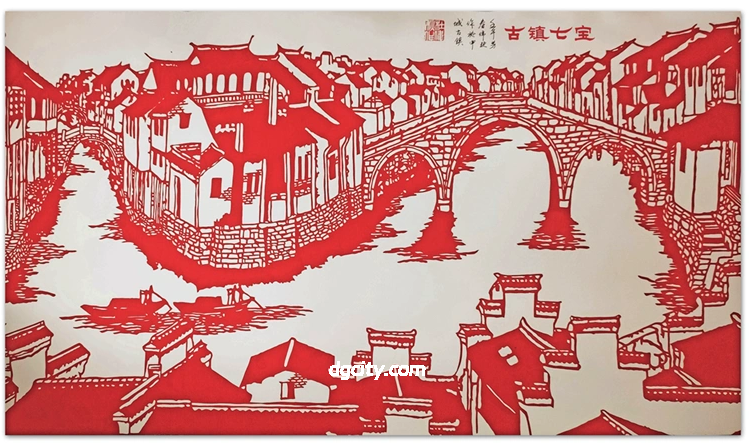
To better experience Shanghai Paper Cutting, it is first necessary to understand the profound heritage of this intangible heritage art. With a long history dating back to the Han Dynasty, Shanghai Paper Cutting reached its peak in the Ming and Qing dynasties after thousands of years of inheritance. In 2008, it was included in the list of National Intangible cultural heritage, becoming one of the important cultural business cards of Shanghai. Different from paper cutting in other regions of China, Shanghai Paper Cutting has its own unique characteristics, with “delicacy, elegance, rich composition and strong decoration” as its core style. Its lines are as thin as silk, and its cutting techniques are exquisite and neat. It is not only good at showing auspicious flowers, birds, animals and zodiac patterns, but also skilled in carving a complete set of historical story works. It even integrates urban decorative elements such as newspaper decorations and tail flowers, forming a unique urban art style different from the bold and unrestrained northern paper cutting, which perfectly interprets the inclusive nature of Haipai Culture.
The development of Shanghai Paper Cutting is inseparable from the persistence of generations of inheritors, among whom Wang Zigan and Lin Ximing, two representative inheritors, have laid the artistic status of Haipai Paper Cutting. Wang Zigan inherited traditional skills and integrated the boldness of northern paper cutting with the delicacy of southern paper cutting. His works are concise, exaggerated and highly decorative, covering flowers, birds, fish, insects, landscapes and figures. Lin Ximing, on the other hand, blazed a new path by integrating painting elements into paper cutting, making this ancient art more artistically appealing. Today, Shanghai Paper Cutting is not only inherited in Museums and studios, but also enters airports, cruise ships and communities, becoming an important carrier connecting Chinese and foreign Cultures, allowing every visiting foreign visitor to feel its charm up close.
For foreign visitors, the most attractive part is to experience paper cutting by themselves and feel the magic of intangible heritage on their fingertips. Shanghai has many professional paper cutting experience venues, including studios of intangible heritage inheritors and large-scale craft exhibition halls. Each venue has experience projects suitable for foreign visitors, and most of them provide English guidance, so there is no need to worry about language barriers. Below, we will detail 3 of the most worthwhile paper cutting experience venues for foreign visitors, including ticket prices, latest opening hours, experience projects and characteristics, to help you choose according to your own itinerary.
The first recommended venue is the Shanghai Arts and Crafts Museum, an important exhibition and experience base for Shanghai Paper Cutting. Located at No. 79 Fenyang Road, Xuhui District, this French late Renaissance-style building, built in 1905, is known as the “Little White House” for its elegant appearance and has become a filming location for many film and television dramas, with both artistic atmosphere and historical heritage. The museum collects a large number of precious paper cutting works, including classic works by inheritors such as Wang Zigan. From traditional folk patterns to modern creative works, there is everything here, allowing foreign visitors to fully understand the development context and artistic characteristics of Shanghai Paper Cutting. The ticket price of the venue is 8 RMB for adults, 4 RMB for students with valid student IDs, half-price for the elderly over 65 years old with valid documents, and free admission for children under 1.3 meters.
The latest opening hours of the venue are 9:00-11:30 and 13:00-16:30 every day, with admission stopped at 11:00 and 16:00. It is closed for rest from 11:30 to 13:00 at noon and closed every Monday (except for national legal holidays). It is recommended that foreign visitors reserve 1.5-2 hours for visiting and experience, so that they can not only appreciate the collected works, but also participate in the basic paper cutting experience class. The paper cutting experience projects of the venue are divided into basic classes and advanced classes. Foreign visitors can choose according to their own foundation. The basic class is suitable for beginners, with professional teachers (some can provide English guidance) teaching on site, including simple paper cutting patterns (such as zodiac signs, flowers, simple geometric patterns). The experience lasts about 30 minutes, with a fee of 30-50 RMB per person, including paper cutting tools (scissors, red paper, carving knives, etc.). The completed works can be taken away for free as souvenirs. In addition, there is a craft shop on the first floor of the venue where you can buy various paper cutting souvenirs, with prices ranging from tens to hundreds of RMB, suitable for taking home as gifts.
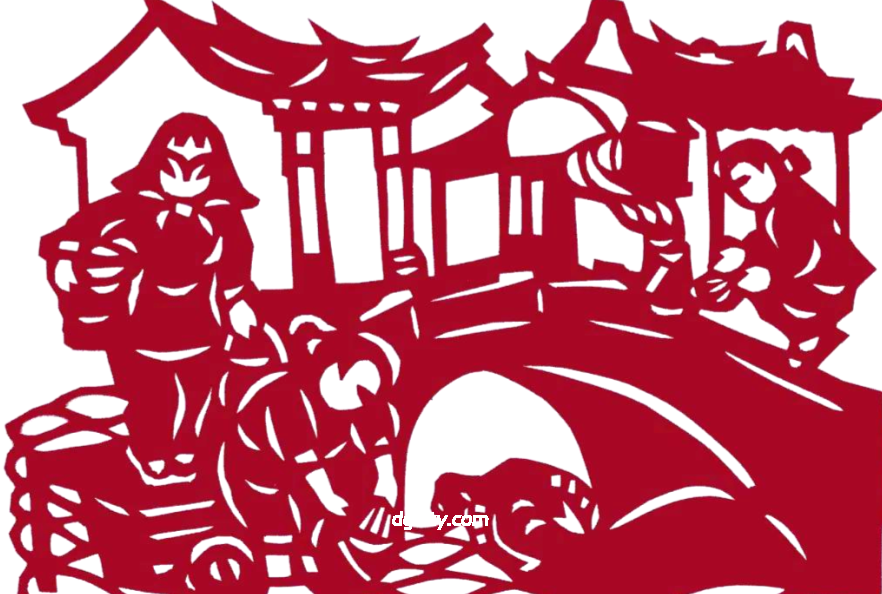
The second recommended venue is the Intangible Heritage Activity Center of Fenglin Street, Xuhui District, the core area for the inheritance of Shanghai Paper Cutting. Relying on the “Intangible Heritage in Community” project, it carries out paper cutting experience activities all year round, with a strong atmosphere and more urban vitality, suitable for foreign visitors who want to deeply feel the paper cutting folk customs. As the application and protection unit of Shanghai Paper Cutting, it gathers many intangible heritage inheritors, allowing foreign visitors to get close to the core inheritance of paper cutting skills. The venue implements a free admission policy, with no ticket required. The paper cutting experience projects are charged separately, with a fee of 20-40 RMB per person for the basic experience class (30 minutes, including tools) and 60-100 RMB per person for the advanced experience class (60 minutes, including tools and professional guidance). Reservations can be made in advance through the official WeChat Official Account, and English guidance services are available in some time slots.
The latest opening hours of the Intangible Heritage Activity Center of Fenglin Street are 9:00-11:30 and 14:00-17:30 every Tuesday to Sunday, closed on Monday, and the opening hours on national legal holidays will be notified separately. The advantage of the experience here is that it is close to community life. Foreign visitors can participate in paper cutting activities with local residents, feel the love of Shanghainese for intangible heritage culture, and also understand the inheritance and application of paper cutting in Shanghai folk customs, such as pasting paper cutting window flowers during the Spring Festival and paper cutting happy characters during weddings. In addition, the center regularly holds paper cutting exhibitions to display high-quality works from different inheritors. During the 2026 Spring Festival, it also launched a “Horse Welcomes Spring” themed paper cutting exhibition, integrating the Year of the Horse elements, allowing foreign visitors to feel the combination of Chinese Spring Festival folk customs and paper cutting art.
The third recommended venue is the Paper Cutting Studio in Tianzifang. As a very distinctive literary and artistic block in Shanghai, Tianzifang is full of urban atmosphere and creative vitality. The paper cutting studios here integrate traditional paper cutting with modern creativity, and the works are more fashionable, suitable for foreign visitors who like creative handcrafts and want to buy characteristic paper cutting souvenirs. The paper cutting studios in Tianzifang are all independently operated, most of which are opened by young inheritors. The works have various styles, including traditional folk paper cutting, creative works integrating Shanghai landmarks (such as the Bund, Oriental Pearl Tower) and Western elements. You can even customize exclusive paper cutting according to the needs of foreign visitors (such as portraits, national flag patterns, etc.). The customization fee ranges from 50-200 RMB according to the complexity of the work.
Most of the paper cutting studios in Tianzifang are open from 10:00 to 21:00 every day, with no ticket required. The experience projects are charged on demand (20-50 RMB per person for basic experience). Most studios provide simple English guidance, and the staff are enthusiastic and patient, guiding foreign visitors to complete their paper cutting works step by step. In addition, Tianzifang is surrounded by characteristic restaurants and cafes. After experiencing paper cutting, you can wander around the block, feel the literary atmosphere of Shanghai, and buy various characteristic handcrafts to enrich your itinerary. It is worth mentioning that during the 2026 Spring Festival, Tianzifang, together with paper cutting studios, launched intangible heritage blessing bags containing paper cutting works, sachets and other handcrafts, which are excellent choices for foreign visitors to take away the Shanghai Spring Festival flavor.
Surrounding traffic details are the key to foreign visitors’ travel. Below is a comprehensive introduction to the Subway, bus and self-driving methods for the three venues, including bilingual station names, route information and practical tips, ensuring that everyone can arrive conveniently. The Shanghai Arts and Crafts Museum is conveniently located near public transportation. After getting off at Changshu Road Station (Line 1/7) of the Shanghai Metro, you can walk about 10 minutes to reach it, with clear English signs along the way. By bus, you can take No. 42, 15 or 824 to Fenyang Road Huaihai Middle Road Station, and walk 3 minutes after getting off. For self-driving, you can navigate to the “Shanghai Arts and Crafts Museum Parking Lot” with a charging standard of 15 RMB per hour. Parking spaces are limited, so it is recommended to go during off-peak hours.
The Intangible Heritage Activity Center of Fenglin Street, Xuhui District can be reached by getting off at Zhaojiabang Road Station (Line 7/9) of the Shanghai Metro and walking about 8 minutes. By bus, you can take No. 43, 17 or 96 to Zhaojiabang Road Damuqiao Road Station, and walk 5 minutes after getting off. There are few Parking lots around, so it is recommended to take public transportation first. The Paper Cutting Studio in Tianzifang can be reached by getting off at Exit 1 of Dapuqiao Station (Line 9) of the Shanghai Metro and walking about 5 minutes. By bus, you can take No. 17, 41 or 146 to Jianguo Middle Road Ruijin Second Road Station, and walk 2 minutes after getting off. Traffic control is implemented around Tianzifang, prohibiting social vehicles from entering, so it is recommended to take public transportation.
In addition to the above information, this guide also supplements practical travel tips for foreign visitors to help everyone experience Shanghai Paper Cutting smoothly and happily. In terms of language services, all three venues have English guide signs. English audio guides can be rented at the Shanghai Arts and Crafts Museum and the Intangible Heritage Activity Center of Fenglin Street (rental fee 20 RMB per unit, deposit 100 RMB). The staff of the paper cutting studios in Tianzifang can provide simple English communication. In terms of experience skills, beginners can start with simple patterns, follow the teacher’s guidance, avoid touching their fingertips with scissors. The paper cutting tools can be taken away for free, or you can buy characteristic scissors on site as souvenirs.
In terms of purchase guides, the price of paper cutting souvenirs ranges from tens to thousands of RMB. Basic folk pattern paper cuttings are suitable for daily commemoration, while creative landmark paper cuttings and customized paper cuttings are suitable as gifts. It is recommended to choose works signed by intangible heritage inheritors, which are more collectible. In terms of precautions, loud talking and chasing are prohibited in the venues, and the use of flash photography is prohibited (for some precious exhibits). Paper cutting works are fragile and need to be properly kept when carrying, avoiding folding and extrusion. In addition, during the 2026 Spring Festival, there are also paper cutting experience areas in the foreign visitor service centers of Pudong and Hongqiao Airports, displaying “Horse Welcomes Spring” themed paper cuttings, allowing foreign visitors to feel the charm of Shanghai Paper Cutting at the first stop of their entry.
Shanghai Paper Cutting, an intangible heritage art on the tip of the fingers, carries the history and warmth of Shanghai, integrating the charm of tradition and modernity. Mastering the above information, foreign visitors can easily plan their Shanghai Paper Cutting experience trip without worrying about trivial travel matters. It is hoped that every foreign visitor can cut out their own Shanghai memories with their own hands with this practical guide, immerse themselves in the exquisite skills and Oriental aesthetics of Chinese traditional paper cutting, understand the cultural heritage and human warmth of Shanghai in the flexible flow of fingers, and leave an unforgettable intangible heritage experience trip.


暂无评论内容