




Located on Mount Muk Yue, 479 meters above sea level, on Lantau Island, Hong Kong, adjacent to Po Lin Monastery, Tian Tan Buddha has been one of the most iconic cultural landmarks in Hong Kong since its official consecration in December 1993. It is also a must-visit destination for foreign tourists traveling to Hong Kong to experience Eastern Buddhist Culture, pursue spiritual peace, and overlook the scenery of Lantau Island. As the world’s largest outdoor bronze sitting Buddha, Tian Tan Buddha took 12 years to construct and complete, integrating the essence of Buddhist sculpture art from the Sui and Tang dynasties with modern engineering technology. It is not only a perfect combination of Buddhist spirit and modern civilization, but also a precious cultural heritage of humanity, embodying the beautiful meanings of Hong Kong’s stability and prosperity, national peace and people’s well-being, and world peace. Every foreign tourist who visits here can feel the charm and power of Eastern Zen in a solemn and quiet atmosphere.
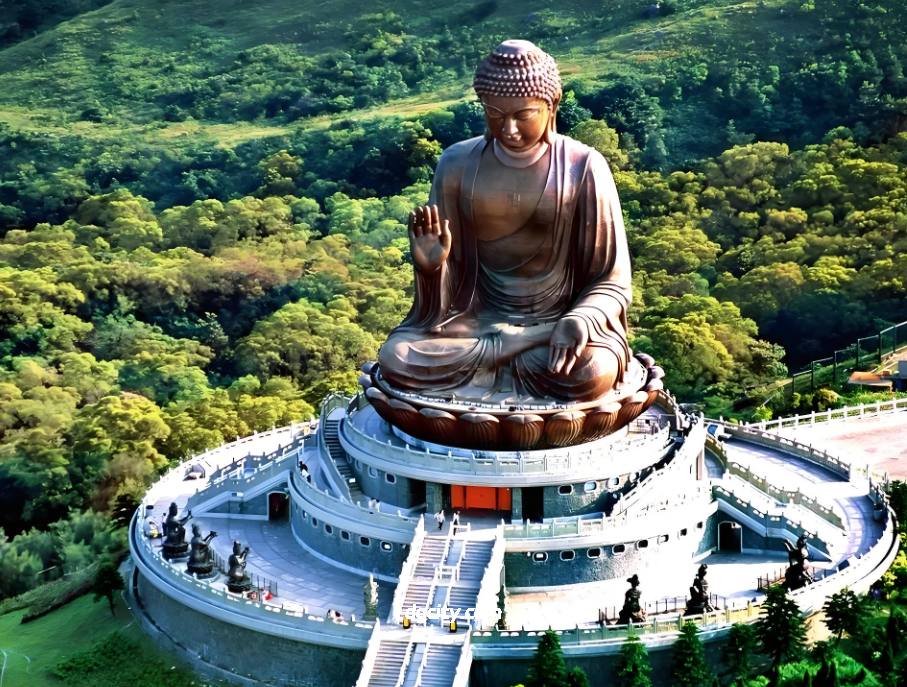
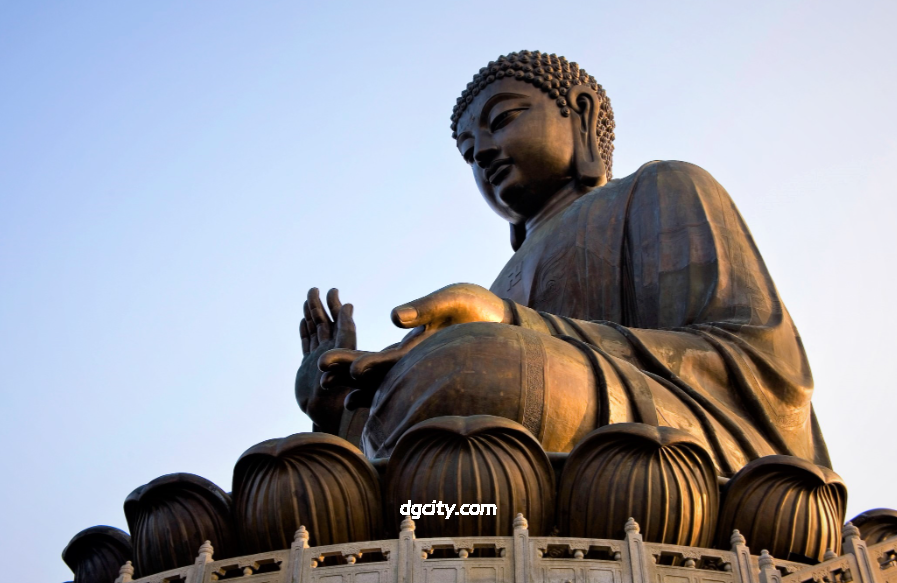
The core charm of Tian Tan Buddha lies in its grand architectural scale, exquisite sculpture craftsmanship and profound cultural connotation, with every detail embodying Buddhist wisdom and artistic ingenuity. The Buddha is cast from 202 bronze pieces, with a total height of 34 meters and a weight of 250 metric tons. The sculpture is modeled after the Vairocana Buddha at Longmen Grottoes and the Sakyamuni Buddha at Dunhuang Grottoes, combining the plump and elegant features of Sui and Tang sculptures with the smooth and graceful lines. After being adjusted and unified by artists, it has formed the solemn and kind Dharma appearance seen today. The Buddha sits cross-legged on a lotus platform, facing north from the south, with a face like a full moon, a broad and flat forehead, ears hanging down to the shoulders, and a kind smile. The spiral hair on the top symbolizes the perfection of wisdom, and the fine hair between the two eyebrows rotates to the right, representing the Buddha preaching the truth and Dharma to all sentient beings, showing the sacred temperament of the Buddha’s full blessings and wisdom.
The gestures and postures of the Buddha have profound religious meanings. The right hand is raised in the “Abhaya Mudra”, symbolizing the Buddha’s great compassion to save all sentient beings from suffering, dispelling fear and bringing peace to the world; the left hand rests naturally on the knee in the “Varada Mudra”, implying the Buddha’s vow to grant blessings and happiness to all sentient beings, fulfilling the beautiful expectations of the world. The Dharma wheel in the center of the palms represents the eternal existence of Buddhism and its circulation in all directions, and the swastika on the chest symbolizes the Buddha’s supreme dignity. Under the lotus platform is a three-tiered altar designed with reference to the Temple of Heaven in Beijing, which is also the origin of the name “Tian Tan Buddha”. Inside the altar, there are three floors of exhibition halls, namely the Hall of the Universe, the Hall of Benevolent Merit and the Hall of Remembrance, displaying precious Buddhist cultural relics, including the relics of Sakyamuni Buddha, for tourists to visit and understand the profound connotation of Buddhist Culture.
For foreign tourists, climbing the 268 steps to the Buddha’s platform is a necessary journey to experience the charm of Tian Tan Buddha, and also a journey full of ritual sense and spiritual practice. These 268 steps are built along the mountain, with lush trees and fresh air along the way. Walking here, you can not only feel the comfort of mountain climbing, but also slowly calm down and get rid of the hustle and bustle of the city. There are rest platforms along the way, convenient for tourists to stop and enjoy the scenery. Tourists with weak physical strength or the elderly can proceed according to their ability. The scenic spot also has a small winding road to provide convenient access for the disabled. After reaching the top, standing on the platform at the foot of the Buddha, you can look up at the solemn Dharma appearance of the Buddha up close, feel its majestic momentum, overlook the red walls and golden tiles of Po Lin Monastery with curling incense, and look far at the green mountains of Lantau Island and the blue waves of the South China Sea, enjoying the magnificent scenery of connected mountains and seas. The spiritual shock and peace here are irreplaceable by other scenic spots.
Inseparable from Tian Tan Buddha is the adjacent Po Lin Monastery, which echoes each other and together constitutes the core Buddhist cultural scenic area on Lantau Island. Founded in 1906 by three monks from Jiangsu Province, Po Lin Monastery was initially just a small stone chamber, and has now developed into the leading one of the four major Zen forests in Hong Kong, known as the “Buddhist Kingdom in the South”. The architecture of the monastery combines the characteristics of the Song, Ming and Qing dynasties, arranged along the central axis to form a symmetrical courtyard space. The main buildings include the Main Hall, the Hall of Ten Thousand Buddhas, the Bell Tower, the Drum Tower, the Meditation Hall, the Dining Hall and the Monk’s Hall, with towering ancient trees and prosperous incense, full of a quiet and peaceful Zen atmosphere. Foreign tourists can enter the monastery to visit, appreciate the architectural aesthetics of Buddhist temples, pray piously in the Main Hall and the Hall of Ten Thousand Buddhas, and also taste authentic Buddhist vegetarian food and tea in the Dining Hall, enjoying a moment of peace in a quiet environment.
Starting from Tian Tan Buddha and Po Lin Monastery, a 5-minute walk will take you to the Heart Sutra Forest, a hidden secret in the bamboo forest and an excellent place for foreign tourists to feel Eastern Zen. The Heart Sutra Forest is composed of 38 wooden pillars, each inscribed with the Heart Sutra in vigorous and powerful calligraphy, which sets off against the surrounding green bamboo forest, creating a quiet and distant atmosphere, and instantly calming down the impetuous mood. It is suitable for meditation and sitting quietly, and also for taking ancient-style photos. Foreign tourists can walk here, read the wisdom of the scriptures, feel the tranquility of the bamboo forest, and experience a Zen experience completely different from that of Tian Tan Buddha and Po Lin Monastery.
In addition, there are other characteristic scenic spots around Tian Tan Buddha, such as Ngong Ping Village and Ngong Ping Nature Center, adding more fun to foreign tourists’ journeys. Ngong Ping Village is antique, adopting traditional Chinese architectural design, perfectly integrating with the Natural Scenery of Lantau Island. It has more than 20 shops and restaurants, providing Chinese and Western delicacies, refreshments, as well as exquisite gifts such as jewelry and traditional handicrafts. There are also check-in spots such as the Blessing Drum and the Bodhi Wishing Tree. Foreign tourists can buy souvenirs, taste delicious food and make good wishes here. The Ngong Ping Nature Center, which was renovated at the end of 2021, provides interactive exhibits, guided tours, as well as map and hiking stick rental services, helping foreign tourists better explore the natural and cultural beauty of Lantau Island. It should be noted that the “Walk with Buddha” attraction in the village is currently closed; for the specific opening time, please check the official website of Ngong Ping 360.
In terms of transportation, foreign tourists can reach Tian Tan Buddha through various convenient ways, and the most recommended way is to take the Ngong Ping 360 Cable Car, which is also the most characteristic way to travel. Exit from Exit B of Tung Chung MTR Station, walk for 5 minutes to reach Tung Chung Cable Car Station, take the cable car to Ngong Ping Station. The whole journey is 5.7 kilometers, taking about 25 minutes. Along the way, you can enjoy the charming scenery of Lantau North Country Park and Tung Chung Bay, overlook the take-offs and landings of planes at Hong Kong International Airport and the magnificent Hong Kong-Zhuh-Macao Bridge. After arriving at Ngong Ping Station, a 10-minute walk will take you to Tian Tan Buddha, with beautiful scenery along the way, starting the spiritual journey in advance.
For foreign tourists with limited budget or who prefer land travel, public transportation is available: take the Tung Chung Line of the MTR to Tung Chung Station, Exit A, transfer to New Lantao Bus No. 23 to Ngong Ping Village Station, then walk for 10 minutes to arrive. The whole journey takes about 40 minutes, which is convenient and cost-effective. If you choose to take a taxi, just tell the driver “Tian Tan Buddha” or “Po Lin Monastery”. The journey from downtown Hong Kong takes about 30-40 minutes, and the fare is about 180-250 Hong Kong dollars. Most drivers are familiar with the venue location and can communicate in English. It is recommended that foreign tourists buy an “Octopus Card” in advance, which can be used to pay for transportation and some store consumption, very convenient.
In terms of tickets and practical information, Tian Tan Buddha is open to the public free of charge, no reservation is required, full of sincerity. Po Lin Monastery is also open for free, allowing foreign tourists to experience the charm of Buddhist Culture for free. The scenic spot is open from 9:00 to 18:00. It is recommended that foreign tourists go in the morning, when there are fewer tourists, so they can visit calmly, pray quietly, avoid the high temperature in the afternoon, and the morning light is more suitable for taking photos. It is recommended that foreign tourists reserve 3-4 hours for the tour, which can not only fully appreciate the grandeur of Tian Tan Buddha and the tranquility of Po Lin Monastery, but also visit nearby scenic spots and feel the spirituality and natural beauty of Lantau Island.
Practical tips can make foreign tourists’ visits smoother and more comfortable. When visiting, you need to dress appropriately, and it is forbidden to wear too revealing clothes such as slippers, short skirts and vests. Keep solemn and respect Buddhist customs; after entering Po Lin Monastery, keep quiet, do not make noise or play around, and do not step on the threshold, which is the basic respect for Buddhist culture. When climbing the steps, it is recommended to wear comfortable sports shoes and proceed according to your ability. When going in summer, you need to bring umbrellas, hats, sunglasses, etc. to prevent sunburn, and carry enough drinking water to replenish water in time.
In addition, the power plugs in Hong Kong are British standard, which are different from those in most foreign countries. It is recommended that foreign tourists carry a plug adapter or power bank with them; you can buy a Hong Kong SIM card online in advance to facilitate navigation and contact. There are toilets (including barrier-free facilities) and rest areas around the scenic spot. There are many restaurants and snack stalls in Ngong Ping Village, where you can replenish energy at any time. The vegetarian food in Po Lin Monastery is worth trying, with an average cost of about 50 Hong Kong dollars, light in taste and full of Zen. Most shops and restaurants in the scenic spot accept Hong Kong dollars and credit cards. Tourists can exchange foreign currency at the service center of Tung Chung Station or Ngong Ping Village, which is very convenient.
In terms of dining and shopping, there are various options in Ngong Ping Village, including characteristic stalls providing Hong Kong-style snacks, milk tea and dim sum, as well as restaurants serving Chinese and Western delicacies, meeting the taste needs of different foreign tourists. In terms of shopping, the shops in the village sell Tian Tan Buddha cultural and creative products, Buddhist characteristic souvenirs, Hong Kong local hand letters, etc. Foreign tourists can buy characteristic souvenirs to take the beautiful memories of this spiritual journey home. In addition, on the first and fifteenth day of each lunar month, the scenic spot will light up the Buddha after sunset. At this time, taking the cable car to watch the lit-up Buddha has a unique charm. Foreign tourists can pay attention to the relevant time to unlock a unique viewing experience.
Tian Tan Buddha in Hong Kong is not only a grand bronze Buddha statue, but also a palace carrying Eastern Buddhist culture and humanistic spirit. Here, you can climb the steps, look up at the solemn Dharma appearance of the Buddha, and feel the compassion and wisdom of Buddhism; you can walk in Po Lin Monastery, pray quietly in the curling incense, and enjoy a moment of peace; you can visit the Heart Sutra Forest, calm down in the bamboo forest and scriptures, and realize Zen; you can wander in Ngong Ping Village, feel the local customs, and buy characteristic souvenirs. For foreign tourists, this spiritual journey can not only appreciate the profound connotation of Eastern Buddhist culture, but also enjoy the mountain and sea scenery of Lantau Island. In the integration of Zen and nature, you can gain spiritual healing and peace, leaving an unforgettable Hong Kong travel memory. Whether you are exploring alone, traveling with a partner, or traveling with your family, here you can feel the unique Eastern charm.



暂无评论内容