




In Chongqing, there is a unique way of travel that is not only the “aerial bus” for old Chongqing residents, but also a must-visit Internet-famous check-in spot for visitors—it is the Chongqing Yangtze River Cableway. Known as “the first aerial corridor over the Yangtze River”, this aerial cableway spanning the Yangtze River has accompanied the mountain city for more than 30 years, witnessing the vicissitudes of the city. With its unique perspective, it presents the natural beauty and urban prosperity of the mountain city, becoming an excellent window to understand the dual charm of Chongqing as a “river city” and a “mountain city”. Not taking the Yangtze River Cableway means not really understanding the three-dimensionality and romance of Chongqing; every aerial crossing is a deep encounter with this landscape city.
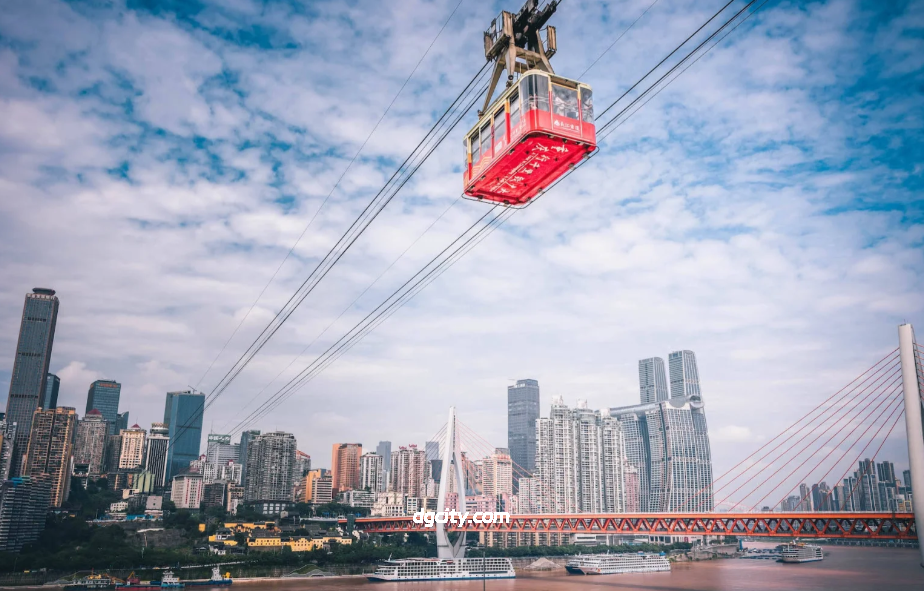
The birth of the Yangtze River Cableway originated from the original intention of solving the travel difficulties of residents on both sides of the river. In the 1980s, the transportation between Yuzhong District and Nan’an District mainly relied on buses and ferries. A round trip often took about an hour, and ferries would be suspended when there was fog on the river, bringing great inconvenience to the travel of residents on both sides. To solve this problem, Chongqing launched the construction of the Yangtze River Cableway, designed by Changsha Nonferrous Metallurgical Design and Research Institute. It adopted the first dual-load and dual-traction scheme in China. After half a year of polishing to finalize the design scheme, all equipment was made in China, making it the first dual-load and dual-traction cableway independently designed, manufactured, installed and commissioned in China. It was officially completed and opened to traffic on October 24, 1987.
In the early days of its completion, the Yangtze River Cableway was an indispensable means of transportation for residents on both sides of the river, and Chongqing people affectionately called it the “local plane”. Although the ticket price was 0.8 yuan at that time, much higher than the bus ticket, a large number of citizens still chose to take it. From early morning to noon every day, the carriage was always crowded with people going out. In special weather such as heavy fog and rising water, when ferries were suspended, the queue at the Xinhua Road Station in Yuzhong District could extend to Xiaoshizi, and the queue at the Shangxin Street Station in Nan’an District could also line up for hundreds of meters, which shows its important position in the daily life of residents at that time. In the second year of its opening, its annual passenger volume exceeded 1 million person-times, connecting the daily life on both sides of the river with convenience.
Over the past 30 years, the Yangtze River Cableway has undergone seven carriage “makeovers”, witnessing the changes of the city and completing a gorgeous transformation from a “means of transportation” to a “tourist landmark”. When it was put into use in 1987, the carriage was a striking beige color, which was easy to be clearly seen in the foggy Chongqing; it was changed to blue in 1995, and to a festive red in 2005 to welcome the Asia-Pacific City Mayors Summit. Later, it underwent many coating updates, including ink wash elements, mountain city landmark elements, and the retro restored first-generation carriage. Each makeover carries different urban memories. Today, the Yangtze River Cableway has become a national 4A-level tourist attraction and a Chongqing cultural relic protection unit, with an annual passenger volume of more than 4 million person-times, winning the reputation of “the first cableway over the Yangtze River and the first stop of Chongqing tourism”.
Taking the Yangtze River Cableway, the most shocking thing is to immerse yourself in the three-dimensional style of the mountain city and the scenery of the two rivers. The cableway is about 1166 meters long, with a one-way running time of about 5 minutes, and the carriage can hold 50 people. Starting from Xinhua Road Station in Yuzhong District, it slowly rises, crosses the surging Yangtze River, and arrives at Shangxin Street Station in Nan’an District. The whole journey has a wide view without any obstruction. Taking it during the day, you can clearly overlook the urban outline on both sides of the Yangtze River: on one side are the row upon row of skyscrapers in Yuzhong District, with the figures of Jiefangbei and Hongya Cave faintly visible, showing the prosperity of a modern city; on the other side are the green mountains and trees in Nan’an District, with scattered residential buildings dotted among them, hiding the market fireworks of old Chongqing. The ships coming and going on the river and the Yangtze River Bridge spanning both sides together form a vivid river city picture—with glowing clouds in spring and summer, and lingering clouds and mist in autumn and winter, like a fairyland.
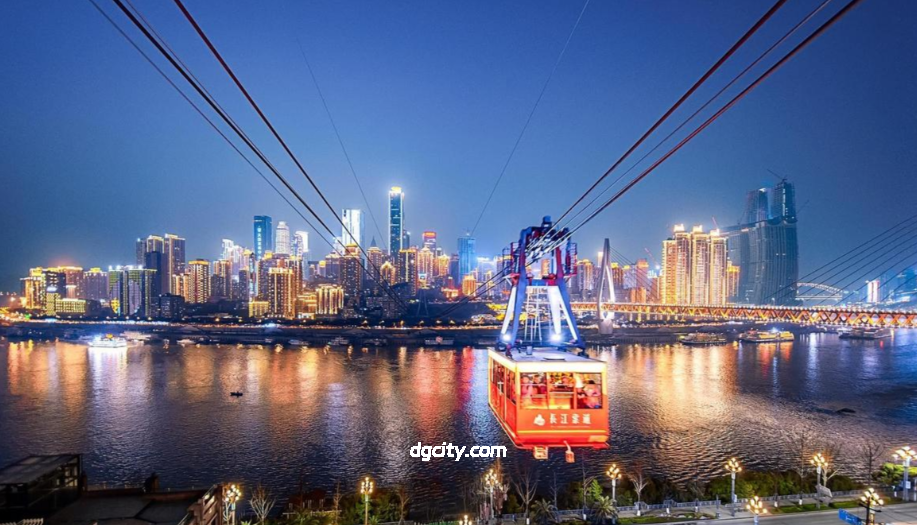
The Yangtze River Cableway at night is even a great way to unlock Chongqing’s night view, known as “the best perspective to watch the night view in the air”. When the lights are on, the lights on both sides of the two rivers are lit up one after another, with neon flashing, outlining the skyline of the city. The Yangtze River reflects the lights of thousands of families, sParkling and extremely beautiful. Taking the cableway shuttling between them is like wandering above the galaxy, with the bright light sea under your feet and the cool evening breeze beside you. You can not only see the dreamy lights of Hongya Cave, but also the glowing Qiansimen Bridge. The shock and romance can only be felt personally. Many tourists specially choose to take it in the evening to unlock the double beauty of day and night at one time, leaving unforgettable memories of the mountain city.
To have a perfect cableway experience, these practical guides are essential. In terms of ticket prices, the one-way ticket is 30 yuan, the round-trip ticket is 50 yuan, and the 40-yuan package includes headphones and commentary, allowing you to understand the historical story of the cableway more thoroughly; students can enjoy half-price, the elderly are free, and you can get a 10% discount by swiping a bus card (real-name authentication is required from the 26th to the 28th of each month). The operating hours are adjusted according to the season. On non-holidays, it is 8:00-22:00 in summer (March 1 to November 30) and 8:00-21:00 in winter (December 1 to the end of February of the next year). On legal holidays, it is 7:30-22:30. It may be suspended in heavy fog, strong wind and thunderstorm weather. Be sure to check the weather and operating hours before departure.
Ticket purchase and queuing skills are also crucial. On holidays, the number of people is limited to 800 per hour, so it is necessary to make an appointment in time slots. The most convenient way is to follow the “Yangtze River Cableway” official WeChat account, where you can buy tickets on the same day and generate a queue number, avoiding long queues on site; third-party platforms such as Meituan and Ctrip allow you to buy combined tickets 2 days in advance, but you need to pick up the ticket on site, so it is recommended to go early. If you want to experience it off-peak, you can choose before 8 am or after 8 pm, when there are fewer people and the scenery is equally amazing. For photography, it is recommended to wear bright clothes, choose a window seat, and avoid crowds to take photos with a strong sense of atmosphere. Bringing a selfie stick or asking a companion for help can capture a more comprehensive view of the two rivers.
There are also rich surrounding activities around the Yangtze River Cableway. The station is adjacent to many core scenic spots, which is very suitable for a series of visits. Starting from Xinhua Road Station, it takes about 20 minutes on foot to reach Jiefangbei and Bayi food Street, where you can shop in the business district and taste delicious food in one stop; it takes about 15 minutes on foot to Hongya Cave. After watching the cableway night view at night, go to Hongya Cave to check in and feel the dreaminess and fireworks of the mountain city. There are also characteristic blocks such as Daijia Lane Trail and Shibati around. After visiting the cableway, you can unlock these old Chongqing style check-in spots along the way to make the journey more layered. In terms of budget reference, the one-way cableway is 30 yuan, plus surrounding catering and other scenic spot tickets, about 150 yuan per person can have a fulfilling day.
Today, the Yangtze River Cableway has long surpassed the attribute of a means of transportation and become a city symbol and spiritual carrier of Chongqing. It carries the collective memories of old Chongqing residents and welcomes tourists from all over the world. With 35 years of persistence, it has witnessed the rise and prosperity of the mountain city. Taking this “aerial bus”, you can not only touch the historical temperature of Chongqing, but also appreciate the vitality of the modern city. Every aerial crossing is a gentle encounter with the mountain city, which is the most touching charm of the Yangtze River Cableway and the most unique scenery of Chongqing.


暂无评论内容