




At the confluence of the Jialing, Fu, and Qu rivers in Hechuan, Chongqing, Diaoyucheng stands atop Diaoyu Mountain—a solitary peak surrounded by cliffs on three sides. Rising 391 meters above sea level, this Ancient City is not only a national AAAA-level tourist attraction and a key cultural relic protection unit in China, but also a Southern Song military fortress that altered the course of world history. It carries the heroic epic of holding an isolated city for 36 years and is an unmissable destination for every traveler who appreciates history and landscapes.
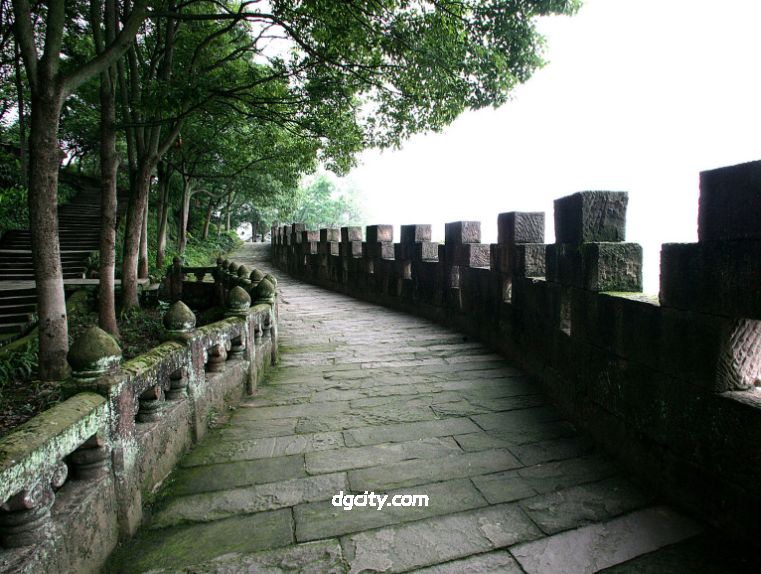
Diaoyucheng’s historical legend began in the late Southern Song Dynasty, amid the war between the Song and Mongol Empires. In 1243 AD, to resist the southward advance of the Mongol iron cavalry, Yu Jie, the Pacification Commissioner of Sichuan, followed the advice of the Ran brothers and built a defensive city on Diaoyu Mountain. He moved the administrative office of Hezhou and the Xingyuan Military Department to the city, establishing a mountain defense system centered on Diaoyucheng. Leveraging the natural advantage of integrating “mountain, water, and city,” this fortress relied on the natural barrier of the three surrounding rivers, as well as the solid city walls, tunnels, and naval piers built along the mountain, becoming a crucial stronghold for the Southern Song to fend off the Mongol army.
The most striking event here is the 1259 Battle of Diaoyucheng. Möngke Khan, Great Khan of the Mongol Empire, personally led 100,000 troops to besiege the city. The garrison and civilians, relying on solid defenses and unyielding will, fought fiercely against the Mongols, and Möngke was injured and killed during the siege. This incident not only plunged the Mongol Empire into a succession dispute, forcing the Western Expeditionary Army to withdraw and halting the Mongol advance into Africa, but also indirectly reshaped the historical landscape of Eurasia—earning Diaoyucheng its title, “Where the Whip of God Was Broken.” This resistance lasted 36 years; it was not until 1279 that the garrison and civilians surrendered on the condition that the city would not be massacred, writing a tragic chapter of loyalty and wisdom with their lives.
Today, Diaoyucheng still preserves a complete ancient battlefield site. As you wander through it, every relic tells the story of past fierce battles. The scenic area boasts a variety of core attractions: the 5,810-meter-long mountain-top city wall, where Song and Qing Dynasty walls overlap, winds along the mountain rocks, with some sections using steep natural cliffs as barriers, exuding grandeur. Huguo Gate, the largest gate of Diaoyucheng, stands atop a cliff; this stone-built fortress remains solid after thousands of years of wind and rain. At dusk, the setting sun gilds the gate, and moss-covered paths blend with the twilight, making it a perfect spot for atmospheric photos.
Beyond the city walls and gates, many relics in Diaoyucheng hold profound historical memories. The Ancient Tunnel is the only surviving Mongol siege tunnel discovered in China to date, with a cleared length of 33 meters. Over 80 iron cannon fragments have been unearthed here, witnessing the use of primitive firearms in the Song Dynasty. The Jiukouguo Site, a complex of buildings related to military command during the Song-Mongol War, retains traces of ancient armories. The Fanjia Weir Site, once the administrative center of Hezhou in the Southern Song Dynasty, features a neat layout of government offices and gardens, showcasing the military, political, and daily life of the era. Additionally, the Tang Dynasty Suspended Reclining Buddha, Thousand Buddha Cliff Carvings, Diaoyu Platform, and Zhongyi Shrine (Loyalty Shrine) seamlessly integrate Natural Scenery with humanistic history, allowing tourists to feel the charm of thousands of years of Culture while enjoying the scenery.
For tourists, a visit to Diaoyucheng offers both historical depth and practical convenience. The scenic area is open from 8:30 AM to 5:00 PM, closed on Mondays (except holidays). Ticket prices are 68 yuan per person in peak season (April–October) and 60 yuan per person in off-season (November–March); students and the elderly can enjoy a 50% discount with valid IDs. For transportation, from downtown Chongqing, take a high-speed train to Hechuan Station, then a taxi (about 20 yuan) to the scenic area. For self-driving, navigate to “Diaoyucheng Tourist Center”—Parking at the East Gate Parking Lot costs 5 yuan per day. Sightseeing cars are available: 10 yuan for a one-way trip and 15 yuan for a round trip. We recommend purchasing a round-trip ticket to save energy for climbing and focus on the core attractions.
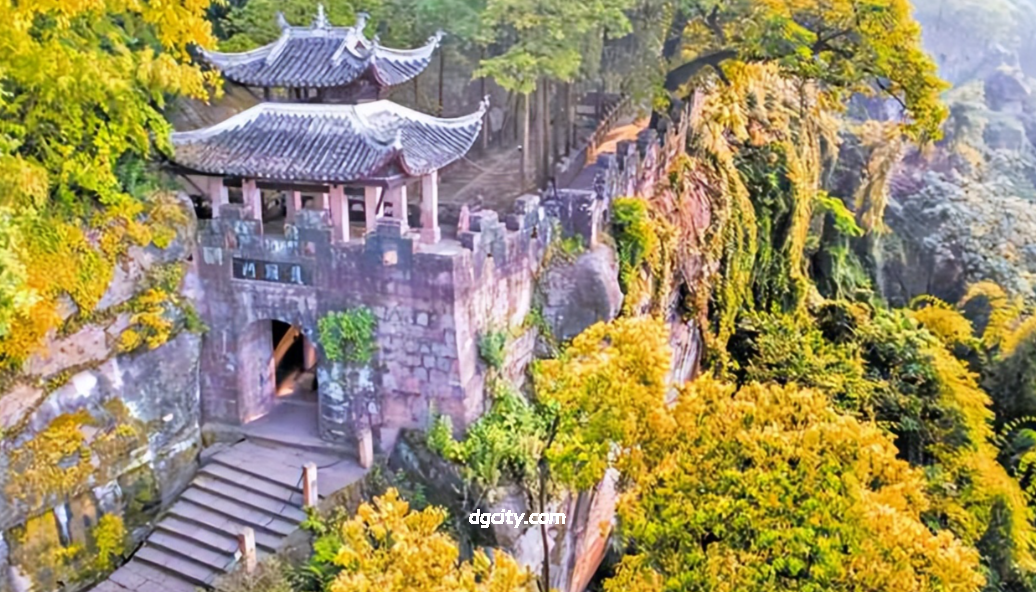
Recommended itinerary: Tourist Center → Take a sightseeing car → Shiguan Gate → Huguo Temple → Diaoyu Platform → Huguo Gate → City Wall Ruins → Jiukouguo Site → Suspended Reclining Buddha → Observation Deck → Zhongyi Shrine (Loyalty Shrine). The entire trip takes about 3–4 hours. We suggest hiring a guide (120 yuan per group) to gain a deeper understanding of the historical stories behind each relic. There are few catering options in the scenic area, so bring your own water and snacks. The mountain trails have many stone steps, so wear non-slip sports shoes. The temperature drops in the evening, so prepare a light jacket.
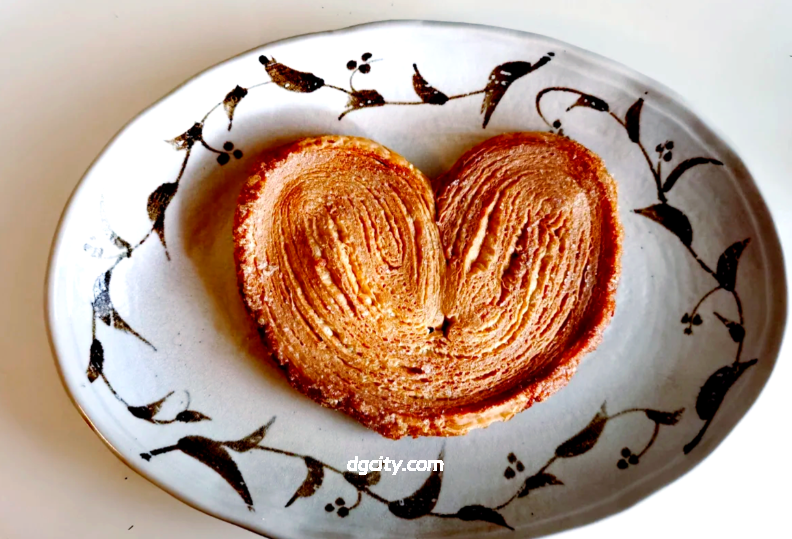
After leaving the Ancient City, don’t miss the delicacies in downtown Hechuan. Hechuan Pork Slices are crispy on the outside and tender on the inside, while Hechuan Peach Slices are sweet and glutinous. Other local snacks, such as Shaoshui Noodles and Lamb Noodles, provide a wonderful culinary experience after your visit. This thousand-year-old city, standing above the three rivers, combines the tragedy of fierce battles with the tenderness of mountains and waters. Step into Diaoyucheng, touch the weathered city walls, and listen to the flow of the three rivers—you’ll feel as if you’ve traveled back in time, conversing with the garrison and civilians of the past, and experiencing the loyalty and perseverance etched in their bones.




暂无评论内容