




On the southeastern slope of the Qionglai Mountains at the western edge of the Sichuan Basin, there lies an ecological secret known as the “Hometown of Giant Pandas” – Wolong National Nature Reserve. Situated in the southwest of Wenchuan County, Aba Tibetan and Qiang Autonomous Prefecture, it is only 130 kilometers away from Chengdu with convenient transportation, yet it has always maintained its primitive and pure natural essence. It is one of the earliest comprehensive national nature reserves established in China and a core position for global giant panda conservation and research.

Wolong is endowed with unique geographical and climatic conditions, forming its distinctive ecological pattern. Covering a total area of 200,000 hectares, the reserve has an altitude ranging from 1,100 meters to 6,250 meters, spanning 6 vertical climatic zones, which creates the magical landscape of “four seasons in one mountain, different weather every ten miles”. It has distinct dry and wet seasons with an average annual temperature of 8.9℃, a forest coverage rate of 62.5%, and a vegetation coverage rate of over 98%. The dense primeval forests, vast alpine meadows, and clear mountain streams together form an ideal habitat for giant pandas and other rare species. The Pitiao River runs through the north and south of the reserve, with boulders and pebbles scattered in the streams, and the unique hydrological environment also provides living space for a variety of aquatic organisms.
As the “Hometown of Giant Pandas”, Wolong is a core habitat for wild giant pandas and an important breeding base for the global captive giant panda population. According to the data from China’s third national giant panda survey, about 150 wild giant pandas live in the reserve, accounting for nearly 10% of China’s existing wild giant panda resources. In 2023, a research team discovered a new wild giant panda population in the core area of the reserve, with an initial estimated number of more than 15, which refreshed the global understanding of the distribution of wild giant panda populations. Meanwhile, it is home to the China Conservation and Research Center for the Giant Panda (CCRCGP). Researchers here took the lead in overcoming the three major technical difficulties in captive giant panda breeding: difficulty in estrus, difficulty in mating and conception, and difficulty in cub survival. As a result, the number of captive giant pandas increased from 10 in 1991 to 170 today, accounting for about 63% of the world’s total captive giant panda population. It has established the world’s largest captive giant panda population with the most reasonable genetic structure and successfully carried out the wild release of giant pandas, opening a new chapter for captive giant pandas to return to nature.
In addition to giant pandas, Wolong is also a valuable gene pool of organisms, with more than 4,000 species of plants and numerous rare wild animals. It is home to 81 rare and endangered species of animals and plants, including snow leopards, golden snub-nosed monkeys, white-lipped deer, and green-tailed monals, many of which are national first-class protected species. Rare plants such as Davidia involucrata and Cupressus chengiana thrive here, forming a complex and complete subtropical alpine forest ecosystem. The “Wuyipeng” Giant Panda Field Observation Station in the reserve is a world-famous field observation base for wild giant pandas, providing valuable first-hand data for global giant panda research.
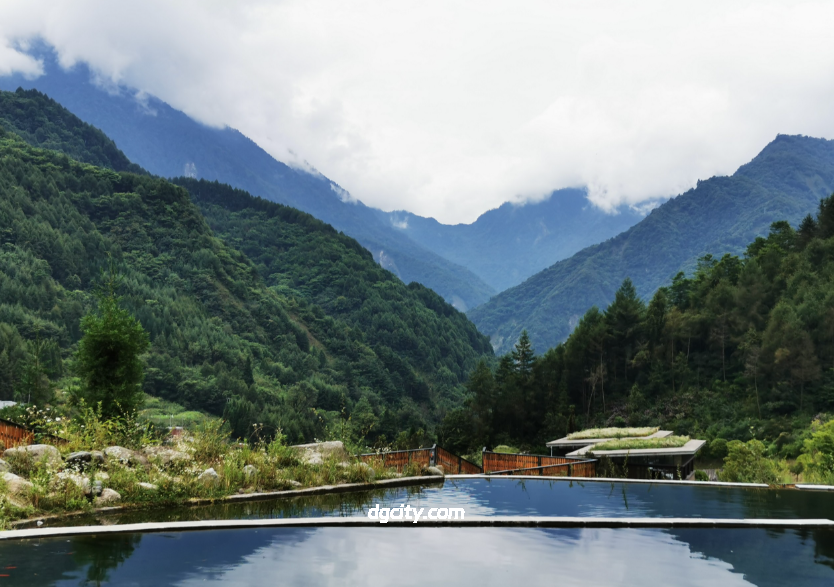
The development history of Wolong is a history of struggle for ecological protection and human coexistence. The reserve was established in 1963, expanded in 1975, joined the UNESCO “Man and the Biosphere Reserve Network” in 1980, and cooperated with the World Wide Fund for Nature (WWF) to carry out giant panda conservation work. It became a UNESCO World Heritage Site in 2006 and was included in the Giant Panda National Park in 2020. During the 2008 Wenchuan Earthquake, Wolong suffered severe damage. The Hong Kong Special Administrative Region took the initiative to undertake 23 reconstruction projects and invested 1.422 billion yuan to help with the reconstruction, allowing this ecological secret to be reborn. Today, Wolong has formed a diversified protection pattern, balancing ecological protection, scientific research and monitoring, and people’s livelihood development. It has built an economic development system based on ecological protection industry and led by ecotourism, enabling local Tibetan and Qiang people to get rid of poverty and become rich while guarding the green mountains and clear waters.
As a “Popular Science Education Base” and “Patriotic Education Base” named by the state and Sichuan Province, Wolong is not only a model of ecological protection but also an important window for spreading the concept of ecological civilization. The Giant Panda Museum here is a professional museum established in China focusing on a single biological species, showing people the evolutionary history and conservation achievements of giant pandas. Every year, countless tourists come here, admiring the primitive Natural Scenery, feeling the cuteness of giant pandas up close, and understanding the importance of ecological protection.
From the remote secret of the Qionglai Mountains to the world-famous home of giant pandas, Wolong has interpreted the profound connotation of “harmonious coexistence between man and nature” with more than 60 years of perseverance. Every bamboo forest, every stream, and every creature here tells the hardships and achievements of ecological protection, and also carries the human reverence and love for nature.








暂无评论内容