




Located on the east side of the central axis in southern Beijing, the Temple of Heaven was first constructed in 1420 during the 18th year of Emperor Yongle’s reign in the Ming Dynasty, initially named the Temple of Heaven and Earth. It was renamed the Temple of Heaven in 1530 when the system of separate sacrifices to heaven and earth was established, serving as a sacred venue for 22 emperors of the Ming and Qing dynasties to hold grand ceremonies of worshipping heaven and praying for grain harvests. Covering an area of 273 hectares, this architectural complex, with its layout concept of “round heaven and square earth”, exquisite craftsmanship and profound cultural heritage, is the largest and best-preserved ancient sacrificial complex in China. Listed as a UNESCO World Heritage Site in 1998, it interprets the ancient Chinese worldview of “harmony between man and nature” and imperial etiquette.
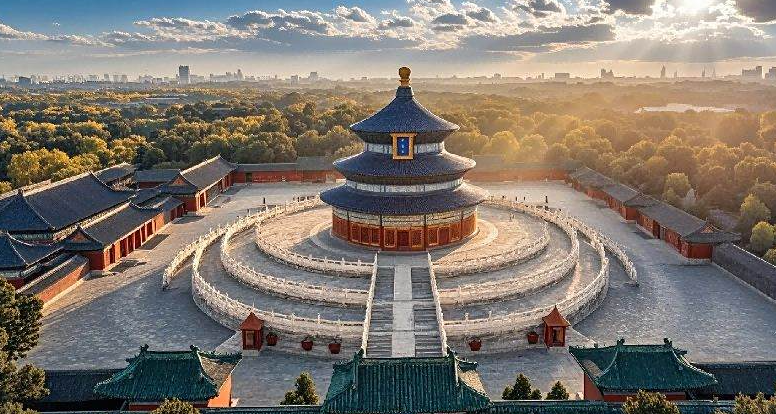
The Temple of Heaven features a layout shaped like the Chinese character “Hui” (a square with a circle inside), divided into the inner altar and outer altar by two layers of walls. The core buildings are concentrated along the north-south central axis of the inner altar, including the Circular Mound Altar, Imperial Vault of Heaven, Vermilion Steps Bridge and Hall of Prayer for Good Harvests from south to north. The east and west sides are surrounded by towering ancient cypresses, creating a solemn atmosphere for sacrifices. The outer altar only has a west gate, which was the exclusive entrance for emperors during sacrifices; the inner altar has four “Heavenly Gates”, and the sacrificial procession had to enter through the south gate and complete the entire ritual along the central axis, with every layout strictly following ancient etiquette norms.
As the core venue for worshipping heaven, the Circular Mound Altar is a landmark building in the southern part of the Temple of Heaven. First built in 1530, it was expanded with durable Aiye green stone in 1749 during the Qianlong period of the Qing Dynasty. The entire structure is a three-layer circular platform, symbolizing the “round heaven”. The number of balustrades and baluster posts on each layer adopts “heavenly numbers”, decreasing from the bottom to the top, echoing the imperial hierarchy of “nine-five supremacy”. The “Heavenly Heart Stone” in the center of the altar is the finishing touch—standing here and speaking, the sound can form a clear echo through reflection from the railings, as if resonating with heaven, fully demonstrating the ancients’ awe of heaven and earth. Surrounding the altar are two layers of walls, round inside and square outside, matched with sacrificial facilities such as cypress fire pits and torch platforms, completely restoring the scene of the winter solstice heaven-worshipping ceremony.
The Imperial Vault of Heaven north of the Circular Mound Altar is the “Heavenly Warehouse” for storing the spiritual tablets of heaven-worshipping deities, and its most famous feature is the Echo Wall surrounding the hall. This circular wall is built with Linqing city bricks dry-laid, with a smooth surface like a mirror. Sound can be continuously reflected when encountering the wall—two people standing at both ends of the wall can hear each other clearly in a low voice without shouting, known as the top of China’s four major echo ancient buildings. There is also the wonder of “Three Echo Stones” on the corridor in front of the Imperial Vault of Heaven; clapping hands on different stone slabs can produce one to three echoes respectively. These acoustic wonders are not only a reflection of architectural craftsmanship but also imply the ancients’ romantic imagination of the interaction between heaven and earth. The hall itself has a single-eave blue glazed tile round spire with a gilded top and a white marble base, showing dignity and elegance.
The Vermilion Steps Bridge, running through the central axis of the inner altar, is the core passage connecting the Imperial Vault of Heaven and the Hall of Prayer for Good Harvests. 360 meters long and 29 meters wide, the bridge surface gradually rises from south to north, with the northern end about 4.5 meters above the ground, symbolizing the ladder from the human world to heaven. The Abstinence Palace west of the Vermilion Steps Bridge was where emperors resided and fasted before sacrifices. Overall square-shaped, the buildings are covered with green glazed tiles, different from the yellow tiles of imperial palaces, to show humility to heaven. The Beamless Hall in the Abstinence Palace adopts a brick and stone arch structure, which can bear weight without a single beam or column, demonstrating the superb architectural craftsmanship of the Ming Dynasty.
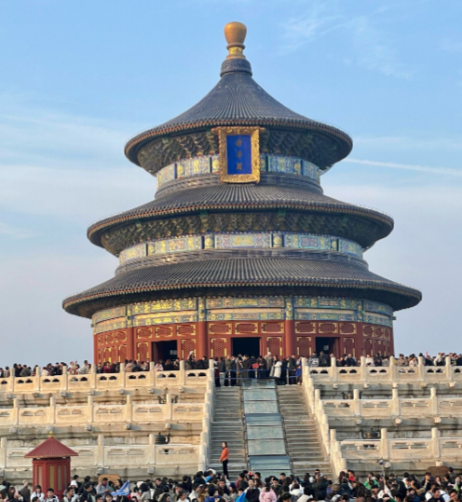
The Hall of Prayer for Good Harvests, the soul of the Temple of Heaven, is located at the northern end of the central axis. First built in 1420, it was destroyed by lightning and the existing building was reconstructed in 1896 during the Guangxu period of the Qing Dynasty. This 38.2-meter-high three-eave circular building takes a white marble platform as its base, and the 28 columns inside the hall have hidden meanings: 4 dragon well columns symbolize the four seasons of spring, summer, autumn and winter, 12 golden columns represent the twelve months, 12 eave columns correspond to the twelve two-hour periods of a day, and the 24 golden and eave columns imply the twenty-four solar terms, integrating the ancients’ understanding of natural seasons into the building. The Hall of Prayer for Good Harvests is where emperors held ceremonies to pray for grain harvests. The roof is covered with blue glazed tiles symbolizing the sky, and the spiritual tablet of the Supreme God of Heaven is enshrined inside. On the first xin day of the first lunar month, emperors would pray here for good weather and abundant grain in the coming year.
For travel tips, the Temple of Heaven requires real-name reservation tickets. International visitors can book 1-3 days in advance through the official website or mini-program with their passport information. It is recommended to book early to avoid selling out during peak seasons (April-October). The Park’s opening hours adjust with seasons: 6:00-22:00 in spring and summer, 6:30-21:00 in autumn and winter. The core building area opens later, so it is necessary to plan the itinerary reasonably. Recommended route: enter from the south gate, visit the Circular Mound Altar, Echo Wall and Imperial Vault of Heaven along the central axis, go to the Hall of Prayer for Good Harvests via the Vermilion Steps Bridge, then explore the Abstinence Palace and Double Ring Longevity Pavilion, and finally leave from the east or north gate. The whole tour takes about 3-4 hours. Early morning is the best time to feel the quiet atmosphere with green cypresses and few tourists. Meanwhile, please protect the ancient buildings, do not climb or carve, and visit this cultural treasure respectfully.
From the echo of the Heavenly Heart Stone on the Circular Mound Altar to the blue glazed sky of the Hall of Prayer for Good Harvests, the Temple of Heaven is not only a group of buildings but also a masterpiece of ancient Chinese cosmology, etiquette Culture and architectural art. Here, every brick and stone carries the dialogue between emperors and heaven, and every wonder shows the wisdom and ingenuity of the ancients, waiting for international visitors to explore this 600-year-old imperial heaven-worshipping legend.




暂无评论内容